
Across South Africa, mountains, craters, caves, and canyons preserve evidence of ancient volcanoes, meteorite impacts, shifting continents and rivers that have sculpted the land over billions of years.
Whether you’re fascinated by fossils, intrigued by plate tectonics or simply enjoy exploring dramatic natural scenery, these destinations reveal the extraordinary geological forces that shaped South Africa long before humans walked the Earth.
1. Barberton Makhonjwa Mountains, Mpumalanga
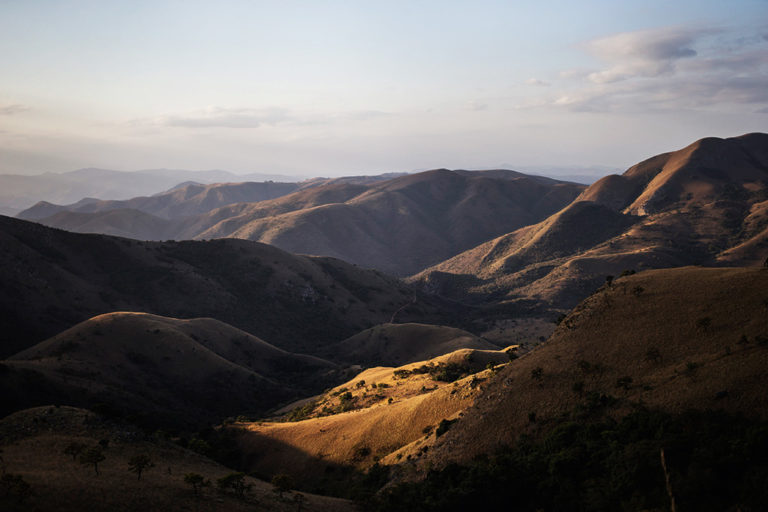
The Barberton Greenstone belt/Getaway Gallery
One of Earth’s oldest geological treasures
The Barberton Makhonjwa Mountains are among the oldest exposed rock formations on the planet, dating back around 3.5 billion years. Recognised as a UNESCO World Heritage Site, the mountains offer scientists an exceptional window into the Earth’s early crust and the conditions that existed when life was beginning to emerge.
Unlike many ancient rock formations that have been heavily altered over time, the rocks here remain remarkably well preserved. Visitors can follow the Barberton Makhonjwa Geotrail, a self-drive route featuring viewpoints and interpretive panels explaining volcanic activity, ancient oceans and some of the earliest geological processes known to science.
For geology enthusiasts, few places in the world rival Barberton’s significance.
2. Vredefort Dome, Free State
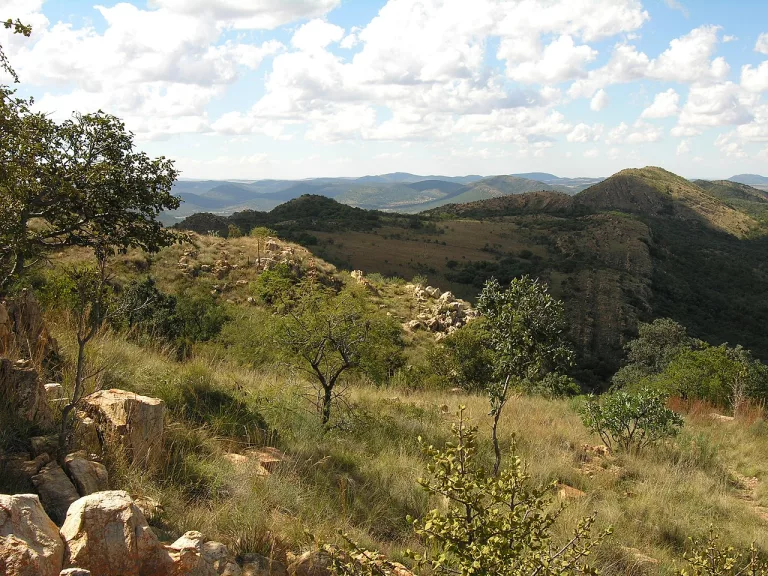
Francesco Bandarin/Wikimedia Commons
The world’s oldest verified meteorite impact site
Around two billion years ago, a massive meteorite struck what is now central South Africa, creating the largest verified impact structure on Earth. Although erosion has worn away much of the original crater, the Vredefort Dome still reveals the immense forces unleashed by the collision.
The impact exposed deep layers of the Earth’s crust, creating unusual rock formations and spectacular folded landscapes. Today, visitors can explore hiking trails, river routes and guided geological tours that explain how the impact forever altered the surrounding region.
The dome is also recognised as a UNESCO World Heritage Site, highlighting its global scientific importance.
3. Pilanesberg National Park, North West
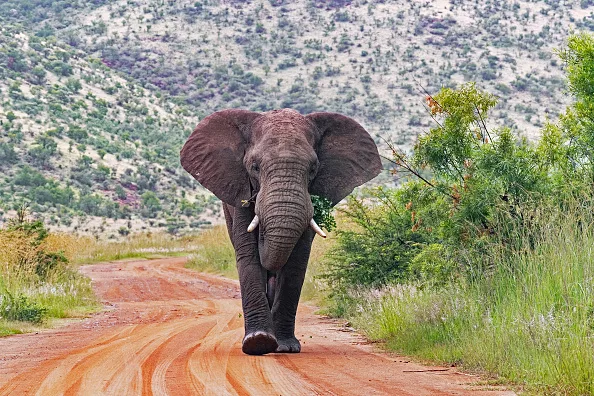
African bush elephant (Loxodonta africana) walking on red dirt road in the Pilanesberg National Park/(Photo by: Arterra/Marica van der Meer/Universal Images Group via Getty Images)
A safari inside an ancient volcano
Pilanesberg is famous for its Big Five safaris, but many visitors don’t realise they are driving through the remains of an extinct volcano.
The park lies within one of the world’s largest alkaline volcanic ring complexes, formed approximately 1.2 billion years ago. Over time, erosion removed the volcanic cone, leaving behind a circular series of hills that now surround fertile valleys rich in wildlife.
This unusual geology contributes to Pilanesberg’s remarkable biodiversity, with different elevations and soil types supporting a variety of ecosystems. It’s one of the few places where visitors can combine wildlife viewing with a lesson in volcanic history.
ALSO READ:
4. Augrabies Falls National Park, Northern Cape
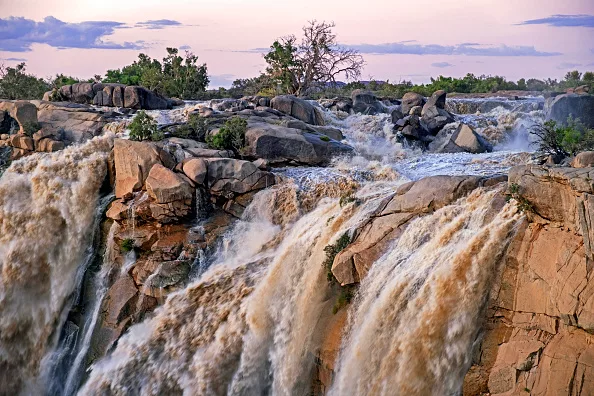
Waterfall on the Orange River in the Augrabies Falls National Park/(Photo by: Arterra/Marica van der Meer/Universal Images Group via Getty Images)
Where water carved through ancient granite
The mighty Orange River crashes nearly 60 metres into a dramatic granite gorge at Augrabies Falls, creating one of South Africa’s most impressive geological spectacles.
Over millions of years, flowing water carved deep channels through ancient granite bedrock, leaving behind polished rock surfaces, towering cliffs and fascinating erosion patterns.
The name “Augrabies” comes from the Khoi word Aukoerebis, meaning “place of great noise”—a fitting description for the thunderous falls, especially after seasonal rains. Scenic viewpoints throughout the park reveal the immense power of water in shaping the landscape over geological time.
5. Tswaing Crater, Gauteng
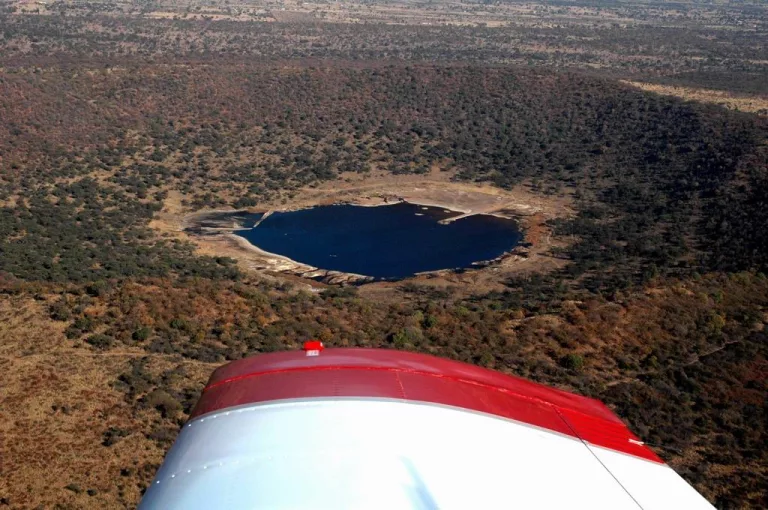
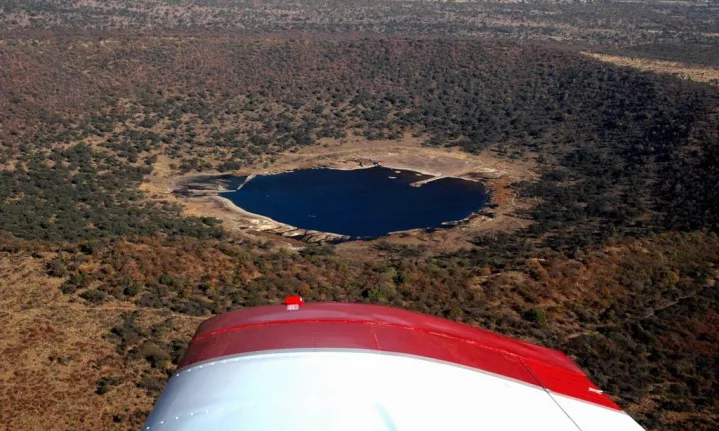
Tswaing crater as seen from above/Hp.Baumeler/Wikimedia Commons
A meteorite impact you can walk into
Just north of Pretoria lies Tswaing Crater, one of the world’s best-preserved meteorite impact craters.
Created approximately 220,000 years ago when a meteorite struck the Earth, the crater measures about 1.13 kilometres across and once contained a saline lake that attracted both wildlife and early humans.
A hiking trail leads visitors down into the crater, where interpretive signs explain the impact event, local ecology, and archaeological discoveries. The combination of geology, archaeology, and biodiversity makes Tswaing a fascinating destination for curious travellers.
6. Cango Caves, Western Cape

Cango Caves/
DIRK TOERIEN/Unsplash
Nature’s underground masterpiece
Hidden beneath the Swartberg Mountains near Oudtshoorn, the Cango Caves showcase millions of years of slow geological transformation.
Formed within thick limestone deposits, the caves were gradually sculpted by groundwater dissolving the rock, creating vast chambers decorated with spectacular stalactites, stalagmites and delicate flowstone formations.
Guided tours reveal awe-inspiring caverns such as Van Zyl’s Hall and Cleopatra’s Needle, while explaining the geological processes responsible for these remarkable natural sculptures. The caves remain one of South Africa’s most celebrated natural attractions and continue to inspire visitors with their underground beauty.
More than beautiful landscapes
South Africa’s geological wonders tell stories spanning billions of years from ancient volcanic eruptions and colossal meteorite impacts to rivers that patiently carved canyons and caves beneath the surface. Visiting these destinations offers more than scenic views; it’s an opportunity to witness the forces that shaped not only South Africa but our planet itself.
For geology lovers, every rock, cliff and crater reveals another page in Earth’s extraordinary story.
Follow us on social media for more travel news, inspiration, and guides. You can also tag us to be featured.
Instagram | Facebook | Twitter | Spotify
ALSO READ: