






What should have been a routine domestic arrival into Abuja turned into something much bigger this week.
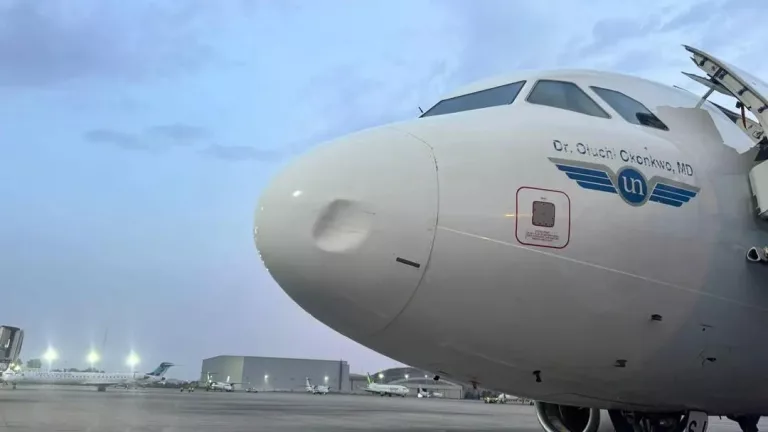
Source: Premium Times Nigeria
According to travelnews.africa, United Nigeria Airlines confirmed that one of its CRJ 900 aircraft was withdrawn from service after a bird strike during the landing of Flight UN0579 from Kano to Abuja on Tuesday evening. The aircraft has been pulled for technical inspections and any maintenance required before it can return to operation.
For passengers, that means the usual travel headache. Delays. Possible schedule changes. Last-minute reshuffling. For the airline, it is another operational setback in a year that is already starting to look unusually difficult.
The part that stands out most
This was not an isolated event.
According to the airline’s statement, this was its fifth bird strike involving its fleet since January 2026. That is the detail making this story travel far beyond one disrupted flight. Five incidents by mid-April is the kind of number that immediately raises eyebrows, especially in a domestic market where tight scheduling already leaves little room for disruption.
The airline said safety came first and apologised to passengers whose plans may now be affected. That decision may be inconvenient, but it is also the right one. In aviation, even when damage appears limited, an aircraft does not simply go back into rotation on assumption alone.
Why bird strikes matter more than many travellers realise
To many travellers, the phrase “bird strike” can sound almost minor, like an inconvenience rather than a threat. In reality, it is treated seriously across the aviation world, especially during take-off and landing, when aircraft are at their most vulnerable.
That is why this latest Abuja incident matters beyond United Nigeria Airlines itself. It pushes attention back onto a wider question that has followed Nigerian aviation for years: how effectively are airports managing wildlife risks around active flight paths?
The Nigerian Civil Aviation Authority has current guidance in place for wildlife strike hazard management, which shows the issue is formally recognised and regulated. Still, repeated incidents like this one tend to shift the conversation from policy on paper to what passengers and airlines experience in real time.
A pressure point for Nigeria’s domestic travel network
There is also a broader travel angle here.
When one aircraft is suddenly removed from service, the knock-on effect can spread quickly. A single grounding can squeeze the rest of the fleet, stretch turnaround times, and push disruptions onto routes that had nothing to do with the original incident.
In a region where business travel, family movement, and short-notice domestic bookings are a normal part of life, reliability matters almost as much as ticket price. That is why stories like this resonate so widely. It is not only about one aircraft in Abuja. It is about how fragile a schedule can become when safety events keep repeating.
The bigger question now
United Nigeria Airlines says the aircraft will return only after full inspection and clearance. That reassurance is important, and it is likely to be welcomed by travellers who would rather arrive later than board an aircraft that has not been properly checked.
But the bigger issue does not disappear once this specific jet is cleared.
If one carrier has recorded five bird strikes in just a few months, the conversation naturally shifts to prevention. Better habitat control around airports. Stronger wildlife monitoring. Faster, more consistent intervention. Those are not background technical matters anymore. They sit right at the heart of passenger confidence.
For now, the grounded aircraft is one story. The pattern behind it is the one the industry cannot afford to ignore.
Source: travelnews.africa
Follow us on social media for more travel news, inspiration, and guides. You can also tag us to be featured.
TikTok | Instagram | Facebook
ALSO READ: