





South Africa is home to some of the most iconic and storied trees in the world. From ancient baobabs to riverine fig trees and resilient camelthorns, each has a unique tale to tell.
Exploring these living landmarks offers a journey through the country’s ecological, cultural, and historical landscapes. Here are five South African trees with a story and where to find them.
The Sagole Baobab is a giant of Limpopo

Sagole Baobab/Scott Davies/Wikimedia Commons
The Sagole Baobab is officially the largest indigenous tree in South Africa. Standing 20.5 metres tall with a trunk diameter of 10.8 metres and a crown spread of around 32.8 metres, this tree is a true natural monument.
Locally revered by the Venda people as muri kunguluwa, or the tree that roars, the Sagole Baobab produces haunting sounds when the wind passes through its massive branches. Carbon dating suggests the tree is around 1,200 years old, but some estimates place it closer to 3,000 years, making it a living link to South Africa’s ancient past.
Where to find it: Near Sagole, between Tshipise and Pafuri in Limpopo Province. Visiting the Sagole Baobab provides a chance to reflect on the cultural and ecological importance of South Africa’s largest living tree.
The Tokai Arboretum giants tell a forestry-era story in Cape Town

Located in Cape Town, the Tokai Arboretum was established in the 19th century as South Africa’s first large-scale forestry experimental station. It became home to a collection of exotic and indigenous trees, some of which have grown into remarkable giants.
These trees serve as a living museum of early forestry efforts, colonial timber economics, and changing conservation values. Although some trees are no longer thriving, their size and presence offer a glimpse into the ambitions of the past and the importance of protecting urban green spaces.
Where to find them: Tokai Park, Cape Town. The Arboretum is easily accessible from the city and is ideal for a reflective walk surrounded by history.
The Outeniqua Yellowwoods are giants of the Garden Route

Big Tree in the Goudveld section of the Outeniqua Forest, Garden Route National Park/Meraj Chhaya/Wikimedia Commons
The Outeniqua Yellowwood, or Afrocarpus falcatus, is the tallest indigenous forest tree in South Africa. Some individuals reach over 40 metres in height, with the oldest surviving trees in the Knysna-Tsitsikamma region estimated to be between 600 and 1000 years old.
These trees are easily recognized by their peeling bark and crowns often draped with lichens, giving them a magical, ancient forest appearance. Historically, they were heavily harvested for shipbuilding, railway sleepers, and furniture, but the largest specimens have been protected.
Where to find them: Forests around Knysna, Plettenberg Bay, and Tsitsikamma, now part of the Garden Route National Park. Visiting these yellowwoods is like stepping back in time and seeing the resilience of South Africa’s forest heritage.
The Kei River fig tree connects people and rivers in the Eastern Cape

A fruiting Strangler/Forest fig/JMK/Wikimedia Commons
Riverine fig trees, such as Ficus craterostoma, thrive along the Eastern Cape’s rivers. These majestic trees often begin life perched on rocks or other trees before sending roots down to the soil, creating dramatic root systems and hollowed trunks that provide habitat for birds and small mammals.
For centuries, these fig trees have supported human and wildlife communities, offering shade, food, and ecological stability. In local communities, they serve as natural meeting points and markers of watercourses, highlighting their importance in cultural and environmental heritage.
Where to find them: Riparian corridors of the Great Kei River and its tributaries in the Eastern Cape. These fig trees are most impressive near valleys and forests close to water.
The Mokala Camelthorn represents survival in the arid Northern Cape

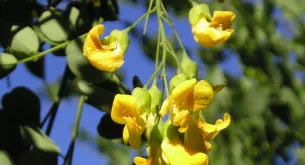
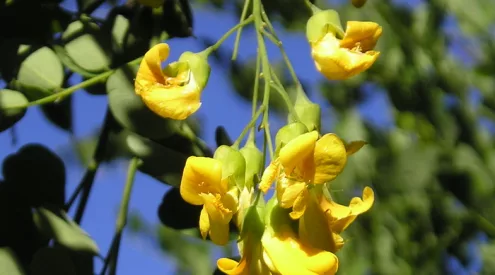
Flowers and pods of the Mokala Camelthorn tree/Harald Süpfle/Wikimedia Commons
The camelthorn, or Vachellia erioloba, is a resilient, drought-tolerant tree native to South Africa’s dry regions. It can grow up to 20 metres tall under optimal conditions and is a defining feature of the Northern Cape’s landscape.
The Mokala National Park, named after the camelthorn in Setswana, is a perfect place to experience these trees. Camelthorns provide shade, fodder, and food for wildlife and historically supported livestock in arid communities. Their presence in the park highlights both ecological survival and human adaptation to the dryland environment.
Where to find them: Mokala National Park, approximately 80 kilometres southwest of Kimberley in the Northern Cape. Visitors can explore the park while learning about the important role camelthorns play in the savanna ecosystem.
Why these trees are important
These five trees are more than natural wonders. They are living witnesses to South Africa’s history, culture, and biodiversity. They connect past and present through stories of human survival, environmental change, and ecological resilience.
The Sagole Baobab embodies ancestral reverence, while the Kei River figs reflect the interdependence between humans and riparian ecosystems. The Tokai Arboretum giants and Outeniqua Yellowwoods reveal the impact of colonial forestry and the ongoing importance of conservation. Finally, the Mokala camelthorns represent survival in the country’s arid landscapes.
Visiting these trees offers not only scenic beauty but also a deeper understanding of South Africa’s rich heritage and the importance of protecting its natural landmarks.
Follow us on social media for more travel news, inspiration, and guides. You can also tag us to be featured.
TikTok | Instagram | Facebook | Twitter
ALSO READ: Lavender, fynbos and wildflower farms to visit in Cape Town