
If you’re not an avid mountain climber, you probably haven’t heard of the little town called Moshi. And that’s okay.
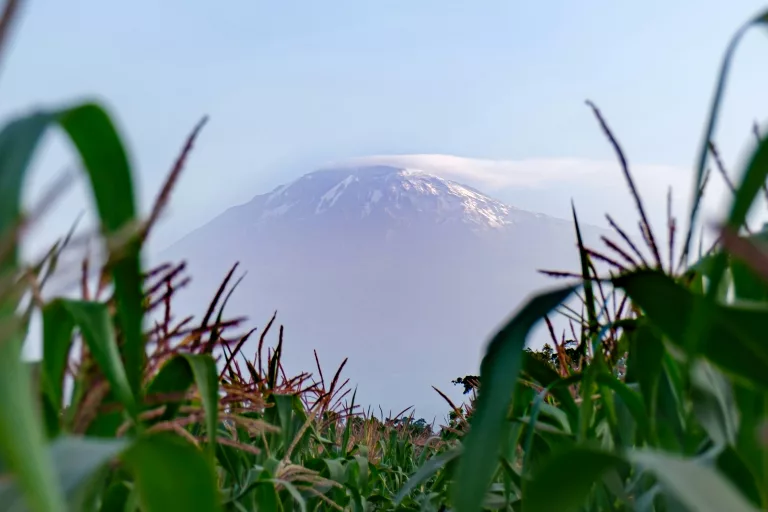
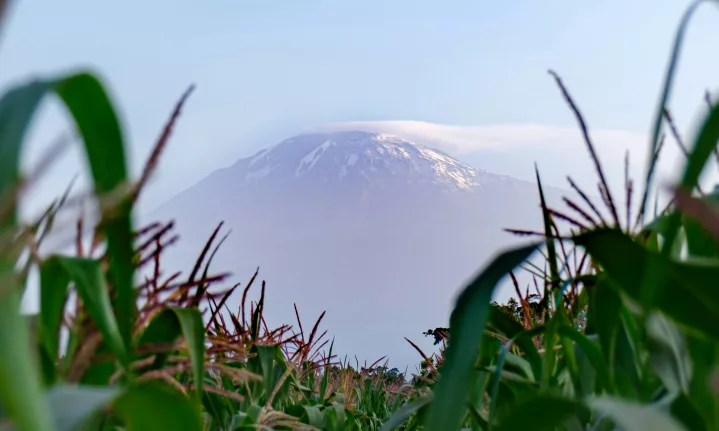
Maize with Mt.Kilimanjaro, Location:Moshi, Tanzania / Nichika Sakurai / Unsplash
Moshi is typically known as the town you visit when you’re planning on climbing the infamous Mount Kilimanjaro. Soaring above the surrounding plains, Kilimanjaro is Africa’s highest mountain at 5 895m, with its summit sometimes visible above the clouds. For many travellers, Moshi is the place where they sleep before an early departure, collect their gear, meet their guide and begin the arduous journey upwards. Kilimanjaro National Park, a UNESCO World Heritage Site, protects the upper reaches of the mountain and its surrounding forests.
But if you give this town a little more of your time, you’ll begin to see the intricate relationship between Moshi and its landscape. The mountain might be what brought you here, but it doesn’t have to be the only thing that makes you stay.
Much like your day, let’s begin with coffee
On the lower slopes of Kilimanjaro, Chagga farmers have developed an intensive home-gardening system known as kihamba. Coffee grows beneath taller trees and alongside bananas, fruit and other crops. This creates a layered agricultural landscape rather than the neat rows of a conventional plantation. The system is also irrigated through traditional networks of channels carrying water down from the mountain.
The Shimbwe Juu Kihamba Agroforestry Heritage Site was recognised by the Food and Agriculture Organization as a Globally Important Agricultural Heritage System in 2011. The system contains more than 500 plant species and combines crops, trees, livestock and traditional irrigation in a way that makes use of the same piece of land at several levels.
Coffee was introduced to the Kilimanjaro region in the 19th century and became an important cash crop for Chagga farmers. Today, it remains a central part of the kihamba system and its history is still tangible around Moshi.
Visitors can walk through coffee and banana farms, see how the crop is harvested and processed, and learn how coffee fits into a farming system that has been shaped over generations. It’s a gentle reminder that the mountain is not an empty wilderness waiting to be conquered. Families have lived, farmed and managed water on its slopes for centuries.
Take a walk through Moshi
The town grew into an important commercial centre during the colonial period, and the arrival of the railway helped establish its connection to wider trading networks. The railway reached Moshi in 1912, linking the town with Tanga and the Usambara Railway system.
Spend a morning walking through the town and you’ll find markets, small shops, cafés and businesses catering to both residents and the steady stream of climbers passing through. The markets are particularly useful for understanding Moshi beyond its tourism economy, with agricultural produce moving in from the surrounding region.
Moshi is a working town, and that is exactly what makes it so intriguing.
Follow the mountain into the villages
The Chagga communities living around Kilimanjaro have shaped the landscape through agriculture and sophisticated water-management systems. The traditional kihamba system relies on canals that draw water from streams originating in the mountain forests, allowing crops to be irrigated even during drier periods.
Materuni Waterfall is one of the area’s iconic attractions. The trail passes through coffee, banana and avocado farms before reaching the waterfall, where water drops about 70m into its basin below. Visitors can also experience elements of Chagga food and coffee traditions in the village.
The waterfall is beautiful, but the walk towards it is arguably the more interesting part. This is the landscape that makes Moshi more than a mountain staging post. Kilimanjaro is woven into the farms, water systems and communities spread across its slopes.
Find a forest almost inside town
Just a few kilometres from Moshi, you’ll find yourself at Rau Forest Reserve, where the groundwater forest feels surprisingly removed from the town around it.
The reserve is about 3km from Moshi and contains natural groundwater, swamp and woodland forest. It supports a variety of wildlife, including black-and-white colobus monkeys, blue monkeys and Kirk’s dik-dik, as well as diverse birdlife and other smaller species.
Rau is particularly interesting because of its closeness to an expanding urban area. It’s not the kind of forest experience that requires a full safari vehicle and an entire day. Walking, birdwatching and cycling are among the activities available in and around the reserve, making it an easy addition to a slower Moshi itinerary.
After the noise of the market and the bustle of the streets, the change in pace is oddly satisfying.
Unwind in the hot springs
Kikuletwa, also known as Chemka or Rundugai, is a collection of springs roughly 35km from Moshi. Emerging from the dry landscape as a clear pool surrounded by vegetation, the springs are an unexpected contrast to the dusty plains around them.
Despite the name, the water is not boiling hot. Tanzania’s tourism information describes it as a pleasant temperature for swimming, with some sections reaching more than 6m deep.
After a morning spent walking through coffee farms or exploring Moshi, the idea of doing very little for an afternoon becomes appealing. For climbers, it could be viewed as a recovery day. For every other traveller, it’s simply another reason to relax and unwind.
And, yes, you can still climb Kilimanjaro
None of this diminishes Moshi’s relationship with Kilimanjaro, nor is it intended to. If the mountain is the reason you came, the town remains an important base for exploring the region and accessing Kilimanjaro National Park. The mountain itself rises through five distinct ecological zones, from cultivated lower slopes and montane forest to alpine desert and the summit.
But the stories you tell about your trip here could be so much deeper with a little more than just Kilimanjaro. Once you look beyond the summit, the mountain starts to reveal an entirely new story.
Give Moshi more than a night
Moshi tells an intricate story that subtly lives within us all. It is the connection between humanity and nature. It’s in the way the forests feed the water systems, the same waters support the farms, and the farms produce food and livelihoods for the people who live here. Everything is connected, working together as one living landscape.
So, climb if you want to climb. Drink the coffee where it is grown. Walk through the market. Follow a path towards a waterfall. Spend a quiet morning in Rau Forest. Swim in a spring outside town.
And if there’s one thing to take away from Moshi, it’s this: Kilimanjaro may be the headline, but Moshi is the story underneath it.
Follow us on social media for more travel news, inspiration, and guides. You can also tag us to be featured.
Instagram | Facebook | Twitter | Spotify
ALSO READ: