
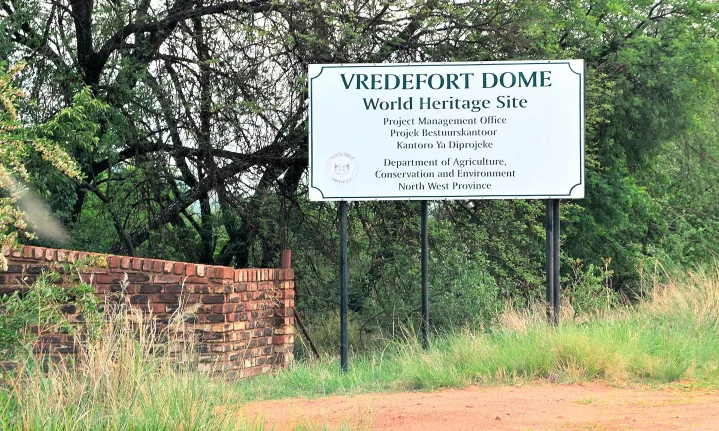
About 2.023 billion years ago, something from outer space struck the Earth’s surface with such force that it created the oldest and largest known impact structure on the planet.
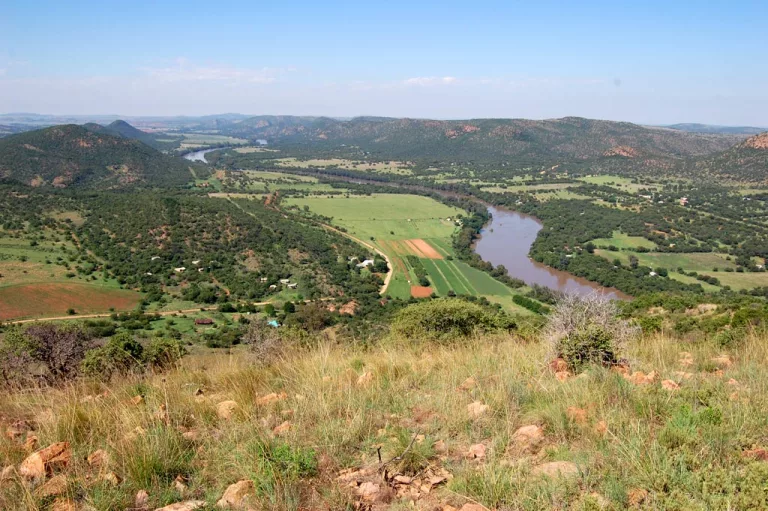
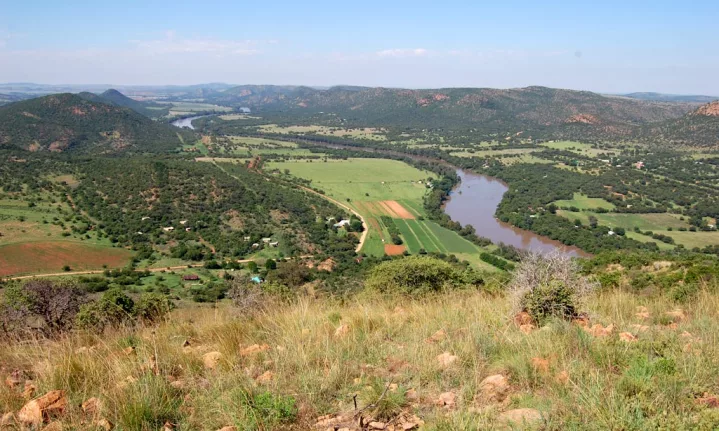
Vredefort dome world heritage site / tadpolefarm / Wikimedia Commons
Today, there’s no enormous crater to stand beside and photograph. Time, erosion and geology have naturally played their part in this story. Instead, you’ll discover a landscape of grasslands, river valleys and farms, with the Vaal River running through it all. This is Vredefort Dome.
The crater is the headline, and it absolutely deserves to be, but Vredefort is not just one experience. It’s an amalgamation of so many other factors that easily paints it as one of the most extraordinary corners of South Africa.
Get properly nerdy about geology
The impact may have happened long before we became part of the story, but the landscape you see today has been extensively eroded. That erosion has given scientists insight into what happened beneath a major impact structure by exposing rocks deep within the Earth’s crust.
UNESCO notes that rocks representing more than 3.2 billion years of geological history are exposed here. Then there are the shatter cones, created by the shock waves of the enormous impact, which resulted in the cone-shaped structures in the rock. Along with fractured rocks, folds and other geological features, these are all part of the evidence that makes the Dome so scientifically important.
A guided geological tour is worth building into a weekend here. The Dome Conservancy offers geological and cultural heritage tours, while specialist operators in the area offer guided drives and walks through the impact structure.
Walk through two billion years
The Vredefort Dome has various hiking options and trails taking visitors through geological formations, rocky landscapes and riverine environments.
The Dome Conservancy lists the moderate Dome Trail, a River Walk along the Vaal and the Rooihaas Trail near Venterskroon among its routes. For those who want more than a casual walk, local guides can arrange half-day, full-day and even overnight hikes.
Here, you’re not just hiking in a crater. You are walking through a landscape that has been shaped by an impact so old that it predates dinosaurs, mammals and, by an almost incomprehensible margin, us.
See the Dome from the Vaal
The Vaal River runs through the Dome and offers you a new way to experience Vredefort. Depending on conditions and the experience you choose, there are options for canoeing, floating and rafting. The Dome Drift includes sections of gentle rapids and longer flowing pools, while other stretches of the river are calmer.
On solid ground, you’re looking down at rocks and up towards ridges. On the river, the landscape softly unfolds around you. The hills form part of a wider view, and suddenly the scientific enormity of the place collides with something much simpler: water moving through a South African landscape.
For the adventurous, rafting brings a little more adrenaline. For everyone else, a quieter paddle or float lets the river do what rivers do best.
Follow the human stories
People have been living in this region for thousands of years, and the Dome contains evidence of human history. The Dome Conservancy identifies Stone Age tools, San rock art and the remains of 19th-century gold-mining settlements among the region’s cultural heritage.
National Museum Publications records engraved rocks in the Dome attributed to different periods of the San rock-art tradition.
Venterskroon is a small historic settlement that grew around gold discoveries in the late 19th century, after gold-bearing conglomerate was identified in the area in 1887. The resulting Vaal River Diggings brought prospectors, businesses and settlements into the landscape.
The Dome is not just ancient, it’s deeply layered. First the collision, then the geology, then came people, movement, mining and eventually an extraordinary landscape became a place people called home.
Wander around Parys
If the Dome appeals to the nerd in you, Parys is likely to bring out the collector.
Perched on the Vaal River, it’s developed a strong arts, antiques and lifestyle identity. Its streets are lined with galleries, antique shops, cafés, restaurants and small businesses, making it the sort of place where a quick coffee can easily turn into an afternoon of wandering.
Parys works surprisingly well as part of a Vredefort weekend because it gives the experience a human scale. After spending so much time thinking about geological events, there is simple gratification in spending an afternoon worrying about whether you actually have room in the car for that old chair you’ve just fallen in love with.
Look beyond the rocks
The area supports a combination of grassland, riverine woodland and rocky habitats, creating space for an abundance of plant and animal life. More than 450 bird species have been recorded in the region, which the Dome Conservancy describes as an important birding destination.
You don’t need to be an obsessive birder to appreciate this. However, you should definitely bring your binoculars just in case you’d like to look a bit deeper at the plants growing from seemingly impossible places between rocks. There is a temptation, when visiting somewhere with a geological superlative attached to it, to spend the entire time looking backwards. But the living landscape is just as interesting.
The meteorite may have arrived two billion years ago, but the birds did not, neither did the river or the grass under your feet.
Stay until the stars come out
Naturally, the best way to end your weekend at Vredefort Dome is to spend an evening stargazing. Eventually the geology lesson, the exploring, the adventure and the history of it all falls away and you’re left standing beneath a glorious, very large sky.
And suddenly, the scale of the knowledge gained hits you once again. You’re reminded of how something so far beyond Earth created such monumental change and birthed the world you’re now standing in today. Long before there were people here to name the hills or build roads between them, something came screaming out of space and struck the planet with an energy release UNESCO describes as the greatest known single energy-release event in Earth’s history.
Today, you can sit more or less quietly beneath the stars and look up.
Come for the Dome but stay for the wonder
The easiest way to approach the Vredefort Dome is to think of it as a crater. It’s technically useful, certainly and gives the story a beginning. But the real fun is in following the threads outward: from the hills to the river, from mining history to San rock art, from bird calls to old shops in Parys, from the landscape beneath your feet to the stars above it.
You can arrive here with a desire to understand how a meteorite changed the Earth and leave thinking about everything that happened afterwards. You could arrive as a geology nerd and find that you are also a river person. You could come seeking adventure and find yourself lingering over a rock, a painting, a bird or a sunset instead.
This is the wonder of Vredefort. A place for nerds, nature lovers, poets and explorers. So yes, come for the Dome, but definitely make some room for everything else. The crater is extraordinary, but it’s only just the beginning.
Follow us on social media for more travel news, inspiration, and guides. You can also tag us to be featured.
Instagram | Facebook | Twitter | Spotify
ALSO READ:
Hike, Drive, Explore: An outdoor adventure in Western Norway