
When the rains fall and the winter chill lifts, Africa’s landscapes erupt in a dazzling display of colour. From carpets of daisies stretching across South Africa’s West Coast to delicate orchids blooming on Malawi’s high-altitude plateaus, the continent’s wildflower season is a feast for photographers.
Whether you’re a professional with a bag full of lenses or simply armed with a smartphone, capturing this fleeting spectacle is all about knowing where to go, when to visit, and how to frame the moment. Here’s your guide to photographing Africa’s wildflower season.
Where to find Africa’s best wildflowers
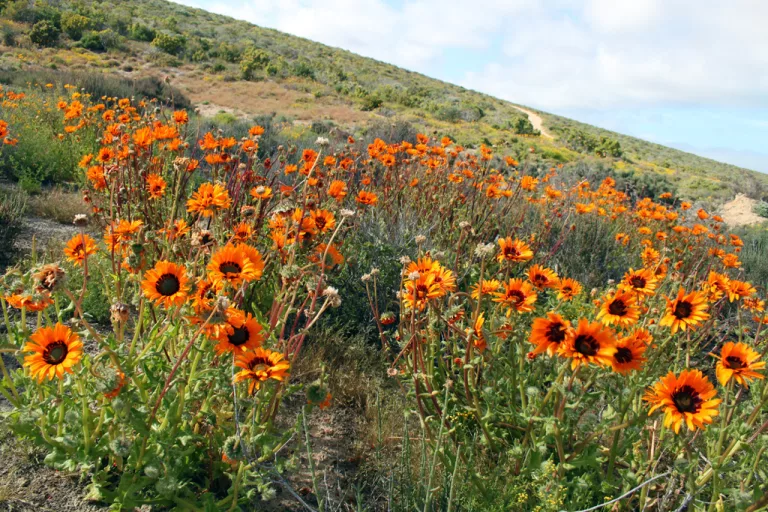
Namaqualand/South African Tourism from South Africa/Wikimedia Commons
Namaqualand, South Africa
Each year between August and September, Namaqualand transforms from a semi-desert into a kaleidoscope of daisies, lilies, and vygies. Towns like Springbok, Kamieskroon, and Nieuwoudtville offer excellent bases, while the Skilpad section of Namaqua National Park is famed for its sweeping panoramas of blooms.
West Coast National Park, South Africa
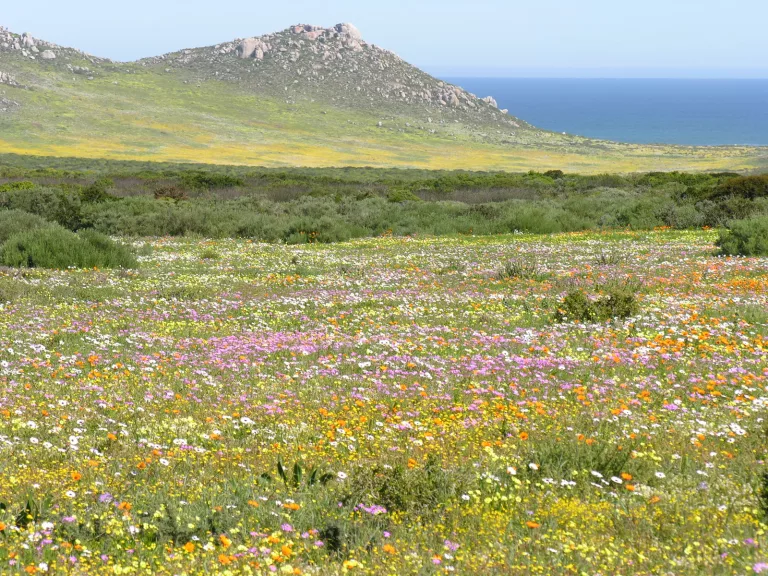
Postberg section @ West Coast National Park/Lucinda Jolly/Wikimedia Commons
Only an hour from Cape Town, the Postberg section of the park opens exclusively during flower season. Here, carpets of orange, yellow, and white blooms unfurl against the backdrop of Langebaan Lagoon, often with zebra and eland grazing among the daisies — an irresistible combination for wildlife and landscape photography.
Cederberg Mountains, South Africa
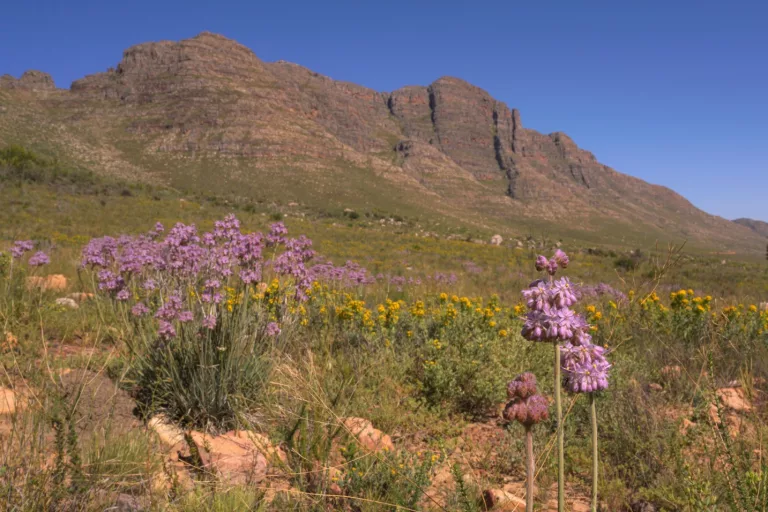
Beyond the rugged sandstone peaks and rock art sites, August and September also bring bursts of colour to the Cederberg. The contrast of craggy cliffs with vivid blooms makes this region ideal for dramatic wide-angle compositions.
Namaqua Desert, Namibia
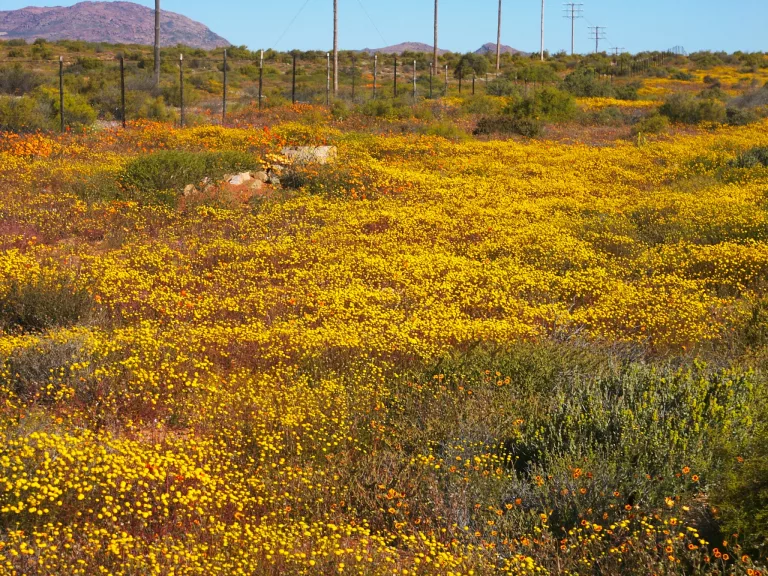
Image of Namaqua used for illustrative purposes/Winfried Bruenken (Amrum)/Wikimedia Commons
A wilder and more remote alternative to South Africa’s Namaqualand, this region draws fewer visitors but dazzles with equal intensity. The rolling hills and stark desert landscapes mean your flower shots often come with a powerful sense of scale and solitude.
Nyika Plateau, Malawi

Nyika National Park/Joachim Huber/Wikimedia Commons
Further north, Malawi’s Nyika Plateau offers something completely different: high-altitude grasslands that erupt in orchids, gladioli, and proteas during the summer rains (November to April). With zebras and antelope roaming the flower-dotted hills, this is one of Africa’s most unusual but rewarding floral photography destinations.
Timing your shots
Flowers may follow the seasons, but the perfect photograph depends on light, weather, and patience.
- Golden Hour: Sunrise and sunset bathe the flowers in warm, flattering tones while casting soft shadows across the landscape.
- Overcast Days: Diffused light eliminates harsh contrasts, making overcast skies ideal for close-up macro shots.
- Midday Landscapes: Though often avoided by photographers, a high sun can work when you want vibrant colours against crisp blue skies.
- Seasonal Peaks: Each year’s bloom depends on rainfall patterns. Namaqualand, for example, peaks between late August and early September, but locals and SANParks’ updates will help you time your visit precisely.
Essential gear for bloom photography
You don’t need the latest professional setup to capture Africa’s wildflowers, but certain gear makes the job easier and the results more striking:
- Camera: A DSLR or mirrorless system gives you full control, though many modern smartphones produce excellent results — especially with manual modes.
- Tripod: Stabilises your camera during low light and enables long exposures at dawn and dusk.
- Polarising Filter: Reduces glare and enhances the blue of the sky, making flower colours pop.
- Drone (where permitted): Nothing captures the sheer scale of Namaqualand’s carpets like an aerial shot. Always check regulations before flying.
Composition tips for Insta-worthy blooms
A field of flowers is stunning in person, but translating that beauty into a photograph requires a few composition tricks:
Use Leading Lines: Roads, fences, or rivers can guide the viewer’s eye through your frame.
Add Foreground Interest: Place a rock, insect, or single bloom in the foreground to give depth and context.
Play with Negative Space: Leaving breathing room in your composition — a wide expanse of sky or a single flower in an empty field — can make your images feel more powerful.
Include People: A lone hiker or child walking through the blooms adds scale and a human connection that resonates on social media.
Change Your Perspective: Don’t just shoot from standing height — crouch low for a flower’s-eye view or climb higher to reveal the scope of a field.
Practical notes for flower chasers
- Respect the Blooms: Avoid trampling delicate flowers for the perfect angle. Stay on designated paths wherever possible.
- Dress for Comfort: Neutral colours help you blend into the environment and avoid distracting reflections in your images.
- Pack Smart: Sunscreen, hats, water, and snacks are as essential as your gear in these often-remote areas.
- Plan Ahead: Accommodation in Namaqualand and the West Coast fills up quickly during peak bloom. Booking early is key.
Follow us on social media for more travel news, inspiration, and guides. You can also tag us to be featured.
TikTok | Instagram | Facebook | Twitter
ALSO READ: Namaqualand vs. West Coast: Which spring bloom should you see?