



On Tiritiri Matangi’s Wattle Track, a sugar-water feeder is a good excuse to stand still. A hihi, or stitchbird, might dart in while you wait. The feeder is a clue to how closely people look after the birds here, but so are the trees around it. Much of the bush on this walk was planted by volunteers who crossed Auckland’s Hauraki Gulf with a very different day out in mind.
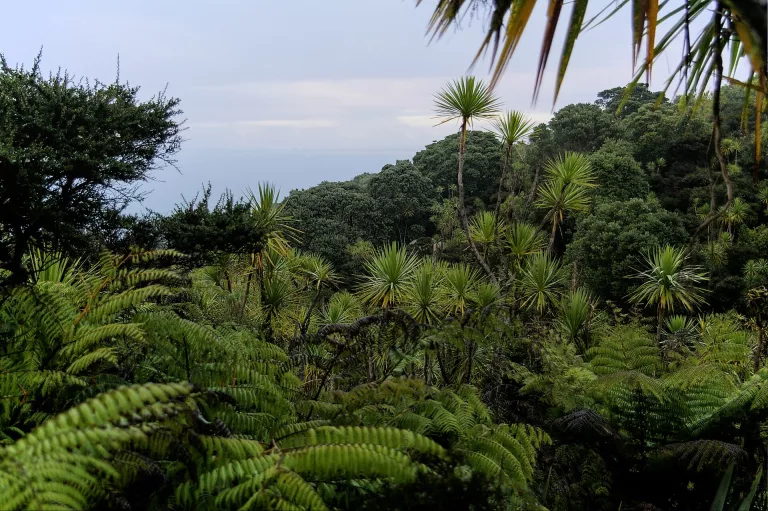
Tiritiri Matangi Island / Beate Schröder-Wettwer / Wikimedia Commons
The lighthouse keeper and the planting crews
Tiritiri Matangi’s history goes back centuries before the first planting crew arrived. Kawerau-ā-Maki built the pā, or fortified settlement, that gave the island its name. Ngāti Paoa later built another pā near its northern end. European farmers began grazing livestock here in the 1850s, with Hobbs Beach at the centre of their operations. By the time farming ended in the 1970s, little of the original forest remained, and it was slow to grow back on its own.
Auckland University scientists John Craig and Neil Mitchell helped set the restoration in motion. Seeds were collected from surviving plants on the island and from nearby sites, then grown in an island nursery. Ray Walter, the last lighthouse keeper, went on to manage the nursery, while his wife Barbara helped organise the planting crews. Schoolchildren, tramping clubs and families came over to dig holes and get seedlings into the ground. There was no regular ferry in those early days. Even so, demand for a place on the planting crews eventually meant keeping a waiting list.
Volunteers planted more than 280,000 native trees between 1984 and 1994. They left some ground open for wildlife that favours grassland. The work continued beyond the planting years. The Supporters of Tiritiri Matangi, formed in 1988, still helps look after the island, which New Zealand’s Department of Conservation administers in partnership with iwi.
A walk through two generations of forest
The Kawerau Track makes it easier to picture what the planting crews started with. It takes in the coast, passes through replanted bush and enters a surviving patch of older forest. If you’d rather spend more of your morning watching birds, take the shorter guided Wattle Track and linger near the water troughs and feeders.
Some of the birds you might see were brought to the island deliberately. Tīeke, or North Island saddlebacks, were moved here in 1984. The island’s last introduced mammalian predator, the kiore or Pacific rat, was eradicated in 1993. Hihi arrived in 1995 and kōkako followed in 1997. Look out for takahē near the lighthouse, too. These stocky, flightless birds can sometimes be seen grazing in the open.
Before you board
Explore Group sails from Auckland’s Viaduct Harbour via Gulf Harbour. Allow about 80 minutes from Auckland or 25 minutes from Gulf Harbour, and book ahead if you’re travelling between November and April. You can add a volunteer-guided walk when you book the ferry or follow the marked tracks on your own. Bring lunch and drinking water, pack food in sealed containers, check your bag for insects or other stowaways and brush soil and seeds off your shoes before you leave the mainland.
Leave yourself time to pause on the way back to the wharf. It’s easy to walk straight past a feeder when you’re thinking about the ferry. Give it a few minutes and a hihi might come in for a drink. Even on a quiet day, there’s something worth stopping for in the shade of trees that schoolchildren and weekend volunteers once planted as seedlings.
Follow us on social media for more travel news, inspiration, and guides. You can also tag us to be featured.
Instagram | Facebook | Twitter | Spotify
ALSO READ: