From historic fishing communities in Southeast Asia to floating reed islands in Peru, these villages show how people have built entire ways of life around water.
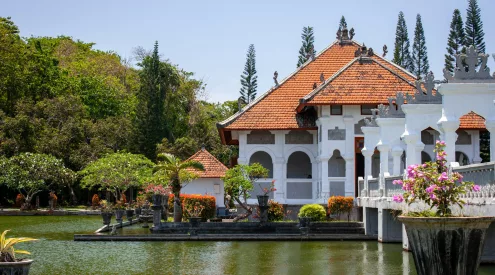
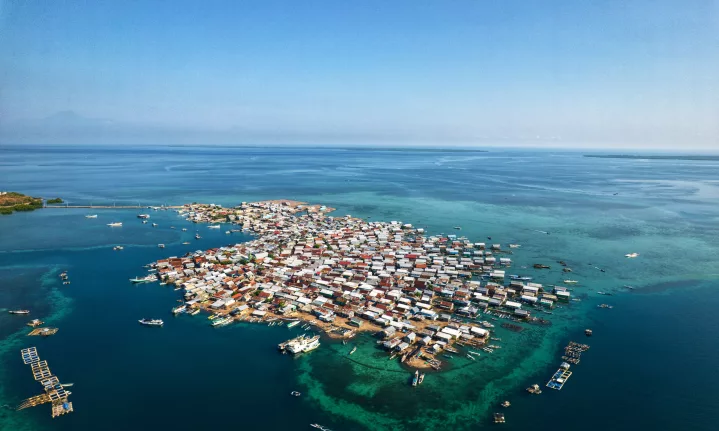
Lombok, Indonesia / Luqman Hakim / Pexels
In these places, boats replace cars, walkways connect homes and markets unfold on the water. Some communities stand on stilts above lakes and rivers, while others have created floating islands from reeds.
Shaped by fishing, trade and seasonal floods, these settlements offer a glimpse into how people have adapted to their surroundings over generations.
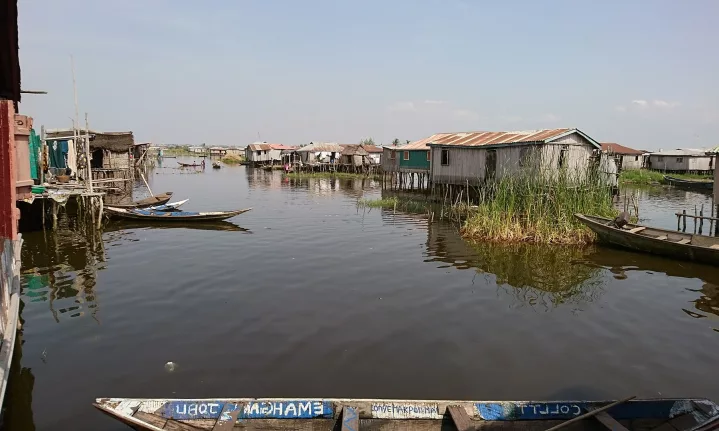
Ganvié, Benin
On Lake Nokoué in southern Benin, Ganvié is a network of stilt houses, schools and markets connected by waterways. Canoes are the main form of transport.
The village was established by the Tofinu people in the 17th and 18th centuries as they sought refuge from warfare and slave raids. The lake offered protection from pursuers unfamiliar with it’s waters. Ganvié’s name is commonly translated as ‘we are saved’.
Fishing remains central to local life, while boat trips offer visitors a glimpse of the village’s daily rhythms.
Plan your visit: Reach Ganvié by boat from Abomey-Calavi, near Cotonou. A local guide can explain it’s history and traditions.
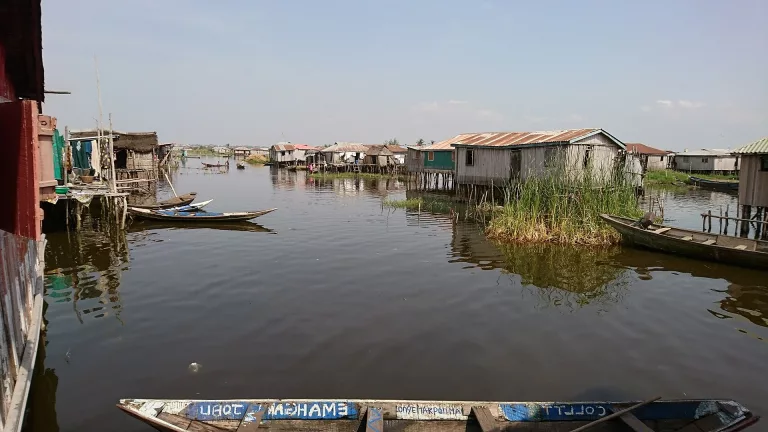
Ganvie, Lake Village, Lake Nokoué, Benin / Asabiyya / Wikimedia Commons
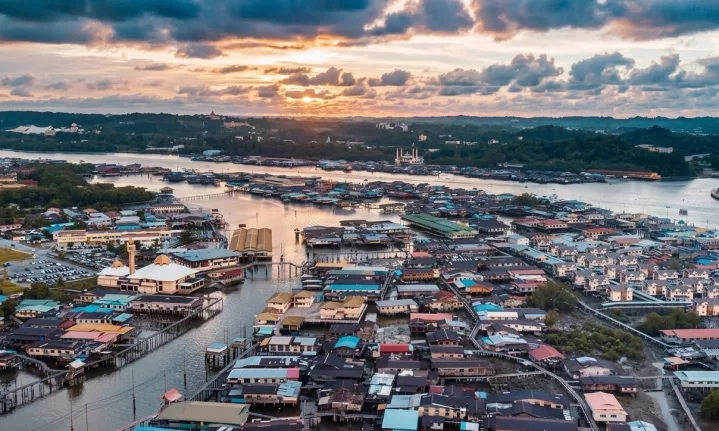
Kampong Ayer, Brunei
Kampong Ayer stretches across the Brunei River, opposite the capital, Bandar Seri Begawan. Wooden houses stand on stilts, walkways link neighbourhoods and water taxis carry residents between the settlement and the city.
This collection of water villages has a history spanning centuries and was once central to Brunei’s trade and social life. Today, homes, schools, mosques and shops make it a living neighbourhood.
The contrast between it’s traditional architecture and the modern capital across the river makes it a fascinating place to explore.
Plan your visit: Take a water taxi from central Bandar Seri Begawan and visit the Kampong Ayer Cultural and Tourism Gallery.
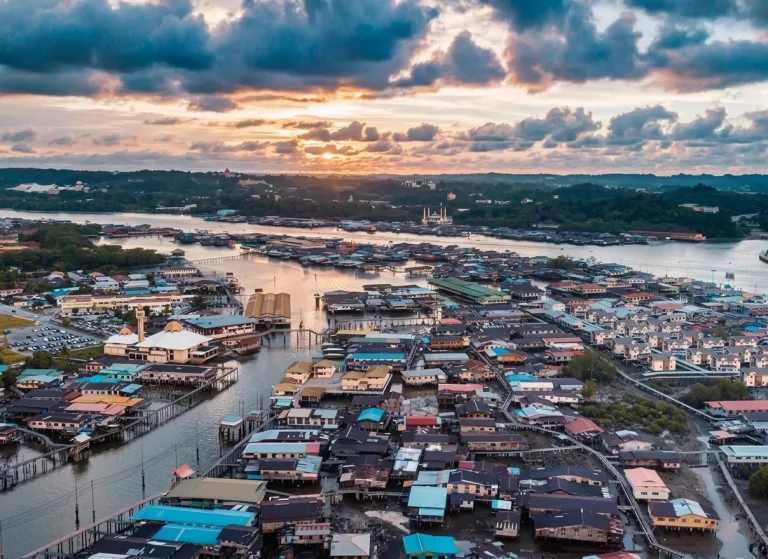
Kampong Ayer is the historic heart of Brunei, where vibrant water-village life thrives gracefully upon the Brunei River / the Tourism Development Department of Brunei / Wikimedia Commons
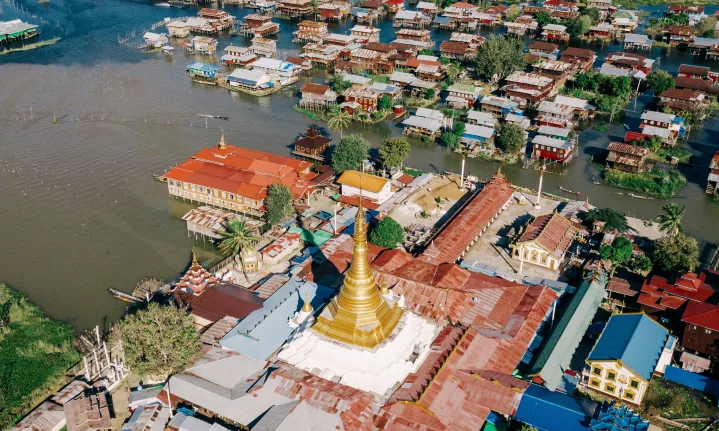
Inle Lake, Myanmar
Surrounded by the hills of Shan State, Inle Lake is known for it’s stilt villages, floating gardens and distinctive fishing traditions.
The Intha people grow vegetables on floating beds anchored with bamboo stakes, while wooden houses rise above the shallow water. Local fishermen are famous for rowing with one leg while standing at the stern, leaving their hands free to handle fishing equipment.
Nearby villages are also known for traditional crafts, including textiles made from lotus fibres.
Plan your visit: Boats connect the lake’s villages and markets. Check current travel advisories before visiting Myanmar.
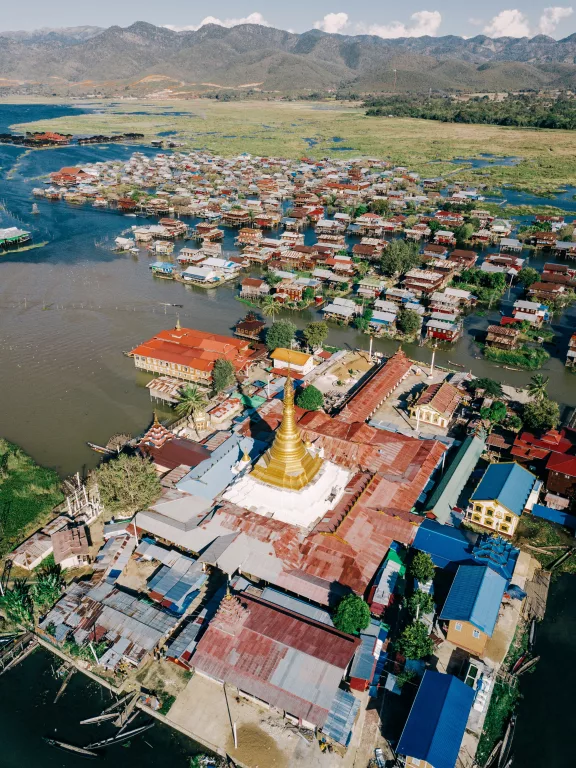
Inle Lake, Myanmar / Rockwell branding agency / Unsplash
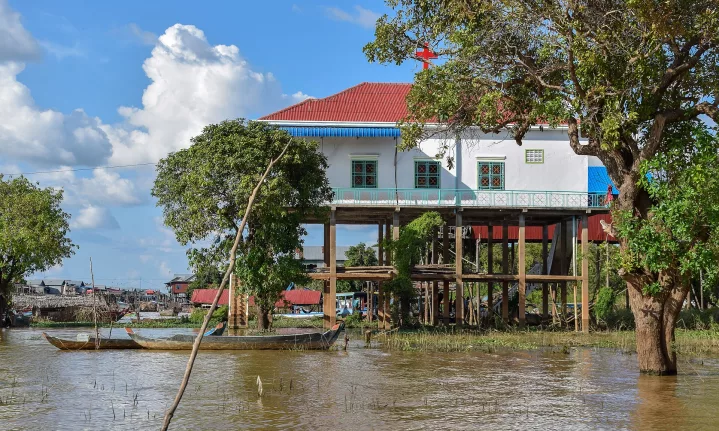
Kampong Phluk, Cambodia
Near Tonle Sap Lake, Kampong Phluk is known for it’s tall wooden houses raised on stilts to accommodate seasonal changes in water levels.
During the dry season, the supports stand exposed. When the rains arrive, rising water transforms the surrounding forest into a network of flooded channels navigable by boat.
Fishing has long supported communities around Tonle Sap, one of Southeast Asia’s major freshwater lake ecosystems. Here, the changing landscape shapes everyday life.
Plan your visit: Kampong Phluk is accessible from Siem Reap. Visit during high water for flooded-forest scenery or in the dry season to see the full height of the houses.
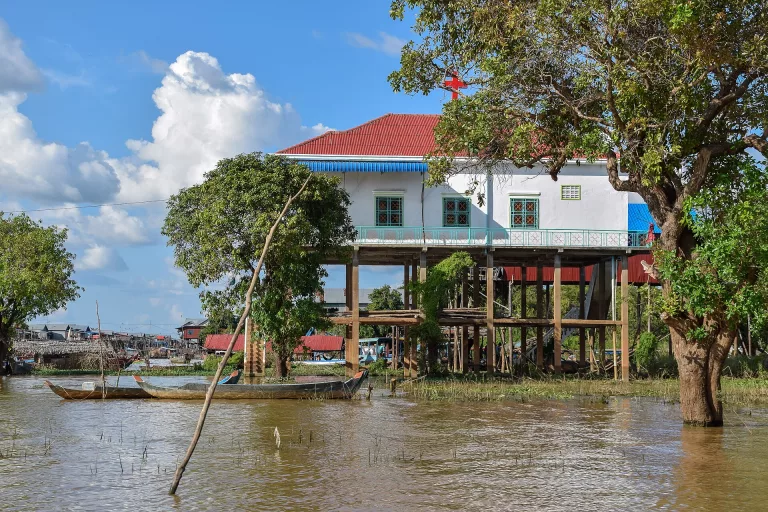
Stilt house in Kampong Phlouk, Cambodia, Siem Reap Province, Cambodia / Krzysztof Golik / Wikimedia Commons
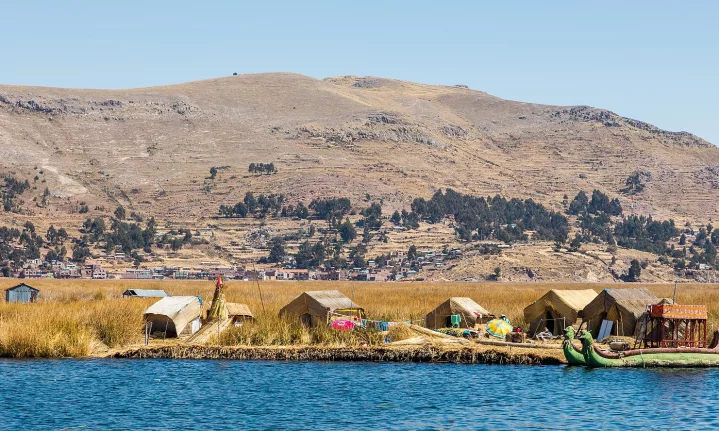
The Uros floating islands, Peru
On Lake Titicaca, the Uros people have built floating islands from totora, a reed growing in the lake’s shallow waters.
Layers of reeds form the islands, which must be replenished as the material decomposes. The same plant is used to build houses, traditional boats and handicrafts.
Fishing and the lake’s natural resources have long supported the community. Today, some families welcome visitors and demonstrate how the islands are constructed.
Plan your visit: Boats depart from Puno. At approximately 3,815 metres above sea level, Lake Titicaca is high enough for altitude sickness to be a concern, so allow time to acclimatise.
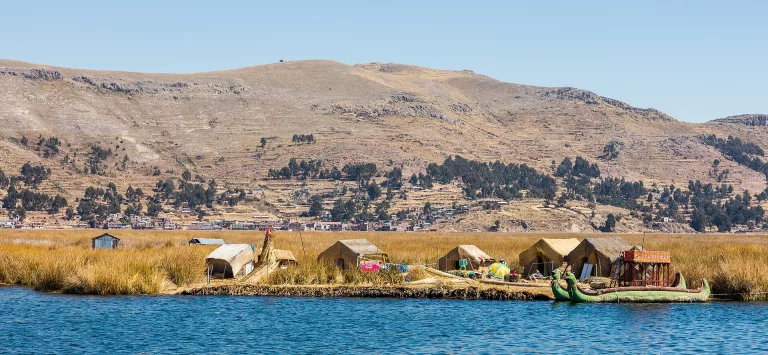
Islas flotantes de los Uros, Lago Titicaca, Perú / Diego Delso / Wikimedia Commons
Tai O, Hong Kong
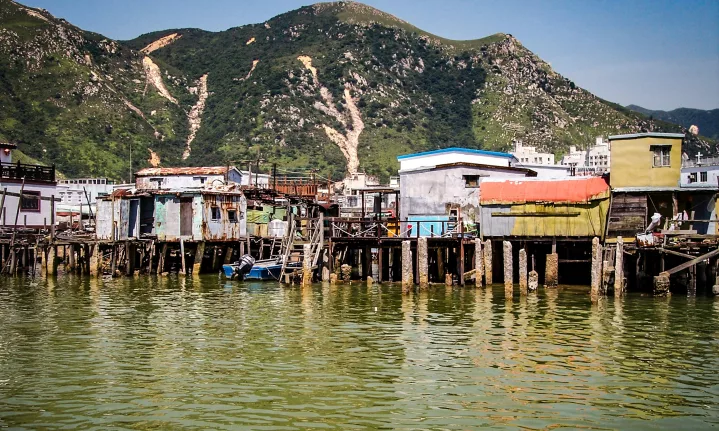
On Lantau Island, away from Hong Kong’s skyscrapers, Tai O is a historic fishing village where stilt houses line tidal creeks and mudflats.
Associated with the Tanka people, the village is known for it’s traditional pang uk houses, raised above the tidal flats and connected by narrow walkways.
Fishing shaped Tai O’s economy, and it’s heritage remains visible in it’s seafood stalls, traditional architecture and boat trips along the waterways. Preserving this way of life has become increasingly important as traditional livelihoods change.
Plan your visit: Tai O is accessible by public transport on Lantau Island. Explore on foot, sample local seafood and take a boat trip.
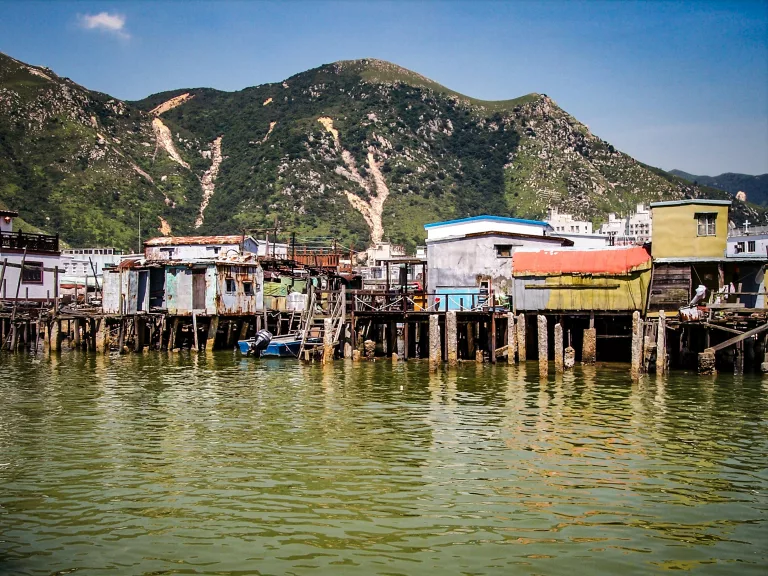
Tai O, Hong Kong, China / Joshua J. Cotten / Unsplash
Cua Van, Vietnam
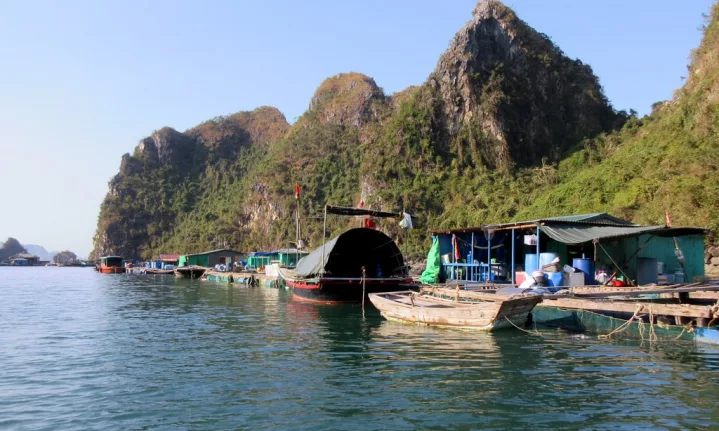
Surrounded by the limestone karsts of Ha Long Bay, Cua Van is known for it’s history as a floating fishing village. Families once lived in raft-based homes anchored in sheltered coves, close to their fishing grounds.
Government resettlement programmes have since moved many families to shore, changing the traditional settlement. Remaining structures and visitor experiences offer a glimpse of a way of life shaped by the sea.
Plan your visit: Cua Van is generally visited on a Ha Long Bay boat cruise. Confirm that your itinerary includes a stop at the village.
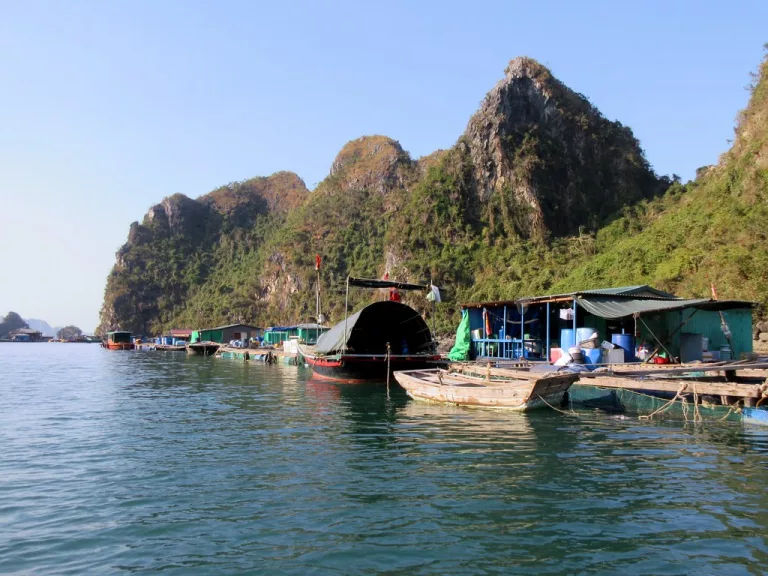
Excursion boats cruising Ha Long Bay, Vietnam, often visit Cua Van floating village on Hang Trai Island. Today tourism and fishing are of equal importance to the inhabitants. / David Stanley / Wikimedia Commons
Life above the water
From Benin to Peru, these communities reveal different ways of adapting to life on the water. Some rely on stilts to accommodate seasonal floods, others developed around fishing and trade, while the Uros created floating land from reeds.
Their appeal lies in more than their unusual architecture. Each village reflects generations of ingenuity and traditions that continue to evolve.
For travellers, the most rewarding visits go beyond the view, offering a closer understanding of the people who have made these remarkable places home.
Follow us on social media for more travel news, inspiration, and guides. You can also tag us to be featured.
Instagram | Facebook | Twitter | Spotify
ALSO READ:
Rocky the pangolin shows hopeful signs after weeks of intensive care