

African destinations are working to attract more cruise ships, but the bigger opportunity may lie in what passengers do after stepping ashore.
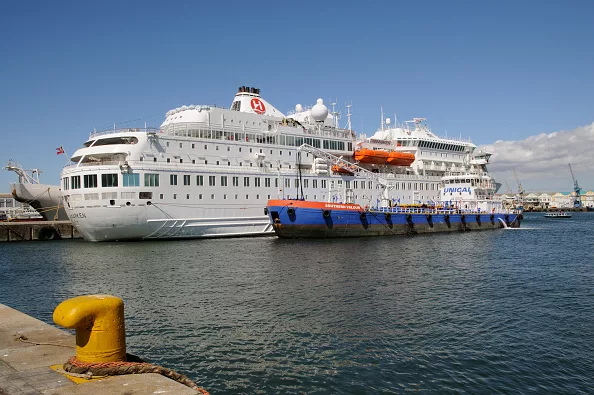
Bunkers vessel Southern Valour supplying fuel to the Finnmarken a Norwegian cruise ship in Cape Town Harbour South Africa (Photo by: myLoupe/Universal Images Group via Getty Images)
From Cape Town and Mossel Bay to Mombasa and Walvis Bay, ports are investing in facilities and excursions to connect cruise visitors with local businesses, cultural attractions, restaurants and wildlife experiences.
The economic potential is significant, with South Africa’s cruise sector recording strong passenger growth over the past three seasons.
Cape Town opened its 2026/27 cruise season on 17 September when the Pacific World arrived with 1,397 passengers, predominantly from Japan, and 655 crew, according to Wesgro, the tourism, trade and investment promotion agency for Cape Town and the Western Cape.
The city welcomed 70 cruise vessels carrying approximately 78,000 passengers in the 2022/23 season. By 2024/25, this had increased to 79 vessels and 127,000 passengers, according to the Seatrade Africa E-report.
Cruise tourism contributed an estimated R4.34 billion to the Western Cape’s gross domestic product and R5.32 billion to South Africa’s economy across three seasons. The sector also generated R3.04 billion in foreign-exchange earnings, according to Wesgro.
More than a stop in port
The benefits of cruise tourism are increasingly extending beyond major terminals.
Mossel Bay, Hermanus and Saldanha Bay collectively recorded 32,000 passengers across 26 ship visits during the 2024/25 season, generating R47.5 million in local expenditure, according to Seatrade.
Infrastructure investment is helping destinations accommodate more visitors. Cape Town’s cruise terminal at E-Berth forms part of a R20 billion precinct redevelopment, while Mossel Bay opened a new cruise reception facility in 2025. Saldanha Bay is also working towards becoming a formal Port of Entry and Exit.
Shore excursions give passengers opportunities to experience destinations beyond the harbour. In Cape Town, these include heritage walks through Bo-Kaap, township food tours in Langa and Khayelitsha, and visits to the Winelands around Stellenbosch and Franschhoek.
In Ghana, excursions to Cape Coast and Elmina combine historical heritage with local markets and cultural activities, including drumming workshops.
These experiences can bring business to local guides, transport operators, restaurants, craft sellers and cultural attractions. However, cruise passengers often have only a few hours ashore, making accessible transport and well-planned excursions essential.
Linking cruise visits with wildlife experiences
Kenya is looking to connect cruise tourism more closely with its safari industry.
In March, the Kenya Wildlife Service introduced a 30% group incentive for cruise passengers visiting national parks including Tsavo East, Tsavo West and Amboseli.
About 20% of cruise passengers currently extend their trips to parks and reserves. The government hopes to increase this figure to 40%, potentially boosting park revenue.
The initiative, developed with Pollmans Tours & Safaris, aims to make excursions easier to organise around cruise schedules. International operators, including Abercrombie & Kent, are also being brought into the market.
According to estimates cited by the Kenya News Agency, a short cruise stop could generate approximately Sh50 million (about R6.45 million) for the economy. A group of 70 tourists visiting the Maasai Mara was estimated to inject Sh23 million into the economy within a few hours.
Kenya is targeting Sh2 billion in revenue from 12,000 cruise tourists.
The challenge is getting passengers from Mombasa to inland attractions and back to their ships before departure. Longer itineraries and carefully coordinated transport can make it easier to include wildlife experiences.
ALSO READ:
Eight Cape Town beaches retain Blue Flag status, with four more in the pipeline
Expedition cruises open new possibilities
Longer and more specialised cruise itineraries are creating additional opportunities for African destinations.
Expedition cruise calls to Cape Town increased from five in the 2023/24 season to 16 in 2024/25, according to Seatrade. These trips can include extended land-based experiences alongside time at sea.
Namibia is also working to strengthen Walvis Bay as a gateway to the country’s desert landscapes, wildlife and coastal attractions.
In late 2025, European Cruise Service established African Cruise Service in Walvis Bay, reflecting growing interest in expedition travel and land-based experiences around African ports.
AmaWaterways added four Africa Safaris & Wildlife itineraries in August 2026, combining its Chobe River cruise with land programmes in destinations including Namibia, Kenya and Victoria Falls.
One itinerary links the Chobe River and Victoria Falls with Namibia’s NamibRand Nature Reserve, Etosha National Park and the Skeleton Coast. Another combines the river cruise with visits to Amboseli and the Maasai Mara.
Beyond wildlife, visitors to the Walvis Bay area can explore Sandwich Harbour, where towering dunes meet the Atlantic Ocean, and experience the Namib Desert’s distinctive landscapes.
In July, the Namibia Tourism Board and Ministry of Home Affairs brought together port authorities, tourism operators and other stakeholders to discuss ways to improve passenger processing and the country’s cruise offering.
New opportunities along Africa’s coast
West Africa is also attracting greater interest from cruise operators.
Cape Verde recorded 110,554 cruise passengers and 250 ship calls in 2024, up from 86,945 passengers and 171 calls in 2023, according to Seatrade.
Global Ports Holding expanded its African operations to Mindelo in 2025, adding the island destination to its international port network.
Benin is also working to develop its cruise tourism offering. A call by Seabourn Sojourn in 2025 marked a significant return for international cruise tourism after years of limited activity.
The country exempts cruise passengers staying for less than 72 hours from visa requirements and plans to develop a dedicated cruise quay by 2027. The changes are intended to make short visits easier while encouraging passengers to explore local attractions.
Further south, Mozambique is seeking to spread the benefits of cruise tourism through Maputo.
The port expects 15 cruise calls and close to 16,000 visitors in 2026. Authorities are working with tourism organisations and FEIMA, a market where visitors can discover local handicrafts, food and culture.
Mozambique received nine cruise ships carrying 4,492 tourists in 2024. Of these, 2,069 passengers disembarked to visit attractions and spend money on local experiences.
Tanzania offers opportunities to combine coastal visits with inland adventures. Dar es Salaam and Zanzibar serve as cruise gateways, while excursions from Dar es Salaam can connect visitors with national parks such as Mikumi and Nyerere.
Seychelles, meanwhile, is targeting smaller, premium and expedition vessels. The island nation recorded 41 cruise calls during the 2025/26 season, up from 35 in the previous season, including eight maiden calls.
A United Nations Economic Commission for Africa cost-benefit analysis estimated that cruise tourism could contribute US$531 million directly to Seychelles’ GDP between 2026 and 2033. When wider economic effects are included, the contribution could reach US$1.247 billion.
The analysis also highlighted environmental and social costs, underscoring the need to ensure tourism benefits reach local communities.
Keeping the benefits local
Attracting cruise ships is only one part of the equation. Destinations must also find ways to ensure that passenger spending reaches local businesses rather than leaking out of the local economy through international suppliers and operators.
Excursions, locally owned restaurants, cultural experiences, craft markets and partnerships with local guides can help destinations retain more of the money visitors spend.
Changes to international cruise itineraries are creating additional opportunities, too.
MSC Cruises revised the 2026 world cruise aboard MSC Magnifica to avoid the Red Sea, adding calls in Seychelles, Mauritius, Réunion, Durban, Cape Town, Walvis Bay and Cape Verde.
The revised itinerary brings additional African destinations into a long-distance cruise route as operators adjust their plans around security risks in the Red Sea.
For destinations across the continent, these calls offer an opportunity to introduce travellers to local landscapes, wildlife and culture. The longer-term challenge is turning a few hours in port into meaningful experiences that benefit the places passengers visit.
SOURCE: IOL, with figures and information attributed to Wesgro, Seatrade and other organisations cited in the report.
Follow us on social media for more travel news, inspiration, and guides. You can also tag us to be featured.
Instagram | Facebook | Twitter | Spotify
ALSO READ: