



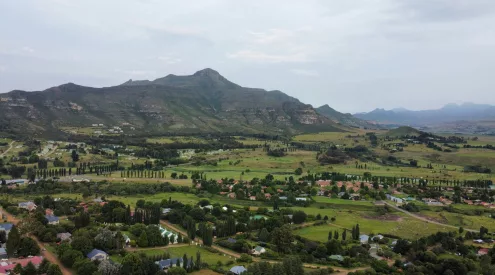
There is a familiar rhythm to travel in South Africa. Land in Cape Town, tick off Table Mountain, maybe add a Winelands day trip, and head home. Or touch down in Joburg, visit family, and leave without seeing much beyond Gauteng.

Source: Travel And Tour World
It works. But it barely scratches the surface.
According to Bizcommunity, new insights from South African Tourism are quietly challenging that pattern, and the numbers tell a story that feels both surprising and a little overdue. Right now, a staggering 91 percent of international visitors explore just one province. Only 9 percent venture beyond that.
In a country as layered and diverse as South Africa, that is not just a missed opportunity. It is a completely different version of the country.
A country seen in fragments
The imbalance is striking when you look closer. Travellers from Brazil, Canada, and Australia are far more likely to move between provinces, with many building broader itineraries. But visitors from across Africa, especially land markets, overwhelmingly stay in a single province.
The reasons are not hard to guess. Visiting friends and relatives accounts for nearly 60 percent of single-province trips. These journeys are often rooted in one place, one community, one purpose.
But when people travel for leisure, the pattern shifts. Holiday travellers are far more likely to move around, and that is where things start to get interesting.
The travellers who stay longer and spend more
There is a clear divide between those who explore widely and those who do not. Travellers who visit multiple provinces stay longer, around 20 days on average, compared to about two weeks for single-province visitors.
They also spend significantly more. Roughly R26,000 per trip versus about R8,800. That is not a small gap. It is the difference between a quick visit and a fully immersive journey.
And it shows in what they do.
Multi-province travellers are far more likely to seek out nature, wildlife, and curated experiences. Think safaris in Limpopo, coastal drives in the Eastern Cape, or cultural stops in KwaZulu-Natal. They are also more likely to book packages that tie these experiences together.
By contrast, single-province visitors tend to focus on social visits, urban experiences, and familiar routines.
A richer way to travel South Africa
Ask anyone who has travelled across provinces, and you will hear a similar story. It is not just about distance. It is about contrast.
One day you are in the bush, watching elephants at sunrise. A few days later, you are on the coast, eating fresh seafood with your feet in the sand. Then you find yourself in a small Karoo town, where time moves differently and the night sky feels endless.
That layered experience is what keeps people talking about South Africa long after they leave. It is also what drives repeat visits.
There is also a quieter benefit. When travellers spread out, it takes pressure off hotspots that are already stretched while bringing income to places that are often overlooked.
Why most travellers still don’t do it
So if the benefits are so clear, why are most people still sticking to one province?
Part of it is perception. For many first-time visitors, South Africa can feel vast and unfamiliar. Planning a multi-stop trip across provinces sounds complicated, even if it is not.
There is also a visibility issue. Some regions simply do not get the same marketing spotlight as others. If travellers do not see it, they do not plan for it.
And then there is trust. People want reassurance that travelling between provinces is safe, simple, and worth the effort. Without that, they default to what feels easy.
The shift that could change everything
This is where the industry has a real opportunity. Not just to market destinations, but to connect them.
Clear itineraries, better storytelling, and stronger representation of lesser-known regions can make a big difference. When travellers see how easily a safari, a city break, and a coastal escape can fit into one trip, the idea becomes far more appealing.
Social media is already nudging this shift. Travellers are increasingly drawn to “hidden gems” and routes that feel more personal than the usual highlights. Influencers, travel creators, and word of mouth are starting to reshape what a South African itinerary looks like.
And importantly, the infrastructure is there. Flights, road networks, and tour operators already make it possible to move between provinces with relative ease. The challenge is less about access and more about awareness.
A bigger picture for South Africa’s tourism future
At its core, this is not just a travel trend. It is an economic one.
When visitors move across provinces, more communities benefit. Small towns, local guides, independent lodges, and family-run businesses all become part of the tourism story.
It also creates a more sustainable model. Instead of concentrating visitors in a few major hubs, it spreads the impact more evenly across the country.
South Africa has never lacked variety. From wildlife and wine to culture and coastline, the country offers one of the most diverse travel experiences anywhere in the world.
The real question is whether travellers are seeing enough of it.
Right now, most are not. But that could change quickly. And when it does, it will not just reshape itineraries. It will reshape how the world experiences South Africa itself.
Source: Bizcommunity
Follow us on social media for more travel news, inspiration, and guides. You can also tag us to be featured.
TikTok | Instagram | Facebook
ALSO READ:
UK visa fees are going up in April and South Africans will pay more