




This week’s stories offer a reminder that while many species continue to face serious challenges, dedicated conservation efforts across Africa and beyond are helping wildlife recover.
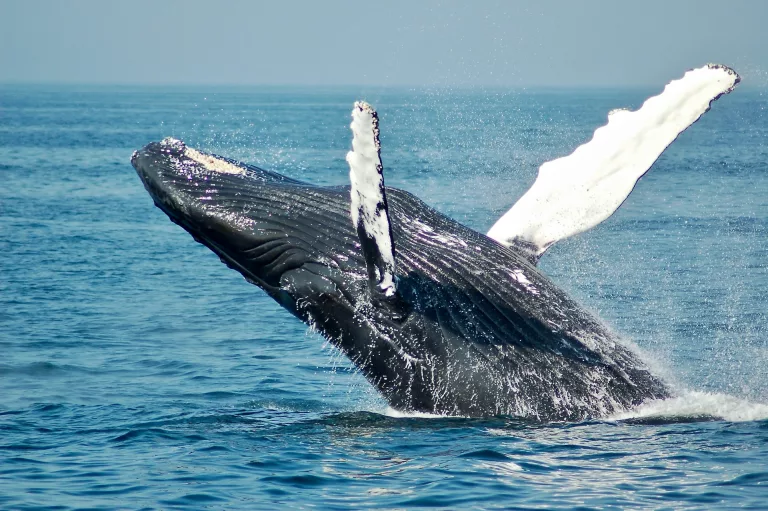
Image used for illustrative purposes/Todd Cravens/Unsplash
Whether protecting whales, restoring island ecosystems or empowering the next generation of conservation storytellers, every success represents another step towards a healthier planet.
Blue and fin whales show encouraging signs of recovery
New research based on sightings and underwater acoustic monitoring suggests that blue whales and fin whales are becoming more common in waters off Southern Africa. Both species were driven to the brink by decades of commercial whaling during the twentieth century, with populations declining dramatically before international protections were introduced.
Scientists caution that recovery remains gradual and that both species still face threats from ship strikes, fishing gear entanglement and climate change. Even so, every confirmed sighting offers another sign that conservation measures are helping these ocean giants reclaim parts of their historic range. Their return is also an encouraging indicator of healthier marine ecosystems, since whales play an important role in nutrient cycling and ocean biodiversity.
African storytellers are shaping the future of wildlife filmmaking
Some of Africa’s most important conservation work is happening behind the camera. The Nature Environment and Wildlife Filmmakers (NEWF) programme continues to train young African wildlife filmmakers, photographers and conservation storytellers, creating opportunities for local voices to tell the continent’s natural history stories.
Since its launch, the initiative has trained hundreds of fellows from across Africa, helping participants develop skills in cinematography, storytelling and environmental communication. By supporting African filmmakers, conservation organisations hope to create more authentic narratives about wildlife while inspiring future generations to protect the landscapes and species they know best.
Sodwana Bay helps train the next generation of marine conservationists
South Africa’s coastline is also helping develop future conservation leaders. NEWF’s marine training centre in Sodwana Bay has expanded opportunities for aspiring underwater filmmakers and divers, with more than 200 participants receiving specialised marine training.
Students learn scientific diving techniques, underwater photography and marine ecology while documenting the rich biodiversity of one of South Africa’s most spectacular reef systems. Beyond producing beautiful imagery, the programme helps bridge the gap between science and public awareness by equipping participants to share conservation stories with audiences around the world.
Rare West African leopards offer renewed hope
Encouraging news has also emerged from West Africa, where researchers have reported positive signs for one of the continent’s most threatened big cats. Monitoring in Pendjari National Park in Benin suggests that West African leopard populations are responding well to improved habitat protection, stronger anti-poaching efforts and healthier prey numbers.
West African leopards are considered one of the rarest leopard populations on the continent, making every conservation success especially significant. The findings highlight how long-term investment in protected areas can produce measurable results for even the most elusive predators.
Billions pledged to protect the world’s oceans
Healthy oceans support everything from whales and seabirds to fisheries and coastal communities. This week, governments, businesses and conservation organisations announced commitments worth approximately US$6.4 billion for marine conservation and climate resilience. The funding is expected to support the expansion of marine protected areas, sustainable fisheries, habitat restoration and projects aimed at protecting marine biodiversity around the world. Large financial commitments alone do not guarantee conservation success, but they provide valuable resources for countries and organisations working to safeguard increasingly threatened marine ecosystems.
Marion Island’s seabirds could soon get a lifeline
One of South Africa’s most ambitious conservation projects continues to gather momentum. Preparations are moving forward for the planned eradication of invasive mice from Marion Island, a remote subantarctic island that provides breeding habitat for thousands of seabirds.
Although tiny, the introduced mice have had a devastating impact on nesting birds by attacking chicks and even adult seabirds, including several albatross species. Removing the invasive rodents would dramatically improve breeding success for many of the island’s iconic seabirds and could become one of the largest island restoration projects ever undertaken.
Follow us on social media for more travel news, inspiration, and guides. You can also tag us to be featured.
Instagram | Facebook | Twitter | Spotify
ALSO READ:
New monkey species with bright orange lips discovered in DR Congo forest