


South Africa is home to landscapes that seem almost too extraordinary to be real. From a spring that gushes from the heart of the Kalahari to giant rock potholes sculpted by rivers over millions of years, these natural phenomena reveal just how powerful Earth’s forces can be.
Whether shaped by water, volcanic activity or remarkable ecological adaptations, these destinations combine breathtaking scenery with fascinating science. Here’s where to experience some of South Africa’s strangest natural wonders and discover what makes them so unique.
1. The Eye of Kuruman, Northern Cape
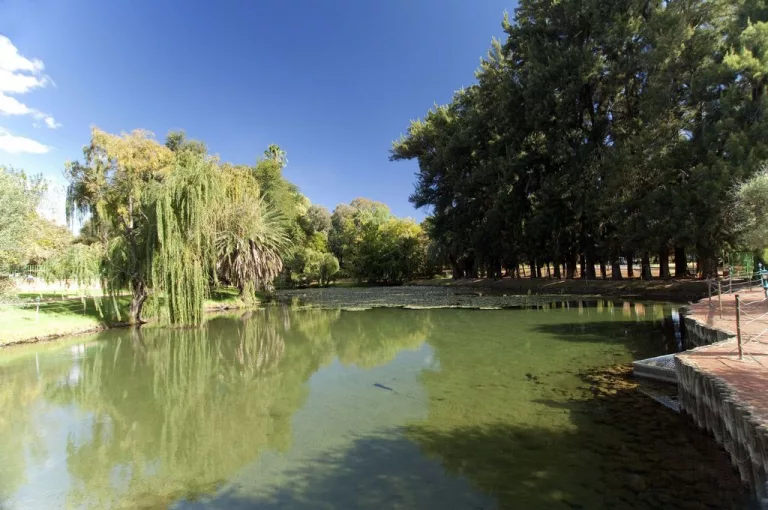
The Eye of Kuruman/South African Tourism from South Africa/Wikimedia Commons
A spring in the desert
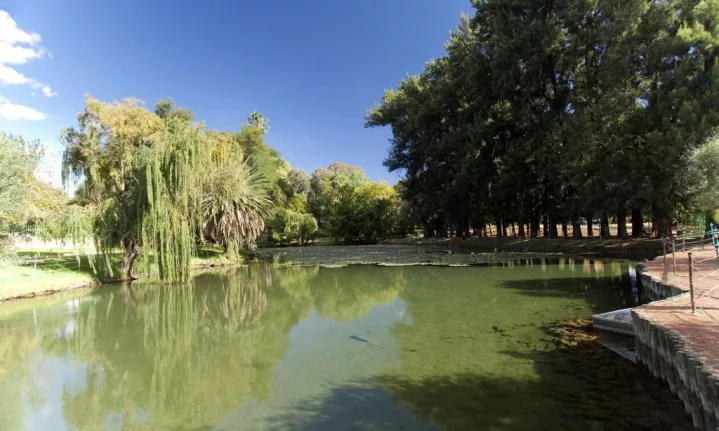
In the arid Northern Cape, the Eye of Kuruman appears almost miraculous. Crystal-clear water bubbles continuously from beneath the ground, creating a lush oasis surrounded by otherwise dry landscapes.
The science behind it
The spring is fed by an underground dolomite aquifer that stores rainwater collected over vast areas. Natural pressure forces the water to the surface, producing an estimated 20 to 30 million litres every day. This steady flow has sustained local communities for centuries and supports a rich ecosystem of fish, birds and aquatic plants.
2. Bourke’s Luck Potholes, Mpumalanga
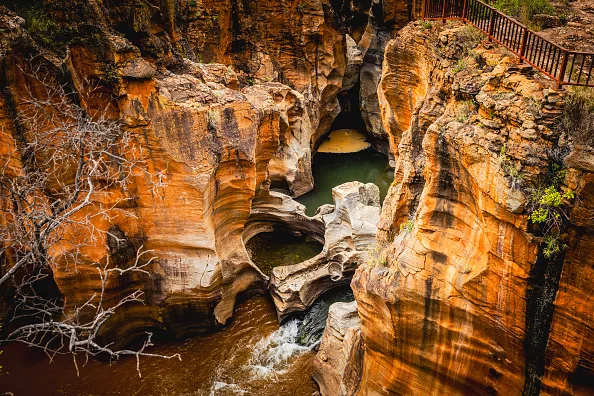
Bourke’s Luck Potholes at the Blyde River Canyon (Photo by Patrick van Katwijk/Getty Images)
Nature’s giant rock sculptures
At the meeting point of the Blyde and Treur rivers, smooth cylindrical holes twist through the sandstone like enormous drill holes. Their unusual shapes have made Bourke’s Luck Potholes one of the Panorama Route’s most photographed attractions.
The science behind it
These formations developed over millions of years as swirling river currents trapped pebbles and gravel. Acting like natural grinders, the stones slowly bored into the bedrock, carving out the deep, rounded potholes visitors see today. Ongoing erosion continues to reshape the landscape.
3. Tugela Falls and the Amphitheatre, KwaZulu-Natal

Tugela Falls/Juniper339/Wikimedia Commons
A waterfall from the clouds
Towering over the Drakensberg, the Amphitheatre forms an almost perfectly straight cliff stretching several kilometres. After heavy rain, the Tugela River plunges dramatically over its edge, creating one of the world’s tallest waterfalls.
The science behind it
The cliff was formed by ancient volcanic lava flows laid down nearly 180 million years ago. Over time, erosion stripped away softer rock, leaving behind the dramatic basalt escarpment. Gravity does the rest, sending the Tugela River cascading hundreds of metres into the valley below.
4. Boesmansgat (Bushman’s Hole), Northern Cape
View this post on Instagram
A mysterious blue abyss
From the surface, Boesmansgat looks like a tranquil pool of crystal-clear water. Beneath that calm exterior lies one of the deepest freshwater sinkholes on Earth, attracting experienced cave divers from around the world.
The science behind it
The sinkhole formed when underground limestone gradually dissolved as groundwater passed through it. Eventually, the roof collapsed, creating the near-perfect circular opening seen today. Its exceptional depth and clear water make it both scientifically important and visually striking.
5. The Great Brak River’s seasonal colour changes, Western Cape
A river that changes its appearance
Visitors to the Great Brak River estuary may notice that the water doesn’t always look the same. Depending on the season, it can shift from clear blue to green, brown or even reddish hues.
The science behind it
Rainfall, sediment carried downstream, tidal influences and algae all affect the river’s colour. Seasonal flooding introduces fine particles that reflect light differently, while changes in salinity and microscopic plant life also alter the water’s appearance throughout the year.
6. Augrabies Falls, Northern Cape
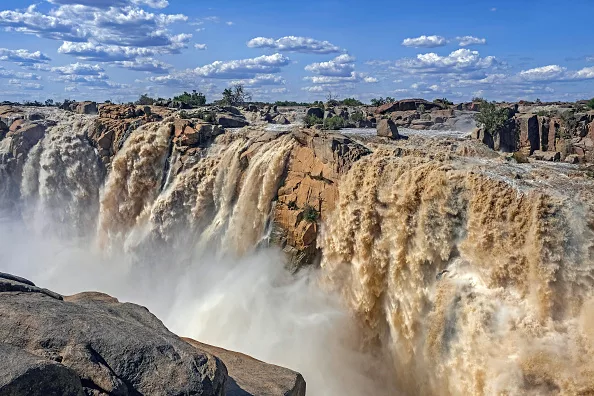
The Augrabies Falls National Park in the Northern Cape Province, South Africa. (Photo by: Arterra/Marica van der Meer/Universal Images Group via Getty Images)
Where the Orange River roars
Known locally as Aukoerebis, meaning “Place of Great Noise”, Augrabies Falls is one of South Africa’s most dramatic waterfalls. During periods of high flow, the thunder of the water can be heard long before the falls come into view.
The science behind it
Over millions of years, the Orange River cut through ancient granite, creating a spectacular gorge. During flood events, enormous volumes of water are forced through a relatively narrow channel before plunging nearly 60 metres, producing powerful spray, mist and the falls’ unmistakable roar.
7. The Richtersveld’s resurrection plants, Northern Cape

Halfmens in ǀAi-ǀAis/Richtersveld Transfrontier Park/Winfried Bruenken (Amrum)/Wikimedia Commons
Plants that appear to come back from the dead
The harsh landscapes of the Richtersveld are home to remarkable plants that shrivel into what looks like lifeless bundles during long dry spells, only to revive after rain.
The science behind it
These so-called resurrection plants survive extreme dehydration by entering a dormant state. Their cells protect vital structures until moisture returns, allowing the plants to unfurl, turn green and resume photosynthesis within a surprisingly short time. It’s one of nature’s most extraordinary survival strategies.
Discover the science hidden in South Africa’s landscapes
South Africa’s natural wonders are more than beautiful places to visit—they’re living classrooms that reveal the immense forces shaping our planet. From rivers carving rock over millions of years to springs flowing beneath desert landscapes and plants adapted to survive some of Earth’s harshest conditions, each destination offers a fascinating glimpse into the science behind the scenery.
Follow us on social media for more travel news, inspiration, and guides. You can also tag us to be featured.
Instagram | Facebook | Twitter | Spotify
ALSO READ:
South Africa’s living fossils: Ancient survivors still walking the Earth


.jpg)