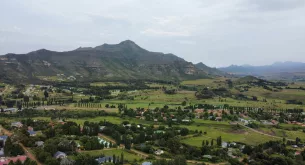





Rising above the forests and savannas of West Africa, Mount Nimba is a mountain of remarkable contrasts. Its slopes shift from dense tropical forest to cool mountain grasslands, creating habitats for rare plants and animals found nowhere else on Earth.
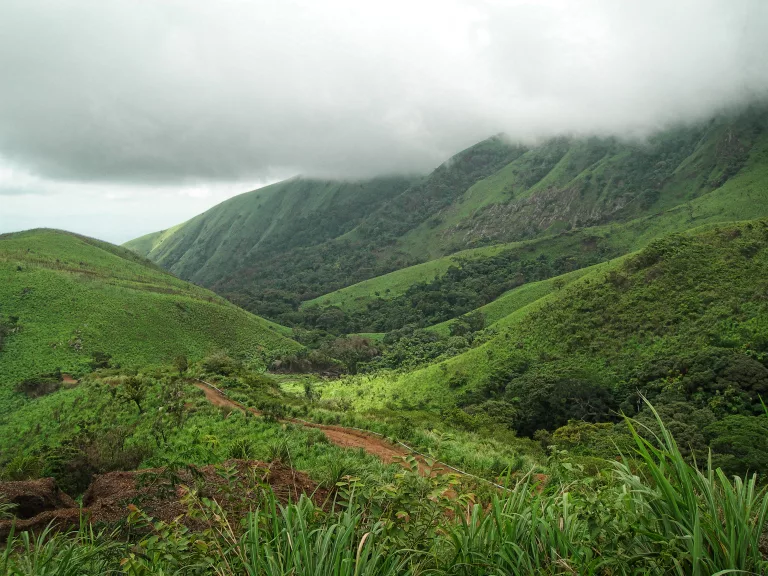
Mount Nimba Strict Nature Reserve/Guy Debonnet/Wikimedia Commons
Stretching across Guinea, Liberia and Côte d’Ivoire, this extraordinary landscape is more than a dramatic natural landmark. It is a refuge for threatened wildlife, a source of freshwater and a reminder of how much biodiversity can exist within a single mountain range.
A mountain of changing habitats
Mount Nimba rises to about 1,752 metres above sea level, standing prominently above the surrounding landscape. Its changing elevation, climate and terrain create a patchwork of habitats that support an exceptional variety of life.
From tropical forests to mountain grasslands
Dense forests cover the lower slopes, where moisture and shade support rich plant communities. Higher up, montane forests give way to open grasslands, where different temperatures, soils and growing conditions shape the vegetation.
These transitions create opportunities for species with very different needs to survive in proximity. More than 2,000 species of vascular plants have been recorded in the reserve, including several that are endemic or nearly endemic to the region.
The result is a landscape where every elevation change brings a different ecological world.
Wildlife found nowhere else
Mount Nimba’s isolation and varied habitats have allowed unusual species to evolve and survive. Some are so closely tied to the mountain that the loss of their specialised habitats could threaten their continued existence.
The remarkable mountain toad
One of the reserve’s most unusual inhabitants is the Mount Nimba viviparous toad. Unlike most frogs and toads, which lay eggs and develop through a tadpole stage, this species gives birth to fully formed young.
Its restricted high-altitude habitat makes it particularly vulnerable to environmental disturbance. When a species depends on such a small area, even local damage can have serious consequences.
A tiny mammal with a specialised lifestyle
The Mount Nimba otter shrew is another remarkable resident. This small, semi-aquatic insectivore is associated with wet habitats and waterways, making the mountain’s streams and moist environments important to its survival.
The wider reserve also supports numerous mammals, birds, reptiles, amphibians and invertebrates. Together, these species demonstrate why protecting different habitat types is essential: conserving the forest alone is not enough if the grasslands and waterways are neglected.
Chimpanzees that use tools
Mount Nimba is also known for its West African chimpanzees, which use stones as tools. This behaviour offers a glimpse into the intelligence and adaptability of these endangered primates.
Chimpanzees need more than isolated patches of forest. They depend on connected habitats where they can find food, shelter and opportunities to move safely. Protecting their environment therefore benefits many other species that share the same landscape.
A vital source of freshwater
Mount Nimba is sometimes described as a natural water tower. Its slopes and springs help sustain waterways that are important to surrounding ecosystems and communities.
Water links the mountain’s different habitats, supporting plants, aquatic organisms and animals that depend on reliable freshwater sources. The forests also help regulate local conditions, making the protection of these environments important beyond the boundaries of the reserve.
For nearby communities, the wider landscape provides resources that support daily life, including water, food and medicinal plants. Conservation must therefore recognise the relationship between healthy ecosystems and human well-being.
The growing pressure on a natural treasure
Despite its ecological importance, Mount Nimba faces significant conservation challenges. Mining, agricultural expansion, hunting and fires threaten parts of the wider mountain landscape.
Mining and habitat disturbance
The mountain contains valuable iron ore deposits, creating pressure for mineral extraction. Mining infrastructure and associated development can disturb habitats, alter waterways and fragment landscapes that wildlife needs to survive.
The effects may extend beyond the immediate mining area. Species do not recognise reserve boundaries, and changes outside protected zones can still affect the ecosystems within them.
Hunting, farming and fires
Hunting places additional pressure on wildlife, while the need for agricultural land can lead to forest clearance. Fires used to manage land may spread into sensitive habitats, affecting vegetation and species adapted to particular conditions.
These pressures are especially concerning for animals with restricted ranges. A species found only on Mount Nimba has few alternative places to survive if its habitat deteriorates.
Protecting a mountain shared by three countries
The Mount Nimba Strict Nature Reserve was inscribed on the UNESCO World Heritage List in 1981. It remains on the List of World Heritage in Danger, where it has been included since 1992.
The protected World Heritage property covers parts of Guinea and Côte d’Ivoire, while the wider mountain range extends into Liberia. This makes cooperation between countries important for protecting habitats, monitoring wildlife and addressing threats that cross national borders.
Conservation efforts include improving ecological monitoring, strengthening patrols and involving local communities in protecting the landscape. Long-term success also depends on adequate funding, effective management and finding ways for people to support their livelihoods without undermining the ecosystems around them.
Why Mount Nimba is important
Mount Nimba’s importance lies in the meeting of its many natural worlds. Tropical forests, mountain grasslands and freshwater habitats create a home for unusual species, including animals that have adapted to conditions found nowhere else.
Its future depends on protecting these habitats as a connected whole. Preserving only one part of the mountain would leave other species and ecological processes vulnerable.
For wildlife, Mount Nimba is a place of extraordinary opportunity but also growing risk. Protecting it means safeguarding not just a mountain, but an irreplaceable part of West Africa’s natural heritage.
Follow us on social media for more travel news, inspiration, and guides. You can also tag us to be featured.
Instagram | Facebook | Twitter | Spotify
ALSO READ: