
Volcanoes have a bit of a reputation for being places you probably shouldn’t visit. And, to be fair, standing near a mountain capable of throwing lava, ash and volcanic gases into the air isn’t exactly your average day out.
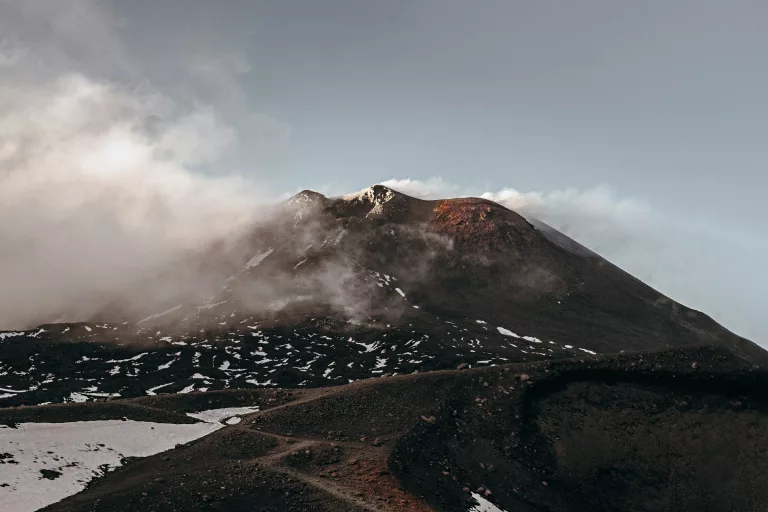
Photo: Unsplash
But volcanic landscapes aren’t automatically off-limits. Many can be visited from designated viewpoints, along marked trails or with authorised guides, while some are found within national parks that have extensive monitoring and visitor-safety systems in place. Others have been quiet for thousands or even millions of years, leaving behind dramatic craters, calderas and unusual landscapes long after their eruptions ended.
From Sicily and Hawaiʻi to Kenya and South Africa, these are some of the world’s volcanoes and volcanic landscapes you can visit – with one important caveat: volcanic conditions can change quickly, so always check official access information before setting out.
First, what makes a volcano ‘active’?
An active volcano isn’t necessarily one that’s erupting when you arrive. The terminology used by volcanologists can vary, but an active volcano is generally one that has erupted in relatively recent geological history or is considered capable of erupting again.
You may also come across the terms dormant and extinct. A dormant volcano is one that is currently quiet but may erupt again, while extinct volcanoes are generally considered unlikely to erupt again. These labels aren’t always applied consistently by every geological authority, so it is more useful for travellers to look at a volcano’s current alert level and official visitor guidance than to assume that a quiet-looking mountain is harmless.
Mount Etna, Sicily, Italy
Mount Etna is one of Europe’s most active volcanoes and one of Sicily’s most recognisable landmarks. Rising above the island’s eastern side, it has produced frequent eruptions over thousands of years, with activity ranging from lava flows to explosive episodes.
Visitors don’t necessarily have to be hardcore mountaineers to see Etna. Lower areas can be visited on foot, while cable cars and organised excursions can take visitors higher up when conditions allow. Access to the upper mountain is controlled and can change according to volcanic activity, weather and safety conditions.
And Etna is a good reminder that a volcano can change from a tourist attraction to a serious natural hazard very quickly. In June 2025, a partial collapse at the volcano’s South-East Crater generated a pyroclastic flow that sent tourists scrambling away from the area. The summit area had already been closed to visitors and there were no reported injuries or deaths, but the event demonstrated why those restrictions matter.
Etna is also currently active. In August 2026, an eruption produced ash that disrupted flights at Catania Airport, with Italian authorities maintaining a high aviation alert because of the risk volcanic ash poses to aircraft. Anyone travelling to Sicily should check the latest INGV and airport information before heading towards the mountain.
Mount Vesuvius, Italy
Mount Vesuvius may be best known for its devastating AD 79 eruption, which destroyed Pompeii and Herculaneum, but the volcano itself is still considered active. It overlooks Naples and the Bay of Naples and forms part of Vesuvius National Park.
Visitors can walk along the designated route around the crater, where the scale of the volcano is easier to appreciate up close. The crater can be visited under controlled conditions, with access restrictions applied when weather or other safety conditions make a visit unsuitable.
Vesuvius hasn’t erupted since 1944, so it can look remarkably peaceful. That’s precisely why it is worth remembering that an active volcano doesn’t need to be visibly erupting to require monitoring.
There was also a tragic reminder in 2024 that volcanic destinations have hazards beyond an eruption. A 56-year-old British tourist died after becoming unwell while climbing Vesuvius during a period of extreme heat. The death was reported as a suspected heart attack rather than a volcanic event, so it isn’t a recent volcanic tragedy, but it does underline the need to take the physical demands of a mountain walk seriously.
Stromboli, Italy
If Etna is dramatic, Stromboli is the volcano that likes to keep things interesting. The tiny island north of Sicily is home to one of the world’s best-known persistently active volcanoes, with frequent small explosions producing glowing volcanic material.
This persistent activity is what earned Stromboli its nickname, the ‘Lighthouse of the Mediterranean’. From the sea, the glow of its eruptions can sometimes be seen after dark.
Visitors can explore the island and, when authorities permit it, join guided excursions to higher viewpoints. Restrictions can change according to volcanic conditions, and access to higher areas is controlled, so this isn’t a mountain where you should simply follow an old route you found online.
Stromboli remains active in 2026, with INGV continuing to record Strombolian activity and occasional lava overflows. A major explosion was also recorded in June 2026.
The most recent fatal tourist incident associated with a Stromboli eruption was in 2019, when a hiker was killed during a violent explosive event. That falls outside the five-year period covered by this article, but it remains part of the volcano’s modern safety history.
Kīlauea, Hawaiʻi, USA
Few places offer a better introduction to active volcanism than Hawaiʻi Volcanoes National Park on the Big Island. Kīlauea is one of the world’s most active volcanoes and has been producing episodic summit eruptions in recent years.
The current eruption began in December 2024 and has occurred in episodes of lava fountaining separated by pauses. As of 10 August 2026, Kīlauea was not erupting, although the US Geological Survey said another eruptive episode was likely between 12 and 15 August. The situation can change quickly, so anyone planning a visit should check the latest USGS and National Park Service updates rather than relying on a previous day’s information.
The erupting area itself is closed because of hazards including volcanic gases, unstable cliffs, ground cracks and falling volcanic material. Visitors can instead view volcanic activity from approved areas when viewing opportunities are available. The National Park Service specifically tells visitors to stay out of closed areas and monitor air quality.
Those warnings aren’t theoretical. In February 2026, a person entered a closed area on the east side of Kīlauea’s caldera. The volcano was not erupting at the time, but the terrain was steep and hazardous, and the individual was later found deceased. The incident is a particularly sobering reminder that volcanic terrain can remain dangerous even during a pause in eruptive activity.
Teide, Tenerife, Canary Islands
At 3,715m above sea level, Mount Teide is Spain’s highest mountain and the centrepiece of Teide National Park. It is also a volcano and part of a still-active volcanic system, although Teide itself is not currently erupting.
One important distinction is worth making here: the most recent eruption on Tenerife was the 1909 Chinyero eruption, rather than an eruption from Teide’s summit itself. The Chinyero eruption occurred on the north-western Santiago rift and is the most recent confirmed eruption on the island.
The landscape around Teide looks almost otherworldly, with lava formations, volcanic rocks and the enormous Las Cañadas caldera. Visitors can reach high elevations by cable car, although access to the summit itself requires additional permission and is subject to weather and other conditions.
At this altitude, the volcano isn’t the only thing to take seriously. Cold temperatures, strong sun, thinner air and rapidly changing weather can make a seemingly straightforward outing considerably more challenging.
Arenal, Costa Rica
Arenal is one of Costa Rica’s most recognisable landmarks, rising above the rainforest near La Fortuna. The volcano became famous for its long period of activity following the major 1968 eruption, producing lava flows, explosions and other volcanic activity for decades.
That eruptive period ended in 2010, and Arenal has remained in a resting phase since then. It is generally described as dormant rather than extinct, meaning its volcanic history still matters when considering the surrounding landscape and hazards.
Visitors cannot simply wander onto the volcano wherever they please. The surrounding area contains steep terrain, volcanic rock and other natural hazards, so travellers should stick to authorised trails and viewpoints.
One of the best things about visiting Arenal is that the volcano is only part of the attraction. Hot springs, rainforest, waterfalls and wildlife make the surrounding area a destination in its own right.
Tongariro, New Zealand
New Zealand’s Tongariro National Park is a spectacular example of a volcanic landscape that doubles as a hiking destination. The park contains several volcanic peaks and systems, including Mount Tongariro, Mount Ruapehu and Mount Ngāuruhoe, each with its own geological history and current level of activity.
The famous Tongariro Alpine Crossing passes through an environment shaped by volcanic eruptions, with emerald-coloured lakes, lava formations and dramatic crater landscapes. It is important to remember, however, that this is an active volcanic environment rather than simply a scenic mountain walk.
New Zealand uses a six-level Volcanic Alert Level system for the volcanoes in the national park, ranging from no volcanic unrest through increasing levels of unrest and eruption. The alert level and track status can therefore change, and visitors should check the latest GeoNet and Department of Conservation information before setting out.
Pilanesberg, South Africa
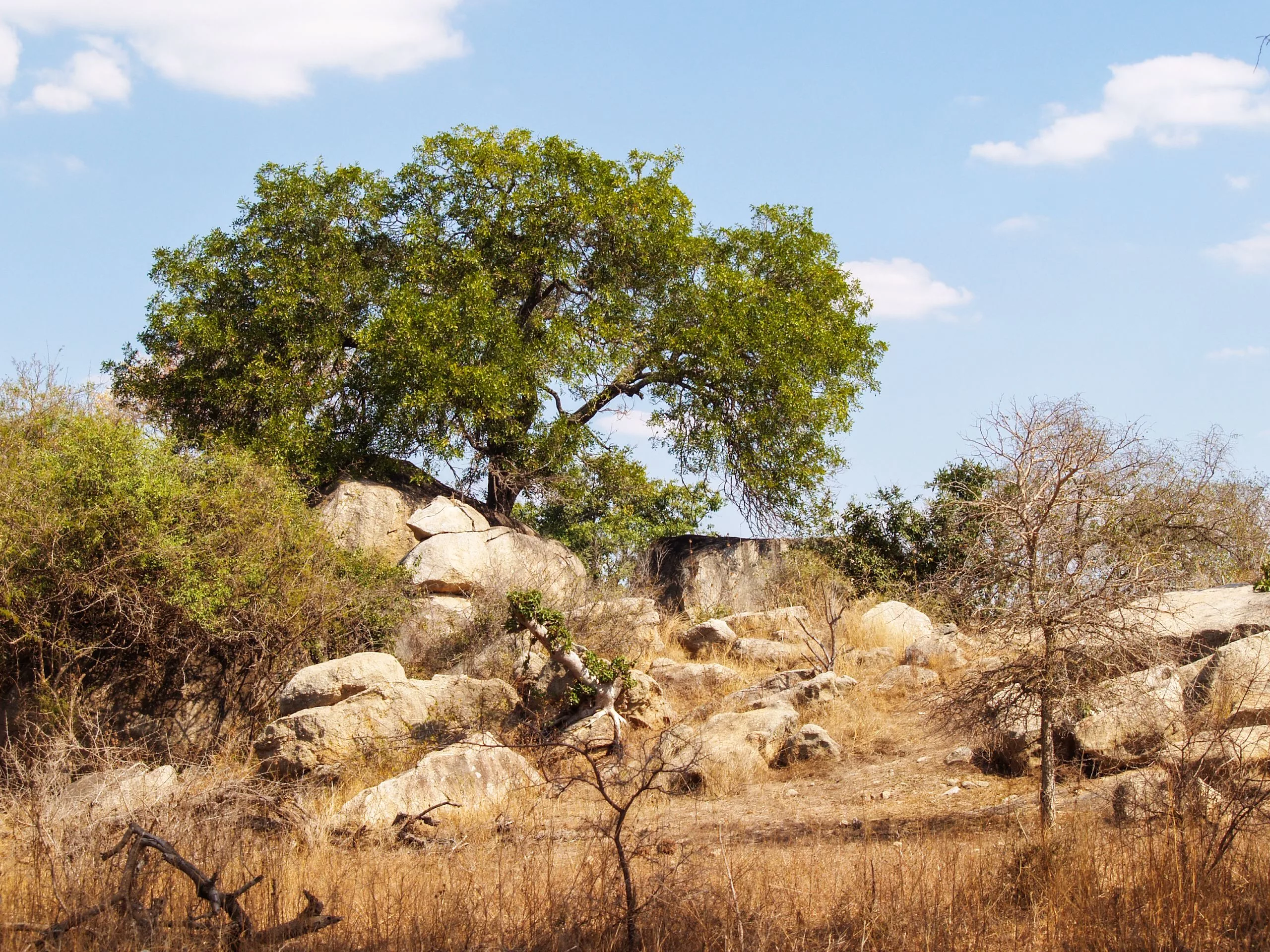
You don’t have to leave South Africa to stand inside an ancient volcanic landscape. Pilanesberg National Park in North West Province sits within the remains of the Pilanesberg Alkaline Ring Complex, an ancient volcanic structure formed around 1.2 billion years ago.
The circular mountain formations surrounding the park are the deeply eroded remnants of this ancient volcanic complex. There is, of course, no active lava or erupting crater here today. Instead, the old volcanic landscape is home to lions, elephants, rhinos, buffalo and leopards.
The volcano’s origins can be easy to overlook when you’re busy searching for wildlife, but the unusual ring-shaped landscape is a reminder of what happened here on a geological timescale.
Ngorongoro Crater, Tanzania
Ngorongoro is one of Africa’s great geological spectacles. The enormous crater is actually a caldera – the collapsed remains of a huge ancient volcano. It formed roughly 2.5 million years ago, after the volcanic mountain collapsed following a major eruption.
Today, visitors can descend into the crater on safari rather than worrying about an eruption. The crater’s walls, grasslands and lakes have created a remarkable ecosystem that supports large numbers of wildlife.
It is a good example of how volcanic activity can continue to shape a landscape long after the volcano itself has fallen silent. There is no active erupting volcano in the crater today, although the wider region remains volcanically active, with other volcanic systems in the East African Rift.
Diamond Head, Hawaiʻi, USA
For something a little easier, head to Diamond Head on Oʻahu. The distinctive crater overlooking Honolulu is an ancient tuff cone, formed during a relatively explosive episode of volcanic activity.
It is better thought of as a volcanic landform than as an active volcano like Kīlauea or Etna. The volcanic activity that created Diamond Head has long since ended, and today the site is one of Honolulu’s best-known hiking destinations.
A designated trail leads to the summit, where hikers are rewarded with panoramic views over Honolulu and the Pacific Ocean.
Mount Longonot, Kenya
Rising from Kenya’s Great Rift Valley, Mount Longonot is a young stratovolcano with a large summit crater. It is thought to have last erupted in the 1860s, meaning it is generally described as dormant rather than extinct. Its volcanic system has also shown signs of geological activity in the past, so it shouldn’t be treated simply as an ordinary hiking mountain.
The mountain can be climbed on a designated trail, with hikers reaching the crater rim and, for those up for a longer outing, walking around the rim itself. The route is steep in places and can be hot and exposed, making this one to approach as a proper hike rather than a casual stroll.
As with other volcanic mountains, stay on the designated route and check local conditions before setting out.
Menengai Crater, Kenya
Another Rift Valley giant, Menengai is a huge volcanic caldera near Nakuru. The roughly 8km-wide caldera sits within a volcanic system and is one of the most striking geological features in the area.
The appeal here isn’t flowing lava but the sheer scale of the volcanic landscape. Visitors can take in the crater from viewpoints and explore parts of the surrounding area, with the enormous depression offering a glimpse into the region’s volcanic past.
As with any crater environment, visitors should follow local access rules and avoid assuming that old or apparently stable volcanic terrain is automatically risk-free.
What about volcanoes in Iceland?
Iceland deserves a special mention because it sits on both a tectonic plate boundary and a volcanic hotspot, making it one of the world’s most volcanically active regions. The Reykjanes Peninsula has experienced a remarkable sequence of eruptions since 2023, with volcanic activity repeatedly changing access to roads, towns and tourist areas.
This makes Iceland a particularly good example of why volcanic tourism requires up-to-date information. An eruption site, trail or viewpoint that was accessible recently may be closed the next time you visit.
Fresh lava is also not something to treat as a harmless photo opportunity. Newly formed lava can remain extremely hot beneath a hardened-looking crust, while unstable ground and volcanic gases can create hazards even after visible activity has stopped. Follow Icelandic authorities’ current access advice rather than relying on old social media posts or videos.
Volcano safety: what travellers need to know
A volcano doesn’t have to be erupting to be dangerous. Volcanic areas can contain unstable cliffs, loose rock, toxic gases, sudden steam releases, landslides and hidden cracks. During an eruption, hazards can include lava, ash, volcanic bombs, pyroclastic flows and lahars, depending on the volcano and its surroundings.
The safest approach is not to try to predict volcanic behaviour yourself. Check the latest information from the relevant national park, geological survey or civil protection authority before leaving, and again before entering the volcanic area.
Check the volcano before you leave
Don’t rely solely on the weather forecast or a guidebook. Look at the latest information from the relevant national park, geological survey or civil protection authority. Volcanic alert levels, trail closures and access restrictions can change quickly.
This is especially important at destinations such as Etna and Kīlauea, where eruptive conditions can change within hours and affect roads, trails, viewing areas and even nearby airports.
Never cross a closure
A rope, barrier or closed trail isn’t there to spoil your holiday photographs. It is there because authorities have identified a hazard that may not be obvious from the path itself.
The fatal incident at Kīlauea in February 2026 is a particularly stark reminder. The volcano wasn’t erupting at the time, but the closed area contained steep and hazardous terrain, and the person who entered the area died.
Take volcanic gases seriously
Some volcanoes release gases such as sulphur dioxide and carbon dioxide. These can accumulate in certain areas and become harmful when concentrations are high. Volcanic gases can also be carried by wind, meaning conditions at a viewpoint may not be obvious simply by looking at the volcano.
If authorities issue air-quality warnings, take them seriously and move away from affected areas. At Hawaiʻi Volcanoes National Park, for example, visitors are specifically advised to monitor air quality because volcanic gas can affect areas away from the active eruption.
Stick to marked trails
Volcanic terrain can be unstable and full of hidden hazards. Stay on established paths and use designated viewpoints, particularly around crater rims and lava fields.
Don’t assume that because another visitor has climbed over a barrier in a photograph, it is safe to do the same. The other person may have ignored a closure, or conditions may have changed since the photograph was taken.
Use a qualified guide where required
Some volcanoes have restricted summit access or require visitors to join guided excursions. Don’t try to circumvent these rules because you’ve seen someone else do it online.
Guides also know the local terrain and restrictions, which can be particularly useful on volcanoes where activity, weather and access conditions change regularly.
Pack for the actual environment
A volcano can mean anything from a hot, exposed trail to freezing conditions at high altitude.
Depending on the destination, you may need:
- Sturdy walking shoes
- Plenty of drinking water
- Sun protection
- Warm layers
- Rain protection
- A charged phone
- Offline maps or another reliable navigation method
- A small first-aid kit
- Any protective equipment specifically recommended by local authorities
And don’t forget that altitude can be a factor on high volcanoes such as Teide. Being prepared for the mountain environment is just as important as knowing about the volcano itself.
Have a Plan B
This might be the most important tip of all. If a volcano closes, don’t try to find a secret route in. Volcanic tourism is one of those rare situations where a closed attraction really can mean closed for your safety.
Instead, choose another trail, viewpoint or attraction. If Etna is restricted, for example, there are plenty of other things to do in Sicily. If Kīlauea’s viewing areas are closed, Hawaiʻi Volcanoes National Park still offers other landscapes and visitor experiences when they are officially open.
The best way to visit a volcano
You don’t need to stand beside flowing lava to have a volcanic adventure. Sometimes the most interesting part is seeing how an ancient eruption shaped an entire landscape.
At Pilanesberg, a 1.2-billion-year-old volcanic complex became the geological foundation for a wildlife-rich national park. At Ngorongoro, an ancient volcanic caldera became one of Africa’s most remarkable safari landscapes. At Diamond Head, an extinct volcanic tuff cone now rises above Honolulu.
And at places such as Etna, Stromboli and Kīlauea, volcanism is still very much part of the landscape. That can make a visit extraordinary, but it also means that conditions can change with little warning.
The golden rule is simple: admire the volcano, but let the scientists and park authorities decide how close you should get.
ALSO SEE: Malaysia tightens hiking rules as social media trends fuel rescue surge
Malaysia tightens hiking rules as social media trends fuel rescue surge