





A small fossil found in Mongolia’s Gobi Desert more than 20 years ago is helping scientists rewrite part of the mammalian family tree.
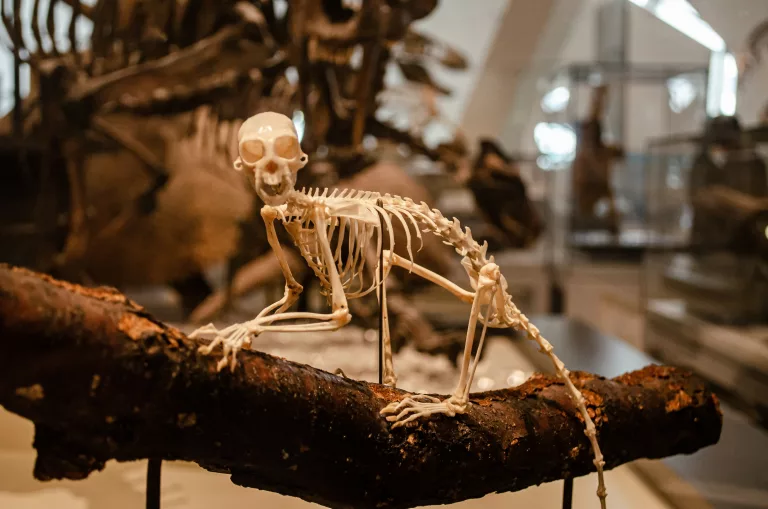
Narciso Arellano / Unsplash / Illustrative purposes only
The remarkably complete specimen belongs to a newly identified species, Tamirkhan balcarceli, which lived during the Cretaceous Period, when dinosaurs still dominated the planet.
The animal was tiny, measuring around 15 to 18cm from head to tail, but its discovery has significant implications.
For decades, scientists had studied a group of Cretaceous mammals called zhelestids mainly through isolated teeth and jaw fragments. Their rounded teeth suggested they may have been early relatives of modern hoofed mammals or other placental mammals.
The new fossil tells a different story.
A fossil that changed the picture
Discovered during a 2004 expedition to the eastern Gobi, the specimen preserves parts of the skull and hind limb, giving researchers a much clearer view of what these animals actually looked like.
It’s long hind legs, ever-growing incisors and distinctive ankle anatomy point towards a different group of ancient mammals called zalambdalestoids.
The researchers therefore concluded that zhelestids were not early placental mammals as previously suggested, but instead belonged to the zalambdalestoid branch of the mammalian family tree.
It’s also a useful reminder that fossils can be misleading when only fragments survive. In this case, the animal’s teeth made it appear to belong somewhere it did not.
The similarities were likely an example of convergent evolution, where unrelated animals develop similar features because they have adapted to similar diets or environments.
A 20-year-old discovery
The fossil was found in 2004, but its significance only became clear after years of study. The species was formally described in Nature in July 2026.
That long wait is part of what makes the discovery so fascinating. In a desert already famous for its dinosaur fossils, one small mammal has now changed how scientists understand an entire branch of early mammal evolution.
Sometimes, it seems, the smallest discoveries can leave the biggest mark.
Source (Good News Network)
Follow us on social media for more travel news, inspiration, and guides. You can also tag us to be featured.
Instagram | Facebook | Twitter | Spotify
ALSO READ:
Botswana criticised over elephant hunts for 60th independence celebrations