


Across Africa, currency offers a glimpse of the places and stories that shape national identity. For travellers, those images can inspire the next adventure.

South Africa’s banknotes / Sincerely Media / Unsplash
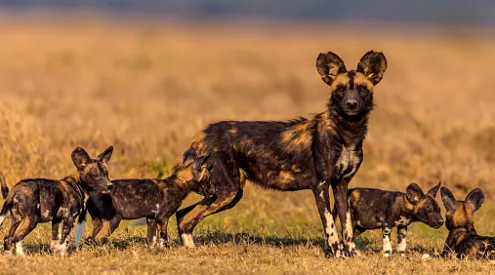
A 2024 study published in People and Nature, examining 4,541 banknotes from 207 countries, found that African banknotes featured mammals more than those from any other region. Here are five countries whose currency points towards destinations worth discovering.
Zambia: A country of waterfalls
Zambia’s kwacha celebrates the country’s natural diversity. The Bank of Zambia’s Heritage Series features six waterfalls alongside wildlife, indigenous plants and other national symbols.
Victoria Falls, known locally as Mosi-oa-Tunya, or ‘The Smoke That Thunders’, is the best known. The Zambezi River plunges into a deep gorge on the border between Zambia and Zimbabwe, sending mist high above the surrounding rainforest.
The experience is difficult to appreciate until you are standing near the falls, feeling the spray and hearing the water roar below. Beyond Victoria Falls, Kalambo Falls, near the Tanzanian border, drops into a dramatic gorge, while Lumangwe Falls and Chishimba Falls offer further reasons to explore Zambia’s lesser-known landscapes.
Botswana: Life on the water
Botswana’s P50 banknote features the Okavango Delta, including a person travelling by mokoro, a traditional canoe, and a fish eagle.
In north-western Botswana, seasonal floodwaters spread across the Kalahari sands, creating a network of channels, lagoons and islands. The wetland supports an extraordinary variety of wildlife.
Exploring by mokoro offers a quieter alternative to a traditional game drive. Guided by an experienced poler, visitors glide through the reeds, watching birds and looking for wildlife along the water’s edge. Depending on water levels and location, walking safaris and game drives offer other ways to explore. Here, a safari unfolds at water level, with the landscape changing according to the seasons.
Seychelles: An island nation rich in biodiversity
The Seychelles’ 2016 banknote series celebrated the archipelago’s distinctive wildlife and plant life, including the coco de mer palm and Aldabra giant tortoise.
On Praslin, Vallée de Mai Nature Reserve protects a forest of coco de mer palms. Their seeds are the largest in the plant kingdom, and the UNESCO World Heritage Site offers visitors a chance to explore a remarkable native forest.
Further afield, Aldabra Atoll is home to one of the world’s largest populations of giant tortoises. It’s remote location has helped preserve a distinctive ecosystem, and access is carefully managed to protect the environment. These sites offer a compelling reason to explore the Seychelles beyond it’s beaches, particularly for travellers interested in rare species and protected habitats.
South Africa: The Big Five
South Africa’s banknotes feature Nelson Mandela on the front and one of the Big Five on the reverse: the rhino, elephant, lion, buffalo or leopard. The designs bring together the country’s democratic history and it’s wildlife heritage.
Each animal evokes a different kind of safari. Kruger National Park is known for it’s wildlife viewing, while provincial reserves and private game reserves across the country offer other ways to experience the bush.
A safari need not mean an expensive lodge. National parks offer self-drive routes and public camps, making it possible to explore at your own pace and within different budgets. The notes also reflect a change in the country’s national story. Earlier South African banknotes featured Jan van Riebeeck, while the introduction of Mandela’s portrait placed the country’s first democratic president at the centre of it’s currency.
Zimbabwe: From waterfalls to ancient stone cities
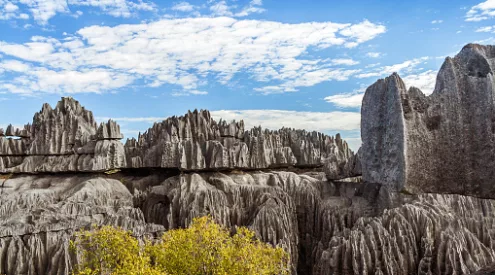
Zimbabwe’s upgraded Big 5 ZiG banknote series, introduced in 2026, pairs five landmarks with five wildlife species. The designs feature Matobo Hills, the Parliament of Zimbabwe, Kariba Dam, Victoria Falls and the Great Zimbabwe ruins.
Matobo Hills is known for it’s granite formations, rock art and cultural significance. Kariba Dam overlooks a vast reservoir popular for boating and fishing, with wildlife areas nearby.
Great Zimbabwe is a particularly compelling stop. Built and expanded between roughly the 11th and 15th centuries, the settlement was an important centre of trade and political power. It’s monumental stone walls remain a remarkable example of pre-colonial African architecture. For a deeper understanding of Zimbabwe’s past, Great Zimbabwe offers a chance to walk through the remains of a once-thriving African civilisation.
A travel guide in your pocket
African banknotes are more than a means of payment. They offer small windows into the places, wildlife and histories that shape the continent. These designs are only a starting point, and the wildlife they celebrate faces real conservation challenges. But they offer a reason to look more closely at the places behind the pictures.
Next time you receive change, take a moment to turn the note over. Your next African adventure might already be in your pocket.
Follow us on social media for more travel news, inspiration, and guides. You can also tag us to be featured.
Instagram | Facebook | Twitter | Spotify
ALSO READ: