
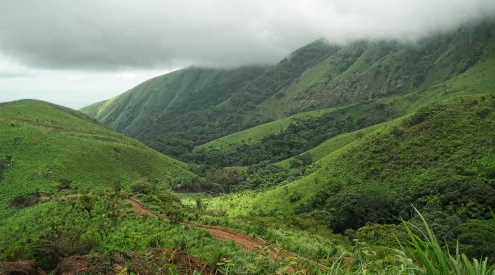
The Western Cape has just added a remarkable new destination to its conservation map.

Image: supplied
The Mount David Nature Reserve is an 800-hectare sanctuary brimming with life, diversity, and a powerful story of ecological renewal.
Once a livestock and grain farm known as Diepgat, the land was purchased in 2008 by Antony van Hoogstraten, who dedicated the next 17 years to its rehabilitation. Through consistent alien clearing and restoration work, the landscape has been transformed into a haven of thriving wetlands, natural seeps, and pristine fynbos, a striking reminder of how patience and passion can revive an ecosystem.
In 2010, the reserve’s ecological value grew even further when, after a wildfire, botanists discovered a Critically Endangered Erica species once believed to be nearly extinct.
“The declaration of Mount David forms part of the Western Cape’s growing network of protected areas, helping to conserve biodiversity, restore degraded landscapes, and strengthen the province’s ecological services that our nature provides,” said Anton Bredell, Western Cape Provincial Minister of Local Government, Environmental Affairs and Development Planning. “These ecological services are critical to the wellbeing of the province’s people and economy and include basic services from clean water and healthy soils to more complicated aspects of climate regulation and strengthening ecological corridors.”
The declaration, formalised on 7 November 2025, was facilitated by CapeNature, in collaboration with Bionerds and the Endangered Wildlife Trust (EWT). Bionerds, which had already compiled the property’s Protected Area Management Plan in 2023, played a key role in steering the process.
The reserve also has a fascinating amphibian connection. During the 2020 lockdowns, conservationists from Bionerds were surveying the nearby Maanschynkop Nature Reserve in the Overstrand for the Moonlight Mountain Toadlet (Capensibufo selenophos) — a species so elusive it was once listed as Data Deficient. While the team came up empty-handed there, a fortunate detour to Diepgat’s upper slopes revealed something extraordinary: a healthy, breeding population of this rare amphibian thriving in its restored habitat.
“Part of our project with the EWT was to work with landowners to find a formal mechanism to secure properties where we have found target frog species. We assessed Diepgat and presented on the biodiversity, ecological, and landscape importance of the property to CapeNature,” explained Alouise Lynch, Director of Bionerds.
“To have recorded a new breeding locality for the Moonlight Mountain Toadlet was a special addition to the ecological diversity of this property, and to have a landowner who has expressed such commitment to conservation through his actions, such that the ecosystems are in a near-pristine condition, is perhaps the greatest reward for anyone working with threatened species and habitats.”
The discovery underscored not only the ecological resilience of the land but also the success of long-term restoration. Wildlife sightings have since included Leopard, Klipspringer, Grey Rhebok, Black Harrier, Verreaux’s Eagle, and Blue Cranes, species that now find refuge in this renewed ecosystem.
Following the Toadlet discovery, the Bionerds team met with the Van Hoogstraten family in Hermanus to discuss securing the area’s future. Their shared vision led to the official declaration of the Mount David Nature Reserve, named by the family themselves.
For other landowners interested in protecting their properties, CapeNature’s Stewardship Team can be reached at [email protected] for guidance on how to contribute to the province’s conservation legacy.
Follow us on social media for more travel news, inspiration, and guides. You can also tag us to be featured.
TikTok | Instagram | Facebook | Twitter
ALSO READ: How to travel like a local: Cape Town edition