

Across South Africa, animals arrive from extraordinary distances. Some have crossed continents, while others have travelled from the cold waters of the Southern Ocean or moved south in response to seasonal food and breeding opportunities. Their journeys bring swallows back to the skies, waders to coastal wetlands and whales close to the Cape coast.
Spring is, in many ways, South Africa’s season of arrivals. Here are some of the remarkable animals that return each year and where travellers have the best chance of seeing them.
Southern right whales return to the Cape Coast
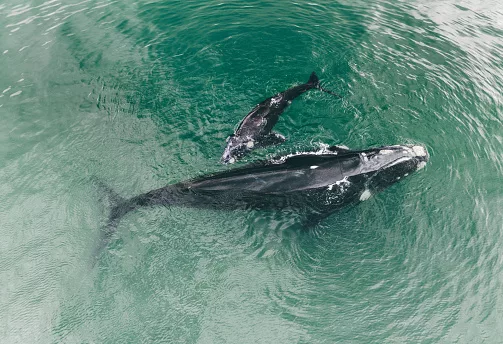
Aerial view over a Southern Right Whale and her calf in South Africa/By: Maria Korneeva/Getty Images
Few seasonal arrivals are as dramatic as that of the southern right whale.
Each year, these enormous marine mammals migrate from Antarctic feeding grounds to the relatively sheltered waters along South Africa’s coast to mate and calve. Hermanus and Walker Bay are among the country’s best-known whale-watching destinations, with the animals typically present between June and November. September, October and November are particularly reliable months for sightings.
Where to see them
Hermanus is the obvious starting point. Its famous Cliff Path allows visitors to watch for whales from land, often without setting foot on a boat. The surrounding Walker Bay area is an important breeding and calving destination during the winter and spring months.
Elsewhere, De Hoop Nature Reserve, Witsand and the coastline around Cape Agulhas also offer memorable opportunities to spot southern right whales.
Spring travellers can turn a whale-watching trip into a broader coastal escape, combining marine wildlife with fynbos walks, beaches and some of the Western Cape’s most dramatic scenery.
Swallows signal the start of summer
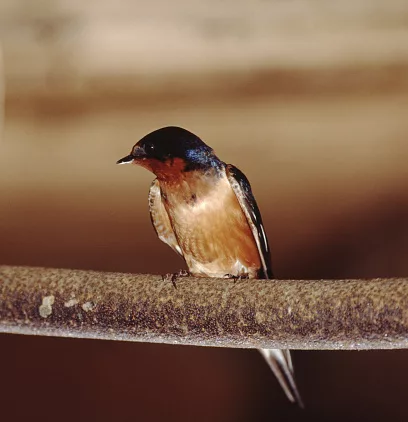
Barn Swallow (Hirundo Rustica). Photographed by acclaimed wildlife photographer and writer, Dr. William J. Weber/Getty Images
Look skywards in spring, and you may notice one of the season’s most familiar signs: swallows returning to southern Africa.
Barn swallows are among the migratory species that reappear during the warmer months, while other swallow species also become a familiar part of South Africa’s summer birdlife. In Kgalagadi Transfrontier Park, SANParks lists Barn, Greater Striped, South African Cliff and White-throated swallows among the birds seen during summer.
Their arrival is a reminder that migration does not always require travelling to a famous wildlife destination. Sometimes, one of nature’s greatest annual movements can be witnessed from a garden, farm, wetland or roadside stop.
Where to look
Swallows can be seen across much of South Africa during the warmer months, particularly around open landscapes, wetlands and areas where flying insects are abundant.
For birders wanting to turn migration into a dedicated wildlife trip, the country’s national parks and protected areas offer a chance to look for a far greater variety of summer visitors at the same time.
Migrant waders fill the West Coast wetlands
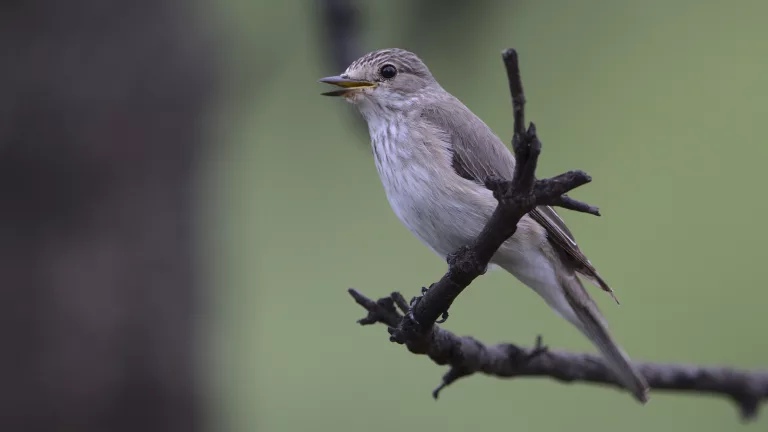
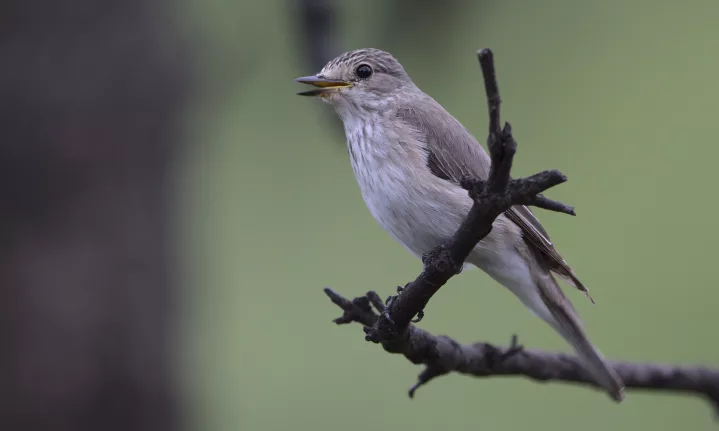
Spotted flycatcher at Loodswaai Game Reserve, Gauteng/Derek Keats/Wikimedia Commons
Spring is an especially important time at West Coast National Park, where the Langebaan Lagoon becomes a stopover and seasonal home for migratory waders.
The lagoon forms part of a Ramsar wetland of international importance, and many of its wader species are Palearctic migrants. SANParks notes that summer is the best time to visit for these birds, particularly September, when returning migrants arrive after their transcontinental journeys.
The park’s wider wetland system can support tens of thousands of waterbirds in summer, including regular Palearctic migrants.
Where to see them
The Geelbek bird hide is one of the best places to watch waders around the lagoon. SANParks recommends visiting from low tide as the water comes in, forcing birds progressively closer to the hide before they eventually move away. Species such as godwits, whimbrels and curlews may be among those lingering longest.
It makes the park an especially rewarding spring destination: one day can include migrant birds, coastal scenery, hiking and cycling, while flower season adds another layer to a September visit.
ALSO READ:
Cuckoos and other summer voices return
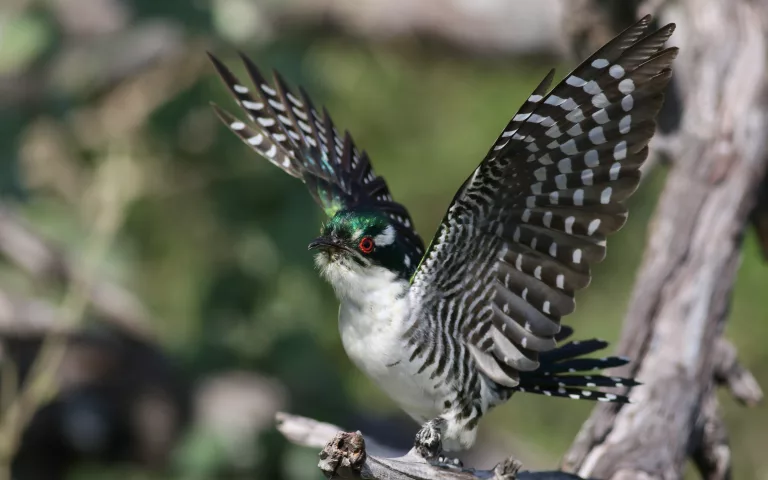
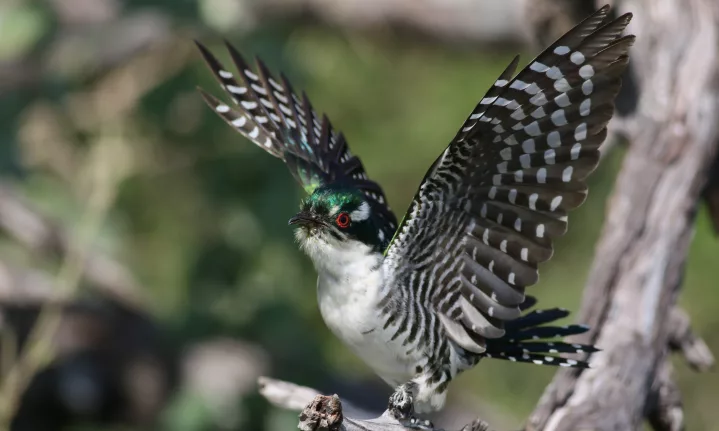
Diederik cuckoo at Mapungubwe National Park, Limpopo/Derek Keats/Wikimedia Commons
Some spring arrivals are easier to hear than to see.
Across South Africa, the warmer months bring back a changing cast of migratory birds, including cuckoos. In Kgalagadi Transfrontier Park, species such as the Diederik Cuckoo and Jacobin Cuckoo are among the birds associated with the summer season.
Their calls can become part of the soundtrack of the changing season, particularly as warmer temperatures and summer rains transform habitats and increase the availability of food.
Where to listen for them
The northern and eastern parts of South Africa are particularly rewarding for summer birding, with national parks and bush destinations offering a mixture of resident species and seasonal visitors.
Kruger National Park, Limpopo’s bushveld and KwaZulu-Natal’s protected areas are all strong choices for travellers interested in how dramatically birdlife can change between winter and summer.
The key is to slow down. A spring wildlife trip is not always about ticking off the Big Five. Sometimes the most memorable encounter begins with an unfamiliar call from somewhere high in the trees.
European rollers make extraordinary journeys
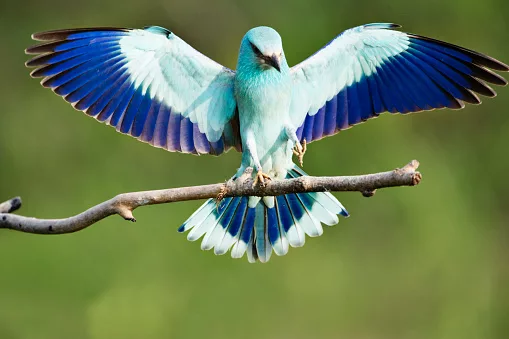
Close-up of European roller spreading wings on branch/By: Winfried Wisniewski/Getty Images
The brilliantly coloured European roller is another reminder of just how far South Africa’s seasonal visitors can travel.
South Africa is home to more than 100 migratory bird species, according to BirdLife South Africa. Its European Roller Monitoring Project is helping researchers understand the remarkable journeys of rollers between southern Africa and breeding areas across Central Asia. Tracking has revealed that these birds can undertake migrations of up to around 15,000km.
Where to look for them
European rollers are associated with the country’s summer birding season and can add a flash of blue to a wildlife drive through suitable open woodland and savanna habitats.
They are especially rewarding to look out for in the northern parts of the country, where a journey through the bush in spring and summer can produce an entirely different bird list from one made during the colder months.
For travellers, the appeal lies partly in the surprise: one of the most striking birds seen beside a South African road may have recently completed an astonishing international journey.
Migrant raptors take to the Kalahari skies
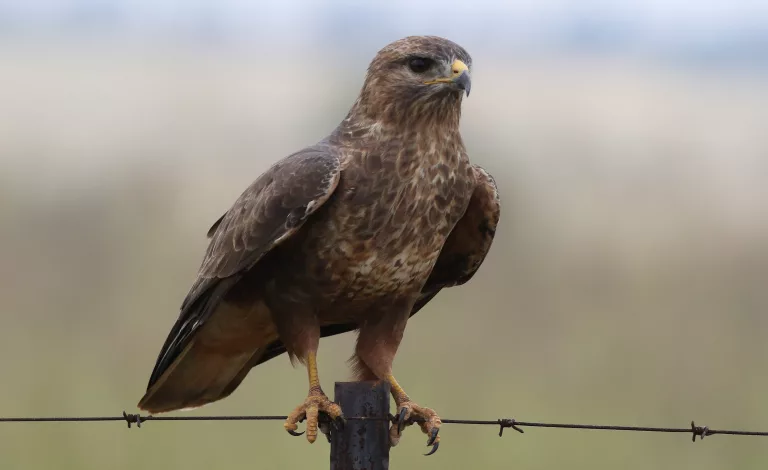
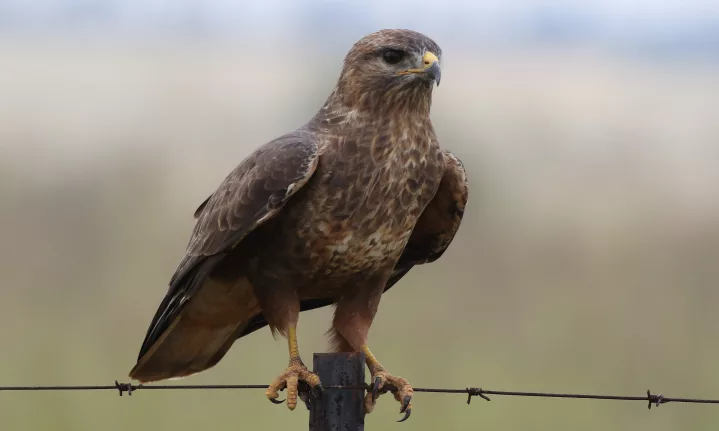
Common Buzzard (Steppe Buzzard)/Derek Keats from Johannesburg, South Africa/Wikimedia Commons
The changing season also brings movement high above the desert.
Kgalagadi Transfrontier Park is one of South Africa’s most exciting destinations for raptor watching, particularly during the summer months when migratory eagles, kites and falcons move through the park. SANParks lists Steppe, Wahlberg’s, Booted and Lesser Spotted Eagles among the migrant eagles recorded along the Nossob Riverbed.
Other migratory raptors can include Steppe Buzzards, harriers, kites and European Hobbies.
Where to watch the skies
The Nossob Riverbed is a particularly rewarding area for bird activity. The camel thorn trees along the dry river systems provide important nesting and roosting habitat, while seasonal food availability attracts a wide variety of birds.
The park’s birdlife changes dramatically through the year. Of roughly 280 recorded species, only about 92 are resident, with the remainder including nomadic, migratory and vagrant birds.
A Kgalagadi trip in the warmer months can therefore offer a different wildlife experience from the classic winter safari: keep scanning the skies between lion sightings, and you may spot one of the season’s great aerial travellers.
Not every spring visitor is easy to find
Migration is not always spectacular or obvious.
Some of South Africa’s seasonal bird arrivals are elusive, threatened or restricted to increasingly fragmented habitats. That makes spring an important reminder of how closely migration is linked to the health of wetlands, grasslands, forests and other ecosystems along an animal’s journey.
The European roller monitoring work, for example, is helping identify migration routes and important stopover sites, giving conservationists a better understanding of the pressures these birds face across multiple countries and habitats.
Travel responsibly
Travellers hoping to see rare or sensitive species should avoid disturbing nesting or breeding birds and should not crowd animals for photographs.
Stick to established roads and trails, use reputable guides where possible and remember that a responsible wildlife encounter does not always mean getting closer. Often, the best experience comes from allowing an animal enough space to behave naturally.
As spring reaches the Indian Ocean, turtles return to nest
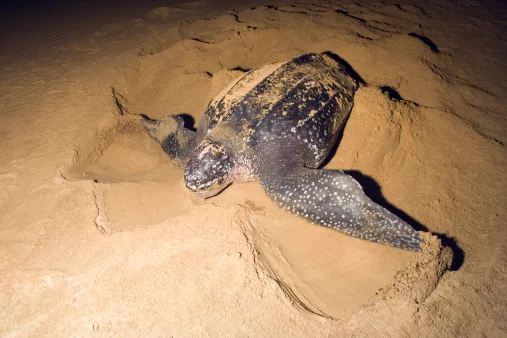
Leatherback Turtle laying eggs on beach/By: Heinrich van den Berg
Gallo Images ROOTS RF collection
South Africa’s spring migration story eventually reaches the coast of northern KwaZulu-Natal.
Loggerhead and leatherback turtles return to beaches along the iSimangaliso coast to nest, with monitoring taking place from October to February. The region is home to one of the world’s longest-running sea turtle monitoring programmes.
At Sodwana Bay, turtle nesting experiences typically focus on November and December, when visitors may have the opportunity to learn about nesting and conservation while observing strict guidelines designed to minimise disturbance.
Where to experience turtle season
iSimangaliso Wetland Park and the Maputaland coast offer one of South Africa’s most extraordinary seasonal wildlife experiences.
Unlike a conventional safari, a turtle encounter takes patience, darkness and careful management. Visitors should join responsible, authorised experiences rather than attempting to search nesting beaches independently.
It is also a fitting reminder that South Africa’s spring wildlife season does not end when the flowers fade. As the country moves towards summer, another wave of animals continues to arrive.
Follow South Africa’s spring arrivals
From whales appearing along the Cape coast to waders returning to Langebaan Lagoon, raptors moving through the Kalahari and turtles beginning their nesting season in KwaZulu-Natal, spring reveals South Africa as part of a much bigger natural map.
A September trip to the West Coast might reveal exhausted waders fresh from an immense journey. A walk along Hermanus’ cliffs could bring you face to face with whales that have travelled north from Antarctic waters. Later in the season, the beaches of northern KwaZulu-Natal become part of another ancient return journey.
Follow us on social media for more travel news, inspiration, and guides. You can also tag us to be featured.
Instagram | Facebook | Twitter | Spotify
ALSO READ:





.jpg)
,_Buteo_buteo_vulpinus,_on_a_fence_along_the_R42,_Gauteng,_South_Africa_(32884491105).jpg)