






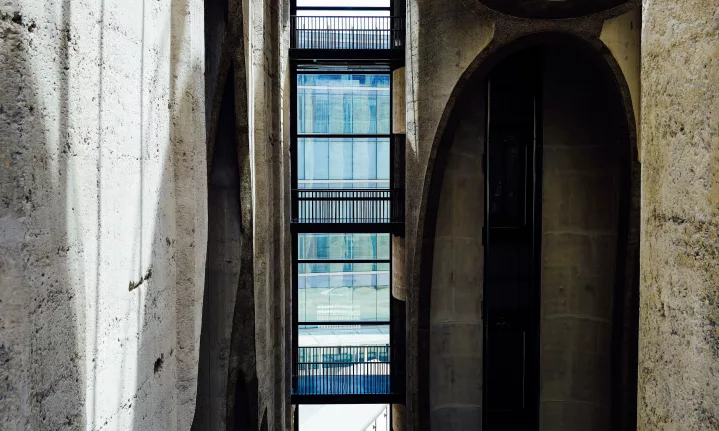
Some staircases lead to a viewpoint. Others are destinations in their own right.
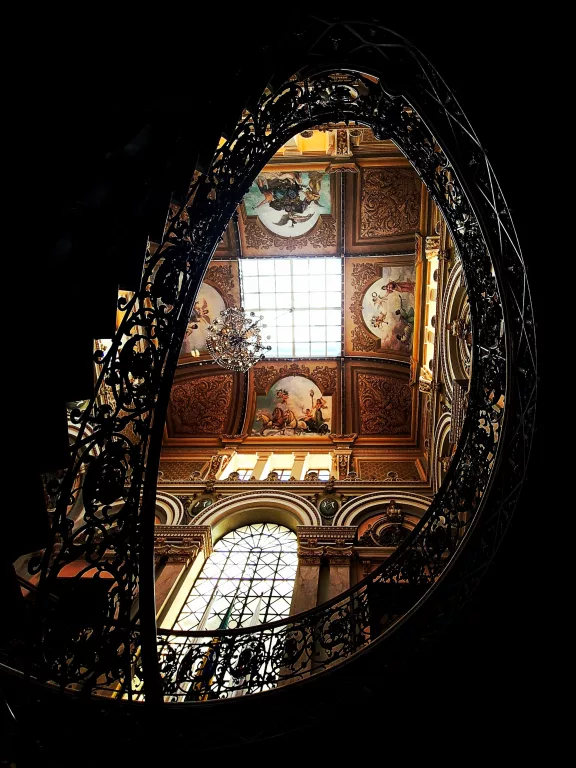
Intricate spiral staircase view with detailed ceiling and artwork, capturing historical architecture / Matheus Viana / Pexels
From ancient stepwells in India to a sculptural staircase inside a former Cape Town grain silo, these eight show how something as ordinary as a set of steps can become an extraordinary piece of architecture, history or engineering.
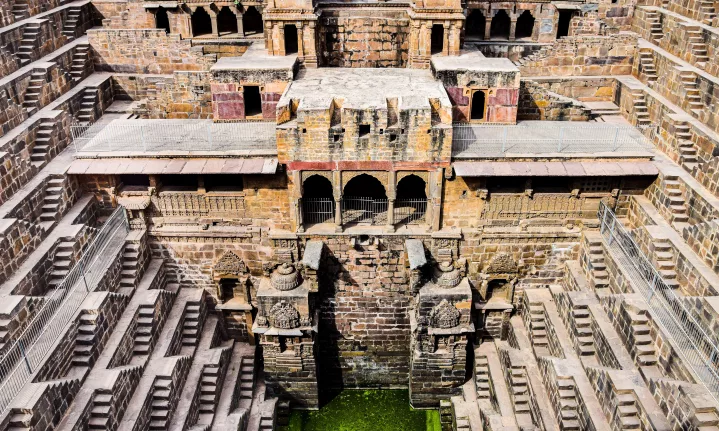
Chand Baori, Rajasthan, India
In the village of Abhaneri, around 95km from Jaipur, thousands of stone steps descend into one of India’s most remarkable historic structures. Chand Baori is a stepwell dating back to the ninth century, built to collect and store water in a region where it was essential for survival.
It’s approximately 3,500 steps are arranged across 13 levels, creating a precise geometric pattern that becomes more striking as you look down into the well. A carved pavilion runs along one side.
Stepwells were practical structures, but they also served as gathering places for local communities. Chand Baori is now one of Rajasthan’s most distinctive architectural landmarks and makes a worthwhile detour from Jaipur.
Why visit: To see how a practical solution to water scarcity became an extraordinary feat of design.
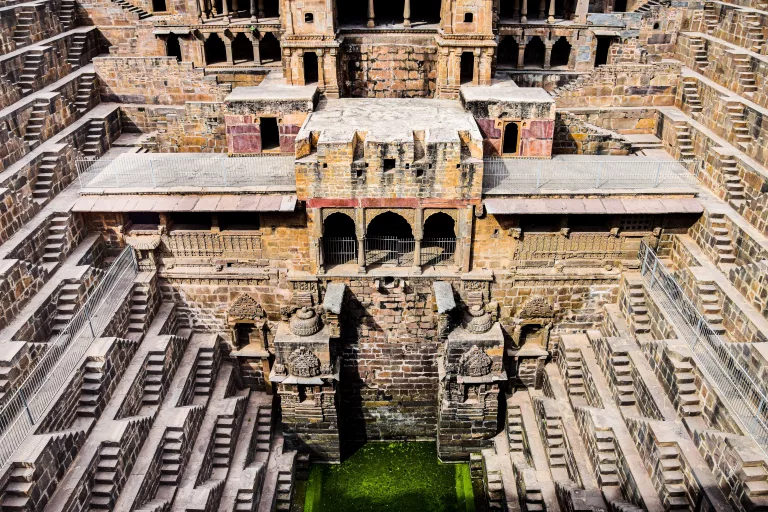
Chand Baori, Rajasthan, India / AXP Photography / Pexels
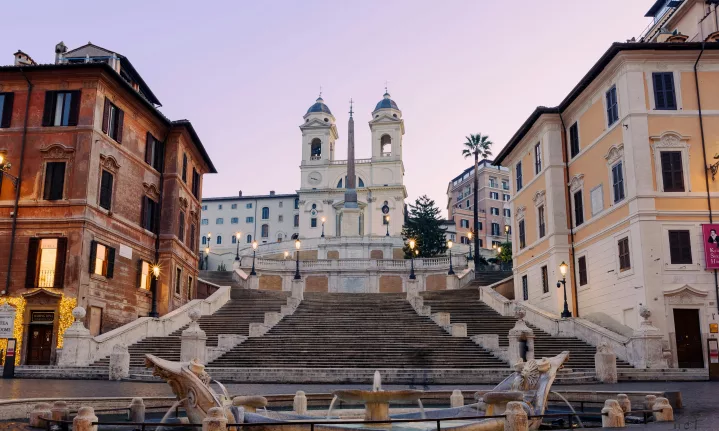
The Spanish Steps, Rome, Italy
The Spanish Steps connect Piazza di Spagna with the church of Trinità dei Monti above. Built between 1723 and 1726, the 18th-century staircase was designed by Francesco de Sanctis, with curved flights and landings that give it a distinctive shape.
It’s one of Rome’s best-known landmarks, but it’s appeal goes beyond it’s architecture. The steps sit in the middle of a lively part of the city, surrounded by historic streets, shops and cafés.
Arrive early to appreciate the design before the crowds build. Just remember that sitting on the steps is prohibited under local rules protecting the monument.
Why visit: For a piece of Rome’s history that remains part of everyday city life.
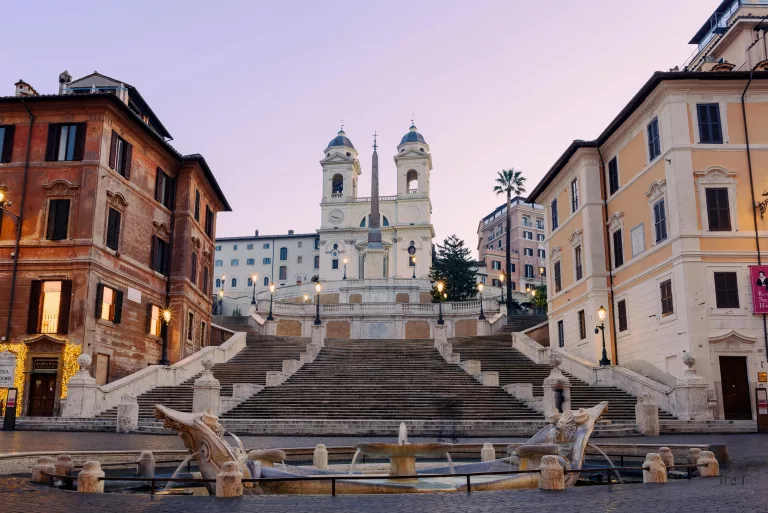
Piazza di Spagna at Sunrise. Roma / Matteo del Piano / Unsplash
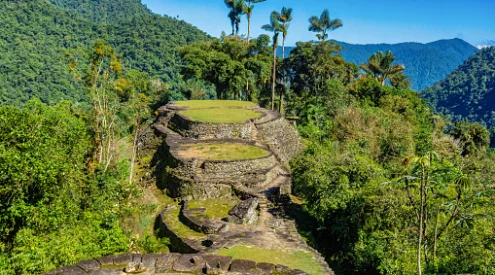
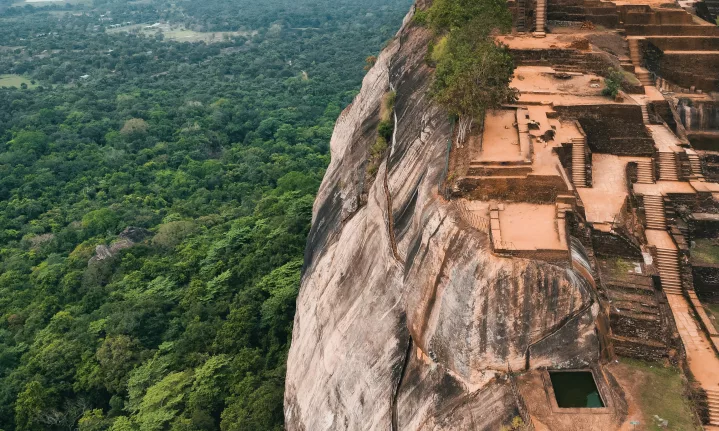
Sigiriya Lion Rock, Sri Lanka
Climbing Sigiriya means following a staircase through the remains of a fifth-century royal fortress. Built under King Kashyapa, the site rises above the surrounding forest, with the final ascent passing between enormous carved lion paws.
Along the way, visitors encounter ancient gardens, water features and frescoes. At the summit, the ruins of the former royal complex offer views across the surrounding countryside.
The climb can be demanding in the heat, so take water, wear comfortable shoes and allow a few hours to explore.
Why visit: To experience an ancient fortress where the climb is part of the history.
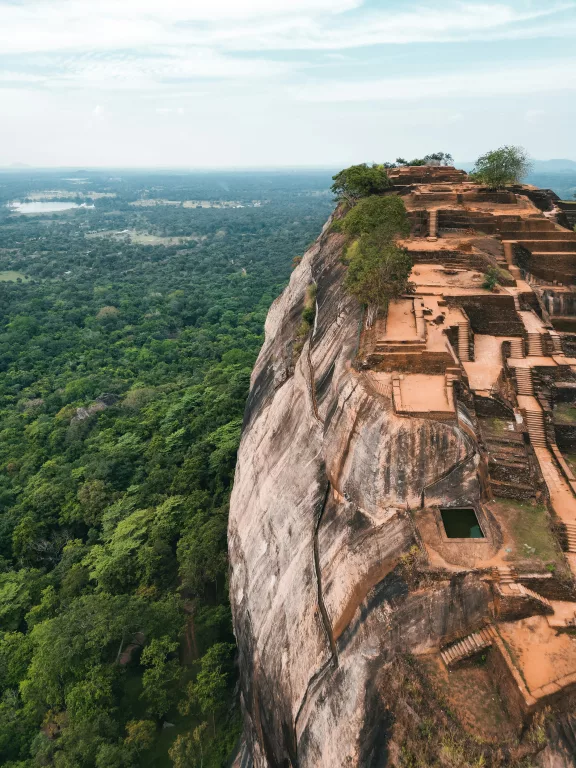
Sigiriya, Sri Lanka / sander traa / Unsplash
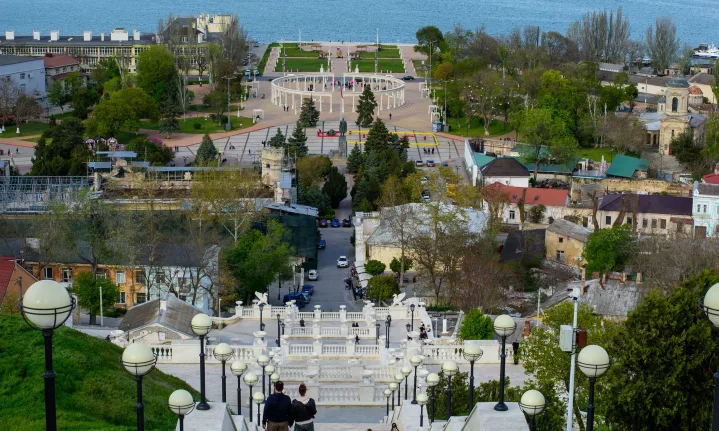
Potemkin Stairs, Odesa, Ukraine
The Potemkin Stairs connect the historic centre of Odesa with it’s harbour. Built in the 19th century, the staircase is known for an optical illusion created by it’s design: from above, the flights and landings appear to merge into one continuous descent.
The landmark became internationally famous through Sergei Eisenstein’s 1925 film Battleship Potemkin, which featured a memorable sequence filmed on the steps.
Today, the staircase remains one of Odesa’s defining landmarks. A nearby funicular offers an alternative to climbing, while the steps themselves provide a direct connection between the city and the waterfront.
Why visit: For it’s unusual design and place in cinema history.
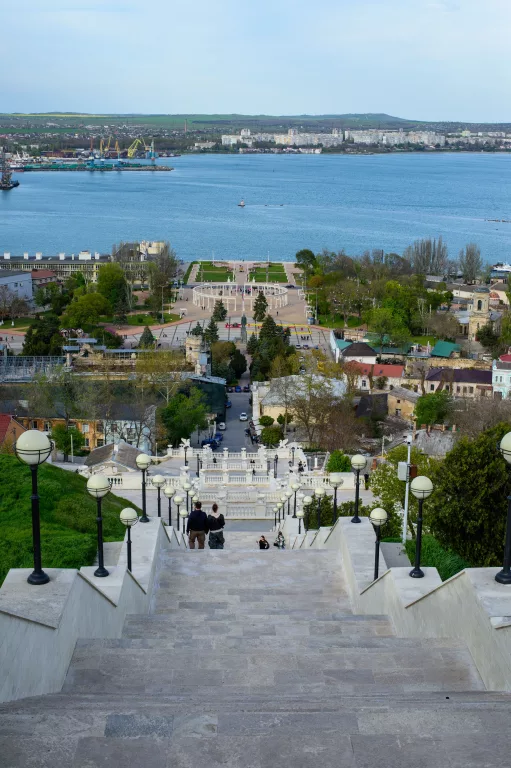
A scenic view from the Potemkin Stairs overlooking the Black Sea in Odessa, Ukraine / Oleksiy / Pexels
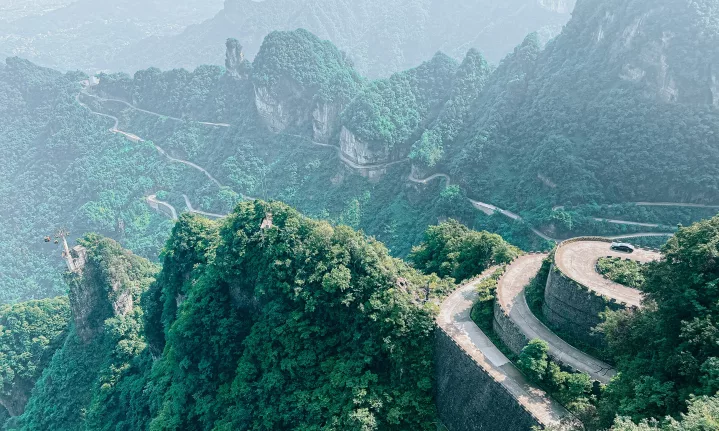
Tianmen Mountain, China
At Tianmen Mountain, 999 steps lead towards a vast natural arch known as Heaven’s Gate. The staircase climbs towards the opening in the mountain, making the ascent a highlight of the visit.
There are other ways to explore the area, including a cable car from Zhangjiajie and a winding mountain road. But for those who enjoy a physical challenge, the staircase offers a closer experience of the mountain.
Check local access arrangements before travelling, as conditions and visitor restrictions can change.
Why visit: To climb towards one of China’s most recognisable natural landmarks.
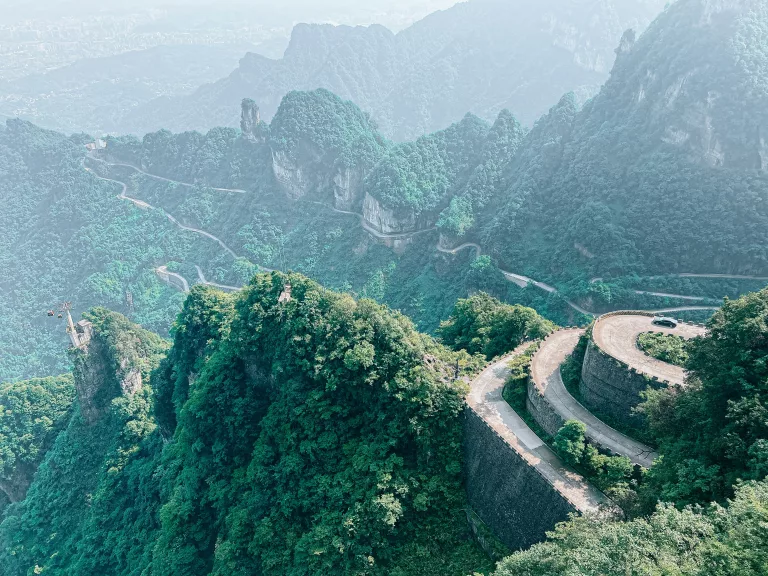
Tianmen Mountain, China / Jayden Pang / Unsplash
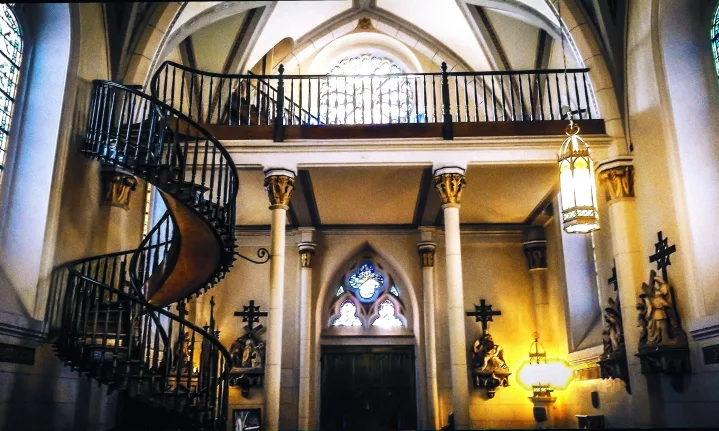
The Miraculous Staircase, Santa Fe, USA
Inside Loretto Chapel is a wooden spiral staircase that has attracted visitors for generations. Built around 1878, it rises approximately 6m to the choir loft, winding upwards without a central supporting column.
It’s unusual construction inspired the name Miraculous Staircase. According to a local religious legend, a mysterious carpenter appeared after the Sisters of Loretto prayed for a way to reach the loft, completed the staircase and disappeared.
The story remains part of the chapel’s appeal, although the carpenter’s identity and the details of it’s construction have been debated. Whatever the truth behind the legend, the staircase is an impressive example of craftsmanship.
Why visit: To see an unusual piece of woodworking and discover the story behind it’s enduring reputation.
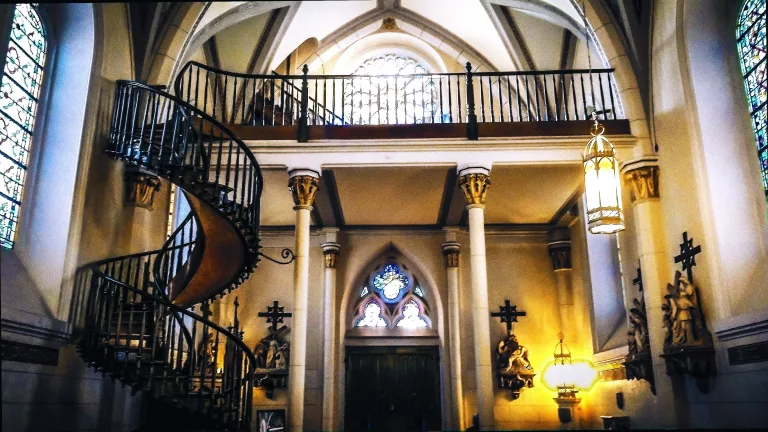
The Miraculous Staircase, Santa Fe, USA / K. Mitch Hodge / Unsplash
Zeitz MOCAA, Cape Town, South Africa
Inside Cape Town’s former grain silo at the V&A Waterfront, a sculptural staircase winds through the concrete structure of Zeitz MOCAA.
Designed by Heatherwick Studio, the museum opened in 2017 after the industrial building was transformed into a contemporary art museum. Rather than demolishing the silos, the architects retained much of the original structure and carved out a dramatic central atrium.
The staircase is part of that transformation, fitting into one of the silo’s narrow cylindrical spaces. It’s worth exploring the museum’s galleries too, which showcase contemporary art from Africa and it’s diaspora.
Why visit: To see how a former industrial building has been turned into one of Cape Town’s most distinctive cultural spaces.
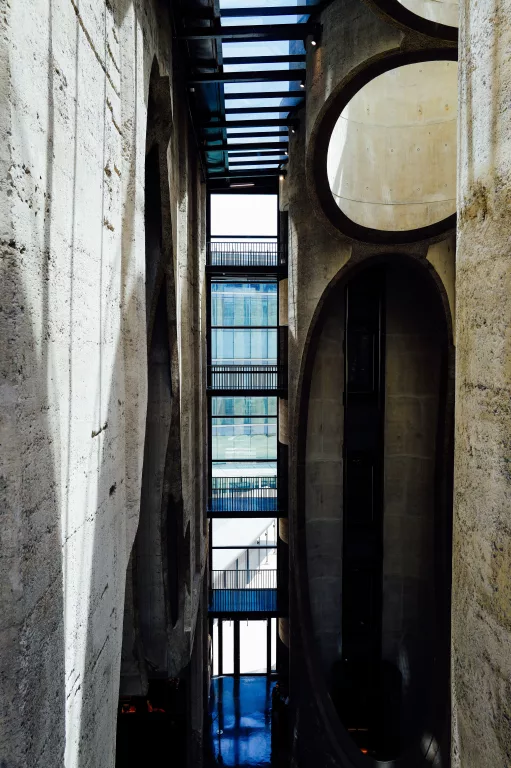
Zeitz MOCAA / Adrien Olichon/ Pexels
More than a way up
These staircases were built for different reasons, from storing water and connecting cities to reaching mountain summits and transforming old buildings. What makes them worth visiting is the story behind each one.
Some require a little effort to reach the top. Others invite you to slow down and look more closely at the details. Either way, they prove that sometimes the journey between two places can be just as interesting as the destination itself.
Follow us on social media for more travel news, inspiration, and guides. You can also tag us to be featured.
Instagram | Facebook | Twitter | Spotify
ALSO READ: