Africa is often explored from the back of a safari vehicle, along dusty roads and between national parks. But some of the continent’s most memorable landscapes make more sense from the water.
A mokoro can take you silently between the channels of Botswana’s Okavango Delta. A canoe can bring you close to wildlife along Zambia’s Lower Zambezi. In Mozambique, a traditional dhow turns the journey between islands into part of the experience, while Tanzania’s Rufiji River offers a different perspective on a classic wildlife safari.
These are destinations where rivers, lakes, wetlands and oceans are not simply backdrops. They shape the landscape, attract wildlife, connect communities and, in many cases, provide the most rewarding way to see what makes the destination special.
Here are seven African destinations where getting on the water changes the way you experience the place.
1. Okavango Delta, Botswana
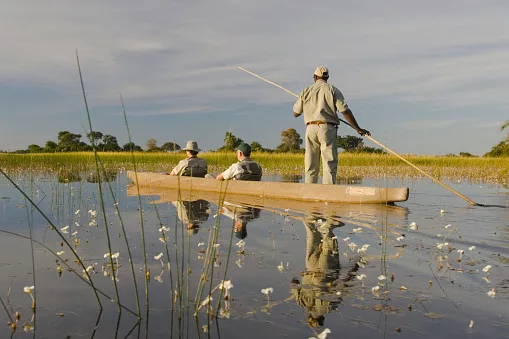
Mokoro tour (traditional canoe) from Jao Camp in the Okavango Delta, Botswana/By: Michele Westmorland, Corbis Documentary/Getty Images
Explore the wetlands by mokoro
Few places demonstrate the value of travelling by water better than Botswana’s Okavango Delta.
The UNESCO-listed wetland spreads across the Kalahari Basin, creating a constantly shifting landscape of channels, lagoons, flooded grasslands, islands and dry woodland. The annual flood transforms large parts of the Delta into a network of waterways, making boats an essential part of exploring some areas. Botswana Tourism lists boating and traditional mokoro excursions among the Delta’s major experiences.
A mokoro is a traditional dugout canoe, traditionally propelled through shallow water by a poler. From this low position, the Delta feels less like a conventional safari destination and more like an enormous floating wilderness.
The boat moves quietly through papyrus and reeds, with only the sound of water against the hull and the occasional call of a bird breaking the silence.
That quietness matters. The Okavango is home to elephants, hippos, crocodiles, antelope, lions and an extraordinary variety of birdlife, but the appeal of a mokoro excursion isn’t necessarily about ticking animals off a list. It is about seeing the relationship between water, vegetation and wildlife at close range.
The experience also changes with the seasons because the Delta’s water levels influence which channels can be navigated and where wildlife concentrates.
For travellers who want to understand why the Okavango is so different from a conventional savannah safari, the answer is often found in a mokoro.
2. Lower Zambezi, Zambia
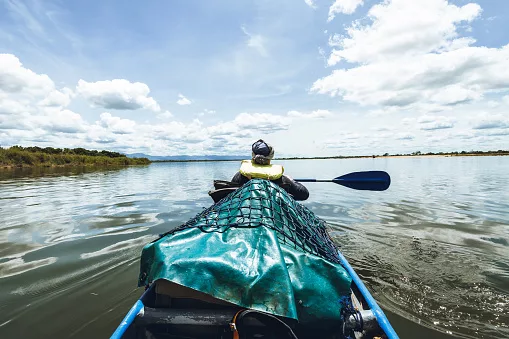
Rear view of a man paddling in a canoe on the Zambezi River in the Lower Zambezi National Park in Zambia/By: golero/Getty Images
Paddle into the wilderness
The Zambezi is one of Africa’s great rivers, but in Zambia’s Lower Zambezi region it becomes more than a geographical feature. It is the centre of the safari experience.
Lower Zambezi National Park lies along the northern bank of the river, opposite Zimbabwe’s Mana Pools landscape. The river attracts elephants, hippos, crocodiles and a wide range of birds and other wildlife, while canoeing has become one of the region’s signature ways to explore.
A guided canoe safari puts you close to the surface of the river, moving through channels and around islands rather than following a road.
The pace is deliberately slow. Instead of an engine carrying you towards the next sighting, the current and your guide determine the rhythm. Elephants may appear along the shoreline, hippos can be encountered in the water and fish eagles are part of the river’s soundtrack.
The Lower Zambezi Tourism Association describes canoeing as a peaceful way to observe the wilderness at close range, while Zambia’s tourism authority highlights guided canoeing through the river’s channels.
It is also a useful reminder that a safari does not have to mean sitting in a vehicle. Here, the river itself becomes the route.
3. Lake Malawi, Malawi
Make the lake your road
Lake Malawi is so large that it can feel more like an inland sea than a lake.
That scale makes travelling by water particularly rewarding. Boat trips can connect lakeshore communities, beaches and islands, while sailing, kayaking, snorkelling and fishing provide different ways of experiencing the freshwater landscape. Malawi Tourism lists everything from short excursions in traditional boats to longer cruises and the scheduled Ilala ferry.
For travellers based around Cape Maclear, boat trips can reach the islands of Lake Malawi National Park, where clear water and colourful cichlid fish make snorkelling part of the experience.
The Marelli Islands, off Senga Bay, are another option, while larger boats can be used for longer cruises and overnight journeys.
One of the most interesting ways to experience the lake is aboard the Ilala. Unlike a private sightseeing cruise, the vessel also serves as a working passenger ferry, allowing travellers to experience the lake as part of everyday life rather than simply as a leisure destination.
Here, the journey matters as much as the destination. Beaches, islands, fishing boats and villages become part of a landscape connected by water.
ALSO READ:
4. Nyerere National Park, Tanzania
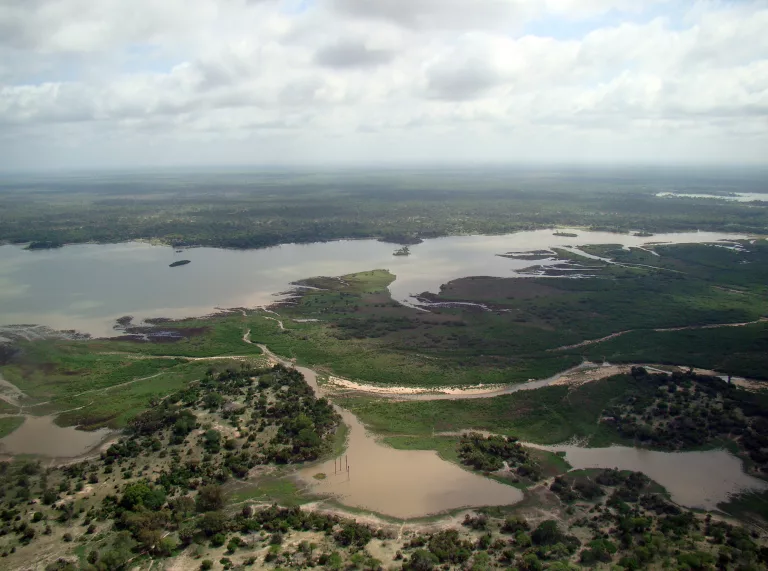
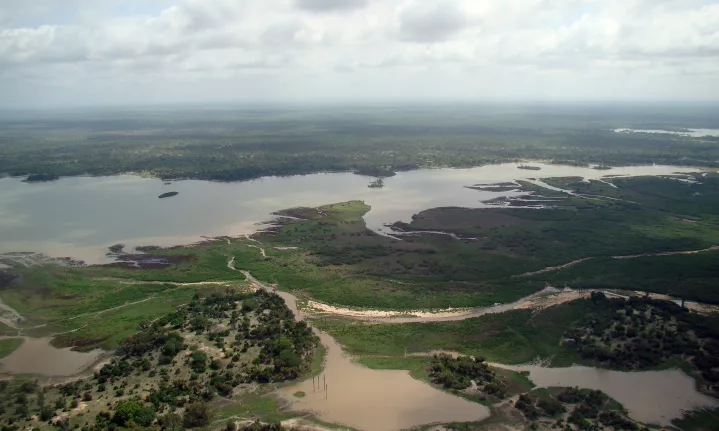
Aerial view of the Rufiji River winding through the landscape of the Selous Game Reserve and Nyerere National Park in Tanzania/User: (WT-shared) Digr at wts wikivoyage/Wikimedia Commons
Follow the Rufiji River
Nyerere National Park offers a different kind of water-based safari.
The former Selous landscape is dominated in part by the Rufiji River and its network of channels and lakes. Tanzania National Parks describes the park as a wilderness of floodplains, woodland and braided waterways, with boat safaris providing opportunities to see wildlife from a completely different perspective.
From a boat, hippos and crocodiles become part of the immediate landscape, while elephants may approach the river to drink or cross the water. Waterbirds add another dimension to the experience, with species including fish eagles, kingfishers and other riverine birds.
The boat also allows you to explore parts of the park that are impossible to experience from a conventional game-drive vehicle.
Instead of following tracks through woodland and grassland, you drift between channels and along the edges of lakes, watching wildlife that has come to depend on the Rufiji system.
For travellers who have already experienced Tanzania’s northern safari circuit, Nyerere offers a compelling change of pace. The wildlife is still the attraction, but the river becomes the safari road.
5. Lake Kivu, Rwanda
Cross a lake surrounded by hills
Lake Kivu offers a quieter, more human-scale water experience.
The lake stretches along Rwanda’s western edge, surrounded by steep green hills and lakeside settlements. Rather than focusing on big-game viewing, water-based experiences here bring together scenery, islands, fishing traditions and local communities.
Visit Rwanda highlights boat cruises as one of the ways to explore the lake, while community-led initiatives around Kivu offer island excursions and fishing experiences.
A boat trip can take visitors towards small islands, where the landscape shifts from busy lakeshore settlements to quieter stretches of water and forest.
Community tourism also gives the experience more depth. Visit Kivu promotes island excursions alongside traditional night and dawn fishing experiences, connecting visitors with local ways of life rather than treating the lake simply as a scenic attraction.
Kayaking and canoeing provide another option for exploring the shoreline at a slower pace, with views towards the surrounding hills and opportunities to see fishing boats and birdlife.
Lake Kivu is therefore less about searching for a major wildlife sighting and more about understanding a landscape shaped by water.
6. Bazaruto Archipelago, Mozambique
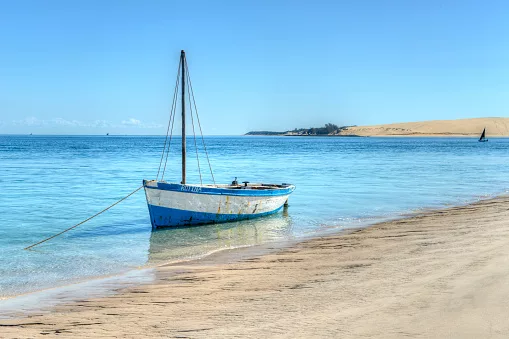
Dhow on the shores of Bazaruto Island, Mozambique/By: demerzel21/iStock
Sail between islands by dhow
In the Bazaruto Archipelago, the Indian Ocean is the highway.
The protected archipelago is made up of islands, reefs, sandbanks, dunes and shallow turquoise water, and moving between these landscapes by boat makes the geography part of the adventure.
A traditional dhow is one of the most atmospheric ways to explore. Visit Bazaruto promotes dhow island-hopping as a way to explore the archipelago under sail, with many lodges arranging day trips for visitors.
The pace is very different from a motorised excursion. The sails catch the wind as the islands gradually change shape on the horizon, while shallow sandbanks and brilliant blue water appear between stops.
The water is also the gateway to the archipelago’s marine life. Visitors can snorkel around reefs and look for turtles, sharks and schools of fish, while the islands themselves support distinctive coastal habitats.
Bazaruto also offers opportunities to connect with island communities, with community visits available on Bazaruto and Benguerra.
The result is a destination where the boat is not simply transport between activities. Sailing, swimming, snorkelling and exploring islands all become part of one continuous water-based journey.
7. Chobe River, Botswana
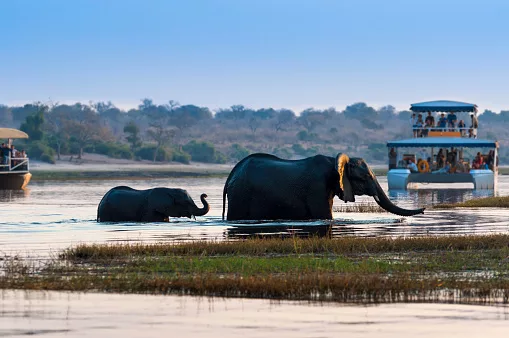
Female African Elephant and its cub crossing the Chobe River in the Chobe National Park with tourist boats on the background/By: Tiago_Fernandez/iStock
Watch wildlife come to the water
Botswana’s Chobe River provides one of Africa’s most accessible ways to combine a boat journey with big-game viewing.
The river forms the northern boundary of Chobe National Park and attracts large numbers of wildlife, particularly during dry periods when permanent water becomes increasingly important.
A river cruise changes the usual safari perspective. Instead of driving towards wildlife, you can sit on the water and allow the animals to come to the river.
Elephants are the obvious stars, often gathering along the banks to drink, swim and bathe. Hippos and crocodiles occupy the water itself, while birds move between the river and surrounding floodplains.
Boat cruises also offer a different way to appreciate the landscape. The river opens up broad views across the floodplain, while the changing light towards late afternoon can turn the water into a central part of the spectacle.
Cruises on the Chobe are available at different times of day, with operators offering shorter trips as well as longer excursions.
For anyone who thinks a safari has to happen from a 4×4, the Chobe provides a convincing alternative: find a comfortable place on the boat, watch the shoreline and let the wildlife come to you.
Why explore Africa from the water?
The perspective changes
A road tends to divide a landscape into destinations: camp, viewpoint, waterhole, picnic site.
A river or lake connects them.
Travelling by water slows the journey down and makes the landscape itself part of the experience. You notice channels rather than roads, islands rather than junctions and wildlife behaviour rather than simply sightings.
The method of travel also influences what you can see. A mokoro slips into shallow Delta channels that a vehicle cannot reach. A canoe follows the Zambezi’s waterways. A boat on the Rufiji opens up a different side of a national park, while a dhow makes the journey between Mozambique’s islands part of the adventure.
Across all seven destinations, the water is more than an activity.
It is the way into the landscape.
Plan around the water
Water-based travel is naturally seasonal, so the experience can vary considerably depending on rainfall, flooding, wind and local conditions.
In the Okavango, the annual flood shapes which areas are navigable. In Zambia’s Lower Zambezi, canoeing is seasonal, with Zambia Tourism noting that many operators run from roughly April to November and identifying July to October as a particularly favourable period.
At Lake Malawi and Bazaruto, conditions on the water can influence sailing and boat excursions, while river levels and wildlife movements affect experiences along the Rufiji and Chobe.
That variability is part of the appeal. These aren’t destinations where the landscape stays neatly fixed throughout the year.
The water changes, and the way you experience the destination changes with it.
Seven destinations, seven ways to travel
From a silent mokoro in Botswana to a working ferry on Lake Malawi and a traditional dhow in Mozambique, these journeys show how diverse water-based travel can be across Africa.
Some are about wildlife. Others are about landscapes, islands, fishing traditions or simply slowing down enough to see a familiar destination differently.
Follow us on social media for more travel news, inspiration, and guides. You can also tag us to be featured.
Instagram | Facebook | Twitter | Spotify
ALSO READ: