
Rivers run through neighbourhoods, hills shape the streets, wetlands collect rain and mountains rise behind homes and offices. These landscapes are not just places to visit at the weekend. They affect how cities grow, how people travel and what makes each city special.
From the Nile in Uganda to the highlands of Angola, these seven African cities show how geography can become part of urban life.
Jinja, Uganda
Source of the Nile, Jinja, Uganda/Christopher Liberty/Wikimedia Commons
Where the Nile meets the city
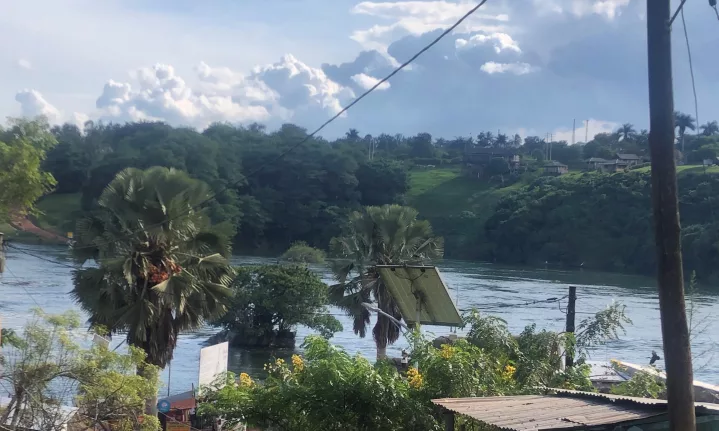
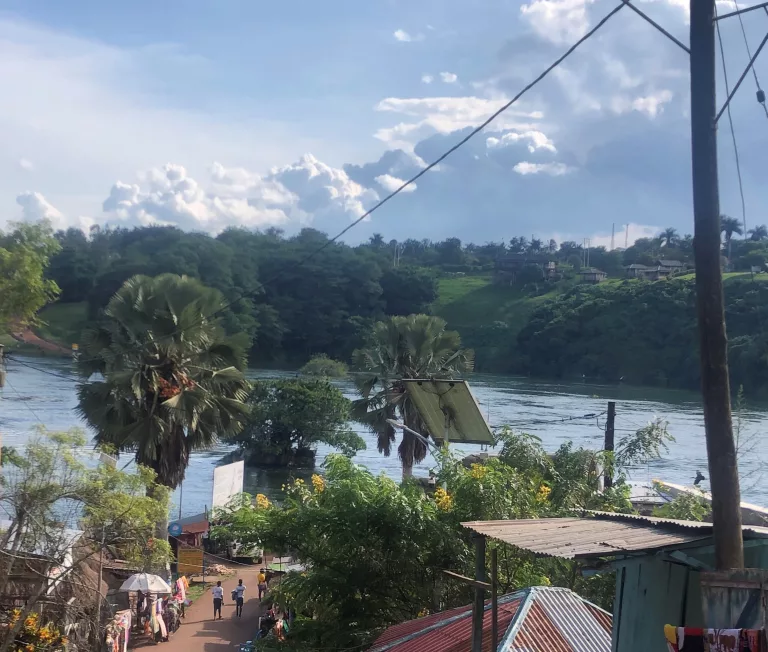
Jinja’s relationship with water is impossible to separate from its identity. The Ugandan city sits beside Lake Victoria, while the Victoria Nile flows out of the lake at the eastern edge of the city. The city also includes several islands within its municipal area.
That geography has helped make Jinja one of Uganda’s best-known adventure destinations. The Nile is central to activities including rafting, cruises, bungee jumping and other water-based experiences, while the river and lake have also played an important role in the city’s industrial and economic development.
Yet the appeal of Jinja’s landscape isn’t limited to adrenaline activities. Walk through the city, and the presence of water is never far away. Riverbanks, lakeside views and the broad green landscape around the Nile give Jinja a distinctly different rhythm from Uganda’s inland cities.
The landscape is also part of the city’s history. Jinja developed as an important trading and transport centre, while the Nile helped support hydroelectric power generation and industry. Today, visitors arrive for the river, but the river has long been part of the city’s everyday life.
Kisumu, Kenya
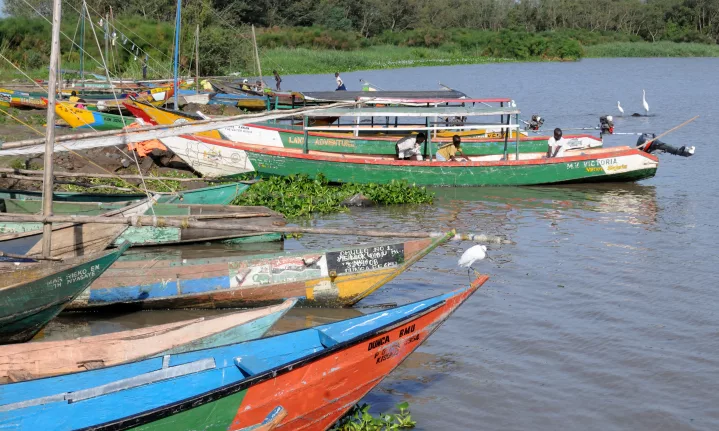
Boats and landing sites on Lake Victoria at Kisumu, Kenya/Josep M. Gracia/Wikimedia Commons
A city built around a great lake
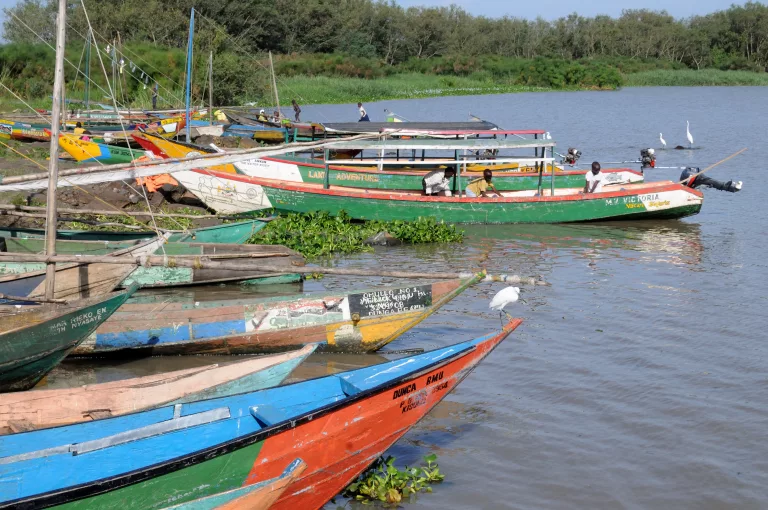
On the northeastern shore of Lake Victoria, Kisumu is one of East Africa’s great lake cities. The city describes itself as the principal urban centre of the Lake Victoria Basin and a major economic, cultural and transport hub in western Kenya.
Lake Victoria changes the experience of being in Kisumu. The waterfront is not an isolated attraction outside the city but a place connected to fishing, food, transport, recreation and local livelihoods.
At Dunga Beach, boats and fishing activity provide a reminder that this is a working lake as much as a scenic one. Elsewhere, the lake forms the backdrop to walks, restaurants and everyday city life.
Kisumu’s geography also gives it a gateway role. From here, travellers can explore other parts of the Lake Victoria basin, while the city’s own attractions include the Kisumu Museum and Kisumu Impala Sanctuary.
The result is a city that feels oriented towards the water. The lake isn’t something Kisumu happens to have nearby; it is one of the things that makes Kisumu what it is.
Kigali, Rwanda
Countryside of Kigali, Rwanda/By: LB Studios/Getty Images
Where hills and wetlands become urban infrastructure
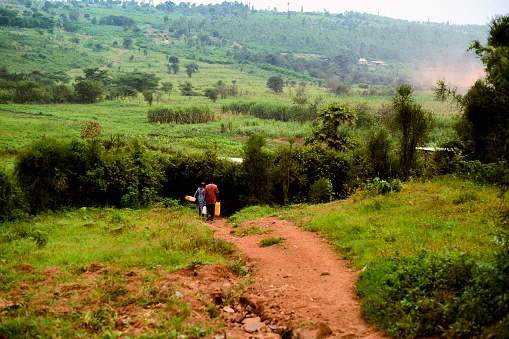
Kigali is often described through its hills, and for good reason. The capital spreads across a landscape of steep slopes, valleys, rivers and wetlands rather than a flat urban plain.
The city’s natural setting is unusually integrated into its built environment. A strategic environmental assessment of Kigali found that steep slopes, rivers, wetlands, forests and agricultural areas together account for a substantial portion of the city’s landscape.
The hills affect how people move through Kigali. Roads rise and fall between ridges, while valleys provide a striking contrast to the dense development higher up.
But the wetlands are perhaps the more revealing part of the story. They are not just green spaces. Kigali’s wetlands store and release water, help buffer flooding and provide ecological benefits within the city. The city has been undertaking major wetland restoration projects, linking environmental protection with flood management, recreation and urban quality of life.
Some of these restored areas are becoming places for residents to walk, spend time outdoors and experience nature without leaving the capital.
In Kigali, the landscape isn’t merely something to look at. It helps the city function.
Addis Ababa, Ethiopia
Ethiopia – Addis Ababa landscape/By: sanniely/Getty Images
Where the highlands meet the city
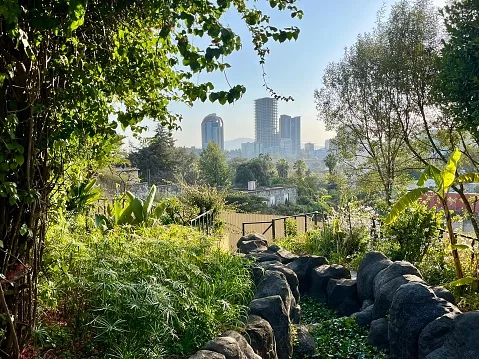
Addis Ababa is a city shaped by altitude. Set on Ethiopia’s highlands, the capital sits beneath the Entoto Mountains, whose forested slopes rise above the northern edge of the city.
Entoto is more than a backdrop. Its forests, trails and viewpoints have become part of city life through Entoto Park, where residents can walk, cycle and spend time outdoors without leaving the capital.
Water is also becoming more visible in the urban landscape. In June 2026, the city opened the Entoto–Kechene riverside development, restoring a river corridor with green spaces and public facilities.
Together, the mountains, forests and waterways give Addis Ababa a distinctive highland character. Here, nature isn’t simply somewhere beyond the city limits — it is woven into the capital itself.
ALSO READ:
Mbabane, Eswatini
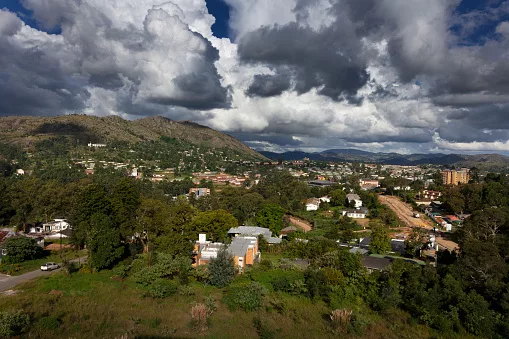
Aerial panoramic view of Mbabane, the capitol city of Eswatini/By: Jadwiga Figula/Getty Images
A capital surrounded by mountains
Mbabane doesn’t need a skyline of skyscrapers to make an impression. Its skyline is largely provided by the mountains around it.
Eswatini’s capital is located on the Mbabane River and its tributary, the Polinjane River, within the Mdzimba Mountains.
That setting gives Mbabane a distinctly highland character. The city is greener and more topographically varied than many Southern African capitals, with roads and neighbourhoods following the contours of the surrounding terrain.
The mountains also influence the city’s climate and its appeal as an outdoor destination. Instead of feeling like an urban centre with nature somewhere beyond the outskirts, Mbabane feels embedded in its landscape.
This is particularly noticeable when moving through the city. Roads climb and descend, viewpoints open unexpectedly between buildings, and the surrounding mountains remain a constant presence.
For travellers exploring Eswatini, Mbabane can therefore be more than a practical stop between destinations. It offers a chance to experience a capital whose physical setting is part of its character.
Lubango, Angola
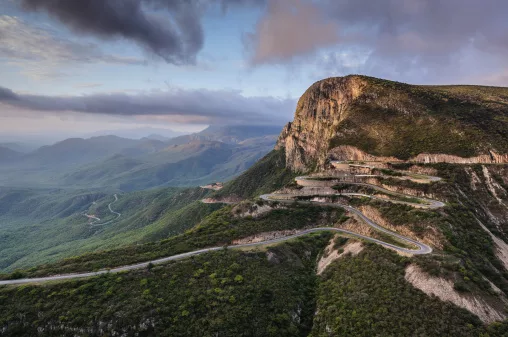
Serra da Leba, Huíla, Angola/Kostadin Luchansky – Angola Image Bank/Getty Images
A highland city beneath a dramatic escarpment
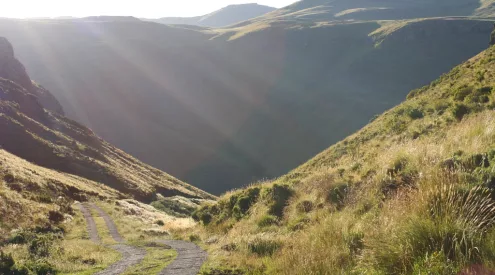
Lubango is one of Africa’s most strikingly situated inland cities. At roughly 1,700m above sea level, the capital of Angola’s Huíla province sits on a high plateau surrounded by mountains and dramatic escarpments.
The city’s elevated setting gives it a cooler climate and a landscape very different from Angola’s better-known coastal cities.
Then there is Tundavala.
About 18km from Lubango, the Tundavala Rift marks the edge of the Huíla Plateau, where the land drops dramatically towards the lowlands. The local tourism authority describes it as a major geological and scenic attraction, while also highlighting the cultural meanings that local communities attach to the landscape.
The Serra da Leba pass provides another extraordinary expression of the terrain, with its winding road descending through the mountains.
But the landscape isn’t simply something viewed from Lubango. The highland environment influences the city’s climate, vegetation, agriculture and architecture. Jacaranda and eucalyptus line parts of the city, while the surrounding plateau supports farming and livestock production.
Lubango demonstrates how dramatically geography can change the character of a city. In Angola’s highlands, the mountains are not a backdrop to the city. They are its setting.
When nature becomes part of the city
These cities are very different from one another, but they share a common feature: their landscapes cannot easily be separated from urban life.
In Jinja, the Nile and Lake Victoria influence recreation, industry and identity. In Kisumu, the lake shapes the city’s relationship with food, fishing and trade. Kigali’s hills and wetlands influence how water moves through the city, while Freetown’s mountains and Atlantic coastline define its physical boundaries.
Mbabane’s mountain setting gives the Eswatini capital its distinctive highland character. Lubango’s plateau and escarpments shape the climate and scenery around Angola’s southern city, while Harare’s wetlands provide an understated but essential natural infrastructure.
They are reminders that some of Africa’s most interesting cities are not places where you have to choose between city and nature.
Follow us on social media for more travel news, inspiration, and guides. You can also tag us to be featured.
Instagram | Facebook | Twitter | Spotify
ALSO READ: