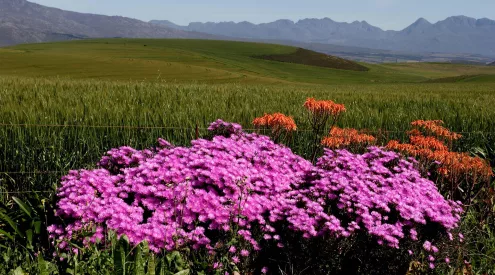




There are few better reminders that winter is finally over than seeing spring flowers in South Africa burst into colour. From vast wildflower carpets in Namaqualand to fynbos-covered mountain slopes in the Western Cape, the arrival of spring transforms some of the country’s most familiar landscapes.
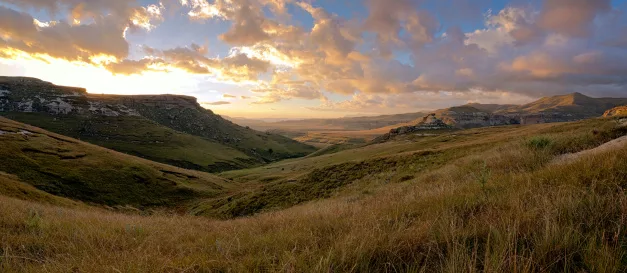
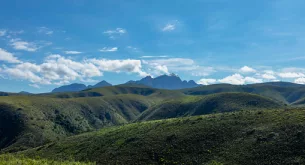
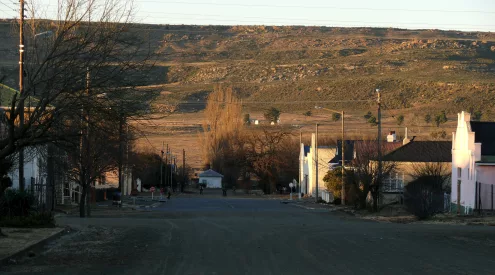
Panorama of the endless view, captured shortly before sunrise at the Golden Gate National Park/By: Paul Bruins Photography/Getty Images
The timing is never guaranteed. Rainfall, temperature and sunshine all influence when flowers appear and how long they last. That uncertainty is part of what makes the season so special. You cannot simply arrive whenever you like and expect the veld to be in full bloom.
If you get the timing right, however, these are some of the best places to experience spring in flower.
Namaqua National Park, Northern Cape
For the full-scale wildflower experience, it is difficult to look past Namaqua National Park. Part of the Succulent Karoo, the park is home to an extraordinary diversity of plant life, including more than 1 000 species found nowhere else on Earth. During August and September, its normally dry landscapes can transform almost overnight into carpets of colour.
The flower display is closely tied to winter rainfall, which means every season looks slightly different. In 2026, SANParks reported the first blooms appearing in late July, with the season expected to peak between mid-August and mid-September, weather permitting.
The park has a long history of recognising the importance of this landscape and its biodiversity. Today it forms part of the protected Succulent Karoo, while its cultural heritage also includes connections to the Nama people and ancient San rock art.
Why visit: This is where you go when you want the flowers to be the main event. Walk the Skilpad and Korhaan trails, take the seasonal circular flower drive or simply spend time photographing the changing landscape. Go on a sunny day, when the flowers open fully, and give yourself enough time to explore rather than rushing from one viewpoint to the next.
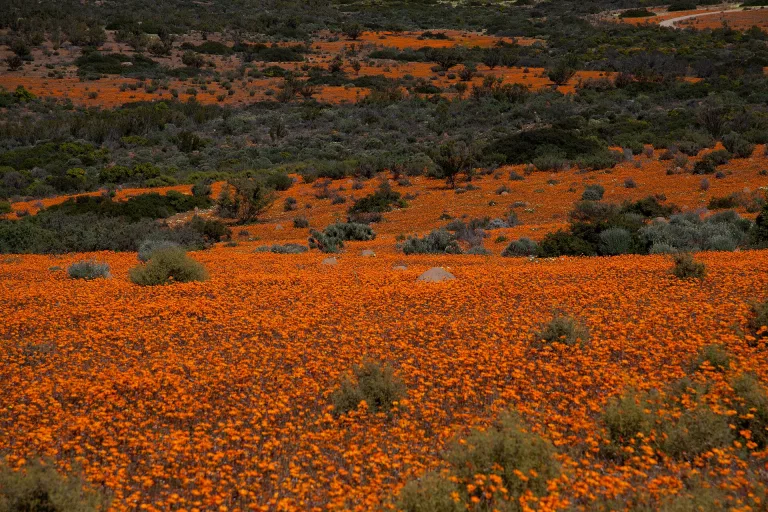
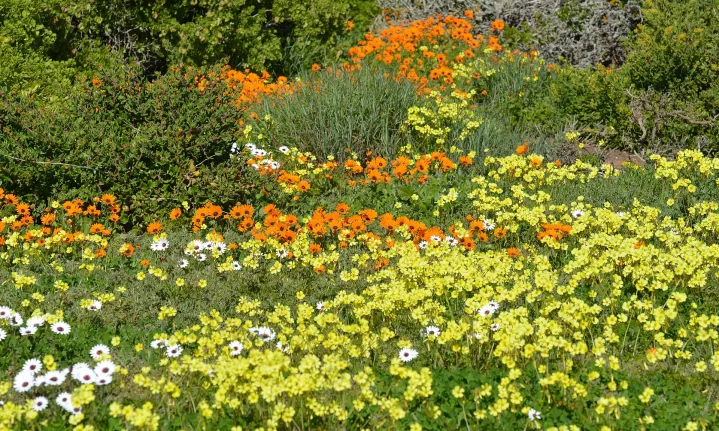
Carpets of Spring flowers, Namaqualand, Namaqua National Park / Photo by Winfried Bruenken / Wikimedia Commons
West Coast National Park, Western Cape
If Namaqualand feels like a dedicated road trip, West Coast National Park is the easier introduction to South Africa’s flower season, particularly for travellers based in Cape Town.
Every August and September, the park’s veld and fynbos erupt into colour. The standout is Postberg, a section of the park that is opened to visitors specifically during flower season. Here, flowers grow alongside the park’s wildlife and coastal scenery, creating a very different experience from simply walking through a botanical garden.
Flower season has become one of the park’s major annual attractions, with the display dependent on the preceding winter’s rainfall. SANParks advises visitors to come during the week where possible, as sunny weekends can bring long queues at the gates.
Why visit: Make a day of it. Drive or hike through Postberg, stop for a picnic and explore the wider park rather than treating the flowers as a quick roadside attraction. The park also offers opportunities to see game against the flower-covered landscape, making this one of the better choices for combining scenery and wildlife. The flowers are only part of the appeal. The combination of open veld, fynbos, lagoon and Atlantic coastline makes the West Coast particularly rewarding for a spring road trip.
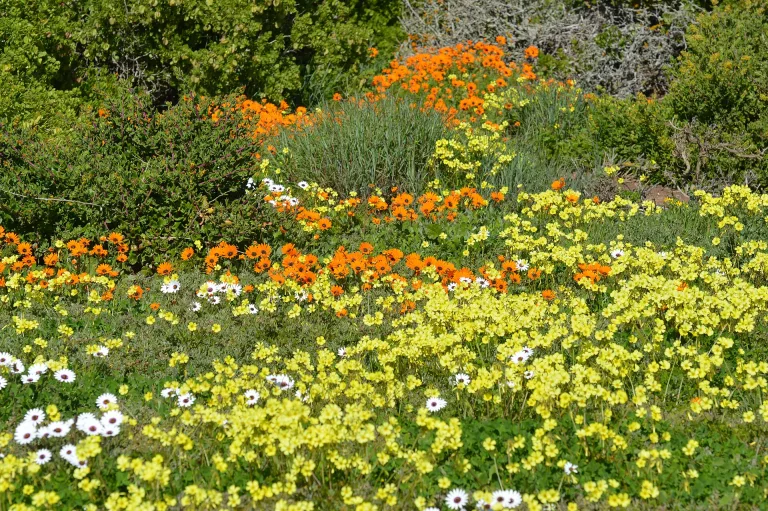
Flowers during the 2021 flower season in the West Coast National Park / Photo by Discott / Wikimedia Commons
Hantam National Botanical Garden, Nieuwoudtville
Nieuwoudtville is one of those places that rewards travellers who are willing to venture a little further. At Hantam National Botanical Garden, more than 6 000 hectares encompass Nieuwoudtville Shale Renosterveld, Dolorite Renosterveld and Hantam Succulent Karoo. More than 1 350 types of flowers occur in the area, including more than 80 species endemic to the Bokkeveld Plateau.
Spring is the garden’s best-known season, generally running from August into October. Annuals, bulbs and succulents cover sections of the landscape in colour, with species including the deep-blue Pride-of-Nieuwoudtville and coppery-pink Sparaxis elegans.
The garden’s history is tied closely to flower tourism. The property was formerly the Glenlyon farm, owned by the MacGregor family, who began offering flower tours in 1960. SANBI acquired the farm in 2007 and it became the Hantam National Botanical Garden.
Why visit: This is a destination for slowing down and looking closely. Follow one of the garden’s trails or book a guided Hantam Explorer tour during the flowering season. The guided experience focuses not only on the flowers but on the relationship between plants, pollinators, soils and the different vegetation types found here. It is a particularly good choice if you want to understand the landscape rather than simply photograph it.
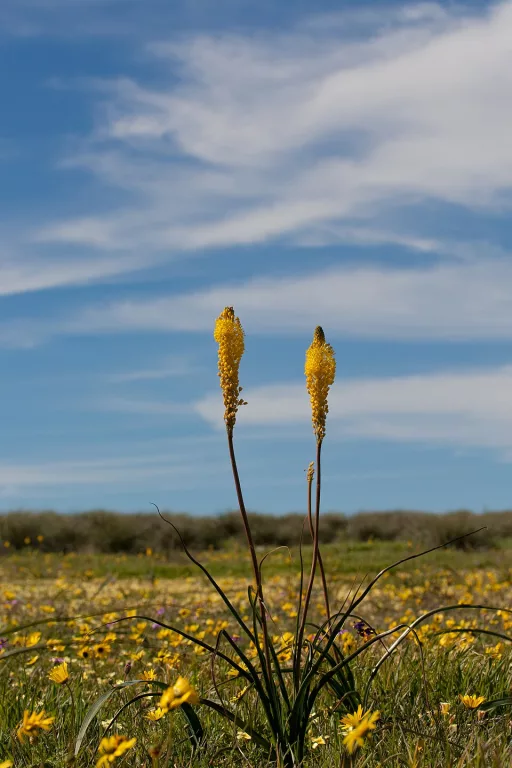
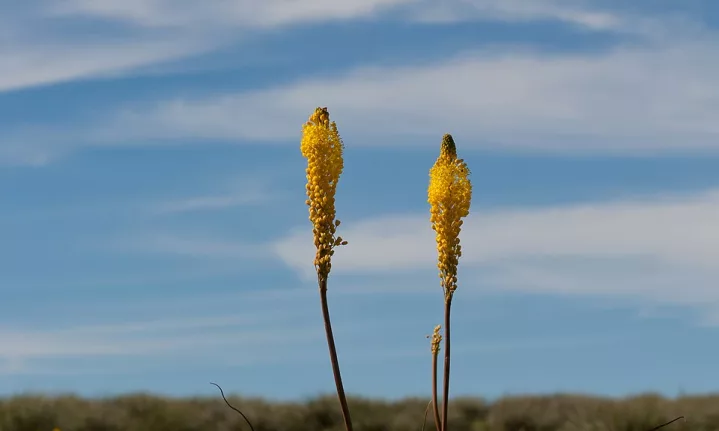
Bulbinella elegans photographed in the Hantam National Botanical Garden, Nieuwoudtville, South Africa. / Julie Anne Workman / Wikimedia Commons
Karoo Desert National Botanical Garden, Worcester
You do not have to drive all the way into Namaqualand to experience a serious spring display.
Just outside Worcester, the Karoo Desert National Botanical Garden protects and showcases plants from the arid and semi-arid regions of southern Africa. The garden was established in 1921 and moved from Whitehill near Matjiesfontein to Worcester in 1945.
Spring is its most popular season, when annuals and vygies flower across the garden. The display is particularly impressive from late July to late September, with reds, pinks, yellows, purples and oranges appearing among the rocky landscape.
Why visit: The garden is an excellent option for a slower spring outing. Walk the Shale Trail, explore the natural areas and spend time around the annual and perennial displays. The garden also has picnic areas and a restaurant, making it easy to turn a flower-viewing trip into a relaxed day out. It is also a useful reminder that the Karoo is anything but barren. In spring, the landscape makes that very clear.
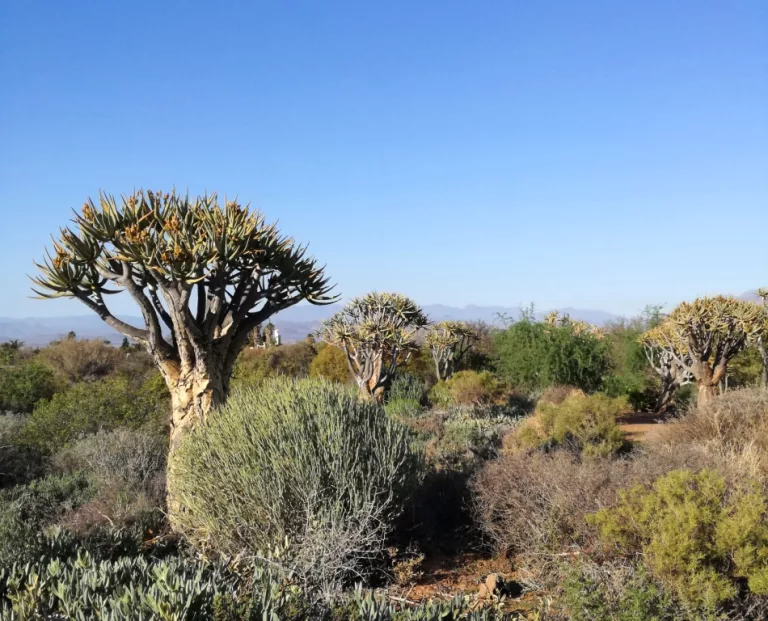
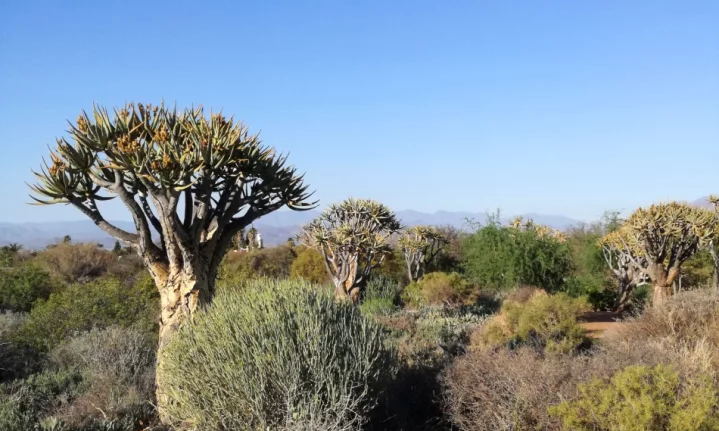
Seeding Quiver Trees – Karoo Desert National Botanical Gardens / S Molteno / Wikimedia Commons
Kirstenbosch National Botanical Garden, Cape Town
For those who would rather not turn flower hunting into a multi-day road trip, Kirstenbosch delivers one of the country’s most accessible spring displays.
The garden was formally established in 1913 after part of Cecil John Rhodes’ estate was handed over for the creation of a national botanic garden. It was initially a neglected, overgrown farm, but its early directors and staff gradually developed the garden into the landscape visitors know today.
Spring is considered Kirstenbosch’s most colourful season, with many species beginning to flower from August and the main spring display continuing through September and October. Expect Namaqualand daisies, vygies, bulbs and flowering fynbos, including proteas, pincushions and conebushes.
Why visit: This is the easy option, but that does not make it any less impressive. Spend a morning wandering through the garden, explore the Protea Garden and bulb collections, walk through the Dell and take in the mountain setting. The beauty of Kirstenbosch is that you can see an enormous range of Cape flora without having to trek into remote countryside.
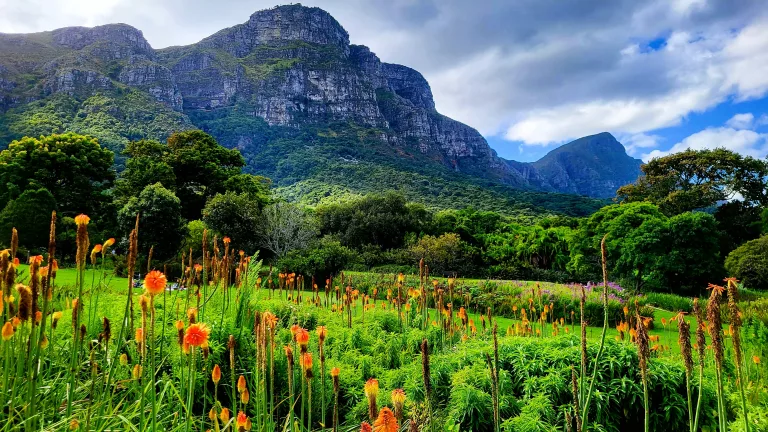
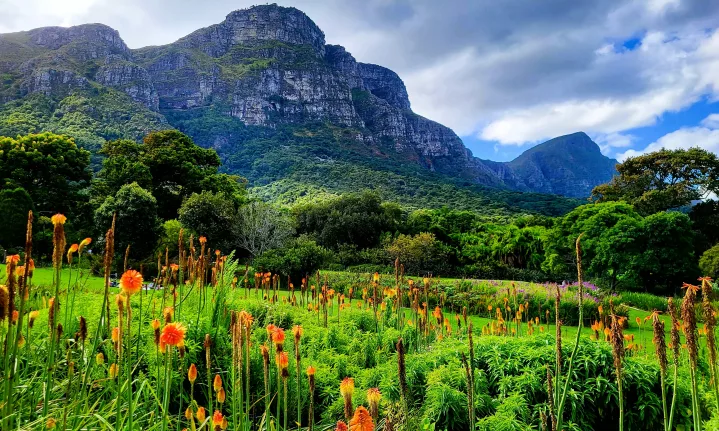
Kirstenbosch National Botanical Garden, Rhodes Drive, Newlands, Kapstadt, Südafrika / Margit Umbach / Unsplash
Harold Porter National Botanical Garden, Betty’s Bay
On the other side of the Cape Peninsula, Harold Porter National Botanical Garden offers a more intimate way to experience the spring flora of the Overberg.
The garden was established in Betty’s Bay after Harold Nixon Porter acquired land in the area and developed it as a garden and private nature reserve. It opened as the Shangri-la Nature Reserve in 1955 and later became a national botanical garden.
Spring, from September to October, brings a particularly rich display of proteas, ericas, daisies, geophytes and other fynbos species. The garden’s wetland boardwalk, trails and mountain scenery give visitors plenty to explore beyond the flowers themselves.
Why visit: Combine the garden with a trip along the Whale Route and a stop in Betty’s Bay. The garden’s upper walking trails can also offer views across the bay, where whales may be spotted during the season. It is the kind of place where the flowers feel like part of the landscape rather than an attraction placed within it.
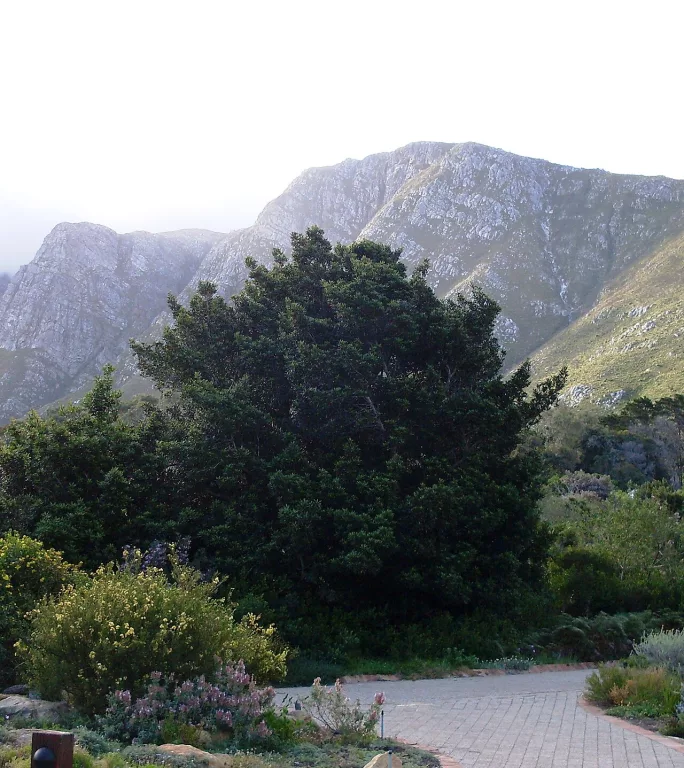
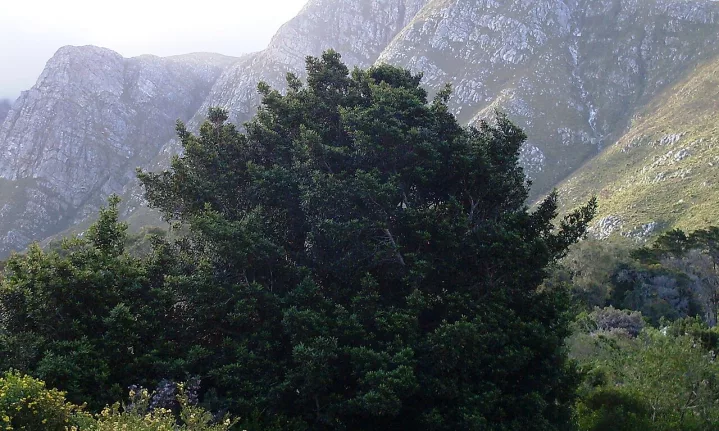
Rapanea tree in Harold Porter gardens. South Africa / Abu Shawka / Wikimedia Commons
Spring is worth planning around
South Africa’s spring flowers are spectacular precisely because they are temporary. A landscape that can look dry and unremarkable one week may be transformed after winter rain, only to fade again as temperatures rise.
That makes flower season less about ticking off a destination and more about paying attention. Check rainfall and flower reports before travelling, aim for sunny weather when possible and give yourself enough time to explore rather than simply stopping for a photograph.
Whether you head north into Namaqualand, follow the West Coast, explore the Bokkeveld Plateau or stay closer to Cape Town, spring offers a particularly good excuse to slow down and see familiar landscapes differently. For a few short weeks, South Africa puts on one of its most beautiful shows. You just have to be there when the flowers decide to open.
Follow us on social media for more travel news, inspiration, and guides. You can also tag us to be featured.
Instagram | Facebook | Twitter | Spotify
ALSO READ: