




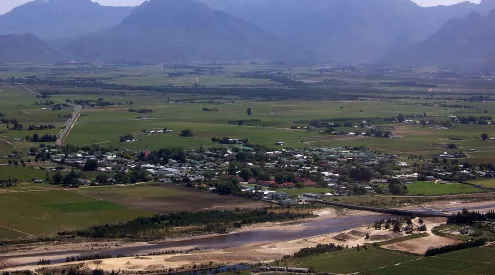
Africa’s urban landscape is expected to look very different by 2050, with several major cities forecast to experience significant population growth. New projections suggest that Cape Town and Johannesburg will lose ground in the rankings of sub-Saharan Africa’s largest urban centres as other cities expand at a faster rate.
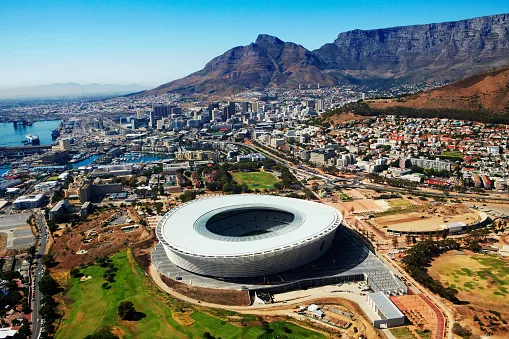
Skyline view of Cape Town and Table Mountain from Helicopter/By: Allan Baxter/Getty Images
According to figures reported by Business Insider Africa, Johannesburg is projected to fall from fifth place in 2025 to eighth by 2050. Its population is expected to grow from 7.1 million to 8.9 million, but this will not be enough to keep pace with rapidly expanding cities elsewhere on the continent.
Cape Town is also expected to drop out of the region’s 15 largest cities, despite its population forecast to increase by 36% over the same period.
Luanda projected to overtake Lagos
One of the biggest changes is expected in Angola, where the capital, Luanda, could become sub-Saharan Africa’s most populous city by 2050.
Its population is projected to increase by 78%, rising from 11.4 million in 2025 to approximately 20.3 million. Lagos, Nigeria’s current largest city, is expected to grow from 12.8 million to 16.2 million, placing it second.
Other cities expected to feature among the region’s 15 largest by 2050 include Kinshasa, Dar es Salaam, Addis Ababa, Abidjan, Khartoum, Onitsha, Yaoundé, Nairobi, Kampala, Bamako, Accra and Mogadishu.
ALSO READ:
Africa’s cities are growing at an unprecedented pace
The projections form part of the report Sub-Saharan Africa’s Urban Awakening: Catalyzing Economic Growth and Job Creation, which highlights the scale of the continent’s ongoing urban transformation.
Sub-Saharan Africa’s urban population has already increased from 170.2 million in 1975 to 912.6 million in 2025. A further 748 million people are expected to move into urban areas by 2050, bringing the total to approximately 1.7 billion.
Among the cities expected to climb the rankings are Bamako in Mali and Mogadishu in Somalia. Bamako’s population could increase by 80% to 7.6 million, while Mogadishu is projected to grow by 64% to 7.2 million.
Although Cape Town and Johannesburg are expected to lose positions, both cities are still forecast to grow, highlighting how rapidly the continent’s urban centres are expanding.
Can African cities keep up with the growth?
Rapid urbanisation presents opportunities for economic development, tourism and job creation, but it also places growing pressure on housing, transport, public services and infrastructure.
The World Bank warns that sub-Saharan Africa could miss out on the economic benefits of urbanisation without greater investment in infrastructure, a stronger business environment and increased private-sector participation.
The region also needs approximately 15 million new jobs every year to accommodate its expanding workforce.
For South Africa, the projections offer an interesting glimpse into how the continent’s major urban destinations could change over the next few decades. While Cape Town and Johannesburg are unlikely to lose their importance as economic and tourism centres, their positions within Africa’s urban hierarchy may look quite different by 2050.
Follow us on social media for more travel news, inspiration, and guides. You can also tag us to be featured.
Instagram | Facebook | Twitter | Spotify
ALSO READ:
These are the world’s best cities for vintage shopping and craft experiences