




A remarkable succulent that resembles a small pebble and grows nowhere else on Earth has been pushed to the edge of extinction.
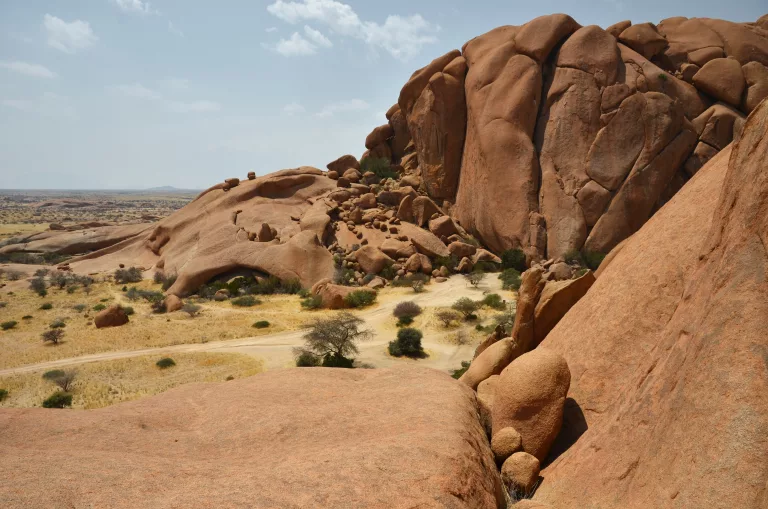
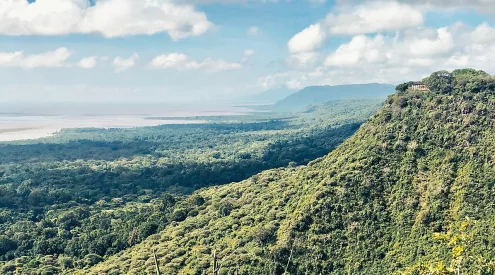
Image of Erongo Region, Namibia used for illustrative purposes/Pavel Špindler/Wikimedia Commons
The tiny plant, Lithops werneri — one of the so-called “living stones” — survives in a single 4 km² patch in the Erongo Mountains in central Namibia.
According to the latest assessment by the IUCN Red List, the species is now listed as Critically Endangered after its population declined by more than 80% since 1981, with fewer than 200 plants believed to remain in the wild.
The unusual succulent blends almost perfectly into its rocky surroundings, an evolutionary adaptation that helps protect it from herbivores. It grows in an exceptionally fragile habitat, rooted in a gravel layer just two centimetres thick that rests atop exposed granite.
A species with nowhere else to go
Unlike many plants with scattered populations, Lithops werneri exists in just one known location. That makes it especially vulnerable, as a single extreme event could wipe out the species entirely.
According to Namibia’s National Botanical Research Institute, the plant has always had a naturally restricted range. After it was first scientifically described in the 1950s, however, it became heavily targeted by collectors supplying Europe’s horticultural trade. Despite repeated searches over the decades, no additional wild populations have ever been found.
For a time, the species was even feared extinct before being rediscovered at its original site in 2012.
Numbers continue to fall
Surveys highlight the alarming pace of the decline. Researchers counted 659 plants in 2012, but later surveys recorded just 118 individuals in 2019 and 163 in 2020.
While illegal collection may still pose a threat, conservationists say climate change is becoming an increasingly significant danger.
The plants have shallow root systems and rely on periodic rainfall to survive. Extended droughts can kill mature plants, while young seedlings require several consecutive seasons of rain to become established.
Drought may also force hungry animals to feed on vegetation they would normally avoid, disturbing or uprooting the fragile succulents. Conversely, flash floods can damage the unstable gravel habitat on which the species depends.
Living stones of southern Africa
Lithops, commonly known as living stones or pebble plants, are a group of dwarf succulents native to Namibia, South Africa and Botswana. Their stone-like appearance allows them to blend seamlessly into rocky landscapes, making them one of the botanical world’s most fascinating examples of camouflage.
With Lithops werneri confined to a single location, conservationists warn that protecting its remaining habitat is essential if the species is to survive.
SOURCE: Mongabay
Follow us on social media for more travel news, inspiration, and guides. You can also tag us to be featured.
Instagram | Facebook | Twitter | Spotify
ALSO READ:
Western Cape sardine deaths under investigation as public warned to avoid dead fish


.jpg)