




Beyond Coffee Bay’s familiar sands, the Wild Coast opens into a quieter, untamed world. Rivers carve through forested cliffs, and the Indian Ocean laps at shores few travellers reach. Here, solitude still reigns.
These beaches aren’t lined with cocktail bars or surf shacks. Instead, you’ll discover hidden coves, waterfall-fed lagoons, and small coastal communities that live with the rhythm of the tides.
Why go beyond Coffee Bay

Cows On A Cliff By The Ocean, Coffee Bay/Homemade Media/Unsplash
Coffee Bay has become a rite of passage for many travellers — a laid-back surf hub wrapped in cliff and culture. But head a little further along this coastline, and the crowds thin fast. Dirt tracks lead to untouched reserves and beaches where the only footprints are your own.
Exploring beyond Coffee Bay isn’t about isolation for its own sake. It’s about rediscovering the Wild Coast’s original spirit: a blend of wilderness, Xhosa heritage, and coastal ecology that still thrives off the tourist grid.
Each stop tells a different story — from marine sanctuaries protecting sea life to waterfalls plunging straight into the ocean.
1. Hluleka Nature Reserve
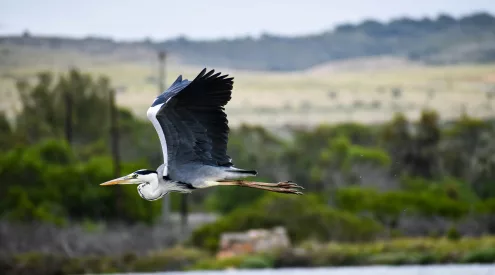
Just 30 km south of Coffee Bay lies Hluleka Nature Reserve, a 770-hectare sanctuary of golden sands, forest and lagoon. The beach curves in a perfect crescent between rocky headlands, where tide pools brim with tiny marine life and crowned cranes wade in the shallows.
Hiking trails snake through indigenous forest — dense with fig, milkwood and quinine trees — before spilling onto empty coves. The reserve is part of a marine protected area, and with only a handful of self-catering chalets, Hluleka stays blissfully uncrowded.
Travel tip: Roads can be rough, but the drive is worth every bump. Bring supplies, patience, and your sense of wonder.
2. Dwesa-Cwebe
Further east, the twin reserves of Dwesa and Cwebe form one of the Wild Coast’s most diverse coastal ecosystems. Here, forest gives way to grassy dunes, and rivers braid into the sea beneath soaring headlands.
Birdwatchers could spend days here — over 290 species have been recorded — while the estuaries offer safe swimming and canoeing. This is also a community conservation success story, co-managed with local Xhosa villages that benefit from tourism and conservation initiatives.
Travel tip: You’ll need to arrange permits and accommodation through Eastern Cape Parks. Book early — space is limited, and that’s precisely the point.
3. Mkambati Nature Reserve

Mkambati Nature Reserve/SAplants/Wikimedia Commons
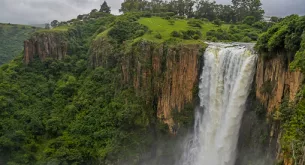
Of all the Wild Coast’s hidden corners, Mkambati might be the most cinematic. Waterfalls tumble straight into the ocean, antelope graze coastal grasslands, and cliffs plunge into turquoise surf.
The 7,700-hectare reserve, close to the Msikaba River mouth, feels otherworldly — part savanna, part rainforest, all wilderness. The Mkambati Falls, one of the few in the world to empty directly into the sea, is a sight you’ll never forget.
Travel tip: 4×4 access is required for much of the reserve, and accommodation is minimal. Pack light and go slow — this is the kind of place that rewards those who linger.
4. Silaka Nature Reserve
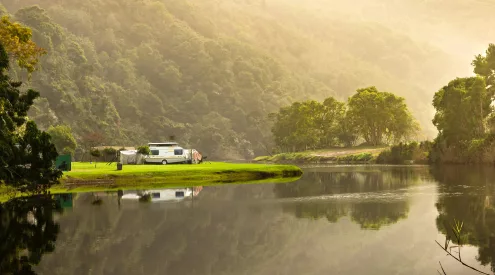
A small but spectacular coastal reserve near Port St Johns, Silaka, is where the forest quite literally meets the waves. The Gxwaleni River forms an estuary at its main beach, creating a calm swimming area framed by green hills.
Wooded trails lead to viewpoints overlooking Sugarloaf Rock and Second Beach, while the reserve’s chalets are tucked into coastal bush — peaceful, simple, and ideal for reconnecting with nature.
Travel tip: A perfect halfway stop between Coffee Bay and Port St Johns. Great for birding, short hikes, and low-key family escapes.
5. Cape Morgan Nature Reserve

Cape Morgan Nature Reserve/~ souTH AFRica ~/Wikimedia Commons
Closer to the southern end of the Wild Coast, Cape Morgan is an underrated gem near Morgan Bay. Its rugged cliffs and lighthouse mark the transition from the Eastern Cape’s dune forests to its rocky shoreline.
Hike the Strandloper Trail, explore the Cape Morgan Caves, or simply find a quiet lookout for whale spotting in winter. The reserve’s mix of forest, estuary and beach makes it one of the most diverse — and least busy — along the coast.
Travel tip: Combine Cape Morgan with a night at Kei Mouth for easy access to local ferries and trails.
6. Kwelera Nature Reserve
North of East London lies Kwelera Nature Reserve, a coastal corridor of dune forest, estuaries and sea spray. The garden is the 10th national botanical garden established in South Africa and the first in the Eastern Cape.
The beaches are often deserted, the dune trails rich with plant life and bird calls. It’s the Wild Coast’s most accessible wild escape — perfect for travellers who crave nature without extreme remoteness.
Travel tip: Pair a visit with nearby Inkwenkwezi Private Game Reserve for a “bush and beach” combo weekend.
Planning your Wild Coast escape
- When to go: Year-round, but April to September offer milder weather and fewer storms.
- Getting there: Most beaches are best reached with a high-clearance vehicle. Allow plenty of time — this is slow travel country.
- Accommodation: Book directly through Eastern Cape Parks or community-run lodges. Many reserves have limited chalets or self-catering units.
- Respect the land: These are community and conservation areas — support local guides, buy village crafts, and tread lightly.
Follow us on social media for more travel news, inspiration, and guides. You can also tag us to be featured.
TikTok | Instagram | Facebook | Twitter
ALSO READ: 5 green spaces in Gauteng hidden in plain sight