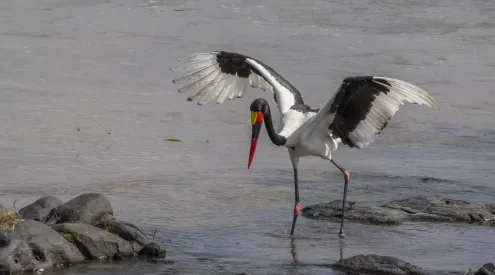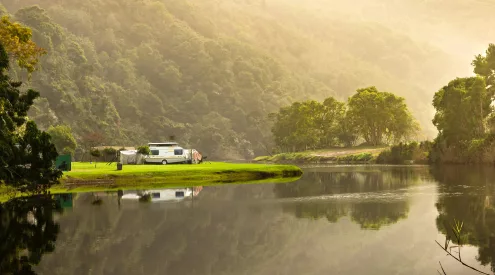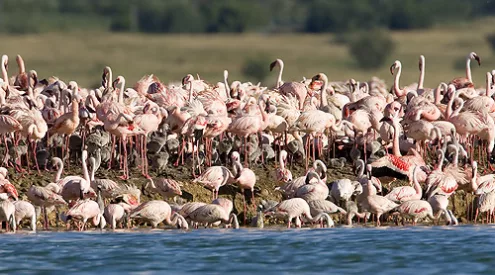



South Africa is particularly well suited to introducing young nature lovers to birding, with wetlands, gardens, estuaries and reserves offering accessible opportunities to see everything from flamingos and pelicans to bee-eaters, weavers and fish eagles.

Image used for illustrative purposes/Anna Khromova/Unsplash
BirdLife South Africa’s latest national checklist records more than 850 bird species, while recent conservation assessments highlight the growing pressures facing many of the country’s birds and their habitats.
These seven places make excellent starting points for junior birders. They combine easy viewing with memorable species and, importantly, opportunities to show children why protecting habitats matters.
1. Intaka Island, Cape Town
You do not need to leave the city to start a birding adventure. In the middle of Century City, Intaka Island offers an accessible introduction to wetlands and birdlife.
The reserve has recorded around 120 bird species across seven different habitats. Children can look for Cape shovellers, yellow-billed ducks, red-knobbed coots, moorhens, Cape sparrows, weavers, little bitterns and red bishops. The reed beds provide food and nesting habitat, while constructed wetlands help purify water and provide habitat for breeding waterbirds.
The island’s man-made heronries are another useful lesson for young birders: conservation does not always mean protecting untouched wilderness. Carefully designed urban spaces can also give wildlife somewhere to live and breed.
Make it a junior birder mission
Give children a simple challenge: find a bird in the reeds, one on open water and one in the trees. Then ask them why each bird might prefer that particular habitat.
2. West Coast National Park, Western Cape
For children who already enjoy spotting wildlife, West Coast National Park turns birding into a proper treasure hunt.
More than 250 bird species are recorded in the park, including flamingos, ostriches and black harriers. Four hides provide opportunities to watch birds without disturbing them, with hides at Geelbek, Abrahamskraal and below the Seeberg viewpoint.
The Langebaan Lagoon is particularly special for showing children that birds are part of much bigger natural systems. Migratory waders such as curlew sandpipers and sanderlings travel thousands of kilometres to reach feeding and breeding grounds in the region. SANParks notes that some travel around 15 000km from Russia.
Make it a junior birder mission
Pick a hide and see how many different shapes and sizes of birds the children can identify. Can they find a bird swimming, one wading and one feeding on land?
The conservation lesson
Explain that wetlands and coastal lagoons are important stopping points for birds travelling across continents. Keeping these habitats healthy benefits birds far beyond South Africa’s borders.
3. Wakkerstroom, Mpumalanga
Wakkerstroom is a brilliant place to take a budding birder when they are ready to move beyond the most common garden birds.
The wetland has four hides: Crane, Iain Drummond Memorial, Clive Beck and Wings over Wetlands. They offer views of waterbirds and waders, while the surrounding grasslands add another layer of birding opportunities. Grey-crowned cranes are among the stars, while other possible sightings include Cape shoveler, little bittern, African rail, black crake and red-chested flufftail.
Families can also make the experience more meaningful by using one of BirdLife South Africa’s accredited community bird guides. A guide can help children understand what they are seeing rather than simply pointing out species.
Make it a junior birder mission
Give each child a notebook and let them record three things: the bird’s name, where they saw it and what it was doing.
The conservation lesson
Wakkerstroom demonstrates why protecting wetlands and surrounding grasslands is so important. The area supports birds that depend on these habitats, while local birding and guiding also create opportunities for communities to benefit from conserving their natural surroundings.
4. Marievale Bird Sanctuary, Gauteng
Marievale is a good option for families wanting to turn birding into a hide-hopping adventure.
The sanctuary is part of the Blesbokspruit wetland system and has several hides with suitably child-friendly names, including Egyptian Goose, Speckled Pigeon, and Shelduck. BirdLife South Africa lists Marievale among the country’s bird-hide sites, with hides offering different levels of accessibility.
The wetland setting means children can look for waterbirds while learning to distinguish between birds that swim, wade, feed in shallow water or hunt from above.
Make it a junior birder mission
Start at one hide and give everyone five minutes of quiet observation. No shouting, pointing or running. See how many species appear when the children simply sit still.
The conservation lesson
Use the experience to explain why wetlands are worth protecting. They are not empty patches of water but complex ecosystems providing food, shelter and breeding areas for numerous species.
ALSO READ:
This bushveld getaway came with giant ants and a side of karma
5. Free State National Botanical Garden, Bloemfontein
A botanical garden might not be the first place children associate with birding, which is precisely what makes the Free State National Botanical Garden such a good introduction.
More than 150 bird species have been recorded here, with the garden attracting birds such as wattled lapwings, white-backed mousebirds, cormorants, herons and ducks. The bird hide sits beside the dam and is less than 200m from the entrance, making it particularly manageable for younger children.
The surrounding garden also gives children the chance to see how flowering plants, trees and water create different feeding and nesting opportunities.
Make it a junior birder mission
Challenge children to find a bird using its bill differently. Which bird is picking seeds? Which is catching insects? Which is searching the water?
The conservation lesson
Botanical gardens can act as small biodiversity refuges, particularly in urban areas. They show children that planting and protecting indigenous vegetation can benefit much more than people.
6. uMngeni Valley Nature Reserve, KwaZulu-Natal
For children who want to combine birding with a bigger outdoor adventure, uMngeni Valley offers something different.
The 900-hectare reserve near Howick encompasses grassland, woodland, thicket and forest, with the landscape dropping from the plateau towards the valley floor. This range of habitats supports a wide variety of plants, birds and other wildlife.
It is a useful place to teach children that birding does not always happen from a hide. Walk quietly, listen for calls and scan different layers of vegetation. A bird high in a tree may be completely different from one scratching around in the grass.
Make it a junior birder mission
Choose one habitat and spend 20 minutes looking and listening before moving on. Ask children whether they noticed different birds in the grassland, woodland or forest.
The conservation lesson
Habitat diversity creates bird diversity. Protecting a reserve is not simply about protecting individual animals; it is about keeping the different ecosystems they depend on functioning.
7. Beachwood Mangroves, Durban
Mangroves provide a completely different introduction to birding, combining birds with the fascinating world of coastal wetlands.
At Beachwood Mangroves Nature Reserve, children can explore an ecosystem that provides important habitat for birdlife and acts as a marine nursery. WESSA’s Durban branch regularly combines guided walks and birding with mangrove clean-ups, and its 2026 events are explicitly described as family-friendly.
That makes this more than a birding outing. Children can see the habitat, learn about the animals that depend on it and then take part in a practical conservation activity.
Make it a junior birder mission
Before the walk, ask children to choose one bird they would like to find. Afterwards, let them draw it and write down what it was doing in the mangroves.
The conservation lesson
This is where birding can become action. Mangroves are important for birds, marine life and coastal resilience, so keeping them free of litter and protecting the ecosystem benefits an entire food web.
Turn birding into a family conservation habit
The best way to get children interested in birds is not to turn every outing into a competition. Give them time to notice things.
A bird does not have to be rare to be exciting. A familiar weaver building a nest, a kingfisher diving into a pond or a flock of flamingos feeding together can all become memorable sightings.
Parents can also introduce children to a simple rule: watch, don’t disturb. Keep a respectful distance, avoid chasing birds, never interfere with nests and take photographs rather than feathers, eggs or other natural souvenirs.
Birding can then become an easy way to teach bigger ideas about conservation. South Africa’s latest biodiversity assessment found that nearly 13% of assessed bird species are threatened with extinction, with habitat loss and climate change among the major pressures. Waterbirds are particularly affected by changing conditions in their wetland habitats.
That makes a pair of binoculars more than a toy. They can be the beginning of a child’s understanding of how wildlife fits into the landscape — and why that landscape is worth protecting.
A simple junior birder checklist
- Spot five different bird species.
- Identify one bird by its call.
- Find a bird feeding.
- Find a bird using water.
- Find a bird in a tree or shrub.
- Sketch your favourite sighting.
- Record where you saw it.
- Find out what habitat that bird needs.
- Leave the habitat exactly as you found it.
- Add your sightings to a family bird list.
The goal is not to create expert birders overnight. It is to encourage children to slow down, look closely and realise that fascinating wildlife can be found almost anywhere.
Follow us on social media for more travel news, inspiration, and guides. You can also tag us to be featured.
Instagram | Facebook | Twitter | Spotify
ALSO READ: