
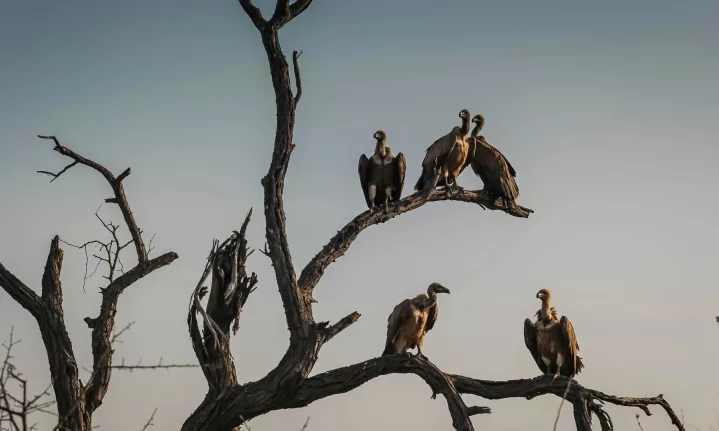
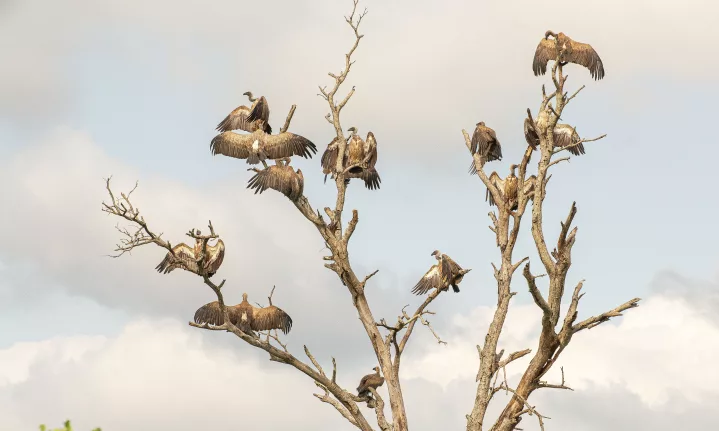
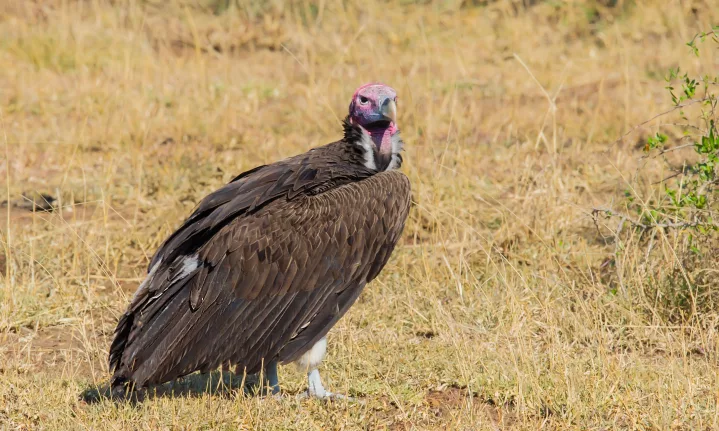
They are not usually the animals that make you slam on the brakes during a game drive. Lions, elephants and leopards get that privilege. Vultures tend to arrive later, circling silently overhead or gathering around a carcass.
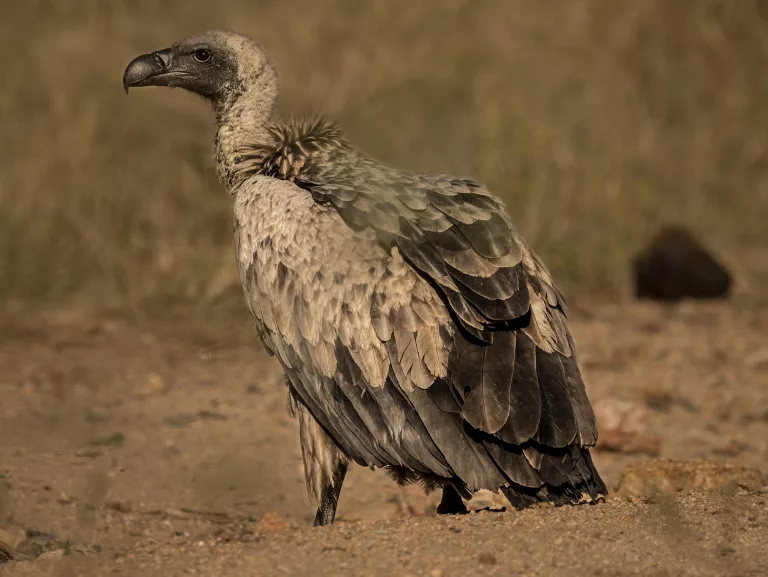
Image by Pieter van der Sandt / Pexels
But look a little closer and these much-maligned birds are every bit as fascinating as the wildlife they follow.
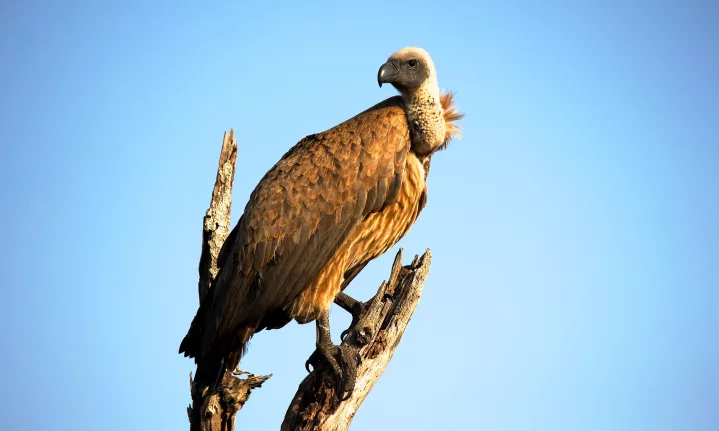
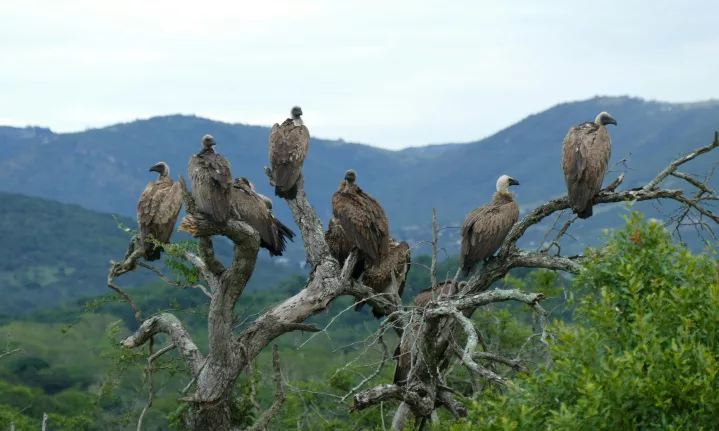
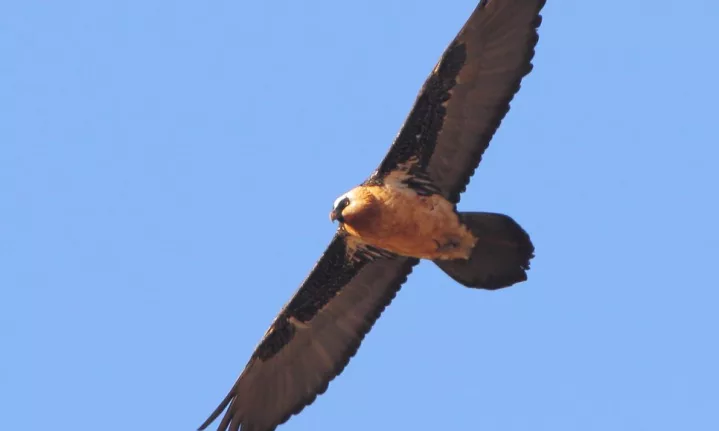
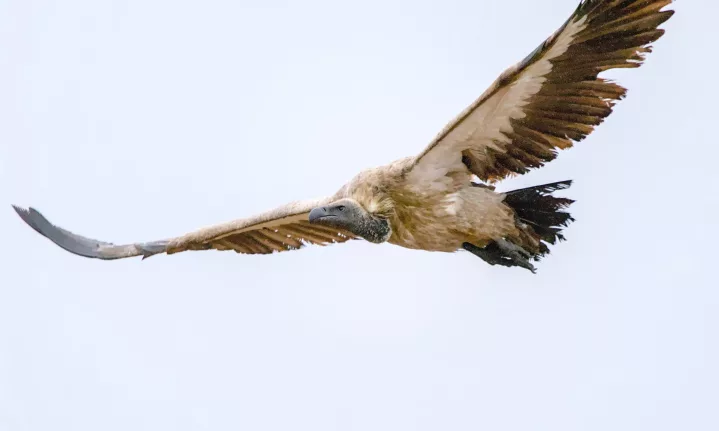
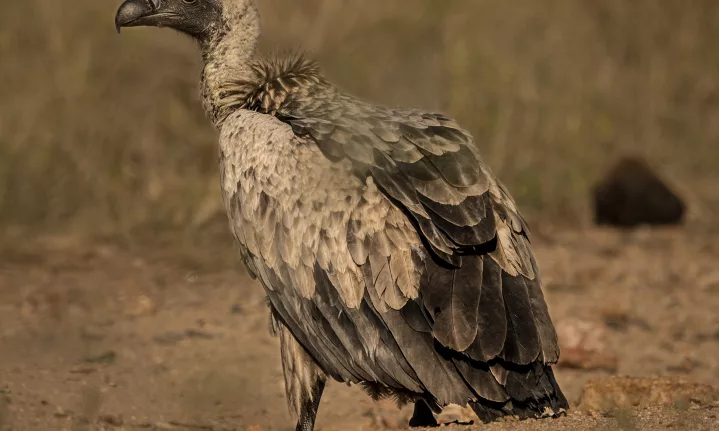
South Africa is home to eight vulture species, including the Cape, White-backed, White-headed, Hooded, Lappet-faced, Bearded and Palm-nut vultures. Two others, Rüppell’s and Egyptian vultures, are rare visitors to the region. Several of the resident species are now Critically Endangered, making an encounter with one in the wild increasingly special.
And there are some remarkable places in South Africa where you can go looking for them.
Why vultures matter
Vultures may have an unfortunate reputation, but their role in the ecosystem is anything but unpleasant. As specialist scavengers, they remove decomposing carcasses from the environment, helping to limit the spread of disease.
The problem is that their numbers have declined dramatically. Poisoning, collisions and electrocution on power infrastructure, habitat loss, reduced food availability and illegal harvesting have all contributed to the decline. Because vultures often feed together, a single poisoned carcass can kill large numbers of birds at once.
That makes seeing one in the wild feel different. You are not simply spotting another bird. You are seeing part of a conservation story that is still unfolding.
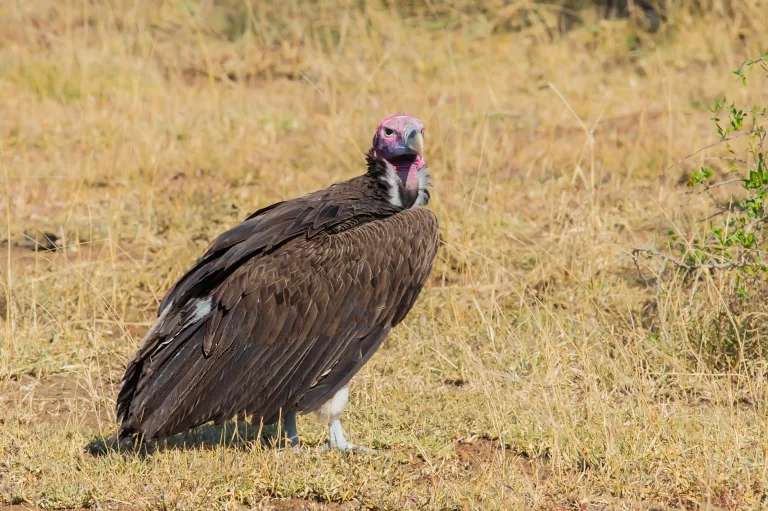
Image by Frans van Heerden / Pexels
Kruger National Park
For an introduction to South Africa’s vultures, it is hard to beat Kruger. The park has more than 500 recorded bird species and its raptor population is particularly impressive. In the Orpen area alone, SANParks records five vulture species, while the park’s wider birding areas offer opportunities to see species including the Lappet-faced Vulture.
The central grasslands are particularly worth watching. With large concentrations of grazing animals and predators, they also attract scavengers. Keep an eye on the sky as well as the road: vultures can often be seen riding thermals above the bush or gathering where there has been a kill.
The experience is wonderfully simple. Pull over, switch off the engine and watch.
Make a trip of it: Spend a few days exploring Kruger’s different regions rather than chasing a particular species. The park’s waterholes, picnic sites and birding hides add plenty of opportunities to slow down and look beyond the Big Five.
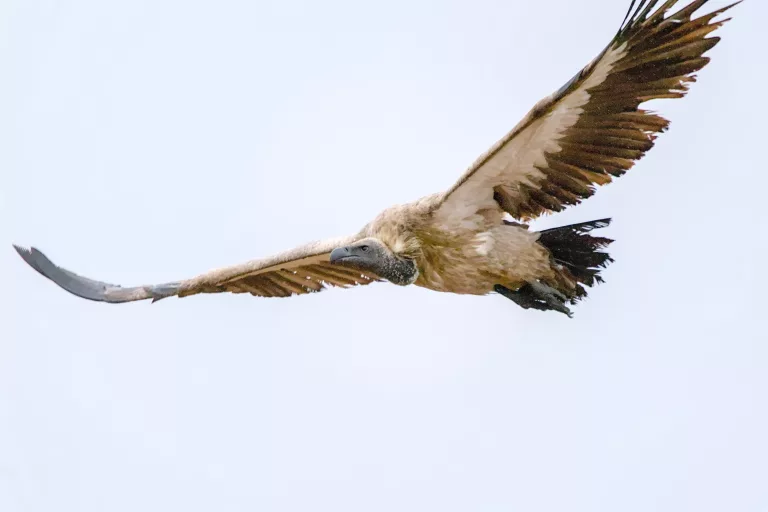
Image by Arno Moller / Unsplash
Giant’s Castle and the Drakensberg
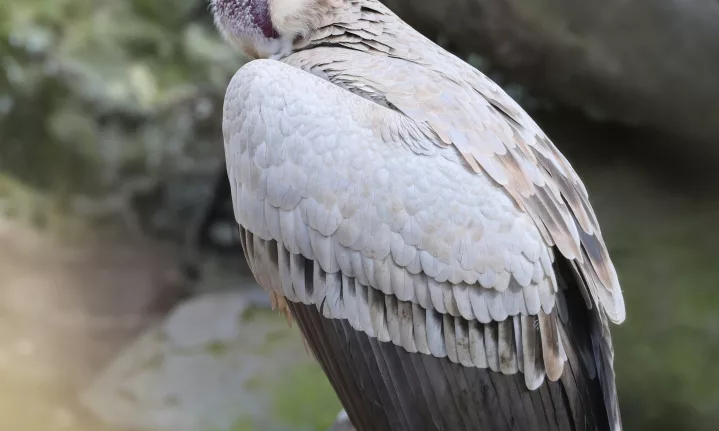
For something more dramatic, head into KwaZulu-Natal’s mountains. The Drakensberg is one of the country’s most important landscapes for the Cape and Bearded vultures. The Cape Vulture breeds on cliffs, while the Bearded Vulture is a spectacular mountain specialist.
At Giant’s Castle, visitors can use the reserve’s Vulture Hide to watch these birds at close range, with the surrounding mountains providing an appropriately dramatic backdrop.
The Cape Vulture is currently classified as Vulnerable in the 2025 regional assessment, with an estimated 9,400 to 12,400 mature individuals in the region. Its population has improved over the past three generations, but it remains vulnerable to poisoning, power infrastructure and other threats.
Make a trip of it: Stay in the Drakensberg and combine vulture watching with hiking, mountain scenery and the area’s famous San rock art.
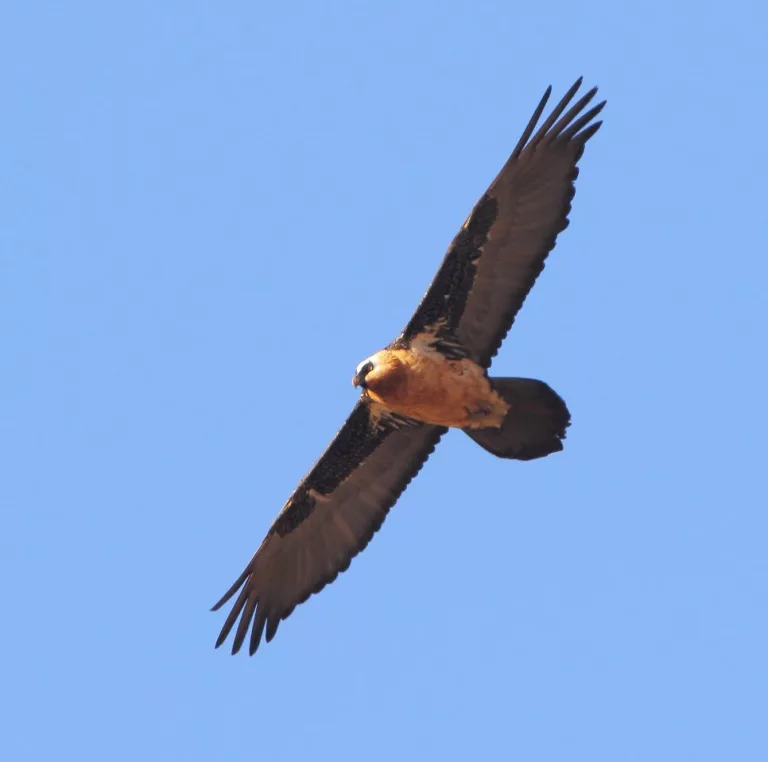
Image by Alandmanson / Wikimedia Commons
The Mzimkulu Vulture Hide
If photography is your priority, the Mzimkulu Vulture Hide near Underberg deserves a place on the itinerary.
Situated at the foot of the Maloti-Drakensberg World Heritage Site, the hide reopened to visitors in August 2026 following a temporary closure. It offers views of Cape and Bearded vultures at eye level, with a one-way glass setup designed for close observation and photography without disturbing the birds.
The hide accommodates only six guests, making this a considerably more intimate experience than watching birds from a busy safari vehicle.
Make a trip of it: Pair the hide with a weekend in the southern Drakensberg. The mountains are the real draw, with hiking, scenery and small-town escapes adding plenty of reasons to stay longer.
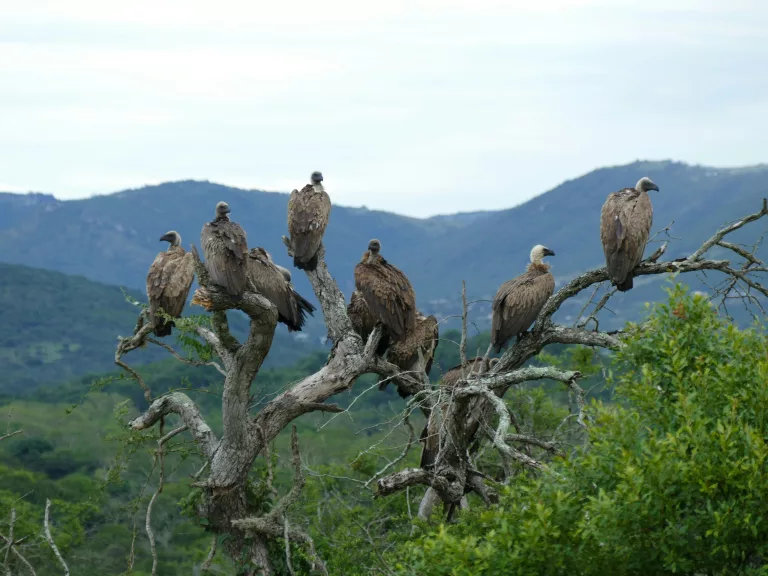
Image by Nora Rademacher / Unsplash
Zululand, KwaZulu-Natal
Northern KwaZulu-Natal is another important vulture landscape, and one where conservation has become part of the travel story.
The Zululand Vulture Safe Zone stretches across approximately 200,000 hectares, from Pongola Game Reserve towards the Mkuze section of iSimangaliso Wetland Park. It encompasses 14 properties, including Manyoni Private Game Reserve and the Mun-ya-wana Conservancy. Five of South Africa’s vulture species occur in the region, which is particularly important for breeding White-backed Vultures.
For visitors, that means a safari here offers the chance to see vultures while supporting landscapes where landowners are actively working to reduce the threats facing them.
Make a trip of it: Combine a private-reserve safari with the broader Zululand region and its wildlife, wetlands and coastal landscapes.
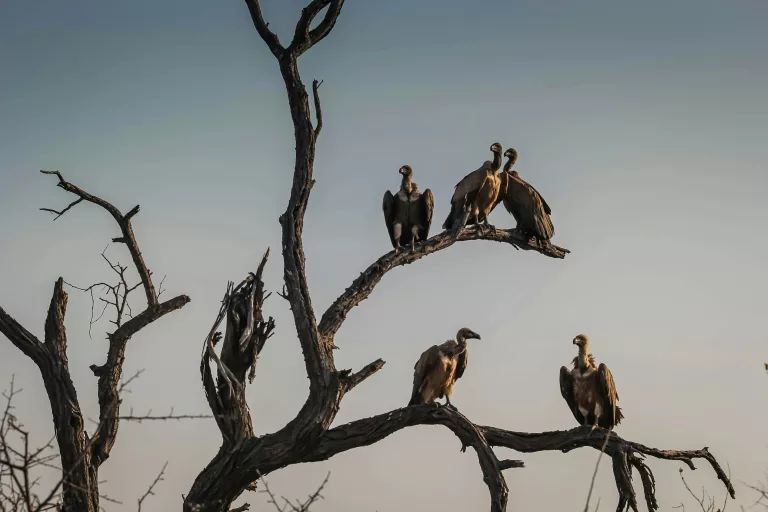
Image by Casey Allen / Unsplash
Tswalu Kalahari Reserve
In the Northern Cape, Tswalu offers an entirely different setting for vulture watching.
The reserve became South Africa’s first Vulture Safe Zone in 2019. Lappet-faced Vultures breed there, while White-backed Vultures also visit the reserve to feed and bathe. Conservation measures include the use of lead-free ammunition, monitoring of vulture nests and escape mechanisms on water reservoirs to prevent birds from drowning.
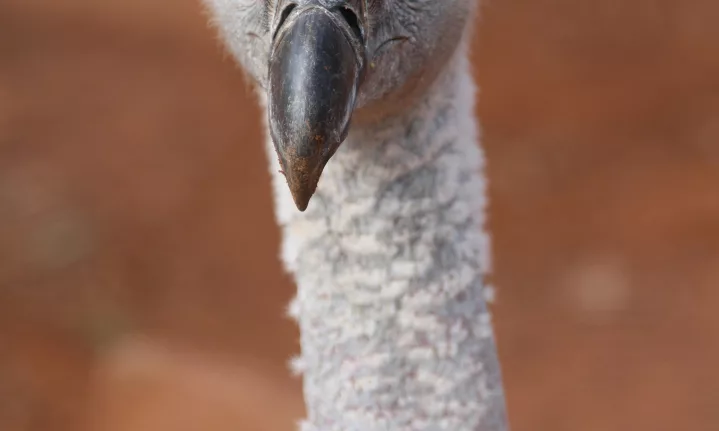
The Lappet-faced Vulture is particularly impressive. It is one of Africa’s largest vultures, with a massive bill and distinctive folds of skin around its bare head. It is also one of the species most in need of protection, with the regional population in serious decline.
Make a trip of it: Come for the Kalahari itself. The red earth, wide-open landscapes and feeling of being far from everything make Tswalu a very different safari experience from Kruger.
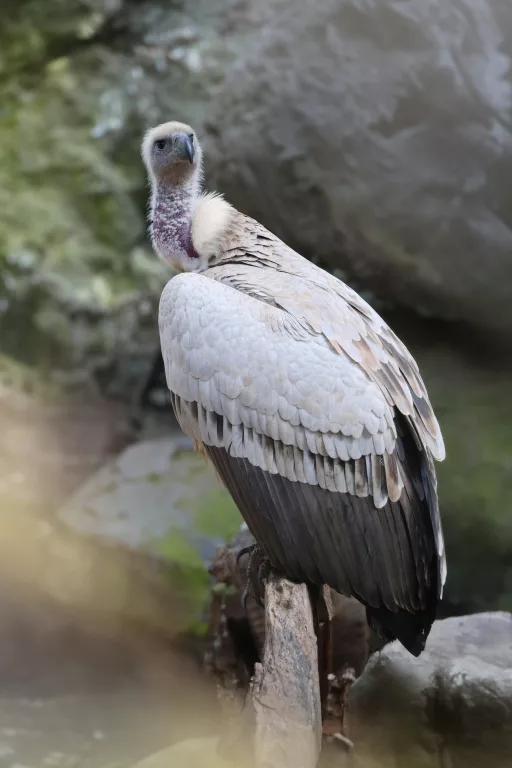
Image by Kathrine Heigan / Unsplash
Manoutsa Vulture Colony
For an encounter on a much larger scale, the Manoutsa Vulture Colony near Hoedspruit is worth knowing about.
The colony sits on the Drakensberg Escarpment and can support up to 660 pairs of Cape Vultures, making it one of the largest colonies of its kind in the world. The birds can be viewed from the property, while access to the colony itself is by prior arrangement.
It is a reminder that vultures are not simply birds of the plains. Their lives are closely tied to some of South Africa’s most dramatic landscapes, from Kalahari scrub to sheer mountain cliffs.
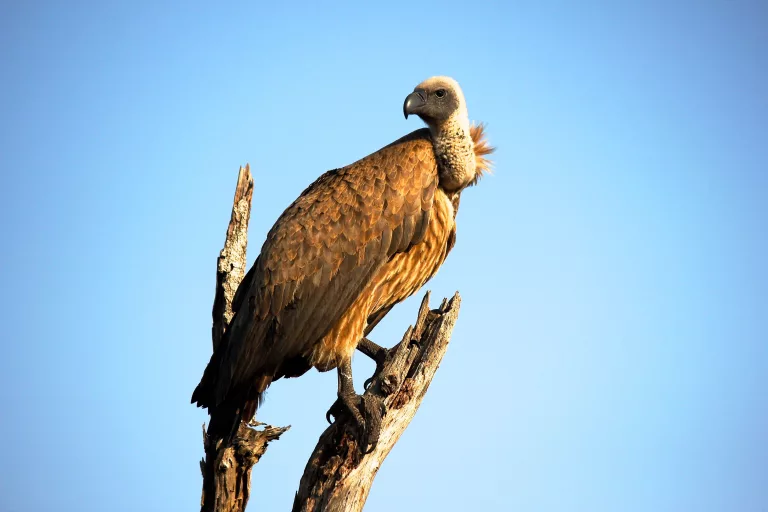
Image by karen Alchin / Pexels
Look up
There is something humbling about changing the way you look at a familiar landscape. The next time you are on safari and see a group of vultures circling overhead, don’t dismiss them as background scenery. Watch how they move through the sky. Look at the different shapes and silhouettes. See if you can identify the species.
These birds have been part of Africa’s landscapes for thousands of years. Their future, however, is increasingly tied to what we do with those landscapes.
So, on your next South African escape, look beyond the usual wildlife checklist. The most extraordinary sighting of the day might be happening high above you. And you might just find yourself hoping the vultures come closer.
Follow us on social media for more travel news, inspiration, and guides. You can also tag us to be featured.
Instagram | Facebook | Twitter | Spotify
ALSO READ:
Marakele your way: 3 ways to explore this Waterberg wilderness