






The ripple effects of the ongoing tensions in the Middle East are being felt thousands of kilometres away, in Africa’s tourism sector.

Sourced: X{@airnewsalerts}
According to Eturbonews, travel agents and tourism officials across the continent are reporting growing uncertainty after several major airlines were forced to cancel or reroute flights because of airspace closures and security concerns in the Gulf region. For destinations that rely heavily on international visitors, the disruption couldn’t have come at a worse time.
For many travellers heading to Africa, the journey often begins with a stopover in the Gulf. Airlines such as Emirates, Qatar Airways and Etihad Airways have built extensive route networks linking Africa with Europe, Asia and North America through hubs in Dubai, Doha and Abu Dhabi.
But as conflict-related restrictions forced the temporary closure of parts of regional airspace and airport operations, those carefully coordinated flight networks were suddenly thrown into chaos.
Airlines have had to cancel some routes entirely while rerouting others through alternative corridors, including airspace over Turkey, the Arabian Sea and North Africa. The result: longer flight times, higher fuel costs and uncertainty for passengers.
Travel agents say the disruption is already showing signs of affecting tourism bookings.
In countries such as Kenya and South Africa, agents report that some travellers are delaying trips until flight schedules stabilise.
Many visitors from the United States and Europe typically rely on Gulf airlines because they offer convenient connections and competitive fares. When those routes are disrupted, travellers often rethink their plans altogether.
The Kenya Association of Travel Agents warns that the impact could be significant. Nearly half of all transit air traffic to Africa passes through the Middle East, making the region one of the continent’s most important aviation gateways.
The aviation industry is also feeling the strain.
Longer routes mean aircraft burn more fuel, increasing operating costs for airlines already dealing with volatile oil prices. Analysts estimate that jet fuel alone accounts for roughly 25% to 35% of airline operating costs — meaning even small price increases can quickly translate into higher ticket prices.
That could make international travel more expensive, potentially discouraging tourists from booking long-haul trips to Africa.
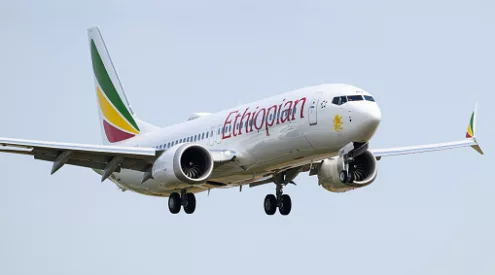
The impact is already being felt by African carriers. Ethiopian Airlines recently revealed that the regional conflict has cost the airline about $137 million in just one week.
The airline has suspended flights to ten destinations across the Middle East and cancelled more than 100 weekly flights, affecting around 50,000 passengers as well as cargo operations.
The disruption is particularly worrying for Africa’s busiest travel hubs.
Cities such as Nairobi, Addis Ababa, Entebbe, Dar es Salaam, Lagos and Johannesburg receive dozens of flights from Gulf carriers each day. These routes play a crucial role in bringing international tourists, business travellers and cargo into the region.
If disruptions continue, tourism-dependent economies could feel the impact quickly.
Popular destinations such as Egypt, Tunisia, Tanzania and Morocco are already warning that international arrivals during the first quarter of 2026 could drop.
On social media, frustrated travellers have been sharing stories of delayed journeys and last-minute itinerary changes.
Some passengers posted that their routes were extended by several hours as aircraft were diverted around restricted airspace. Others reported scrambling to find alternative flights after cancellations disrupted carefully planned holidays.
For tourism operators, the biggest concern is uncertainty. Even short-term disruptions can cause travellers to postpone trips — something the industry is still recovering from after the pandemic-era slowdown.
Across Africa, tourism has been slowly rebuilding in recent years as international travel rebounds. But the current situation highlights just how interconnected the global aviation system really is.
A conflict in one region can quickly send shockwaves across continents, affecting airlines, travellers and entire tourism economies.
Industry stakeholders say the next few weeks will be critical. If flight routes stabilise soon, the sector may avoid major losses. But if disruptions continue, Africa’s tourism industry could face a challenging start to 2026.
{Source: Eturbonews}
Follow us on social media for more travel news, inspiration, and guides. You can also tag us to be featured.
Necessary cookies are absolutely essential for the website to function properly. These cookies ensure basic functionalities and security features of the website, anonymously.
| Cookie | Duration | Description |
|---|---|---|
| cookielawinfo-checkbox-analytics | 11 months | This cookie is set by GDPR Cookie Consent plugin. The cookie is used to store the user consent for the cookies in the category "Analytics". |
| cookielawinfo-checkbox-functional | 11 months | The cookie is set by GDPR cookie consent to record the user consent for the cookies in the category "Functional". |
| cookielawinfo-checkbox-necessary | 11 months | This cookie is set by GDPR Cookie Consent plugin. The cookies is used to store the user consent for the cookies in the category "Necessary". |
| cookielawinfo-checkbox-others | 11 months | This cookie is set by GDPR Cookie Consent plugin. The cookie is used to store the user consent for the cookies in the category "Other. |
| cookielawinfo-checkbox-performance | 11 months | This cookie is set by GDPR Cookie Consent plugin. The cookie is used to store the user consent for the cookies in the category "Performance". |
| viewed_cookie_policy | 11 months | The cookie is set by the GDPR Cookie Consent plugin and is used to store whether or not user has consented to the use of cookies. It does not store any personal data. |
Functional cookies help to perform certain functionalities like sharing the content of the website on social media platforms, collect feedbacks, and other third-party features.
Performance cookies are used to understand and analyze the key performance indexes of the website which helps in delivering a better user experience for the visitors.
Analytical cookies are used to understand how visitors interact with the website. These cookies help provide information on metrics the number of visitors, bounce rate, traffic source, etc.
Advertisement cookies are used to provide visitors with relevant ads and marketing campaigns. These cookies track visitors across websites and collect information to provide customized ads.
Other uncategorized cookies are those that are being analyzed and have not been classified into a category as yet.