



An astonishing new species of velvet worm has been discovered in one of South Africa’s driest regions—the Karoo. The find is not just a biological breakthrough but a powerful reminder of the region’s prehistoric forested past.

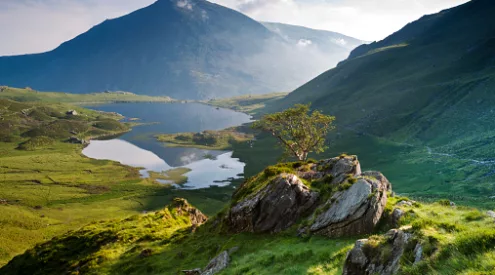
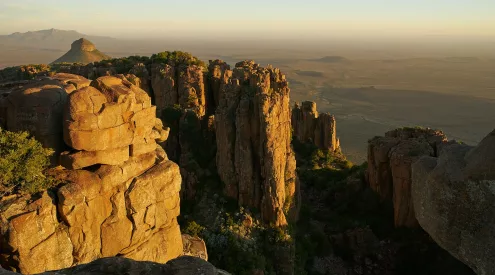
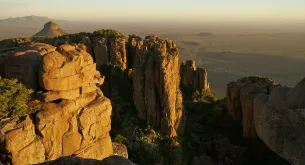
Image of Swartberg Mountain used for illustrative purposes/yakovlev.alexey from Moscow, Russia/Wikimedia Commons
It all began in March 2022 when Stellenbosch University student Rohan Barnard was exploring the Swartberg Mountains between Calitzdorp and Oudtshoorn in search of ants and invertebrates, according to BBC Wildlife Magazine.
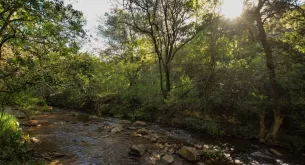
What he found instead was far rarer—a small, slate-black creature tucked under moist leaf litter by a riverbank.
“I had a basic knowledge of the Cape velvet worms, having found one for the first time on Table Mountain in 2019,” recalls Barnard. But this time, he’d unearthed something completely new: a velvet worm species never before recorded in the Karoo.
Now officially named Peripatopsis barnardi—or Rohan’s velvet worm—the creature has been described in the journal Evolution and Ecology, and is being hailed as a “living fossil.”
A creature older than dinosaurs

Image used for illustrative purposes|Velvet_worm.jpg: Geoff Gallicederivative work: B kimmel/Wikimedia Commons
Velvet worms are ancient in every sense. With a lineage tracing back more than 500 million years to the Cambrian period, they are among Earth’s most enduring organisms. They are typically found in damp, forested habitats—relics of the supercontinent Gondwana—and usually survive only in isolated Afro-temperate forest pockets in deep gorges.
Which makes the Karoo discovery all the more astounding.
According to Professor Savel Daniels, evolutionary biologist and lead author of the study, the presence of this velvet worm offers significant insight into what the landscape once looked like.
“The origin of these forest patches can be traced to the early Miocene, about 23 to 15 million years ago, when the region used to be temperate and subtropical,” Daniels explains.
“During the late Miocene, however, the region underwent significant climatic changes, with a decrease in rainfall due to the advent of the proto-Benguela current along the West Coast and two geotectonic uplifting events.”
Following Barnard’s initial discovery, Daniels visited the site in July 2022 and collected additional specimens for DNA sequencing and microscopic analysis. The results confirmed not only the discovery of a new species but also the first velvet worm ever found in the Karoo.
Hope in the hidden layers
This rediscovery of deep time in the form of a soft-bodied invertebrate underscores the Karoo’s richness—beyond fossils, beyond landscapes.
“It is incredible to realise that I’ve uncovered a living fossil,” says Barnard. “It is as if I have found a missing link that we did not even know about. It gives me hope that there is still so much left to discover. But it also makes me worried for the future, that we will lose animals and plants to extinction that we did not even know existed.”
From a travel perspective, this find adds another layer to the allure of the Swartberg Mountains—a UNESCO World Heritage Site-in-waiting, rich in geology, palaeontology, and now, cryptic biodiversity.
Whether you’re road-tripping the R62 or stargazing under Karoo skies, keep in mind that some of Earth’s greatest secrets lie hidden in the leaf litter—waiting to be discovered.
Follow us on social media for more travel news, inspiration, and guides. You can also tag us to be featured.
TikTok | Instagram | Facebook | Twitter
ALSO READ: Rare ‘Corpse Flower’ bloom draws crowds in Warsaw





_and_Crassula_rupestris_var._rupestris_(Crassulaceae)_in_habitat_(39833016424).jpg)