


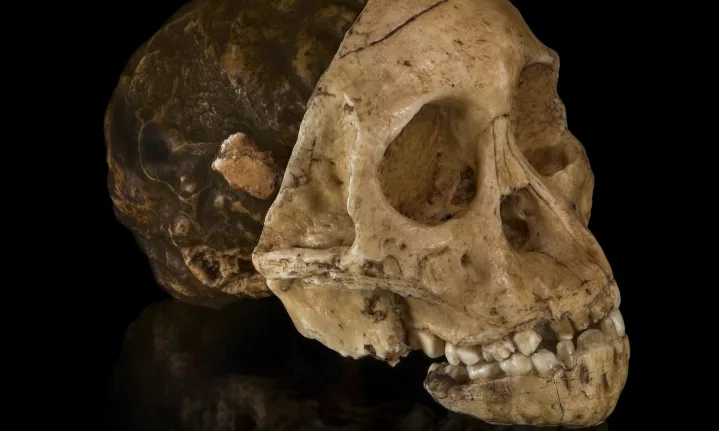
Taung can easily be reduced to one extraordinary discovery. In 1924, a fossilised skull found at the Buxton limestone quarry changed the way scientists viewed human evolution.
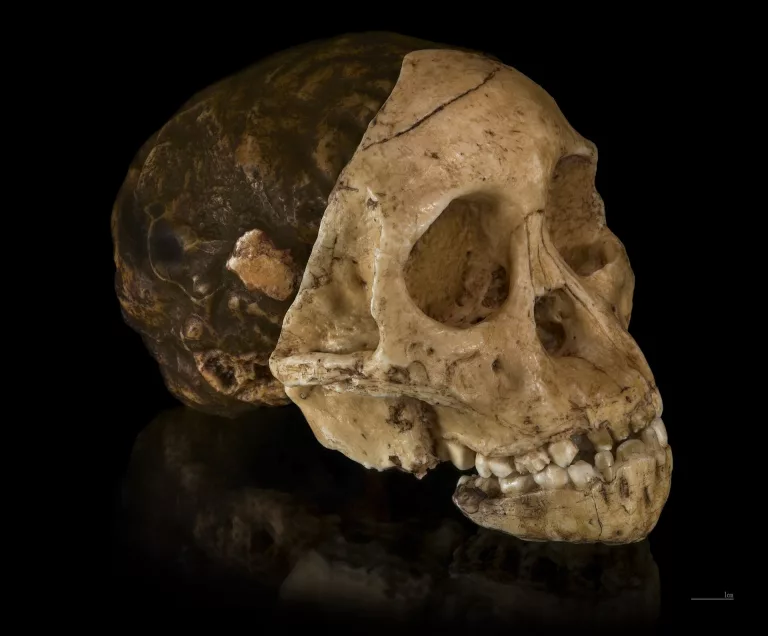
Cast in three parts: endocranium, face and mandible, of a 2.1 million year old Australopithecus africanus specimen so-called Taung child, discovered in South Africa / Didier Descouens / Wikimedia Commons
The Taung Child, identified as Australopithecus africanus, became one of the most significant early hominin discoveries in the world, and the Taung Skull Fossil Site now forms part of the Fossil Hominid Sites of South Africa World Heritage Site.
But stopping at the fossil site means missing much of what makes a weekend in this corner of the North West worthwhile.
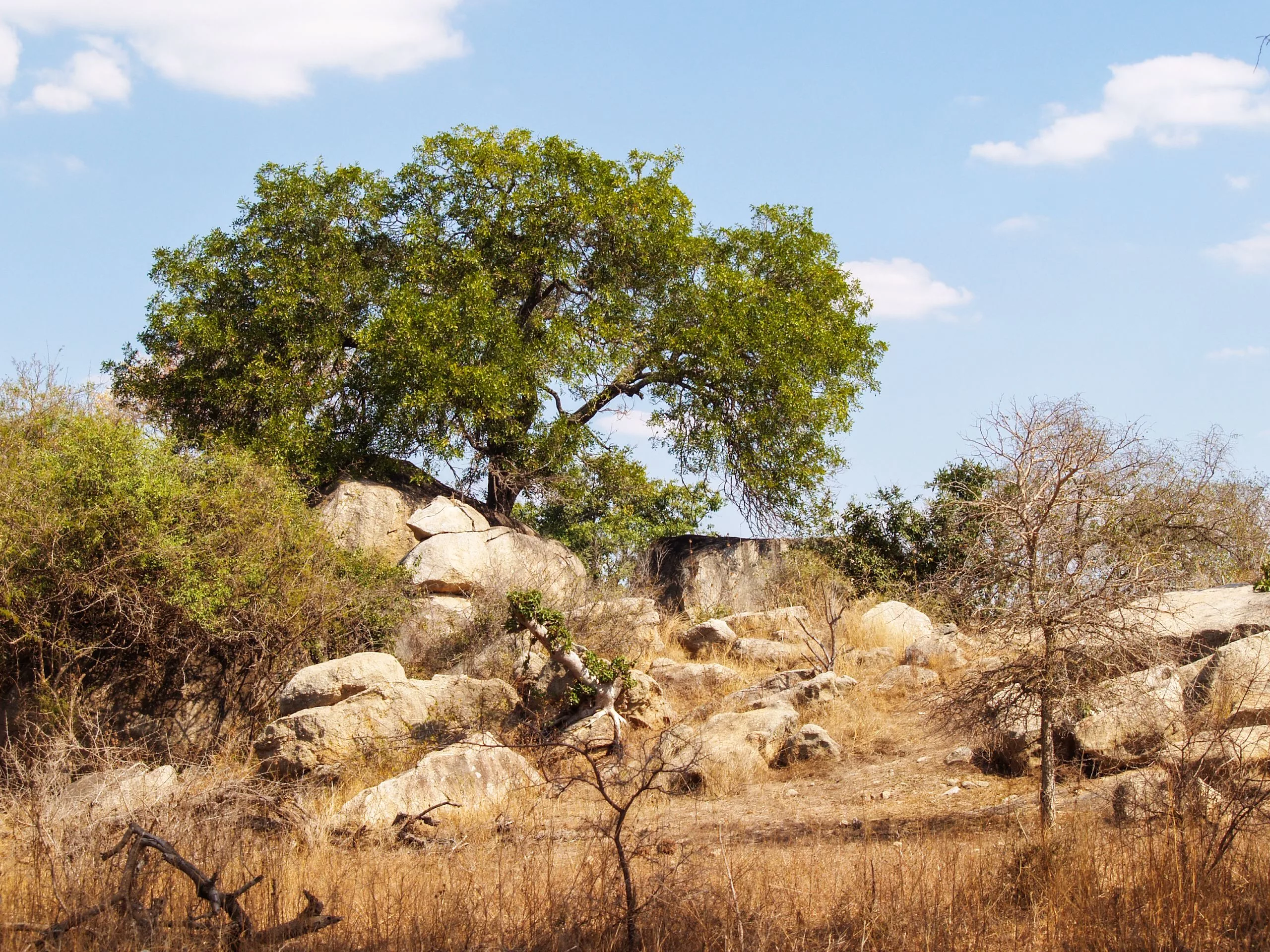
The Greater Taung area stretches through dry landscapes, river valleys and villages where natural and cultural heritage are gently intertwined. The municipality identifies the Taung Dam, Mmabana Cultural Centre, Kgosi Galeshewe Memorial Site and Thomeng Waterfall among its tourism attractions, while the wider Taung Heritage Route includes the Blue Pools and Dinkwaneng rock engravings.
If you have a weekend to spare, these are six stops to put on your list.
1.Cool off at the Blue Pools
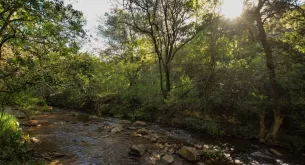
Located at the former Buxton quarry, the Blue Pools form part of a limestone landscape of natural rock basins, streams and caves. Water moves through the rocky valley, with pools and caves tucked between the limestone formations. The result is a landscape that feels remarkably different from the dry countryside you might expect to find around Taung.
Pack a picnic, give yourself time to explore the landscape and resist the temptation to rush back into the car.
The Blue Pools have long been associated with picnicking and outdoor recreation, although the condition and management of the site have been raised as concerns in visitor accounts.
2. Find Thomeng Waterfall
Water is an unexpected thread running through Taung’s landscape, and Thomeng Waterfall is another reason to venture beyond the fossil site.
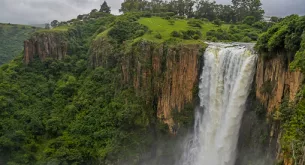
The Greater Taung Local Municipality lists Thomeng Waterfall among the area’s tourism attractions and identifies hiking, mountain biking and picnicking among the activities associated with the area’s natural heritage sites. The waterfall forms part of a broader landscape that has also been identified for its tourism potential.
This is less about arriving at a popular attraction and more about experiencing Taung’s landscape. Bring your most trusted pair of walking shoes, water and a good sunscreen, and allow time to appreciate the geological setting rather than treating the waterfall as a quick photo stop.
3. Spend an afternoon at Taung Dam
If the Blue Pools reveal Taung’s smaller waterways, Taung Dam offers a completely different scale.
The dam was originally constructed for irrigation purposes and has since been identified as a recreational and tourism asset for the area. The Greater Taung Local Municipality lists boat cruises, speed boating and fishing competitions among activities associated with the dam, as well as opportunities for picnics and hiking.
After a morning spent exploring the heritage sites, Taung Dam offers a soothing change of pace. The water transforms the character of the landscape, particularly in contrast to the surrounding dry countryside.
For your weekend itinerary, this is your slower afternoon. Bring something to eat, find a good view of the water and let the day stretch out.
4. Visit the Mmabana Taung Arts and Cultural Centre
The Mmabana Taung Arts and Cultural Centre provides a window into the living culture of the area. The Greater Taung Local Municipality describes the centre as a place that develops and showcases local arts and culture, including pottery, quilting, beading, sewing, sculpture, dance and music.
The centre also continues to host cultural events, with performances and other cultural programming forming part of its calendar. It remains part of Taung’s contemporary cultural life rather than simply a heritage marker from the past.
This is the stop to make when you want to understand Taung as a living place rather than simply a destination built around an archaeological discovery. Taung’s story is not only written in fossils and rocks.
5. Look for the rock engravings at Dinkwaneng
About 20km from Taung, near Manthe village, Dinkwaneng offers another layer of the region’s history.
The site is known for rock engravings associated with San hunter-gatherers. The Greater Taung environmental management framework identifies Dinkwaneng as an important cultural and natural heritage resource, specifically noting San rock art near Manthestat.
Rock art is not the kind of attraction that announces itself. Its value lies in the traces left behind and in thinking about the people who moved through this landscape long before Taung became associated with palaeoanthropology.
If you arrange a visit, use a knowledgeable local guide where possible and treat the engravings as heritage rather than something to climb on or touch.
6. Pay your respects at the Kgosi Galeshewe Memorial Site
For a different experience of Taung’s history, head towards Magogong to visit the memorial site associated with Kgosi Galeshewe.
Galeshewe was a paramount chief of the Batlhaping and an important figure in resistance to colonial rule. Ditsong Museums records his involvement in rebellions against the Cape Colony government, his imprisonment on Robben Island and his later burial at Magogong, where a monument now commemorates his legacy alongside other Batlhaping and Batlharo leaders.
It makes for a meaningful counterpoint to the Taung Child story. One takes you millions of years into the past; the other brings you into the much more recent history of colonial expansion, resistance and the communities who lived through it.
Together, they make the point that Taung’s heritage cannot be defined by a single fossil.
A weekend in Taung
Start with the famous fossil site, because it would be regretful to come this far and ignore one of the discoveries that helped establish South Africa’s importance in the study of human evolution.
But don’t just leave it there. The compelling thing about Taung is the way these stories overlap. Geological history, archaeology, water, San rock art, Batlhaping heritage and the history of resistance all exist within the same broad landscape.
The fossil is certainly reason enough to visit Taung. But look a little further, stay a little longer, and the town begins to reveal a much bigger story.
Follow us on social media for more travel news, inspiration, and guides. You can also tag us to be featured.
Instagram | Facebook | Twitter | Spotify
ALSO READ:
Southern Africa’s most unique-looking animals and where to find them