




There are landscapes that make you stop for a photograph, and then there are landscapes that make you put the camera down for a moment because the view is doing quite enough on its own. The Valley of Desolation near Graaff-Reinet falls firmly into the second category.
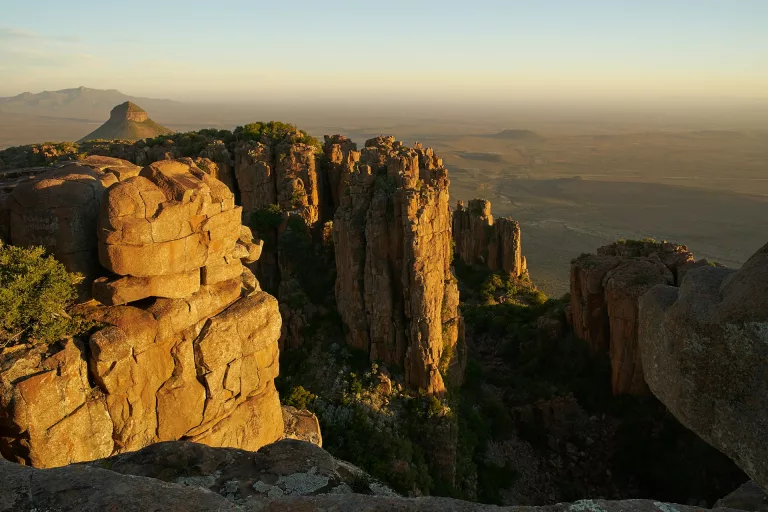
Wolfgang Hasselmann/Unsplash
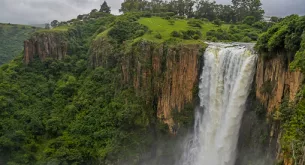
Perched above the plains of the Great Karoo in the Eastern Cape, the Valley of Desolation is one of South Africa’s most striking geological landmarks. Its towering dolerite columns rise dramatically from the escarpment, with the enormous Karoo stretching towards the horizon below.
It is also a place where natural and cultural heritage meet, making it particularly fitting for Heritage Month. The landscape tells a story that stretches back hundreds of millions of years, while the surrounding area carries evidence of people who lived here long before the modern town of Graaff-Reinet existed.
A landscape millions of years in the making
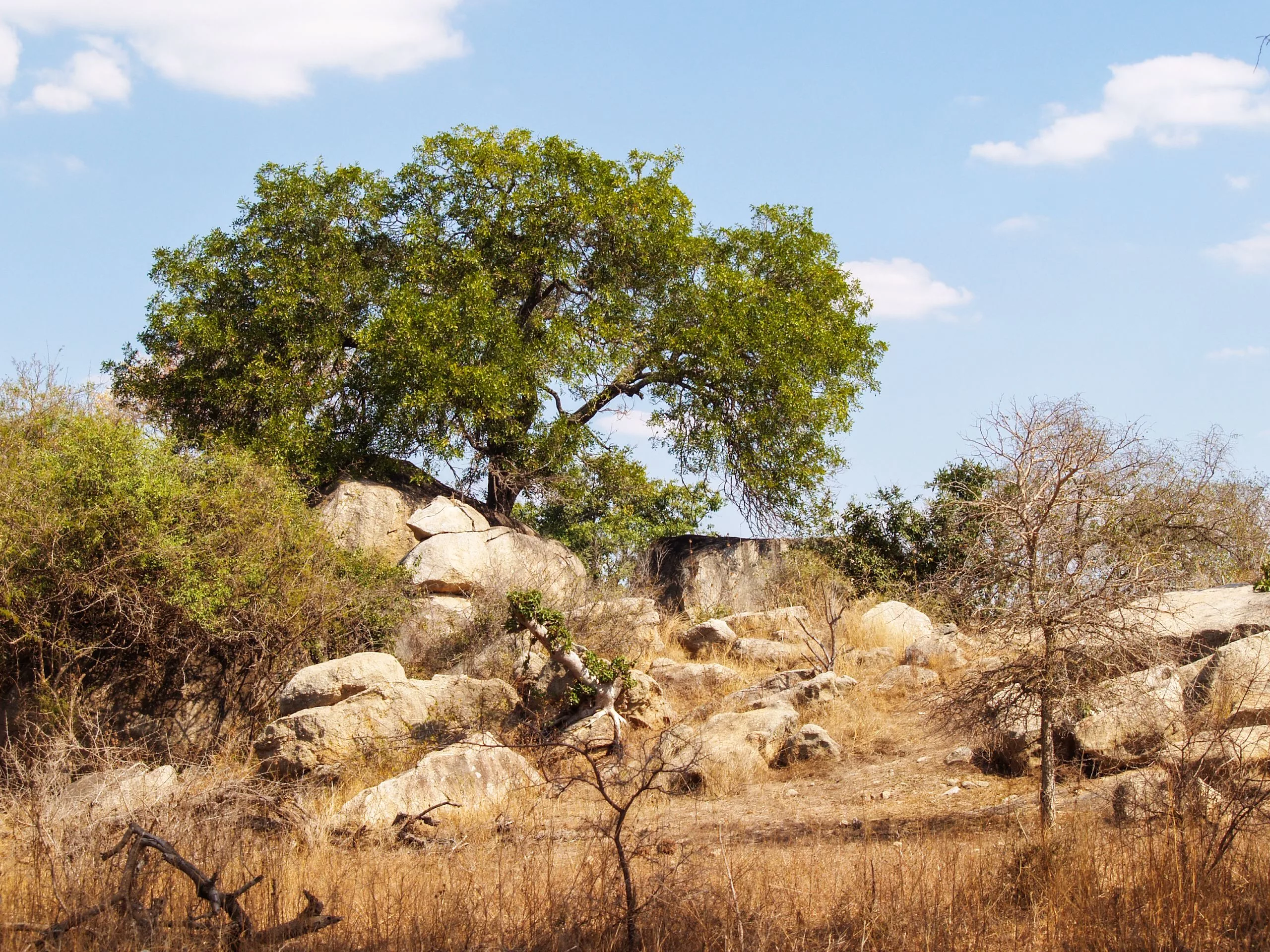
The Valley of Desolation is part of Camdeboo National Park, which almost surrounds the historic town of Graaff-Reinet. The park’s semi-arid landscape is characteristic of the Karoo, with hardy shrubs, succulents and grasses adapted to limited rainfall and dramatic temperature changes.
The dramatic rock formations are the result of geological events that happened during the Jurassic Period. Molten magma pushed into layers of sedimentary rock and cooled underground, forming dolerite. Over millions of years, erosion removed the softer surrounding rock, leaving the more resistant dolerite behind.
The result is the collection of enormous vertical columns seen today.
In geological terms, it is essentially a very long case of nature taking its sweet time. The formations developed over millions of years, while erosion continues to shape the landscape.
SANParks estimates the geological processes responsible for the landscape stretch back roughly 200 million years, while its current heritage information explains that the dolerite intrusions formed between about 180 and 100 million years ago.
The columns have earned the Valley another memorable nickname: the “Cathedral of Mountains”. Stand among them and it is easy to understand why.
The walk to the view
The Valley of Desolation is accessible by road, with viewpoints along the route and at the top. From the parking area, visitors can follow the Crag Lizard Trail, a roughly 1.5 km route that takes about 45 minutes and passes the Valley viewpoints.
It is a relatively short walk, but the scenery does a good job of making it feel like an expedition.
The trail leads through the rugged landscape towards viewpoints overlooking the Karoo plains. From here, the scale of the scenery becomes apparent. The dolerite cliffs dominate the foreground, while Graaff-Reinet and the surrounding plains appear remarkably small in the distance.
For hikers, photographers and anyone who enjoys a dramatic landscape without having to spend an entire day climbing a mountain, it is a particularly rewarding outing.
And there is a good reason to pause frequently. The landscape changes depending on the light, with early morning and late afternoon bringing out the textures of the rock and the enormous scale of the plains.
More than a pretty view
The Valley’s heritage story is older than the roads and viewpoints that make it accessible today.
Evidence of early, middle and later Stone Age occupation has been found within Camdeboo National Park, including stone tools such as hand axes, scrapers, blades and grinding stones. Rock paintings in the park also provide evidence of later Stone Age hunter-gatherer communities.
The Inqua people occupied the wider area during the mid-1600s, while white farmers settled on the Camdeboo Plains and Sneeuberg from around 1770. Agriculture subsequently became an important part of the region’s history.
The landscape itself also played a role in the history of conservation.
The Valley was declared a national monument of geological and scenic significance in 1939. A conservation campaign later gathered momentum in the 1970s, when establishing a protected area in the Karoo became a national conservation priority.
An especially unusual part of this story involved schoolchildren from across South Africa. A fundraising campaign allowed children to buy symbolic pieces of the proposed reserve, with contributions from about 300,000 schoolchildren helping fund the creation of what became the Karoo Nature Reserve. The reserve was formally handed over in 1976 and later became part of Camdeboo National Park.
Camdeboo National Park was officially proclaimed in 2005. Today it covers about 19,405 hectares and protects the Valley as well as a broader landscape of Karoo vegetation, wildlife and heritage sites.
Heritage in the landscape
A visit to the Valley of Desolation is therefore about more than ticking off another scenic viewpoint.
It is a chance to see how geological history, human history and conservation overlap in one landscape. The rocks record ancient changes to the Earth, archaeological evidence points to people who lived here thousands of years ago, and the conservation story demonstrates how South Africans eventually came together to protect this remarkable corner of the Karoo.
The road to the Valley also has its own history. The original route was built using picks, shovels, barrows and even some dynamite, and was completed in 1930 at a cost of about R2,000. The road was eventually tarred in 1978, making the spectacular viewpoints considerably easier to reach.
Today, visitors can arrive by car, stretch their legs along the trail and stand above a landscape that has taken millions of years to create.
That is quite a lot of history for a morning walk.
For Heritage Month, the Valley of Desolation makes a compelling reminder that South African heritage is not confined to museums, monuments and historic buildings. Sometimes it is written into the rocks, painted onto cave walls and spread across an enormous Karoo horizon.
And this particular piece of heritage comes with a view that is difficult to beat.
Follow us on social media for more travel news, inspiration, and guides. You can also tag us to be featured.
Instagram | Facebook | Twitter
ALSO READ: