


SAA’s profit mirage: How taxpayers keep footing the bill
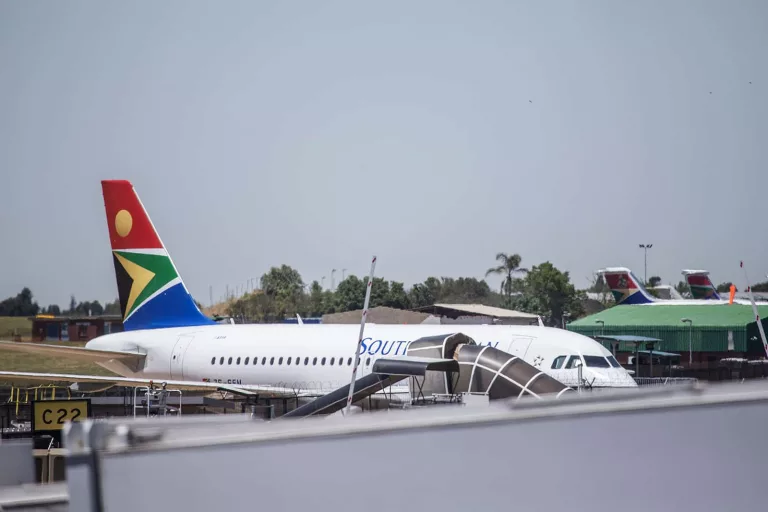
For decades, South African Airways (SAA) has been the nation’s most expensive state-owned enterprise. Since 2000, South Africa’s taxpayers have poured over R145 billion into state airlines, with SAA alone swallowing R133.3 billion—more than 90% of the total spent on all state carriers.
Sourced: X{@SABreakingNews}
According to The Citizen , to put that in perspective, that money could have bought over 10 billion loaves of bread, funded 58 million SASSA grants, built nearly a million RDP homes, or employed hundreds of thousands of South Africans for years. Yet, instead of feeding, housing, or employing citizens, the funds have repeatedly kept SAA afloat while exposing the fragility of state-owned airline operations.
A “profit” built on smoke and mirrors
The airline recently reported a profit of R155 million for the 2024-25 financial year. On paper, it seems like a recovery. But look closer, and the story unravels: the profit was largely due to the sale of assets—including one of SAA’s prized Heathrow slots—and a quiet government injection of R1 billion disguised as share capital.
Economist Dawie Roodt called the move semantic trickery. “It’s semantics trying to disguise a bailout as share capital. Why do businesses sell shares and dilute shareholding? It’s to raise money. It’s as simple as that,” he said.
Strip away the gains from asset sales and state support, and SAA’s underlying position shows a pre-tax loss of around R996 million—a precarious edge reminiscent of its near-collapse in 2019.
Even the auditor-general disclaimed the 2025 financial statements, signaling that key balances, disclosures, and consolidations could not be verified. Outa CEO Wayne Duvenage called the report “nothing short of irresponsible” and raised serious concerns about governance, accountability, and whether SAA’s leadership has learned from decades of repeated lifelines.
The cost of decades of bailouts
Before business rescue, SAA received around R68 billion in bailouts, excluding government guarantees. During business rescue, R29.4 billion more went into the airline via lenders and direct state subsidies. Compromises with creditors and aircraft lessors added R35.7 billion in unrecovered funds.
By comparison, smaller state airlines cost far less: SA Express R7 billion, Mango R5 billion. The scale of SAA’s drain on the public purse is staggering.
Operational reality vs reported numbers
SAA’s operational data shows modest improvements: more passengers carried, a load factor of 65%, and revenue of R9.266 billion. Yet, the airline still reported a negative airline EBITDA of R443 million, far below the target of positive R241 million.
Meanwhile, executive pay continues to soar. CEO John Lamola received a 23% salary increase to R4.7 million, with other executives awarded boosts of 23-36%, even as the airline relies on state support and asset sales to report profit.
The public reaction
Across social media and public forums, citizens have voiced outrage at the mismatch between reported profit and underlying instability. Many point out that while SAA celebrates, ordinary South Africans remain deprived of funds that could have addressed unemployment, hunger, and housing.
What it all means
SAA’s so-called recovery is built on a fragile foundation: asset liquidation, disguised bailouts, and accounting interventions, rather than sustainable airline operations. It’s a stark reminder of the repeated cost of state mismanagement and the urgent need for government action—whether that’s improved governance, restructuring, or selling a majority shareholding to private investors.
In short, while the airline’s glossy reports paint a picture of progress, the reality is a taxpayer-funded profit mirage, and the public is left wondering if lessons from decades of bailouts will ever be truly learned.
Source: The Citizen
Follow us on social media for more travel news, inspiration, and guides. You can also tag us to be featured.
TikTok | Instagram | Facebook
ALSO READ: