
Luxury travel is changing. In 2026, travellers are no longer chasing exclusivity alone. Increasingly, they are looking for meaningful experiences that leave a positive impact long after the journey ends.

Image: Jacqueline S Wood
According to recent research from Booking.com, 85% of global travellers want to travel more sustainably, with many high-end visitors seeking experiences rooted in conservation, culture and environmental responsibility.
Across Southern Africa, a growing number of safari lodges and eco-tourism destinations are responding to this shift. Instead of offering wildlife encounters alone, they are inviting guests into the ongoing work of protecting endangered species and preserving fragile ecosystems.
From soaring Cape vultures in the Drakensberg to nesting sea turtles along KwaZulu-Natal’s remote coastline, these destinations are redefining what luxury in the wild looks like.
Cape Vulture Nature Reserve: protecting the giants of the sky

Image: Supplied
Perched along the Northern Drakensberg escarpment, Cape Vulture Nature Reserve is home to the third-largest breeding colony of Cape vultures in South Africa.
Often overlooked in favour of the Big Five, these powerful birds play a critical role in maintaining ecosystem health by naturally preventing the spread of disease. Yet the species remains endangered, with only around 4,000 breeding pairs left globally.
Guests visiting the reserve can observe more than 700 breeding pairs soaring above the cliffs, with wingspans reaching up to 2.6 metres. The experience offers a rare perspective on one of Africa’s most important conservation success stories.
Thonga Beach Lodge and the ancient turtle migration

Image: Supplied
Set within the iSimangaliso Wetland Park UNESCO World Heritage Site, Thonga Beach Lodge offers visitors an intimate look at one of nature’s oldest rituals.
Each year, endangered leatherback and loggerhead turtles return to the same beaches where they hatched decades earlier. Some have travelled thousands of kilometres across the Indian Ocean before emerging under the cover of darkness to nest.
Leatherback turtles, the largest sea turtles on Earth, can weigh up to 916 kilograms, while loggerheads are recognised as the world’s largest hard-shelled turtles. Witnessing a nesting event along this protected coastline is considered one of Southern Africa’s most remarkable wildlife experiences.
Beyond the shoreline, the surrounding coral reefs support more than 1,250 species of fish, making the region one of the continent’s richest marine ecosystems.
Tsowa Safari Island and the elephant crossings of the Zambezi

Image: Supplied
In the middle of the Zambezi River lies Tsowa Safari Island, a secluded safari destination surrounded by extraordinary biodiversity.
The island sits within reach of three national parks and is known for its regular elephant river crossings, where herds move between territories through the flowing channels of the Zambezi.
Ancient baobab trees dominate the landscape, some believed to be more than a thousand years old. The area is also home to over 350 bird species, including the elusive Pel’s fishing owl, alongside 75 mammal species recorded within the surrounding ecosystem.
For travellers, the experience combines luxury accommodation with front-row access to one of Africa’s most dynamic wildlife corridors.
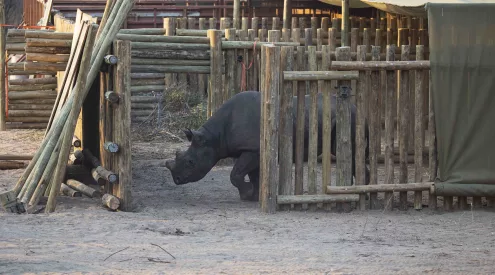
Rhino Ridge Safari Lodge and the story of the white rhino

Image: Supplied
Rhino Ridge Safari Lodge occupies a significant place in South African conservation history.
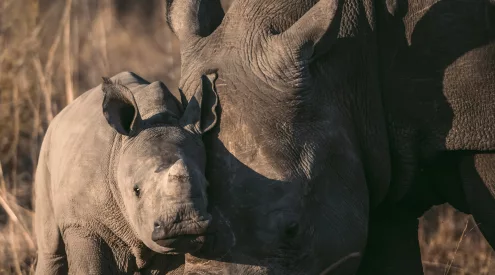
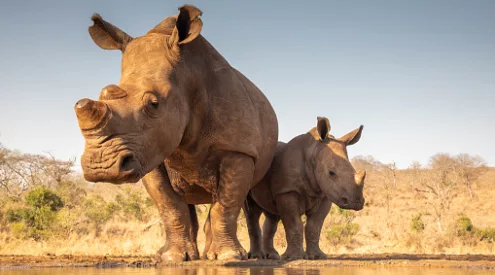
Located within Hluhluwe-iMfolozi Park, the lodge stands in the same landscape where the southern white rhino was rescued from near extinction. By the 1940s, fewer than 100 white rhinos remained alive.
Through the groundbreaking Operation Rhino programme led by conservationist Ian Player, surviving animals were relocated into protected breeding programmes. The species gradually recovered, and today every southern white rhino can be genetically linked back to this region.
While the park is home to 86 mammal species, the white rhino remains its defining symbol of conservation success.
As luxury travel continues to evolve, destinations like these are proving that meaningful wildlife experiences can go hand in hand with long-term conservation. In many cases, the greatest privilege is no longer simply seeing wildlife, but contributing to its survival.
Follow us on social media for more travel news, inspiration, and guides. You can also tag us to be featured.
TikTok | Instagram | Facebook | Twitter
ALSO READ:
David Attenborough turns 100: The voice that brought nature home