







A long-standing immigration question may finally be shifting
For thousands of Zimbabwean Exemption Permit holders living and working in South Africa, uncertainty has become a familiar part of life. But a recent announcement from government has sparked cautious hope that a long-standing deadlock may finally be shifting.
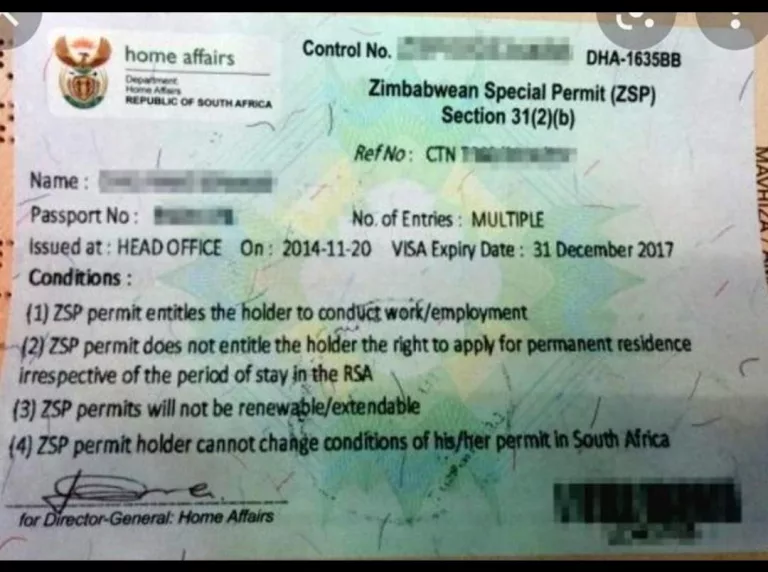
Sourced: X{@ThandoZ27}
According to The South African, Deputy Minister of Home Affairs Njabulo Nzuza has indicated that holders of the Zimbabwe Exemption Permit (ZEP) can now apply for permanent residence, a notable change in tone from previous policy positions that explicitly blocked such applications.
For many families who have built their lives in South Africa over more than a decade, the statement has been received as a potential turning point, even if it is not yet a final legal amendment.
From temporary protection to long-term questions
The Zimbabwe Exemption Permit was introduced in 2009 as a temporary solution for Zimbabweans who entered South Africa during periods of economic instability in their home country.
Over time, the programme has been extended repeatedly, most recently with a deadline set for May 2027, reflecting how temporary measures often become long-term realities.
But one rule remained firm until now: ZEP holders were not allowed to apply directly for permanent residence.
That restriction is now being reconsidered in practice, with authorities signalling that applications will be assessed on a case-by-case basis.
“Apply for other legal pathways,” says Home Affairs
Speaking in a recent media interview, Nzuza explained that the exemption permit was never designed as a permanent status.
He noted that individuals who wish to remain in South Africa should pursue alternative legal routes, including other visa categories already available under immigration law.
This includes options such as business and other mainstream visa types, which could now serve as stepping stones toward long-term residency for eligible applicants.
The shift suggests a more flexible interpretation of how long-term residents under special permits may transition into formal immigration status.
Pressure from legal action and community advocacy
The announcement does not come in isolation.
The ZEP Holders Association (Zepha) has been engaged in a long-running legal battle with the Department of Home Affairs, arguing that ZEP holders — many of whom have lived in South Africa for years — should be allowed to apply for permanent residence based on family ties, economic contribution, and humanitarian grounds.
The group has taken the matter to the Johannesburg High Court, pushing for a clearer and more inclusive pathway for long-term residents under the scheme.
Their argument has consistently centred on one idea: that temporary status has, for many families, become permanent life.
Hope, but not yet certainty
While the deputy minister’s remarks have been welcomed by legal representatives, advocates are urging caution.
Attorney Simba Chitando, who represents Zepha, said the comments align with long-standing demands from permit holders, but stressed that the announcement still needs to be formally documented before any real change can be confirmed.
Until then, uncertainty remains — and legal action could continue if the policy shift is not properly implemented.
A deeply rooted community in South Africa
It is estimated that around 180 000 ZEP holders live and work in South Africa. Many have spent years — in some cases more than a decade — building careers, raising children, and becoming part of local communities.
For many families, children have grown up entirely in South Africa, often with limited ties to Zimbabwe beyond heritage.
This reality is part of what has fuelled ongoing debate about whether temporary immigration frameworks can still serve populations that have effectively become long-term residents.
Why this moment matters beyond policy
Immigration policy in South Africa has long been shaped by balancing economic needs, regional relationships, and domestic pressures.
The ZEP system sits directly at that intersection — created as a temporary response to migration flows, but evolving into a long-term social and legal question.
The latest remarks suggest a possible recalibration: a move away from strict temporary classification toward more flexible, individualized assessment.
Still, nothing is final until formal policy changes are issued in writing.
Cautious optimism in a long-running debate
For now, the reaction from legal representatives and advocacy groups is measured.
There is optimism — but also a readiness to return to court if necessary.
Beyond the legal arguments, there is also a broader concern: ensuring that migration policy reflects lived reality, not just administrative categories.
The conversation around ZEP status in South Africa has never been just about permits.
It is about people who have built lives in the country while navigating a system designed for temporary residence.
This latest development does not close the debate, but it may signal that the door is finally being left slightly more open than before.
Source: The South African
Follow us on social media for more travel news, inspiration, and guides. You can also tag us to be featured.
TikTok | Instagram | Facebook
ALSO READ: