






Greece’s second-largest city has plenty to offer beyond its famous seafront and White Tower. Spend three days exploring bustling food markets, Roman and Byzantine landmarks, atmospheric neighbourhoods, street art and the flavours that have made Thessaloniki one of Greece’s great food cities.
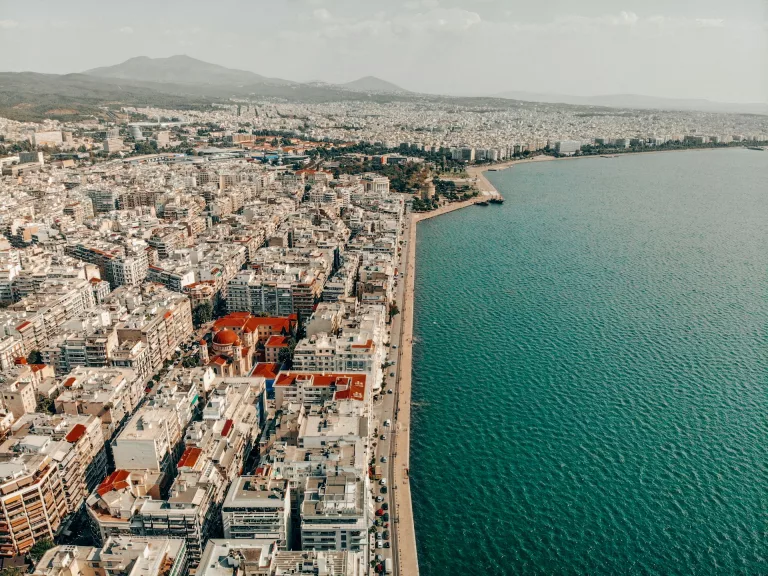
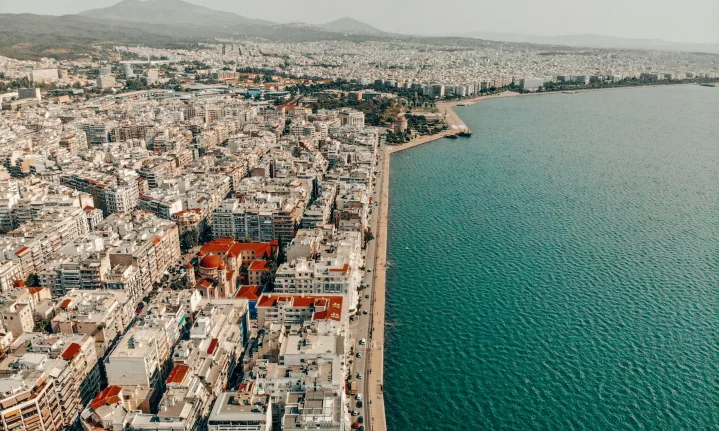
Thessaloniki, Greece/Miltiadis Fragkidis/Unsplash
Thessaloniki is a city best explored on foot, with layers of history appearing between cafés, shops and apartment buildings. Roman ruins stand alongside Byzantine churches, Ottoman-era buildings and contemporary street art, while traditional markets remain part of everyday city life. The city has 15 UNESCO World Heritage monuments, many of them Byzantine churches, scattered through its urban landscape.
A three-day visit is enough to get a taste of this history without spending the entire trip inside museums.
Day one: discover the city’s food and history
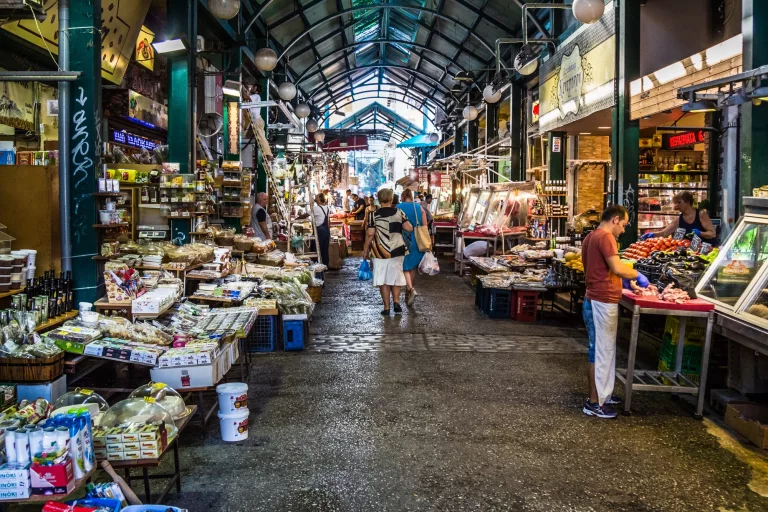
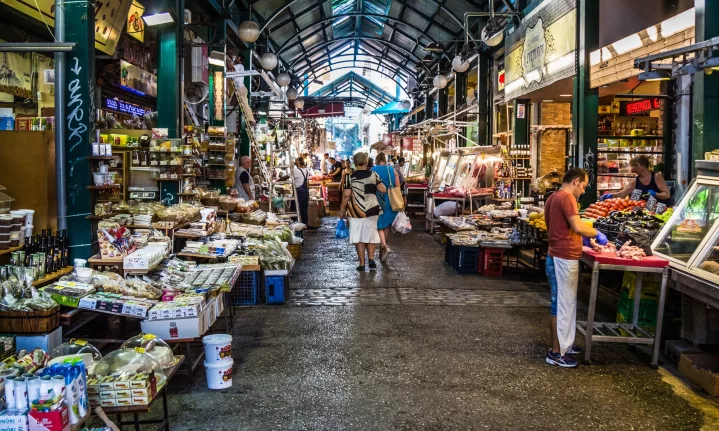
Inside Kapani Market/https://pixabay.com/users/zorand-3554075/, CC0, via Wikimedia Commons
Start at Kapani Market
Begin in the centre at Kapani Market, also known as Agora Vlali. This traditional market is one of Thessaloniki’s oldest surviving markets and remains part of everyday life in the city.
The market is filled with stalls selling fresh produce, spices, olives, fish, meat and sweets, alongside bakeries, coffee shops, tavernas and meze restaurants. Many of the shops have been family-owned for two or three generations.
Take your time wandering through the narrow lanes; the sights, sounds and smells are part of the experience.
Nearby Athonos Square is another good place to browse small food shops and settle down for a coffee or something to eat. The surrounding streets are home to restaurants, traditional shops and small businesses.
Make time for Modiano Market
Continue to Modiano Market, an indoor market whose construction began in 1922 and was completed in 1930 by architect Eli Modiano.
The historic market was designed with a glass roof and European market halls in mind. Today it combines food shops, traditional products, restaurants and bars.
Modiano is particularly interesting because of its connection to Thessaloniki’s Sephardic Jewish heritage. Its architect, Eli Modiano, came from one of the city’s prominent Jewish families.
The market also reflects the city’s evolving food culture, making it a good place to sample local flavours while seeing how traditional and contemporary Thessaloniki overlap.
Follow Thessaloniki’s Roman past
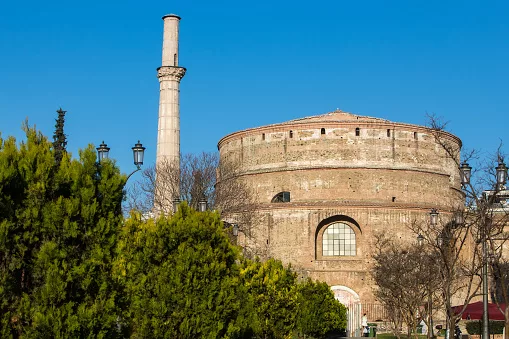
The Rotunda, a 4th-century monument in the city of Thessaloniki/By: verve231/Getty Images
From the markets, head towards the Roman Forum and Galerian complex, where the city’s ancient history becomes impossible to miss.
The Rotunda is one of Thessaloniki’s most striking monuments. Built during the Roman period, the monumental structure has served different purposes over the centuries and is now one of the city’s most important historical landmarks.
Nearby, the Arch of Galerius and remains of the Galerius complex provide another glimpse into the Roman city.
Rather than rushing between the monuments, explore the surrounding streets on foot. This is where the contrast that makes Thessaloniki so interesting begins to emerge: ancient ruins appear beside modern cafés, university buildings, shops and busy streets.
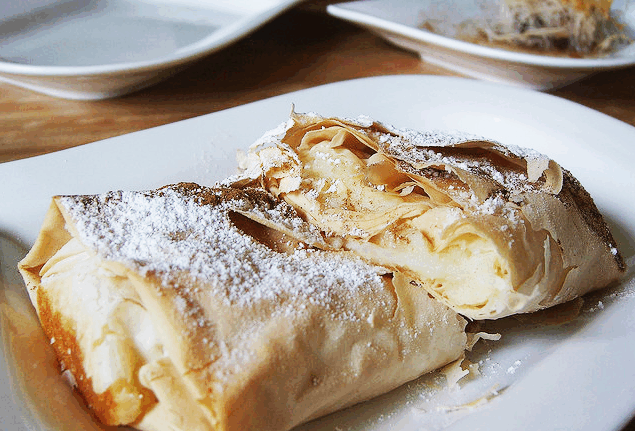
Try bougatsa for breakfast or a snack

Bougatsa/avlxyz/Wikimedia Commons
No food-focused visit to Thessaloniki is complete without bougatsa, the city’s famous flaky pastry.
The pastry is made with thin, crisp phyllo and comes in sweet or savoury versions. The classic sweet variety is filled with cream and finished with icing sugar and cinnamon, while other versions contain cheese, spinach or minced meat.
Bougatsa became particularly associated with Thessaloniki after Greek refugees arrived from Constantinople and other parts of Asia Minor in the early 20th century.
Pair it with a Greek coffee, and you’ve got one of the city’s classic breakfasts.
Spend the evening in Ladadika
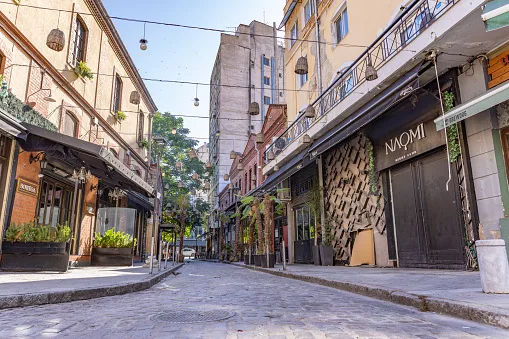
Ladadika district of Thessaloniki/By: Oleksandr Petroshchuk/Getty Images
As evening arrives, head towards Ladadika, the former commercial district close to the centre.
Its cobbled streets and preserved façades now house restaurants, bars and tavernas. The historic district survived the great fire of 1917 and was later redeveloped into one of Thessaloniki’s best-known dining and nightlife areas.
Order several small dishes rather than committing to one large meal. Meze-style dining fits Thessaloniki particularly well and lets you sample more of the city’s flavours.
ALSO READ:
Day two: explore Byzantine Thessaloniki and Ano Poli
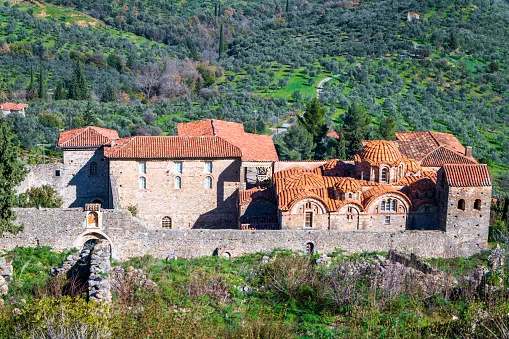
High angle view of Saint Demetrius Greek Orthodox Church/By: George Pachantouris/Getty Images
Step into the Byzantine era
Thessaloniki is one of Europe’s most rewarding cities for Byzantine history.
The city’s UNESCO-listed monuments include churches, monasteries, fortifications and the Rotunda. The monuments span centuries and contain important examples of Byzantine art and architecture.
Visit the Church of Saint Demetrius, dedicated to the city’s patron saint, and the Church of Agia Sofia before continuing towards Ano Poli.
You don’t need to see every Byzantine monument during a short stay. Choose a few that interest you and leave enough time to explore the neighbourhoods between them.
Walk uphill to Ano Poli
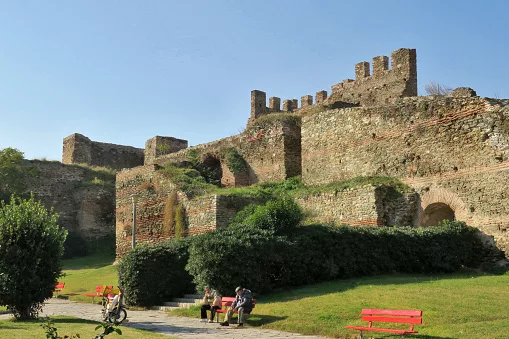
Old city walls at Ano Poli Thessaloniki, Greece/By: Izzet Keribar/Getty Images
The city’s Upper Town, or Ano Poli, feels markedly different from the busy centre.
The area retains narrow lanes, traditional houses and older architectural details, offering a glimpse of a quieter side of Thessaloniki. The neighbourhood’s elevated position also provides sweeping views across the city.
Allow yourself time to wander without a strict route. Stop at a traditional café, look for old houses and follow the lanes towards the city walls.
Visit Vlatadon Monastery
Continue towards Vlatadon Monastery, a Byzantine monastery in Ano Poli.
Its elevated position makes it a peaceful place to pause while taking in views across Thessaloniki. It also forms part of the city’s wider Byzantine heritage.
Walk beside the old city walls
From Ano Poli, follow the surviving city walls towards Eptapyrgio and Trigonion Tower.
The fortifications are among the city’s most atmospheric places to walk, particularly later in the afternoon when Thessaloniki spreads out below you.
The walls form an important part of the city’s Byzantine heritage and offer a different perspective on Thessaloniki’s long history. The tourism authorities describe Ano Poli and the walls as places where the city’s historic layers are particularly visible.
Have dinner in Ano Poli
Stay in the Upper Town for dinner rather than immediately returning to the centre.
Traditional tavernas tucked into the neighbourhood’s streets offer a chance to experience a quieter side of Thessaloniki. Look for local dishes, grilled meats, meze and seasonal vegetables.
Thessaloniki’s cuisine has been shaped by local traditions as well as recipes brought by Greek refugees from Asia Minor, Pontus and Eastern Thrace.
Day three: discover the city’s cultural layers
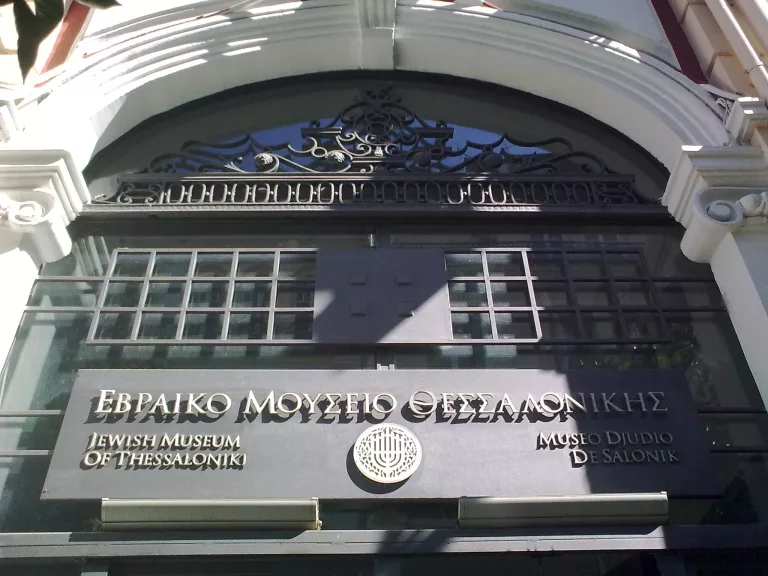
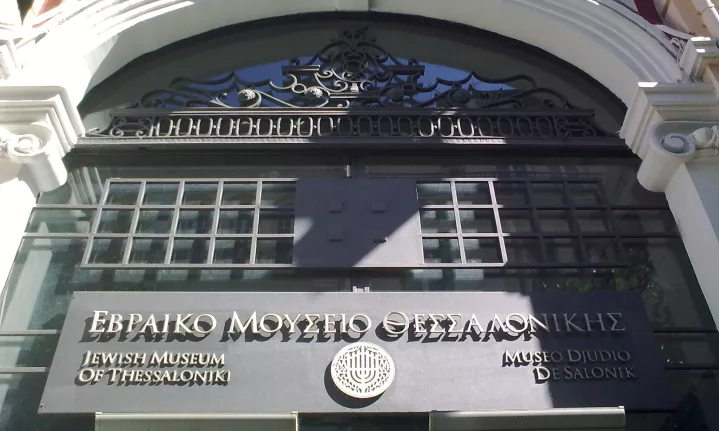
Jewish Museum of Thessaloniki sign features at the building’s facade/Sam. SALTIEL/Wikimedia Commons
Explore Thessaloniki’s Jewish history
Thessaloniki’s story is also inseparable from its historic Jewish community.
After the expulsion of Jews from Spain in 1492, large numbers of Sephardic Jews settled in Ottoman Thessaloniki, becoming an important part of the city’s commercial and cultural life.
The Jewish Museum of Thessaloniki offers an introduction to this history. Its building is one of the few structures in the city centre that survived the devastating fire of 1917. It now houses collections relating to Thessaloniki’s Jewish community and heritage.
It’s worth including even if history museums aren’t normally high on your travel list because it adds another important layer to understanding the city.
Look beyond the museums for street art
Thessaloniki’s history isn’t confined to archaeological sites.
Contemporary street art has become another layer of the urban landscape, with murals and smaller works appearing throughout the city.
Spend some time exploring side streets around the centre and university district rather than sticking to the main tourist routes. The contrast between historic buildings, archaeological remains and contemporary artwork is part of Thessaloniki’s appeal.
Browse around Navarinou Square
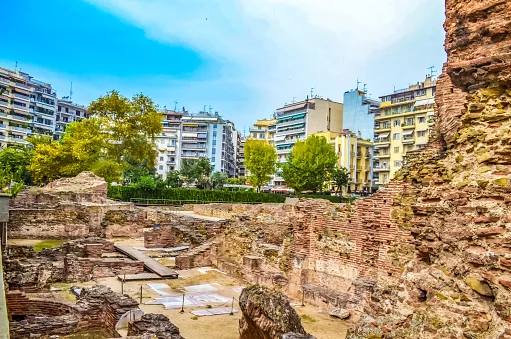
Navarinou Square in Thessaloniki/By: Anna Yordanova/Getty Images
Make your way to Navarinou Square, where the remains of the Palace of Galerius sit alongside a lively modern neighbourhood.
The square is known for its youthful and alternative atmosphere, with cafés, bars, restaurants and shops. It is particularly popular with students and remains busy throughout the day and evening.
The nearby pedestrianised Dimitriou Gounari Street is also worth exploring, with shops, cafés and places to stop for a quick bite.
The Roman ruins scattered through this area are a reminder of how closely Thessaloniki’s ancient and modern identities overlap.
Eat your way through Thessaloniki

Koulouri/Тиверополник/Wikimedia Commons
Leave part of your final day open for food.
Thessaloniki is part of the UNESCO Creative Cities Network for Gastronomy, and its food culture reflects the many communities and migration movements that have shaped the city.
Look beyond the obvious gyros and souvlaki. Try koulouri, the sesame-covered bread ring sold throughout the city, or seek out local sweets such as trigona, crisp pastry cones filled with cream.
Bougatsa is another must-try, whether you choose the sweet custard-filled version or a savoury filling.
Thessaloniki’s food culture also extends to meze restaurants, ouzeries, tavernas and pastry shops. Seafood, mussels, meatballs, stuffed vegetables, and other dishes shaped by the city’s multicultural past feature throughout the local culinary landscape.
The point is less about ticking off a list of dishes and more about understanding how food tells the city’s story.
A different side of Greece’s second city
Thessaloniki’s waterfront may be its most recognisable face, but it is only the beginning.
Spend 72 hours looking beyond it, and another city emerges: one of markets and Byzantine churches, Roman ruins and Ottoman influences, traditional bakeries and modern cafés, street art and old neighbourhoods.
It is a city where history isn’t sealed away behind museum doors. It is woven into the streets, food and everyday life, making Thessaloniki particularly rewarding for travellers who prefer to explore a destination by walking, eating and observing rather than simply moving from one famous landmark to another.
Follow us on social media for more travel news, inspiration, and guides. You can also tag us to be featured.
Instagram | Facebook | Twitter | Spotify
ALSO READ: