










Tbilisi is a city where layers of history sit alongside a fast-changing creative scene. Beyond the cobbled lanes and balconies of the Old Town, the Georgian capital has bustling food markets, Soviet-era relics, contemporary art spaces, converted industrial buildings, and neighbourhoods where cafés and restaurants are breathing new life into older streets.
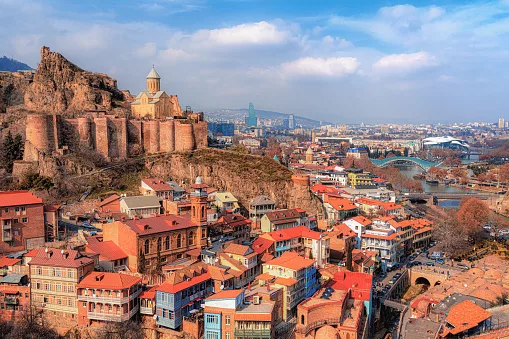
Old Town Tbilisi/By: Mekdet/Getty Images
This 48-hour itinerary looks beyond the usual sightseeing circuit, while still making room for one of Tbilisi’s most distinctive traditions: its sulphur baths.
Day one: markets, Soviet history and a creative neighbourhood
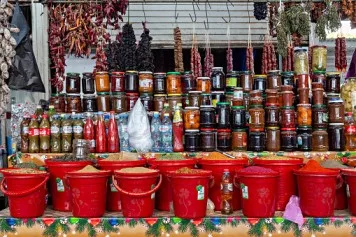
By: Ozbalci/Getty Images
Start at Dezerter Bazaar
Begin the morning at Dezerter Bazaar, one of Tbilisi’s largest agricultural markets near the city’s Central Railway Station.
The market covers about 2,000 square metres and is packed with stalls selling fruit and vegetables, nuts, herbs, cheeses, dairy products, spices and traditional Georgian treats. Depending on the season, you may also find churchkhela, tklapi, pickles and tkemali, the tart plum sauce that features prominently in Georgian cuisine.
It is worth arriving early. The market typically gets going from around 07:00, giving you time to wander through the stalls before continuing with the day’s sightseeing.
Don’t rush through this stop. Part of the experience is watching locals shop for ingredients and seeing the sheer variety of produce that feeds the city’s kitchens.
Walk through Chugureti
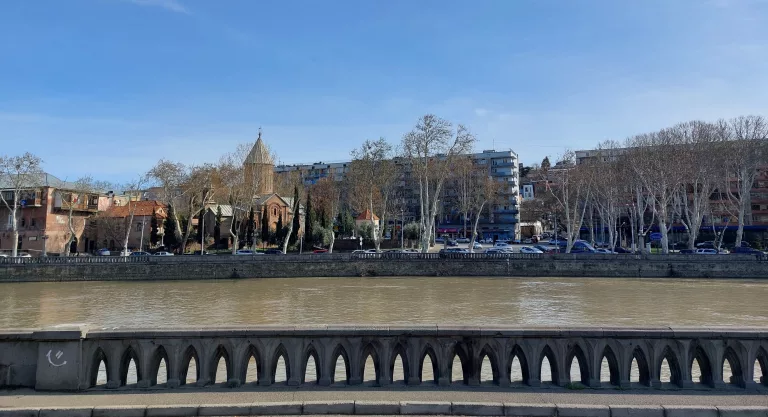
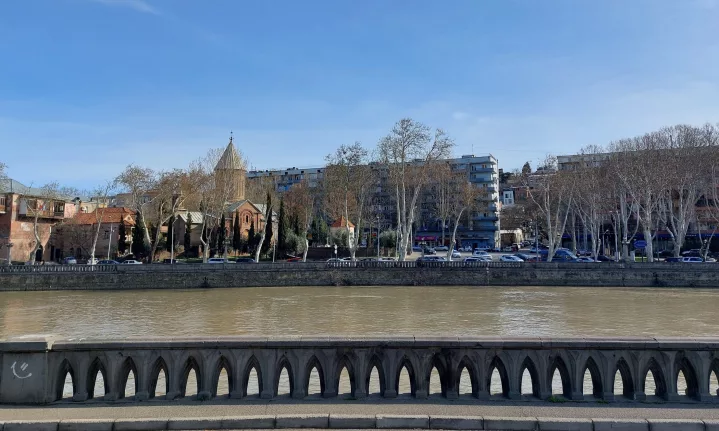
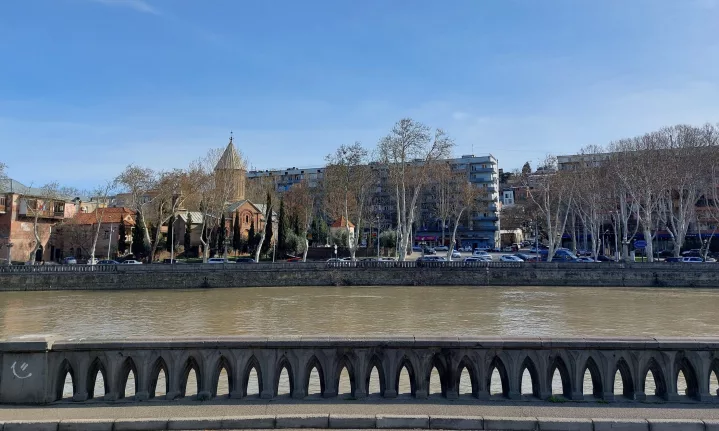
Zhordania Embankment and the Church of St. Nicholas of Chugureti as seen from the Public Service Hall parking area/Kober, CC0, via Wikimedia Commons
From the market, head toChugureti, a neighbourhood north of the Mtkvari River where older architecture meets Tbilisi’s newer café and creative culture.
The area makes an interesting counterpoint to the more polished historic centre. Its streets combine older residential buildings with cafés, restaurants, studios and independent businesses, while nearby Fabrika has become one of the best-known examples of the city’s creative redevelopment.
Take your time here rather than following a strict attraction-to-attraction itinerary. Explore courtyards, stop for coffee, and keep an eye out for murals, balconies, and architectural details.
Spend an afternoon at Fabrika
View this post on Instagram
Continue to Fabrika, a former Soviet sewing factory that has been transformed into a multi-purpose creative space.
The complex is now associated with Tbilisi’s contemporary urban culture, with cafés, restaurants, shops, studios and social spaces occupying the former industrial building.
It is also a useful place to understand the changing character of the city. Tbilisi’s identity isn’t confined to its historic churches and traditional architecture. New businesses and creative spaces are increasingly occupying buildings and neighbourhoods with much older histories.
Take a seat in the courtyard for a drink or coffee before heading out again.
Browse the Dry Bridge Market
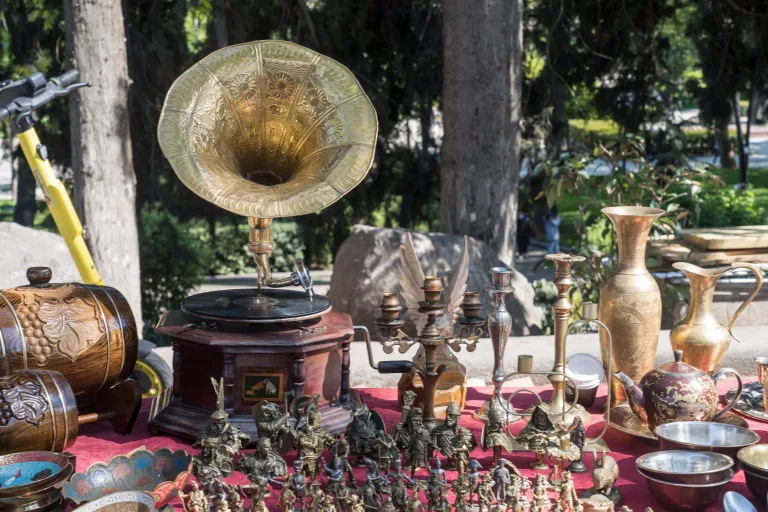
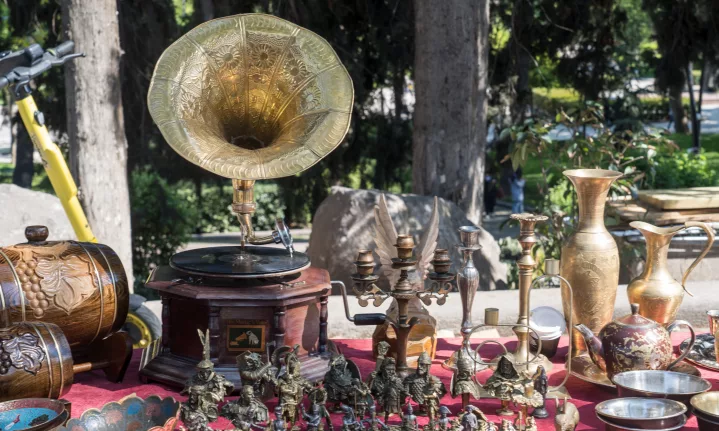
Dry Bridge Market in 2025/Alexkom000/Wikimedia Commons
Later, head towards the Dry Bridge Market, one of Tbilisi’s most distinctive open-air markets.
The market has been operating in its current form since the 1950s and has become known for its mix of antiques, Soviet-era objects, old photographs, household goods, jewellery and other curiosities. Nearby, artists display paintings and handicrafts in an open-air gallery.
This is the place to browse rather than shop with a particular item in mind. You could come across an old camera, a piece of porcelain, Soviet memorabilia or a Georgian artwork.
The market is generally open daily, with Georgia Travel listing hours of roughly 09:00 to 17:00.
Eat your way through Georgian cuisine
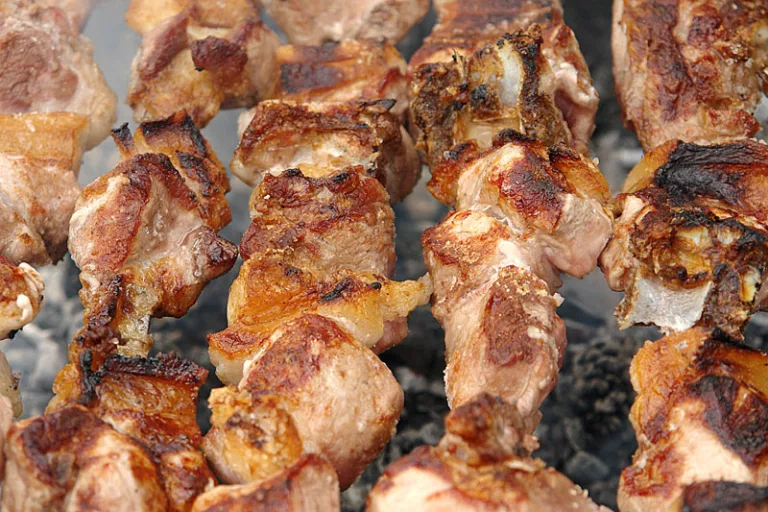
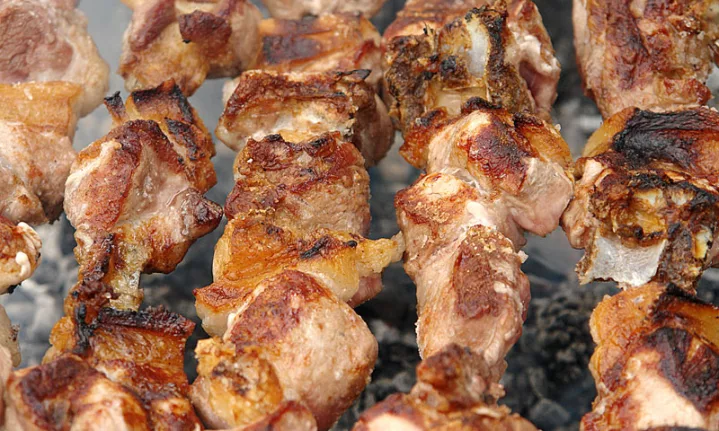
Mtsvadi/Paata Vardanashvili/Wikimedia Commons
Finish the day with a proper Georgian dinner.
Tbilisi is an ideal place to sample dishes from different parts of the country because regional cooking traditions have converged in the capital. Look for khinkali, Georgian soup dumplings; khachapuri, the country’s famous cheese-filled bread; pkhali made with vegetables and walnuts; and grilled mtsvadi.
Khachapuri is particularly worth exploring because the dish has numerous regional variations. The familiar Adjarian version is boat-shaped and topped with cheese, butter and egg, while Imeretian khachapuri is round and filled with cheese.
Don’t worry about fitting everything into one meal. Georgian food is made for sharing.
ALSO READ:
Day two: art, architecture and a soak in the sulphur baths
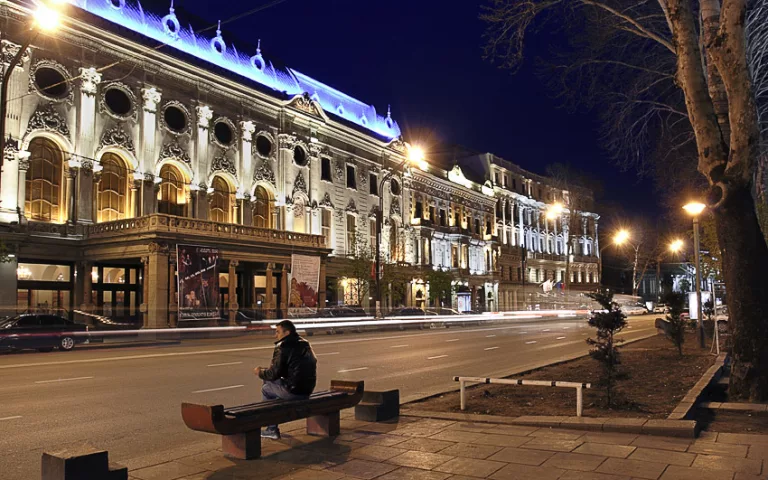
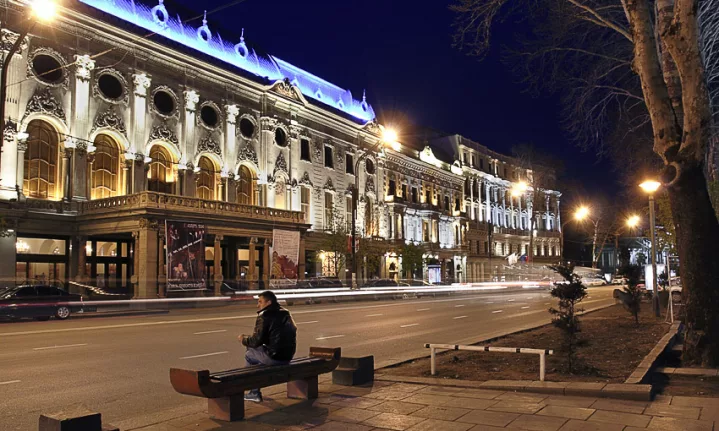
Rustaveli Theatre/George Kvizhinadze from Tbilisi, Georgia/Wikimedia Commons
Walk along Rustaveli Avenue
Start your second morning on Rustaveli Avenue, Tbilisi’s main central thoroughfare.
The roughly 1.5-kilometre avenue brings together several of the city’s cultural institutions, including the Georgian National Gallery, Opera and Ballet Theatre, Rustaveli Theatre and the Modern Art Museum.
The avenue is also an architectural journey through different periods of Tbilisi’s history. Give yourself time to look beyond the museums and notice the façades, monuments, churches and public buildings along the route.
Make time for Georgian art
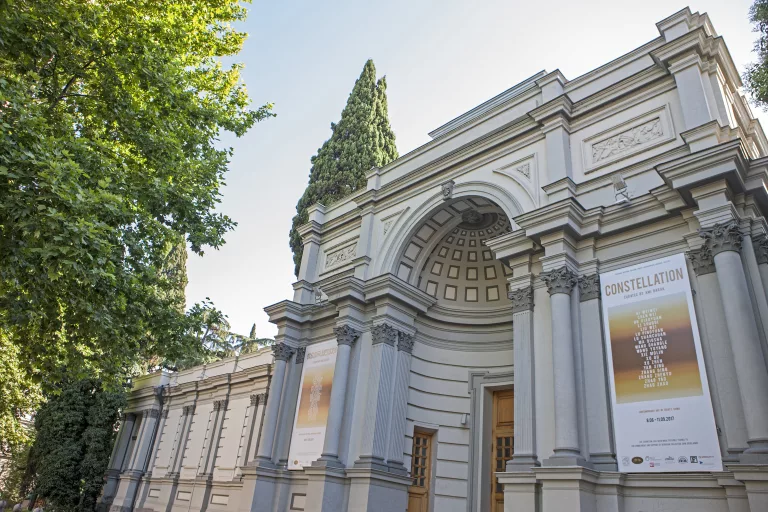
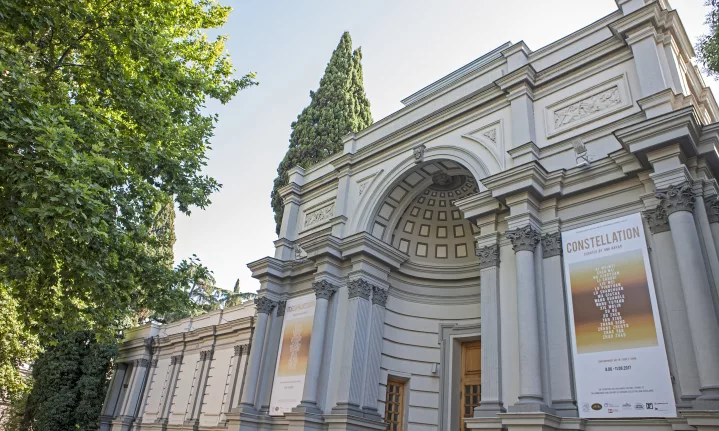
National Gallery, Rustaveli Avenue, Tbilisi/JohnDodelande_Georgie, CC0, via Wikimedia Commons
The Georgian National Gallery is a useful stop for understanding the country’s artistic heritage.
Its collection includes works by major Georgian artists such as Niko Pirosmani, Davit Kakabadze and Lado Gudiashvili, alongside modern Georgian painting and sculpture.
For travellers interested in the city’s contemporary creative scene, Tbilisi also has an expanding network of galleries and art events. The annual Tbilisi Art Fair, for example, brings together galleries and artists from Georgia and elsewhere in the region, reflecting the city’s growing connections with the international contemporary-art world.
Stop for a Georgian lunch
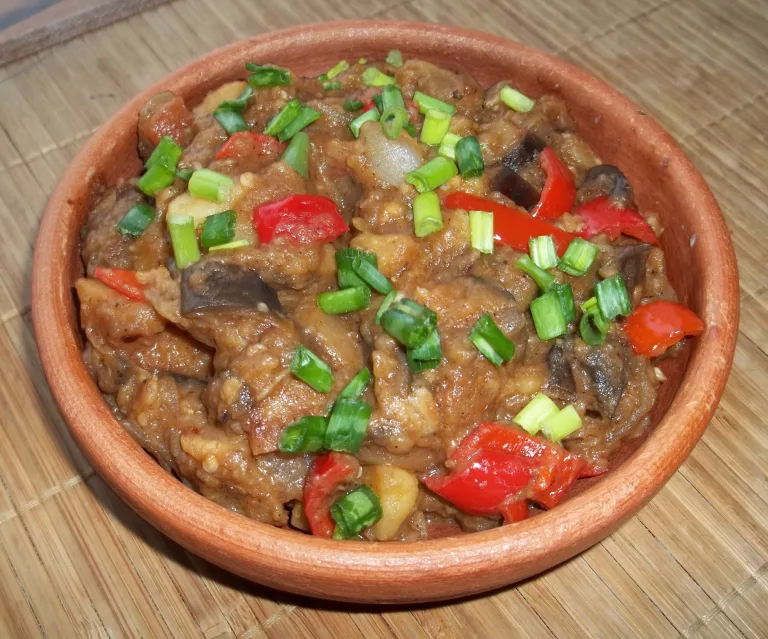
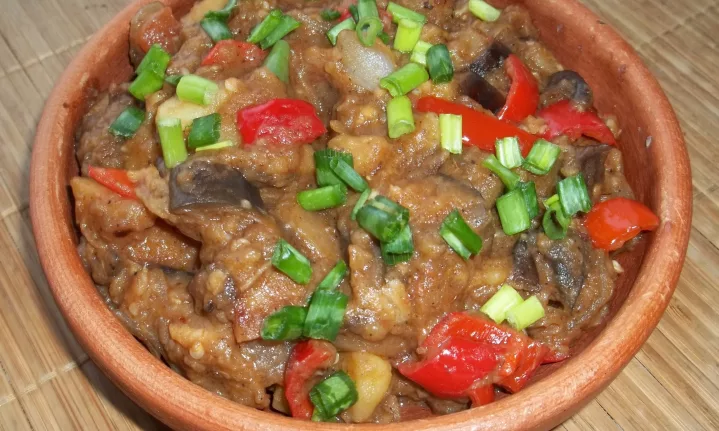
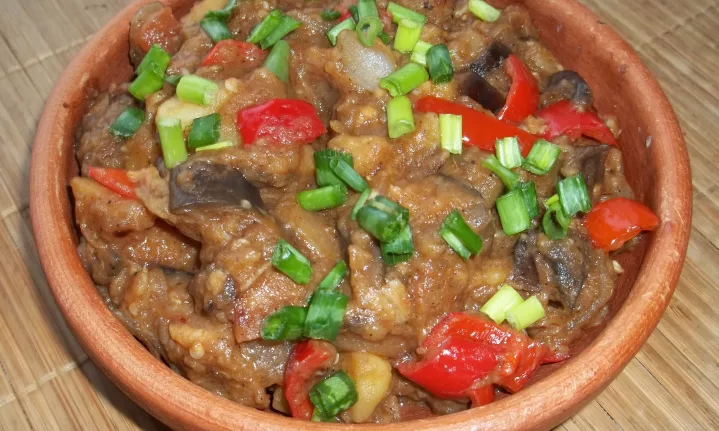
ajapsandali/Georgia About/Wikimedia Commons
Take another opportunity to explore Georgian food rather than simply repeating the previous night’s meal.
Try lobio, a seasoned bean dish, ajapsandali, a vegetable dish associated with Tbilisi, or a selection of pkhali, usually made from vegetables mixed with walnuts, herbs and spices.
If you missed khinkali on the first night, this is another chance. In Tbilisi, the dumplings have developed their own city-style version, known as kalakuri khinkali, which incorporates herbs into the filling.
Take a traditional break at the sulphur baths
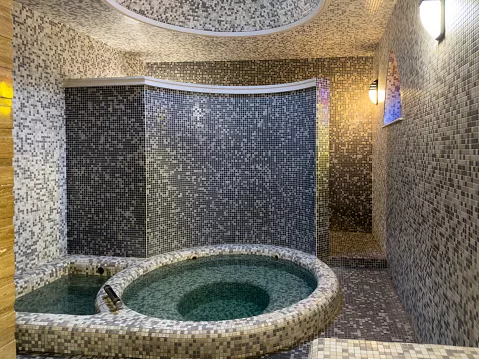
An interior view of a historic public or private sulphur bath house in the Abanotubani district of Old Tbilisi. The space features tiled thermal pools, including a central hot pool and a smaller cold plunge pool/By: Kelly Cheng/Getty Images+
No trip to Tbilisi is complete without experiencing its sulphur baths, even on an itinerary designed to look beyond the Old Town.
The baths are concentrated in Abanotubani, whose name translates roughly as “bath district”. Naturally heated sulphur water rises beneath the city, and the distinctive domed bathhouses have been part of Tbilisi’s culture for centuries.
Most bathhouses offer private rooms as well as public bathing areas. A traditional visit can include soaking in the warm mineral-rich water followed by a kisa, a vigorous exfoliating scrub performed with a coarse cloth.
Book ahead if you have a particular bathhouse in mind, especially during busy periods.
The sulphur baths are technically within the historic core, but they work here because the experience is about participating in one of Tbilisi’s enduring traditions rather than ticking off another viewpoint or monument.
End the weekend with wine and the city lights
Finish your 48 hours with a leisurely Georgian dinner and a glass of local wine.
Rather than trying to squeeze in one final attraction, spend the evening in one of Tbilisi’s cafés, wine bars or restaurants and watch the city change after dark.
That is perhaps the best way to understand Tbilisi beyond its postcard image. The city is historic without feeling frozen in the past, and its markets, food, art and repurposed spaces reveal a capital that continues to reinvent itself.
Getting around Tbilisi
Tbilisi is relatively easy to explore without a car. The metro operates daily from 06:00 to midnight, while public transport generally runs from 07:00 to 23:00.
For this itinerary, combine public transport with walking. The markets and neighbourhoods are spread across the city, but several of the stops can be linked together on foot once you arrive in each area.
Allow extra time for wandering. Some of the most interesting parts of Tbilisi are not individual attractions but the streets, courtyards, cafés and markets between them.
Follow us on social media for more travel news, inspiration, and guides. You can also tag us to be featured.
Instagram | Facebook | Twitter | Spotify
ALSO READ:
48 hours in Hualien, Taiwan: Where mountains meet the Pacific