






Getting children outdoors does not have to mean a long hike or a traditional wildlife outing. Some of the most memorable nature experiences happen when children are encouraged to stop, listen, touch, smell, taste and look closely at what is around them.
From forests and botanical gardens to nature reserves and working farms, South Africa has plenty of places where children can interact with the natural world in hands-on ways. These six destinations offer opportunities to turn a family outing into a sensory adventure.
1. Walter Sisulu National Botanical Garden, Gauteng

Footpath in Walter Sisulu National Botanical Garden/JMK/Wikimedia Commons
Look for eagles, birds, plants and water
The Walter Sisulu National Botanical Garden in Roodepoort is a good introduction to nature for children who may not be ready for a strenuous hike. The garden combines landscaped areas with natural habitats, walking trails, a waterfall, birdlife and indigenous vegetation.
About 240 bird species have been recorded at the garden, while more than 600 naturally occurring plant species are found across its different habitats. A breeding pair of Verreaux’s Eagles also nests on the cliffs near Witpoortjie Falls.
The garden’s waterfall and birdlife provide an easy starting point for a five-senses game. Ask children to count how many different bird calls they can hear, look for movement in the trees and feel the different textures of leaves, bark and rocks along the way.
The garden also has a butterfly garden and other themed areas that make it possible to explore nature without travelling far from the city.
Try this: Pack a picnic and ask children to choose one thing they can see, hear, smell, touch and taste before heading home.
2. Kloofendal Nature Reserve, Gauteng
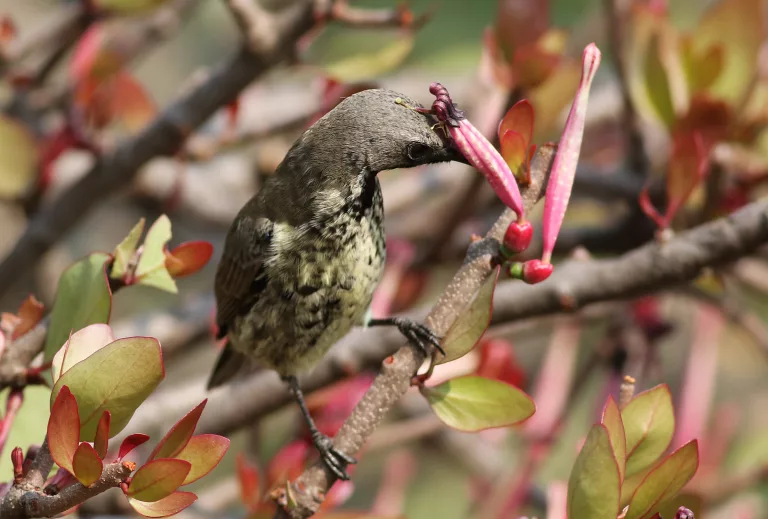
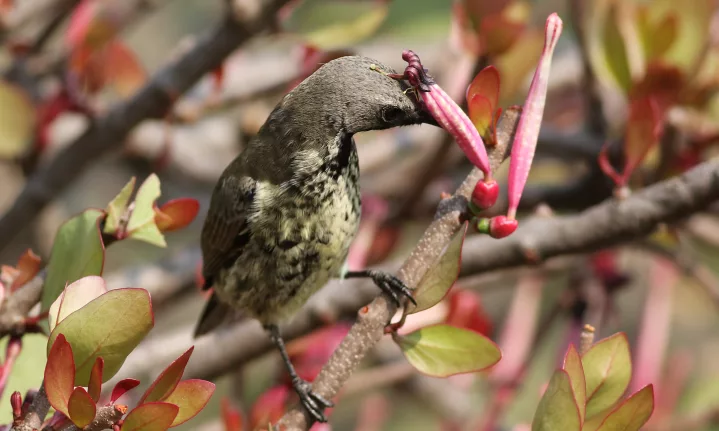
Amethyst sunbird feeding on nectar of a mistletoe flower at the Kloofendal Nature Reserve/Derek Keats from Johannesburg, South Africa/Wikimedia Commons
Taste wild plants and listen for frogs
Kloofendal Nature Reserve in Roodepoort turns a walk in the bush into an opportunity to learn about the natural world. The 128ha reserve is an important environmental education site and contains walking trails, a dam, a bird hide and a variety of small mammals.
What makes it particularly suited to this story is the range of guided experiences offered by Friends of Kloofendal. These include bush-food walks, butterfly activities, frog outings, bird walks, geology and even making art from plant material collected in the reserve.
The bush-food experience introduces children to wild fruits, tea, coffee and jams, while other activities encourage them to look closely at butterflies, listen for frogs and discover how the landscape was formed.
Some guided walks are specifically designed as family activities. The butterfly walk, for example, is a two-hour guided experience where participants can catch butterflies briefly for identification before releasing them unharmed.
Try this: Give children a small notebook and let them draw or describe five things they noticed using their senses.
ALSO READ:
3. Harkerville Forest and Kranshoek, Garden Route
Feel the forest and listen for frogs
The indigenous forests around Harkerville offer a completely different sensory experience. At the Garden of Eden, short circular walks pass through wet high forest containing trees such as stinkwood, kalander and wit-els. There is also an 800m wheelchair-accessible trail.
Nearby Kranshoek has a picnic site with coastal views and a stream where children can look for frogs.
This is a place where children can slow down and pay attention to details that are easy to miss. The forest canopy changes the light and sound around you, while leaves, bark, rocks and damp earth provide plenty of different textures to investigate.
It is also worth choosing the easier walks rather than attempting the Harkerville Coastal Trail with young children. The latter is a challenging 26km route and is not recommended for children under 12.
Try this: Stop at the stream and let children spend five quiet minutes listening for frogs, insects and birds.
4. Wilderness, Garden Route
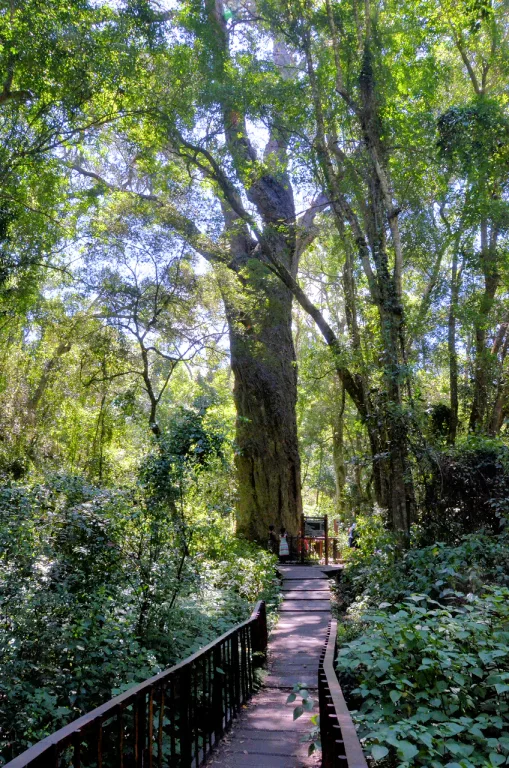
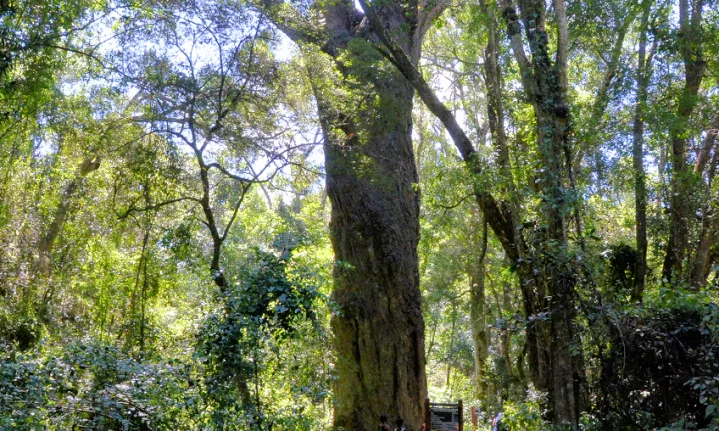
Woodville Big Tree/Ossewa/Wikimedia Commons
Paddle, listen and watch the waterways
The Wilderness section of the Garden Route National Park is built around a landscape of lakes, rivers, estuaries, forests and mountains. It offers families the chance to experience nature from several different perspectives.
There are forest paths, bird hides and waterways to explore, while canoeing offers another way to experience the landscape. SANParks notes that the area is home to
Woodville Big Tree/Ossewa/Wikimedia Commons
a range of birdlife, including Knysna turacos and several kingfisher species.
A family outing here can be as simple as walking beside the river and listening to the water, spotting birds from a hide or paddling quietly along one of the waterways.
The area also has designated day-visitor spots, including the Touw River Estuary, Island Lake and Woodville Big Tree, giving families options beyond a full-day hike.
Try this: On a canoe trip or riverside walk, ask children to listen for sounds coming from the water, forest and sky and see how many they can identify.
5. Imhoff Farm, Western Cape
View this post on Instagram
Get hands-on with farm life
Imhoff Farm in Kommetjie offers a more intimate way for younger children to connect with nature. Its Higgeldy Piggeldy Farmyard allows children to feed and touch friendly farm animals, including ponies, cows, sheep, goats, pigs, emus and rabbits.
The farm itself combines open green spaces, animals, vineyards, restaurants and other family-friendly experiences. Its setting also brings the mountains, sea and countryside of the Cape Peninsula into the experience.
This is an easy place to turn a normal family outing into a sensory exercise. Children can feel an animal’s coat, hear the different noises around the farm, smell the countryside and watch how animals behave.
Food adds another sensory layer. The farm has eateries offering locally sourced produce, freshly squeezed juices, baked goods and other farm-style food.
Try this: Let children choose their favourite animal and describe what it looks, sounds and feels like before stopping for a farm-style snack.
6. Monkeyland, Plettenberg Bay
View this post on Instagram
Listen to the forest come alive
At Monkeyland Primate Sanctuary near Plettenberg Bay, the focus is on observing rescued primates in a forest environment rather than viewing animals behind conventional cages.
Monkeyland describes itself as the world’s first free-roaming multi-species primate sanctuary. It currently cares for more than 550 rescued primates across nine species, with the aim of giving them as natural a life as possible within the sanctuary’s habitat.
For children, the forest setting makes the experience about more than simply spotting monkeys. Encourage them to listen for calls in the trees, look for movement in the canopy and notice how the animals use their surroundings.
The experience can also open up conversations about wildlife rescue, habitats and why wild animals need natural environments.
Try this: Before entering the sanctuary, ask children to predict how many different animal sounds they will hear. Afterwards, compare what they heard with what they expected.
Make nature a five-senses adventure
Children do not need to know the name of every bird, plant or animal they encounter to benefit from time outdoors. Asking simple questions can turn an ordinary family outing into a much more memorable experience.
- What can you see? Look for birds, insects, tracks, flowers and movement in the trees.
- What can you hear? Stop walking and listen for water, wind, birds, frogs and insects.
- What can you smell? Notice flowers, leaves, wet earth, forests and farm smells.
- What can you touch? Where it is safe, feel bark, rocks, leaves, grass and other natural textures.
- What can you taste? Try a picnic, farm produce or an organised bush-food experience where tasting is permitted.
The idea is not to rush through a checklist. Instead, it gives children a reason to slow down and pay attention to the natural world around them.
Follow us on social media for more travel news, inspiration, and guides. You can also tag us to be featured.
Instagram | Facebook | Twitter | Spotify
ALSO READ:
48 hours in the Soutpansberg: Mountains, forests and Venda culture



.jpg)
