






South Africa is celebrated for its dramatic mountains, wildlife and coastlines, but when the sun sets, another spectacular attraction takes centre stage. Thanks to vast open spaces, dry climates and low levels of light pollution, the country boasts some of the clearest night skies in the world.
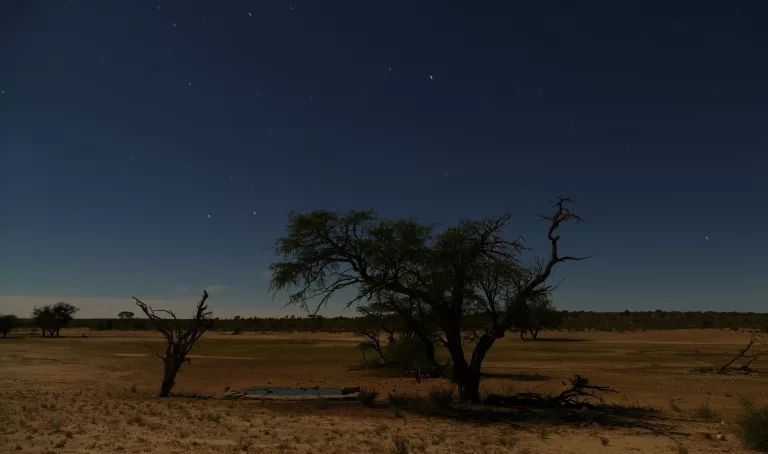
Nossob Camp, Kgalagadi Transfrontier Park at night/Bernard DUPONT from FRANCE/Wikimedia Commons
Whether you’re hoping to photograph the Milky Way, catch a meteor shower or simply marvel at thousands of stars overhead, these seven destinations offer unforgettable stargazing experiences.
1. Sutherland, Northern Cape
South Africa’s astronomy capital
If there’s one destination synonymous with stargazing in South Africa, it’s Sutherland. Sitting more than 1,400 metres above sea level, this small Karoo town combines crisp, dry air with exceptionally dark skies, creating ideal conditions for astronomical observation.
Sutherland is home to the South African Astronomical Observatory’s observation station and the Southern African Large Telescope (SALT), the largest optical telescope in the southern hemisphere. Guided evening tours introduce visitors to the wonders of the universe through professional telescopes, while local guides help identify planets, constellations and distant galaxies.
Even without specialised equipment, stepping outside on a moonless night reveals a dazzling canopy of stars unlike almost anywhere else in the country.
2. Tankwa Karoo National Park
Silence beneath a sea of stars
Few places feel as remote as Tankwa Karoo National Park. Its vast plains, rugged mountains and near-total absence of artificial light create an extraordinary backdrop for stargazing.
The park’s dry climate means cloudless evenings are common, allowing the Milky Way to stretch dramatically across the sky. It’s also a favourite among astrophotographers, who travel from around the country to capture its pristine nightscapes.
During the day, visitors can explore the park’s unique desert scenery before settling in for an evening where silence is broken only by the occasional call of nocturnal wildlife.
3. Kgalagadi Transfrontier Park
Where wilderness meets the cosmos
By day, Kgalagadi Transfrontier Park is known for its iconic red dunes, black-maned lions and elusive predators. At night, however, the sky becomes the main attraction.
Far removed from towns and cities, the park offers exceptionally dark conditions that reveal countless stars, planets and the glowing band of the Milky Way. Wilderness camps provide particularly immersive experiences, where visitors can lie back and admire the heavens while listening to the distant calls of jackals, owls and other nocturnal creatures.
Few safari destinations combine wildlife and world-class stargazing as seamlessly as Kgalagadi.
ALSO READ:
4. Karoo National Park
Big skies in the heart of the Great Karoo
Located near Beaufort West, Karoo National Park offers some of the clearest night skies in the Western Cape. The park’s expansive landscapes and dry air provide excellent visibility throughout much of the year.
After a day spent spotting Cape mountain zebra, springbok and black rhino, evenings invite visitors to slow down and appreciate the vastness overhead. On clear nights, familiar southern hemisphere constellations, the Southern Cross and even the Magellanic Clouds are visible to the naked eye.
The park’s peaceful setting makes it an ideal destination for travellers looking to escape both city lights and busy tourist routes.
5. Cederberg
Rugged mountains under glittering skies
Just a few hours from Cape Town, the Cederberg offers an accessible escape into some of the Western Cape’s darkest skies.
Known for its dramatic sandstone formations, ancient San rock art and rugged hiking trails, the region transforms after sunset into a natural observatory. Several lodges and observatories host guided stargazing evenings, allowing visitors to view distant planets, star clusters and nebulae through powerful telescopes.
Its combination of mountain scenery and celestial beauty makes the Cederberg one of the country’s most rewarding weekend getaways.
6. Namaqualand
A destination that shines long after flower season
Namaqualand is famous for its spring wildflower displays, but once the blooms have faded, another natural spectacle takes over.
The region’s remote landscapes and sparse population create excellent conditions for stargazing throughout the year. Away from towns, the skies remain remarkably dark, allowing visitors to appreciate the brilliance of the Milky Way and countless constellations.
Travellers visiting during flower season can enjoy colourful landscapes by day before watching the stars emerge in spectacular fashion after sunset.
7. Mountain Zebra National Park
Safari days and star-filled nights
Tucked away in the Eastern Cape, Mountain Zebra National Park offers visitors the chance to enjoy both exceptional wildlife viewing and remarkably clear night skies.
With little surrounding development, the park experiences minimal light pollution, making it an excellent place to unwind beneath the stars after a day of game drives. Comfortable accommodation within the park allows visitors to remain immersed in nature long after dark.
It’s an ideal destination for families, photographers and anyone seeking a safari experience that continues well into the evening.
Tips for making the most of your stargazing adventure
Plan around the moon
The darkest skies occur during the new moon, when moonlight won’t wash out fainter stars and the Milky Way.
Dress for chilly evenings
Even in summer, desert and Karoo destinations can become surprisingly cold after sunset. Warm layers, hats and blankets are essential.
Bring the right gear
Binoculars, a tripod and a red-light torch can enhance your experience without affecting your night vision. A stargazing app can also help identify constellations, planets and satellites overhead.
Give your eyes time to adjust
Avoid bright lights for around 20 minutes after arriving at your viewing spot. Your eyes will gradually adapt, revealing many more stars than you can initially see.
South Africa’s landscapes don’t lose their magic when daylight fades. In many places, the real show only begins after dark, when thousands of stars illuminate the night sky and remind us just how vast and beautiful the universe really is.
Follow us on social media for more travel news, inspiration, and guides. You can also tag us to be featured.
Instagram | Facebook | Twitter | Spotify
ALSO READ:
South Africa’s living fossils: Ancient survivors still walking the Earth


.jpg)