Along South Africa’s coastline, a highly productive marine ecosystem exists just below the surface.

Windmill Beach/Ayra Redwood/Unsplash
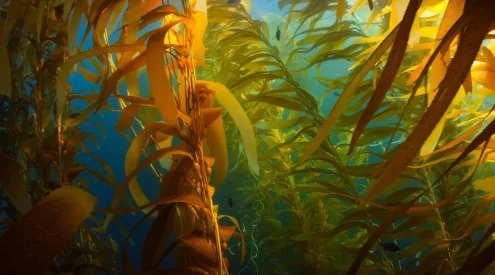
Kelp forests, often referred to as underwater jungles, form dense canopies in the cold, nutrient rich waters of the Atlantic Ocean and parts of the southern Cape. While less visible than terrestrial landscapes, these systems play a critical role in supporting marine biodiversity and maintaining coastal ecological balance.
Kelp forests are particularly well developed along the west coast due to the influence of the Benguela Current, a cold ocean current that drives upwelling. This process brings nutrient rich water from the deep ocean to the surface, creating ideal conditions for kelp growth and sustaining complex food webs.
The structure and function of kelp ecosystems
These forests are dominated by large brown algae such as Ecklonia maxima, a species endemic to southern Africa. Unlike terrestrial plants, kelp does not have roots. Instead, it uses a holdfast to anchor itself to rocky substrates. From there, a flexible stem extends upward toward the surface, where buoyant fronds form a canopy that captures sunlight for photosynthesis.
This vertical structure creates distinct ecological zones. The canopy reduces light penetration, producing shaded areas below that are suitable for different organisms. The mid water zone provides shelter for fish, while the seafloor supports invertebrates and algae that thrive in lower light conditions. This stratification allows multiple species to coexist within a relatively small area.
Kelp forests are among the fastest growing ecosystems globally, with some species capable of rapid daily growth. Their productivity supports both direct grazing by herbivores and indirect food chains through the breakdown of organic material into detritus, which feeds a variety of organisms.
Biodiversity and species interactions
The ecological complexity of kelp forests supports a wide range of marine life. Invertebrates such as sea urchins, abalone, and crustaceans inhabit the reef and kelp surfaces, while fish species utilise the forest for shelter and feeding.
One notable resident is the shyshark, a small benthic shark that is well adapted to reef environments. Its behaviour, including curling into a defensive posture, reflects evolutionary adaptations to predation pressure within confined habitats. Shysharks contribute to the regulation of smaller prey species, helping maintain ecological balance.
Higher up in the water column, Cape fur seal populations frequently forage in and around kelp forests. As mobile predators, they play an important role in controlling fish populations and linking different parts of the marine ecosystem. Their use of kelp habitats also highlights the connectivity between coastal and offshore environments.
Kelp forests are also indirectly linked to the survival of the African penguin, an endangered seabird species. While penguins do not live within the kelp itself, they rely on fish populations that are often associated with these habitats. Declines in prey availability, influenced by environmental changes and fishing pressures, have had significant impacts on penguin populations.
Ecological importance and ecosystem services
Kelp forests provide a range of ecosystem services that extend beyond biodiversity support. One of their key functions is coastal protection. By absorbing wave energy, kelp reduces the impact of storms and helps stabilise shorelines. They also contribute to global carbon cycles. Through photosynthesis, kelp absorbs carbon dioxide and converts it into organic matter. Some of this carbon is exported to deeper ocean layers when plant material breaks off and sinks, a process that is increasingly studied for its role in carbon sequestration.
In addition, kelp forests support fisheries by providing habitat for commercially important species. This makes them economically as well as ecologically valuable, particularly for coastal communities that depend on marine resources.
Environmental pressures and conservation
Despite their resilience, kelp ecosystems are vulnerable to environmental change. Rising sea temperatures, driven by climate change, can affect growth rates and distribution. Marine heatwaves have been linked to declines in kelp cover in other parts of the world, raising concerns about future impacts in southern Africa.
Overfishing can also disrupt ecological balance by removing key predator species. This may lead to population increases in herbivores such as sea urchins, which can overgraze kelp and create degraded habitats known as urchin barrens. Pollution and coastal development further threaten these systems by altering water quality and sedimentation patterns. As a result, conservation strategies increasingly focus on integrated marine management, including the establishment of marine protected areas and the regulation of fishing activities.
Research, awareness, and human connection
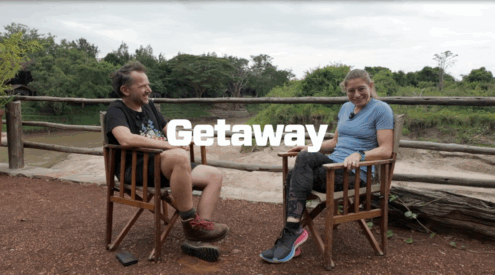
Scientific research continues to expand understanding of kelp ecosystems, including their responses to environmental stress and their potential role in climate mitigation. At the same time, public awareness has grown through storytelling and visual media. The documentary My Octopus Teacher introduced global audiences to the ecological richness of South Africa’s kelp forests, highlighting both their biodiversity and their vulnerability.
Experiencing kelp forests responsibly
Kelp forests are accessible to the public through snorkelling and diving, particularly along the Western Cape. These activities provide opportunities for environmental education and foster a deeper appreciation for marine ecosystems. However, responsible interaction is essential to minimise disturbance and protect fragile habitats.
A vital but often overlooked ecosystem
South Africa’s kelp jungles represent a critical component of the country’s natural heritage. Their ecological importance, combined with their role in supporting marine life and coastal stability, makes them a priority for conservation. Understanding how these systems function is key to ensuring their protection in the face of ongoing environmental change.
Follow us on social media for more travel news, inspiration, and guides. You can also tag us to be featured.
TikTok | Instagram | Facebook | Twitter
ALSO READ:
David Attenborough turns 100: The voice that brought nature home