

South Africa is home to some of the world’s most spectacular plants, from colourful spring flowers to ancient trees. But look beyond the obvious, and you’ll find a stranger side to the country’s flora: plants that resemble people, stones, elephant feet and even something from another planet.
Many of these botanical oddities have evolved remarkable ways of surviving in some of southern Africa’s harshest landscapes. Better still, seeing them can become an adventure in itself, taking travellers deep into the Northern Cape, the Karoo and, just across the border, Namibia.
Here are some of the strangest plants to look out for – and where to find them.
Halfmens: The plant that looks almost human
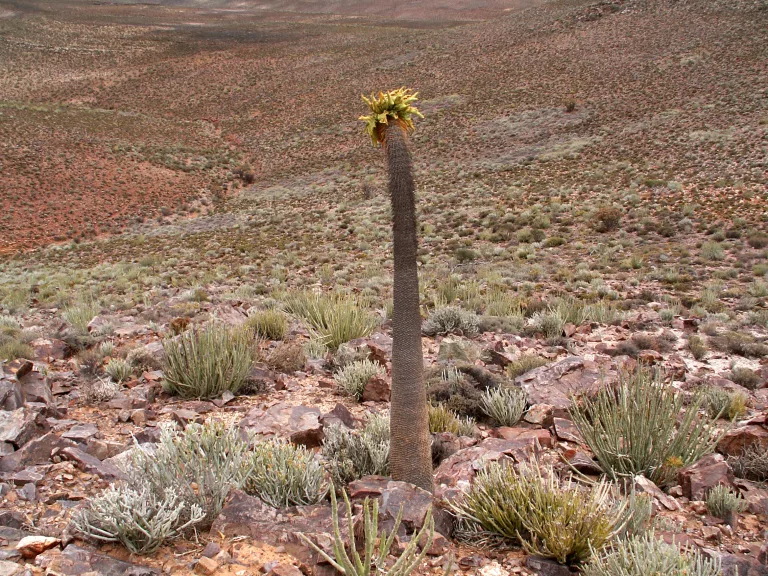
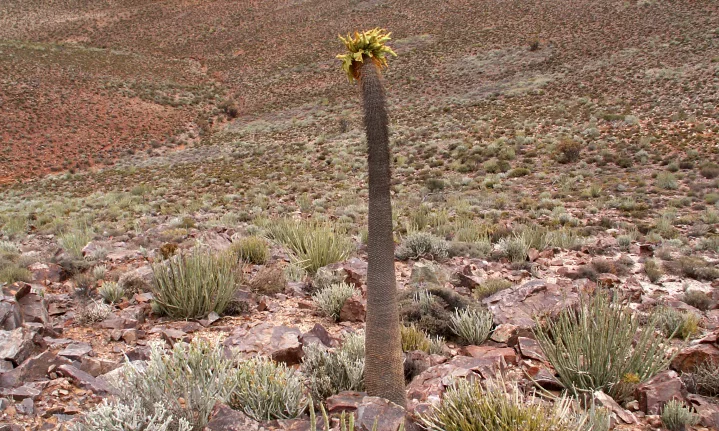
Halfmens in Richtersveld National Park/Winfried Bruenken Amrum/Wikimedia Commons
Where to find it: the Richtersveld, Northern Cape
Few plants have a name as intriguing as the halfmens, or Pachypodium namaquanum. Its tall, cylindrical, spiny stem and crown of leaves can give the impression of a person standing against the desert landscape.
The name means “half human”, inspired by the plant’s silhouette. In the Richtersveld, the Nama regard these human-like plants as embodiments of their ancestors.
The halfmens is adapted to extremely dry, rocky slopes, where its roots grow between boulders and into rock crevices. It is also one of the region’s most vulnerable botanical treasures: SANBI currently lists it as Critically Endangered, with drought, habitat degradation and illegal collecting among its threats.
The best place to experience it is the |Ai-|Ais/Richtersveld Transfrontier Park, where SANParks specifically recommends the drive through Halfmens Pass for spotting these unusual succulents.
It is a destination where the plants are only part of the attraction. Rugged mountains, lava formations, the Orange River and vast desert scenery make the journey here feel almost otherworldly.
Lithops: The living stones hiding in plain sight
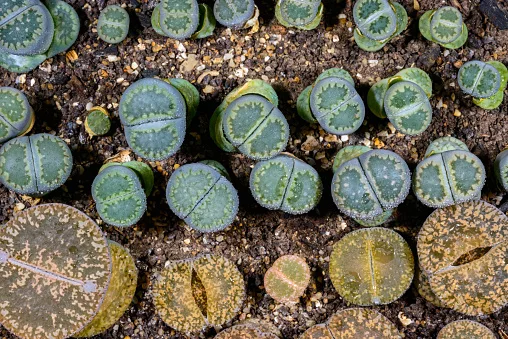
Mesembs Lithops sp. – South African plant from Namibia in the botanical collection of super succulent plants/By: Oleg Kovtun/iStock
Where to find them: South Africa and Namibia
At first glance, a Lithops looks like nothing more than a pebble. These tiny succulents have thick, fleshy leaves that sit almost flush with the ground, allowing them to disappear among the surrounding stones. They occur naturally across the drier parts of South Africa and Namibia, making them some of southern Africa’s most remarkable examples of botanical camouflage.
But these living stones are increasingly vulnerable. Namibia’s rare Lithops werneri, found only in a small area of the Erongo Mountains, is critically endangered, with fewer than 200 plants believed to remain in the wild. Its tiny population has been affected by illegal collecting, drought and climate change.
For travellers, the lesson is simple: these miniature plants are best admired without disturbing them. In South Africa, look for lithops in the country’s arid western regions, particularly the Nama Karoo and Succulent Karoo.
ALSO READ:
South Africa’s oldest living places, from historic towns to ancient cultural landscapes
Elephant’s foot: a plant with a prehistoric-looking trunk
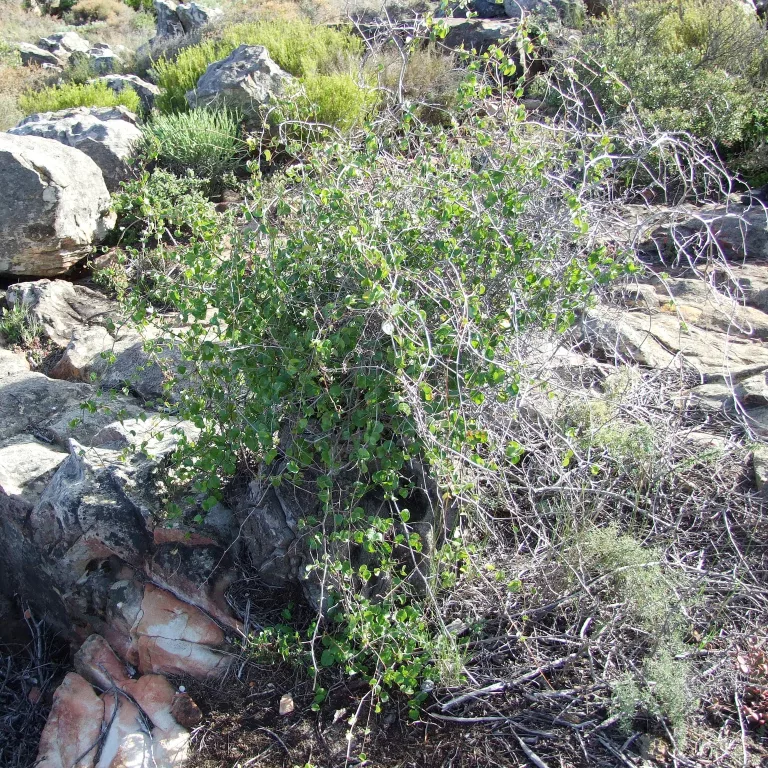
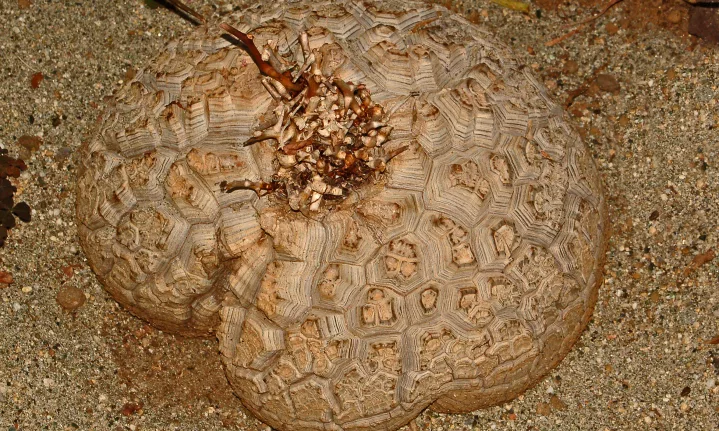
Dioscorea elephantipes in Cederberg/wielies/Wikimedia Commons
Where to find it: the Western and Eastern Cape
It may be called elephant’s foot, but Dioscorea elephantipes looks more like a giant piece of cracked stone.
Its swollen underground and above-ground stem is covered in deeply fissured bark, giving it the appearance of an enormous tortoiseshell or elephant’s foot. SANBI describes it as one of the country’s “weird and wonderful” caudiciform plants.
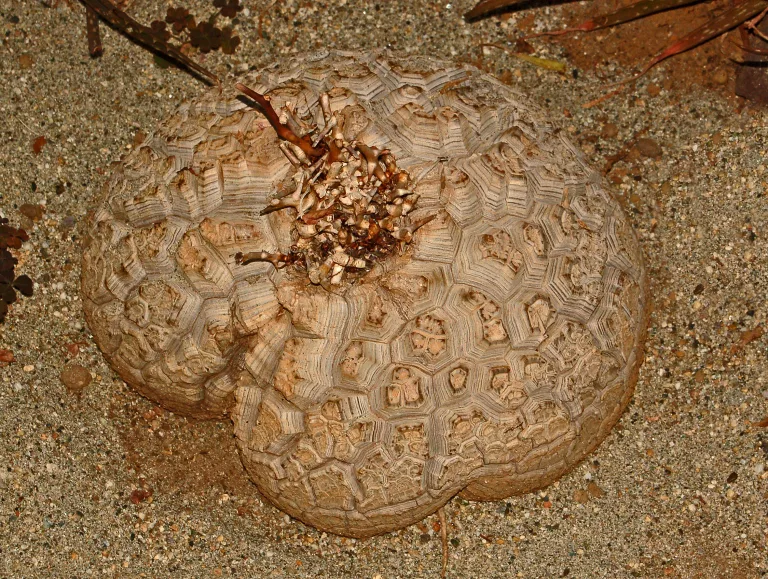
Large tuberous stem/Hectonichus/Wikimedia Commons
The plant has another clever survival trick. It becomes dormant during the hot, dry summer, shedding its leaves to conserve energy before growing again during the cooler months. It can tolerate temperatures above 40°C as well as occasional temperatures below freezing.
Its natural range includes parts of the Western and Eastern Cape, including the Clanwilliam area and around Graaff-Reinet, Willowmore and Uniondale.
That makes it an excellent addition to a Karoo or Cederberg road trip – especially for travellers who enjoy looking for the smaller details hidden within big landscapes.
Quiver trees: The strange silhouettes of the Northern Cape
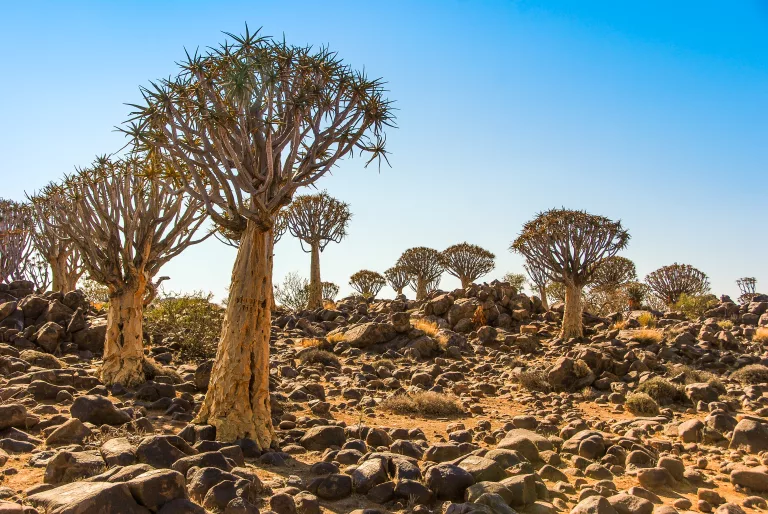
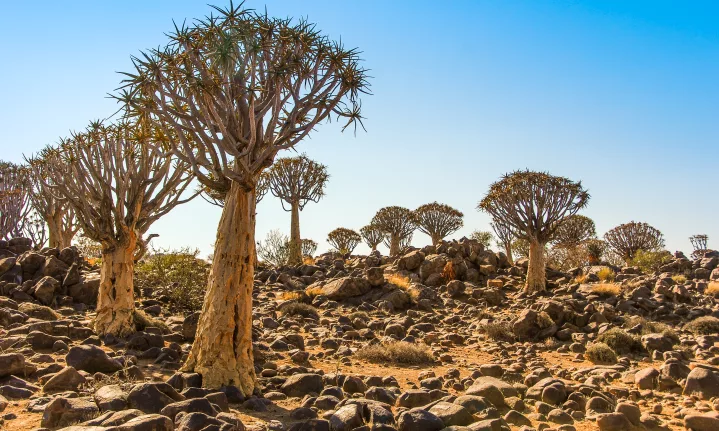
Quiver Tree Forest or kokerboom or Köcherbaumwald near Keetmanshoop in Namibia/Falcodigiada/Wikimedia Commons
Where to find them: Namaqualand and the Richtersveld
With their thick trunks and branching crowns, quiver trees (Aloidendron dichotomum) look almost like giant plants from another world.
Their Afrikaans name, kokerboom, and English name, quiver tree, come from the traditional use of their hollowed branches to make quivers for arrows.
They are particularly associated with the arid landscapes of the Northern Cape and Namibia. In the Richtersveld, they rise dramatically from rocky terrain, while sites such as Kokerboomkloof have become memorable stops for visitors exploring the region.
Quiver trees also tell a more sobering story. Research monitored by SANParks has found significant declines in some northern populations linked to increasing temperatures and drought, although southern populations are showing different trends.
Seeing a quiver tree in the wild therefore offers more than a great photograph. It is a glimpse into how a changing climate is reshaping even the most resilient desert landscapes.
Hoodia: The succulent with a surprising history
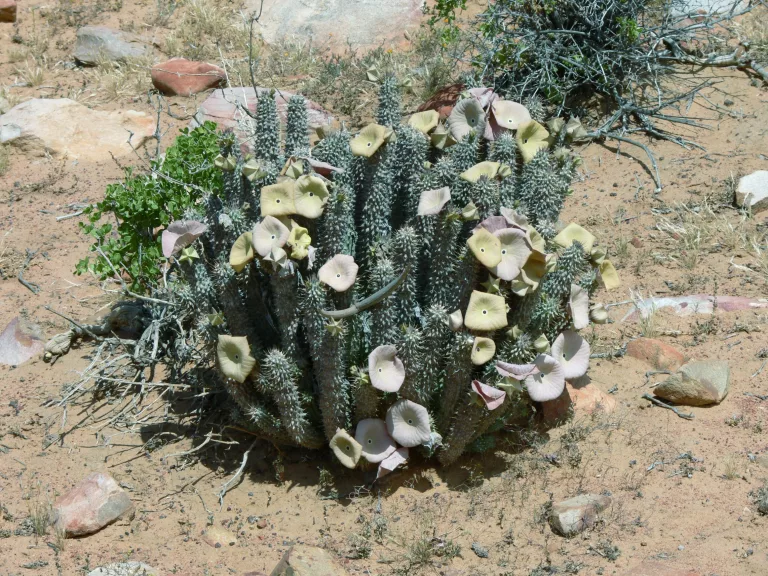
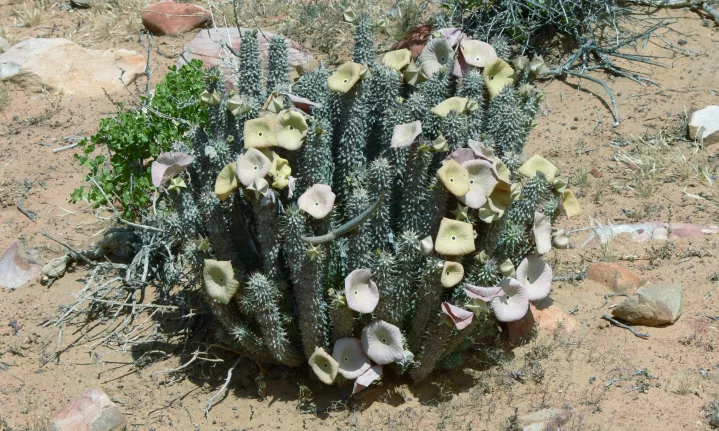
Bushman’s hat, Queen of the Namib, Hoodia gordonii (Masson) Sweet ex Decne, Biedouw Valley, Cederberg Local Municipality/Winfried Bruenken (Amrum)/Wikimedia Commons
Where to find it: The Northern Cape and Southern Namibia
Hoodia may look like an ordinary spiny succulent from a distance, but its story is anything but ordinary.
Hoodia gordonii occurs in parts of the Northern Cape, the north-western Western Cape and southern Namibia. It is adapted to hot, dry environments and can grow in sandy Kalahari soils as well as rocky slopes.
Its flowers are particularly strange. They can reach around 7.5cm across and produce a smell reminiscent of rotting meat, an adaptation associated with their fly pollinators.
Hoodia also has a significant traditional and cultural history. San communities have long used Hoodia species, including as a thirst quencher and appetite suppressant. Commercial interest in the plant has subsequently raised important questions around traditional knowledge, benefit sharing and sustainable trade.
It is another reminder that the plants of the drylands aren’t simply curiosities – they are part of much older relationships between people and the landscape.
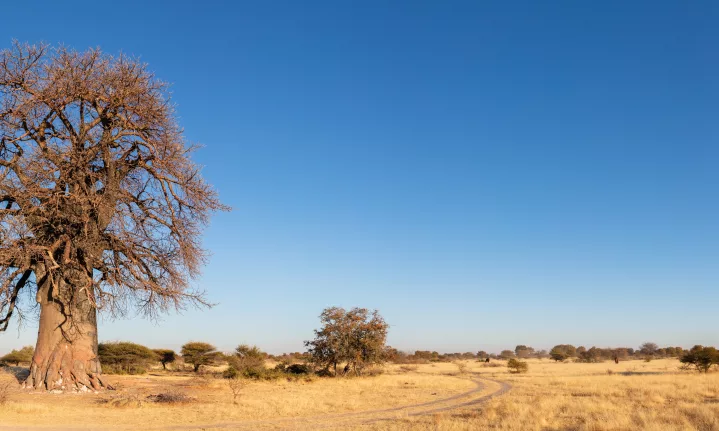
Baobabs: Africa’s upside-down trees
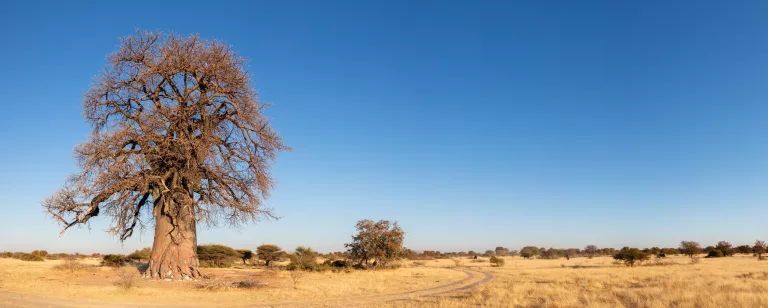
Baobab (Adansonia digitata) in a typical landscape of the Makgadikgadi Pans National Park, Botswana/Diego Delso/Wikimedia Commons
Where to find them: Limpopo
South Africa’s baobabs are less a miniature oddity and more a botanical giant.
The baobab’s enormous trunk and thick branches give it the appearance of a tree growing upside down, inspiring legends across Africa. Some mature trunks can reach extraordinary proportions, while the tree itself can grow to around 25m tall.
In South Africa, Adansonia digitata occurs naturally in the warmer parts of Limpopo, where it grows in hot, dry woodland.
Its flowers are another spectacle. Large white blooms open in the late afternoon and last for roughly a day before falling, with fruit developing afterwards. The flowers are pollinated at night, primarily by fruit bats.
For travellers, baobabs add a completely different landscape to this botanical journey. Instead of the stark Succulent Karoo of the Northern Cape, the search moves north into Limpopo’s warmer bushveld.
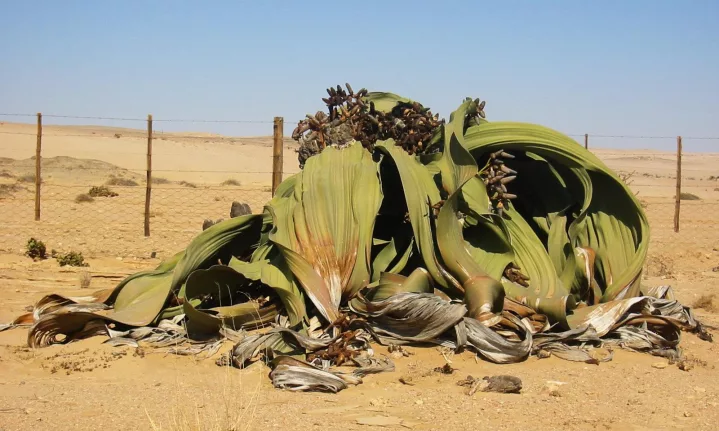
Welwitschia: the alien plant worth crossing a border for
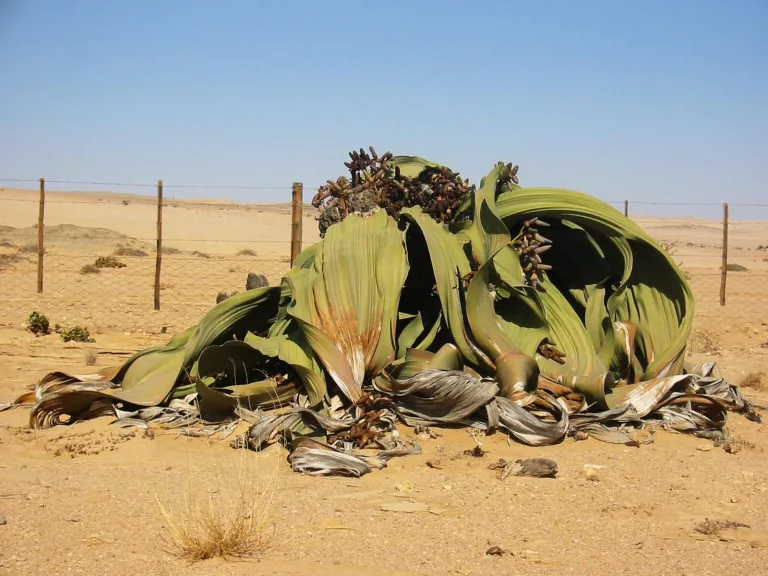
Welwitschia mirabilis, Welwitschia Plains, Haigamkab, Namibia/Thomas Schoch/Wikimedia Commons
Where to find it: Namibia’s Namib Desert
Strictly speaking, Welwitschia doesn’t belong on a list of South African plants. But when talking about southern Africa’s strangest flora, it would be impossible to leave it out.
Welwitschia mirabilis is endemic to the Namib Desert and has only two leaves, which continue growing throughout its life. Wind and heat gradually shred them into long, tangled ribbons, giving mature plants an almost octopus-like appearance.
Some plants are believed to live for centuries, with Namibia’s tourism authority describing Welwitschia as a living fossil capable of surviving for more than 1,000 years.
The Welwitschia Plains, roughly 30–50km inland from Swakopmund, contain one of the highest concentrations of these remarkable plants.
For South African travellers, this makes a fascinating extension to a Northern Cape road trip: cross into Namibia and continue into the Namib Desert to see one of the world’s most unusual plants in its natural habitat.
How to turn it into a botanical road trip
You don’t need to be a serious botanist to make a journey around these plants.
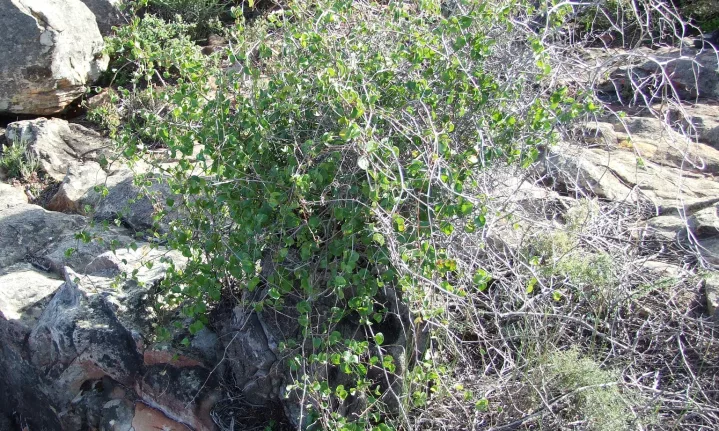
Start in the Western Cape, where the Cederberg and Karoo landscapes provide opportunities to encounter unusual succulents such as elephant’s foot. From there, head north into Namaqualand and the Northern Cape, where the landscape becomes increasingly arid, and the botanical oddities become even more spectacular.
Continue towards the Richtersveld for halfmens and quiver trees while keeping an eye out for the tiny lithops hidden among the rocks.
If you have the time and the necessary border-crossing arrangements, continue into Namibia for the ultimate finale: Welwitschia growing across the Namib Desert.
For an easier introduction before heading into the field, Kirstenbosch National Botanical Garden also has displays featuring plants from the Namaqua and Richtersveld regions, including halfmens and quiver trees.
The important thing is to admire wild plants without disturbing them. Some of the species featured here are threatened by illegal collecting, while protected areas have suffered from succulent poaching.
Follow us on social media for more travel news, inspiration, and guides. You can also tag us to be featured.
Instagram | Facebook | Twitter | Spotify
ALSO READ:






,_parque_nacional_Makgadikgadi_Pans,_Botsuana,_2018-07-30,_DD_03-08_PAN.jpg)
.jpg)