




There is something unsettling about walking through a place where people once lived, worked and dreamed, only to find that the buildings have been left behind.
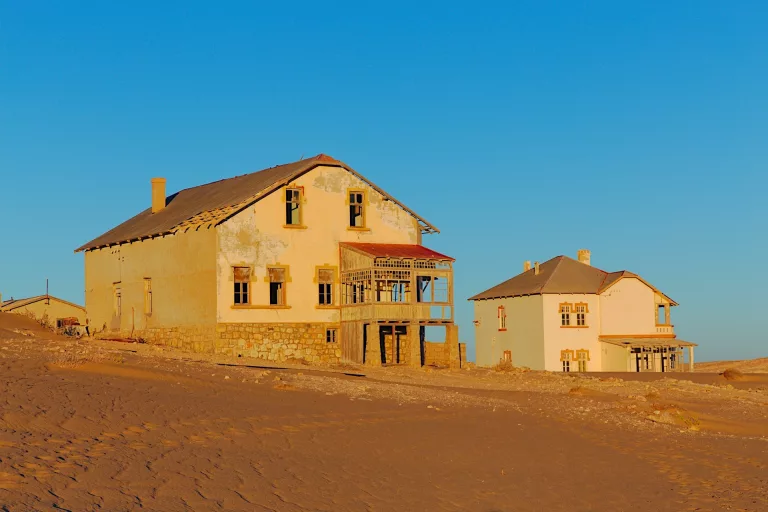
Kolmanskop, Namibia/Max Murauer/Unsplash
Some are famous ghost towns while others are simply remote stretches of coastline. They all offer a different kind of travel experiencethe past seems to be waiting around the next corner. Below are some of the region’s abandoned places that you can still visit.
Kolmanskop, Namibia
Kolmanskop, Namibia/Francesco Ungaro/Unsplash
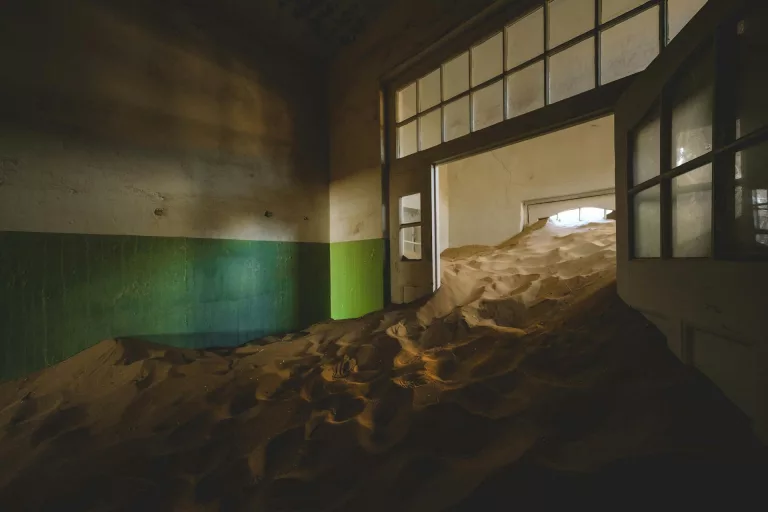
Few abandoned places in Southern Africa are as hauntingly photogenic as Kolmanskop. You may even recognise it before you know its name. The ghost town’s distinctive, sand-filled interiors featured on the cover of Tame Impala’s 2020 album Slow Rush, giving the already surreal landscape an unexpected pop-culture connection.
A few kilometres from Lüderitz, this former diamond-mining town rose from the Namib Desert after diamonds were discovered in the area in 1908. Its German residents built an astonishing settlement in the middle of one of the harshest environments imaginable, complete with a hospital, school, ballroom, casino and even a tram system.
Then the diamonds began running out. Richer deposits were found further south, and residents gradually moved away. By 1956, Kolmanskop had been abandoned. Today, desert sand pours through windows and doors, filling former homes and rooms almost to the ceiling. Visitors can enter the ghost town on guided tours and learn about the people who once called this improbable place home. The combination of crumbling German architecture and encroaching desert makes it one of Namibia’s most recognisable abandoned places.
Millwood Goldfields, South Africa
Meraj Chhaya/Wikimedia Commons
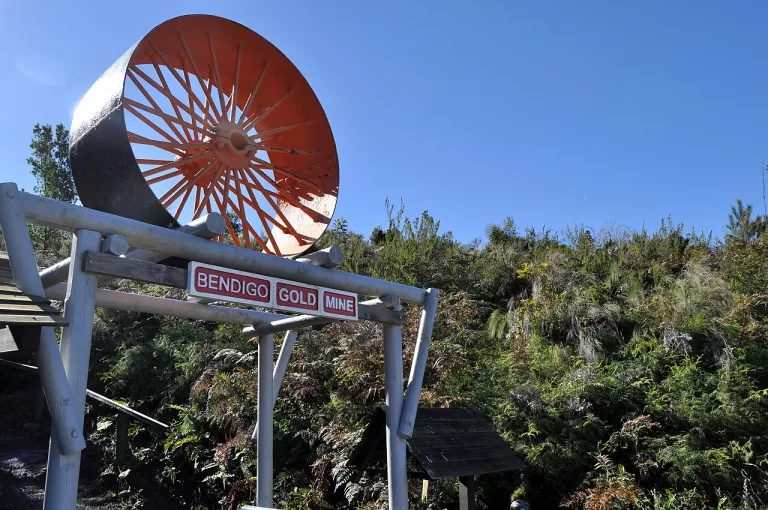
Deep in the Knysna Forest, the remains of the Millwood Goldfields are considerably less grand, but perhaps even more atmospheric. A gold rush in the 1880s created a settlement here almost overnight. The boom was short-lived, however, and the town eventually disappeared into the surrounding forest.
Today, moss-covered ruins, old mining equipment and rusting corrugated-iron structures remain among the trees. The site can be visited through the Goudveld section of the Knysna Forest, with access regulated as part of the conservation area. The forest makes this one particularly eerie. Rather than desert swallowing a town, here nature has been quietly taking it back.
Leydsdorp, Limpopo
Ossewa/Wikimedia Commons
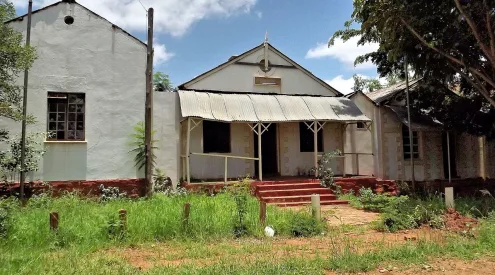
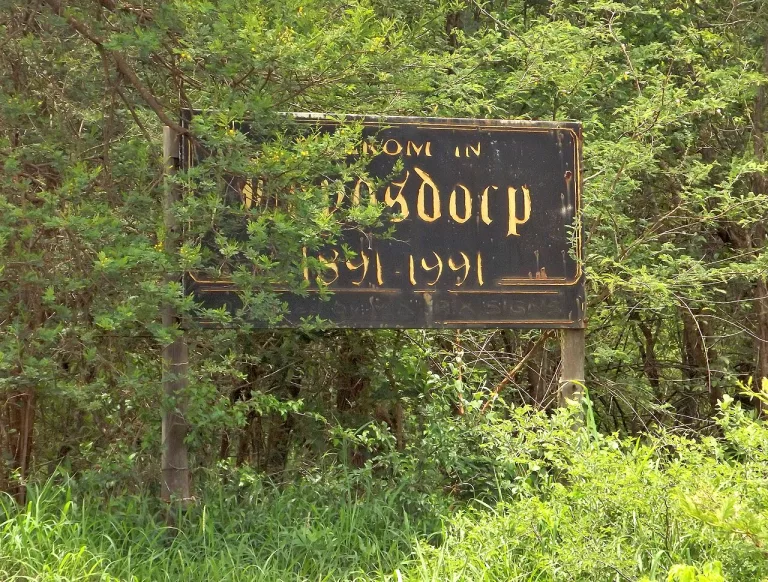
In the late 1880s, gold fever transformed a remote part of Limpopo into the bustling settlement of Leydsdorp. At its height, the town had thousands of residents and all the essentials of a growing mining centre, including shops, a hospital, police station, bakery, printing house and magistrate’s office. Its fortunes did not last. Malaria and disease made life difficult, while richer gold discoveries elsewhere drew prospectors away.
Today, only fragments of the settlement remain, including deteriorating buildings that hint at its former importance. Leydsdorp is a reminder that sometimes a place simply becomes economically irrelevant, and people leave one by one until there is almost nobody left.
Pinda Lighthouse, Mozambique
Stig Nygaard/Wikimedia Commons
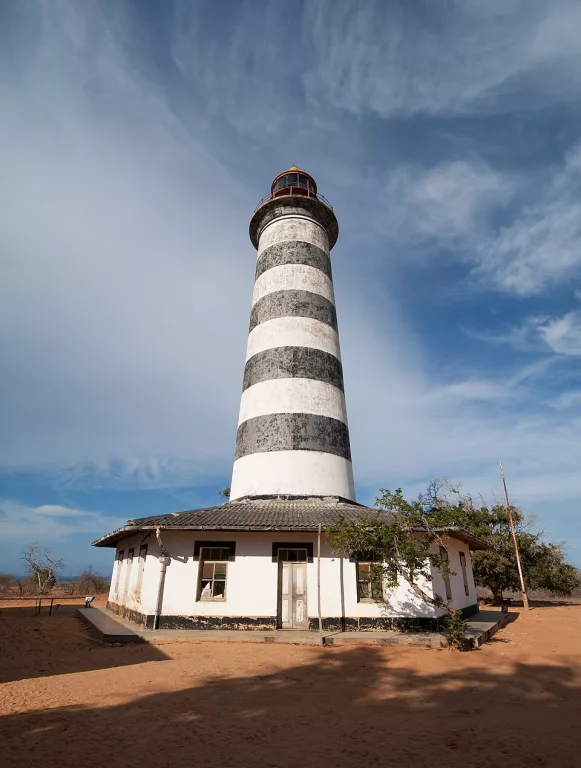
On Mozambique’s Pinda Peninsula stands an isolated lighthouse built by the Portuguese in 1923 to guide ships through Memba Bay. The lighthouse was later abandoned, but its lonely position overlooking the coast gives it an unmistakably atmospheric quality.
Unlike some abandoned structures that are hidden behind fences or on private property, Pinda Lighthouse has historically been open to visitors. Its remote coastal setting makes the journey part of the experience. Standing beside an old lighthouse with the ocean stretching into the distance is the sort of scene that requires very little help from a ghost story.
Pilgrim’s Rest, Mpumalanga
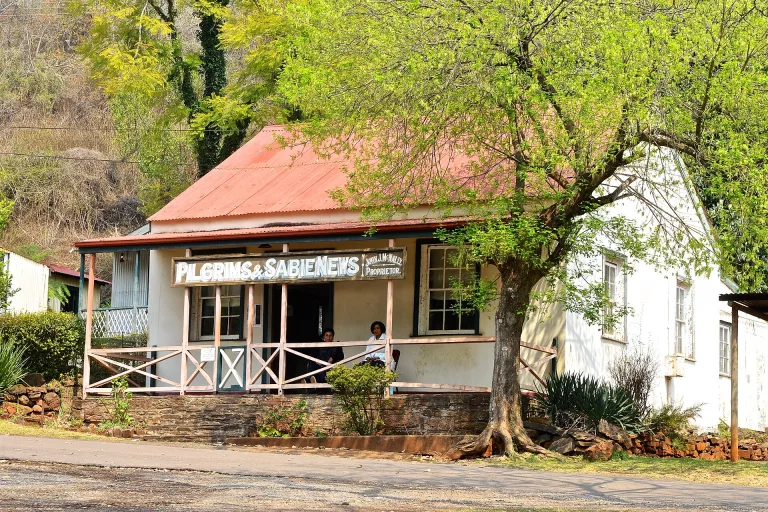
Old Newspaper of Pilgrim’s Rest / BenibenOFF / Wikimedia Commons
Pilgrim’s Rest is perhaps the least abandoned-looking place on this list, but its history gives it an appropriately ghostly atmosphere. Gold was discovered here in 1873, triggering a rush that brought thousands of prospectors into the mountains. The settlement eventually became a preserved heritage site and living museum, with historic buildings, mining remnants and museums allowing visitors to walk through its gold-rush past.
It also has a long association with ghost stories. Alanglade House, once the home of a mine manager and his family, has featured in local ghost tours, while the historic cemetery has inspired its own collection of tales. Abandonment can be more complicated than an empty building.
Visit with care
Abandoned does not mean abandoned by everyone. Some ruins are on protected land, some are privately owned and others may be structurally unsafe. The safest way to experience these places is to stick to designated visitor areas, follow local access rules and use a guide where one is required. Resist the temptation to climb through unstable buildings or remove objects as souvenirs.
After all, the best ghost stories are the ones you can come home from with all your bones, your camera and your sense of curiosity intact.
Follow us on social media for more travel news, inspiration, and guides. You can also tag us to be featured.
Instagram | Facebook | Twitter | Spotify
ALSO READ:
WATCH: Interview with Showrunner of AFRICA: EARTH’S WILD HOME