


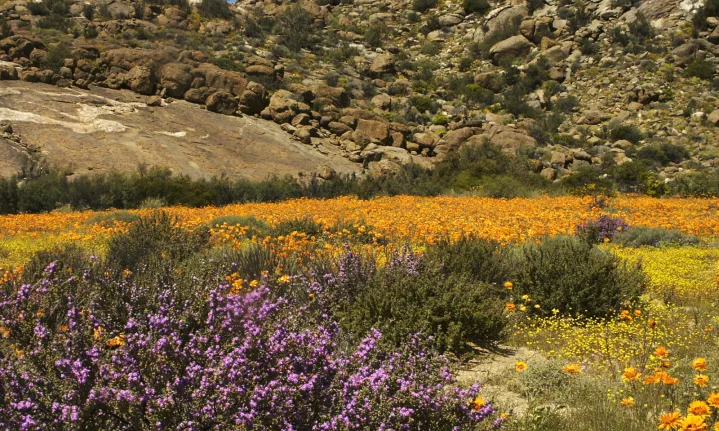
Table Mountain and the Drakensberg may be South Africa’s best-known mountain landscapes, but they are far from the whole story.
Across the country, mountain ranges rise through very different environments: from the subtropical forests and grasslands of Limpopo and the Eastern Cape to the fynbos-covered ranges of the Western Cape and the arid peaks of Namaqualand. Some are biodiversity hotspots, others are important water catchments, while several harbour plants and animals found almost nowhere else.
These mountains may not have the same international recognition as Table Mountain or the Drakensberg, but they offer plenty of reasons to make the journey.
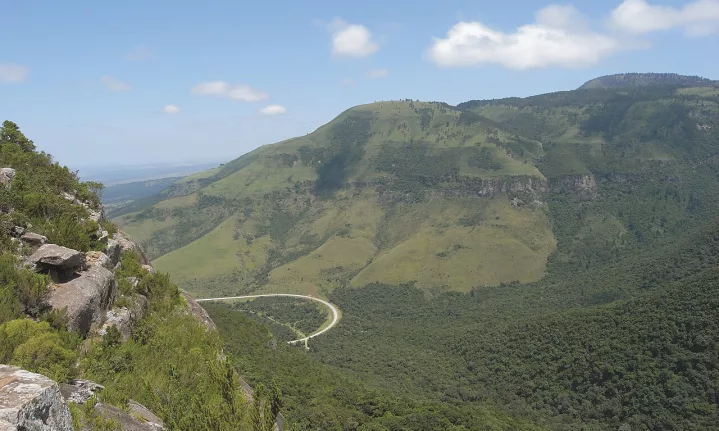
Soutpansberg, Limpopo
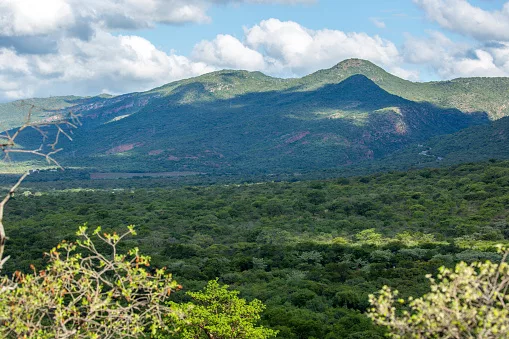
The lush Soutpansberg Valley in northeastern South Africa/By: Goddard_Photography/iStock
A biodiversity hotspot in the north
Running across northern Limpopo, the Soutpansberg is one of South Africa’s most interesting mountain ranges and surprisingly easy to overlook.
Its east-west orientation already sets it apart from many of the country’s major mountain systems. More importantly, its elevation and varied climate create a remarkable mixture of habitats. Research has recorded 2500 to 3000 indigenous vascular plant taxa in the range, confirming its importance as a centre of plant diversity and endemism.
The scenery changes as you move through the mountains. Forests give way to thicket, woodland and grassland, while some higher areas contain fynbos-like vegetation. That means a single day in the Soutpansberg can feel like several different landscapes stitched together.
It is also a rewarding destination for birders, with the wider Soutpansberg-Limpopo region supporting a dedicated birding route designed to promote conservation, tourism and community-based economic opportunities.
How to explore it
The mountains lend themselves to hiking, birding, mountain biking, wildlife viewing and slow road trips. Places such as the Louis Trichardt area provide a useful base, while wilderness properties in the range offer opportunities to experience the mountains without giving up creature comforts.
For a particularly unusual mountain escape, the Soutpansberg also combines natural scenery with a deep human history, including ancient rock art sites.
This is a mountain range to visit when you want biodiversity rather than just altitude.
Amathole Mountains, Eastern Cape

Lysippos/Wikimedia Commons
Forests, waterfalls and high-altitude grasslands
The Amathole Mountains have a completely different personality.
In the Eastern Cape, the range rises above valleys and settlements in a landscape of indigenous forests, grasslands, waterfalls and rugged peaks. Some of its mountains rise above 2,000m, and winter can bring snow to the higher elevations.
The biodiversity is equally impressive. BirdLife South Africa records 442 plant species in the Amatola mountain area, with indigenous wet and dry forests on the slopes and montane grasslands and mistbelt grasslands at higher elevations.
The mountains are also particularly appealing to birders. Cape parrots, orange ground thrushes, Knysna woodpeckers, bush blackcaps and Drakensberg rockjumpers are among the species associated with the area.
Follow the forests around Hogsback
Hogsback is one of the best-known gateways into the mountain landscape, with shorter walks leading through indigenous forest to waterfalls, while more ambitious hikers can tackle longer mountain routes.
The Amatola Hiking Trail is the serious option: a roughly 100km, six-day traverse through forests, ridges, streams and mountain scenery.
You don’t have to commit to six days, though. The surrounding Hogsback and Stutterheim areas offer shorter walks and birding opportunities, making the Amatholes accessible to travellers who simply want a few days in the mountains.
The region also has an important cultural history, including connections to Xhosa history and King Sandile, adding another layer to a landscape that is already rich in natural attractions.
Witteberg, Western Cape
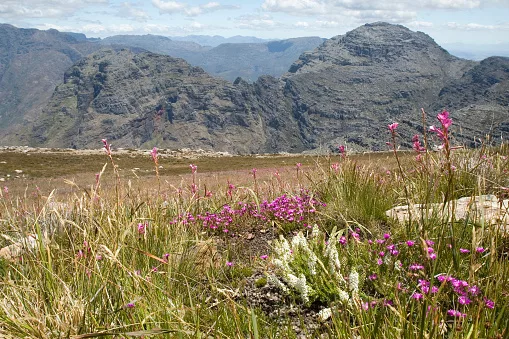
White and pink flowers on Slangkoek peak, with the Witteberg and Du Toitskloof mountains in the far/By: Fran Hunziker Photography/Gallo Images ROOTS RF collection
The Karoo mountain range with a fynbos secret
The Witteberg is the kind of mountain range you could easily drive past without realising how unusual it is.
Located south of Matjiesfontein, the range rises from the dry landscapes of the Little Karoo, creating a striking contrast between the surrounding semi-arid terrain and the vegetation found higher up.
Among its botanical treasures is the Witteberg sunbush, a South African endemic restricted to the Witteberg Mountain Range. It grows on rocky quartzitic ridges in dry montane fynbos at around 1,500m.
That is what makes the Witteberg so fascinating: the landscape may look unmistakably Karoo from a distance, but higher elevations reveal a completely different botanical world.
A mountain range for slow travellers
The Witteberg isn’t about ticking off famous viewpoints. Its appeal is the combination of geology, isolation, unusual vegetation and big Karoo skies.
It works particularly well as part of a road trip through the Karoo, where the mountains become another reason to slow down rather than simply a destination to conquer.
Bring binoculars, sturdy walking shoes and plenty of time. This is a landscape best appreciated at a slower pace.
Langeberg, Western Cape
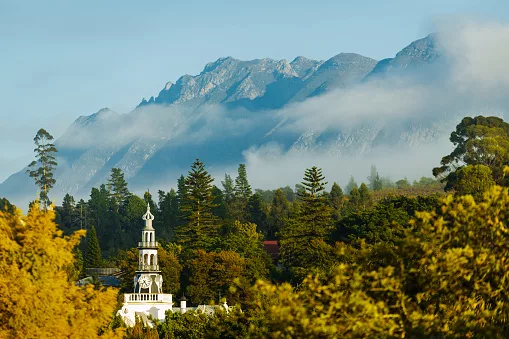
Bell tower of The Moederkerk (Mother Church), in Swellendam with Langeberg Range in view/By: Michal Krakowiak/Getty Images
Where fynbos meets the Little Karoo
The Langeberg deserves far more attention from travellers heading through the Western Cape.
Stretching across the southern Cape, the range creates a dramatic transition between the wetter landscapes to the south and the much drier Little Karoo to the north. Its slopes support mountain fynbos, while pockets of Afro-temperate forest survive in sheltered valleys.
The difference can be striking. One side of the range can be lush and densely vegetated, while the landscape beyond the northern slopes becomes noticeably drier.
Its botanical diversity is another reason to visit. The Langeberg contains numerous range-restricted plants, including species found only in particular high-altitude habitats. Some are threatened by pressures such as inappropriate fire regimes and invasive alien vegetation.
Explore the mountains around Swellendam
The Langeberg is particularly accessible from towns such as Swellendam and Riversdale, while areas such as Boosmansbos offer a more remote wilderness experience.
Hikers can expect sandstone peaks, fynbos-covered slopes, streams, forests and expansive views across the southern Cape.
It is also a rewarding mountain range for birdwatchers. The Langeberg supports Cape fynbos species alongside birds associated with its forest patches, while the northern foothills gradually transition into Little Karoo habitats.
For travellers who want to combine a mountain escape with historic towns, farm stays and a southern Cape road trip, the Langeberg makes an excellent base.
Kamiesberg, Northern Cape
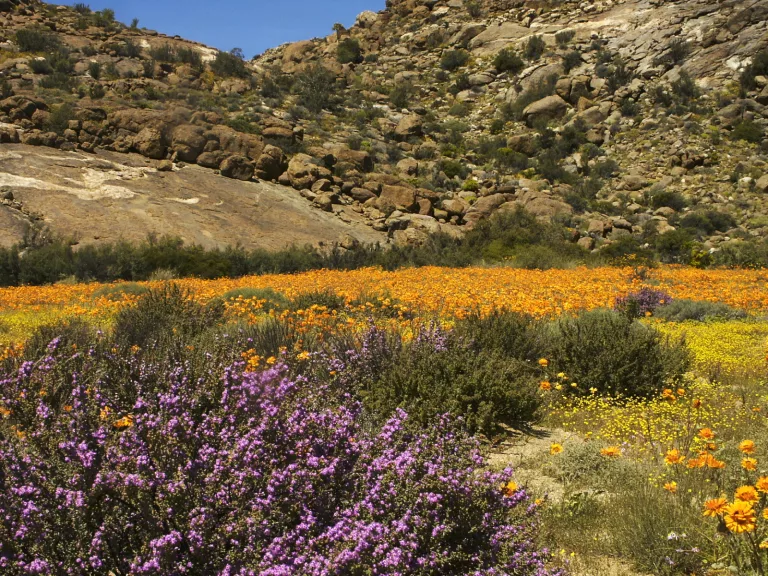
Goegap Nature Reserve in the Kamiesberge/Winfried Bruenken (Amrum)/Wikimedia Commons
Namaqualand’s mountain secret
The Kamiesberg proves that mountains don’t need dense forests or towering cliffs to be spectacular.
Rising from Namaqualand, these granite mountains form part of the Succulent Karoo and contain an extraordinary concentration of plant diversity. SANParks describes the range as a centre of endemism, with at least 22 endemic taxa associated with the Kamiesberg.
Four of the range’s highest peaks rise above 1,500m, while Rooiberg reaches about 1,700m. The rocky upper slopes provide habitat for plants that occur nowhere else.
Some of these species are remarkably localised. The Kamiesberg sugarbush, for example, is restricted to the mountains and is classified as critically endangered, with fire frequency identified as a major threat to its survival.
Visit when the landscape comes alive
The Kamiesberg is particularly compelling during Namaqualand’s flower season.
After sufficient winter rain, the surrounding landscapes can explode into colour as annuals and bulbs emerge from the seemingly barren ground. Namaqualand contains an estimated 3,500 plant species, more than 1,000 of them endemic to the area.
The mountains add another dimension to the flower experience. Instead of viewing Namaqualand solely as a carpet of flowers across open plains, travellers can explore the granite hills and higher-altitude vegetation where many of the region’s specialised plants occur.
This is mountain country for botany, photography and road-trip wanderers.
ALSO READ:
Father criticised after leaving exhausted seven-year-old behind on Mount Fuji
Waterberg, Limpopo
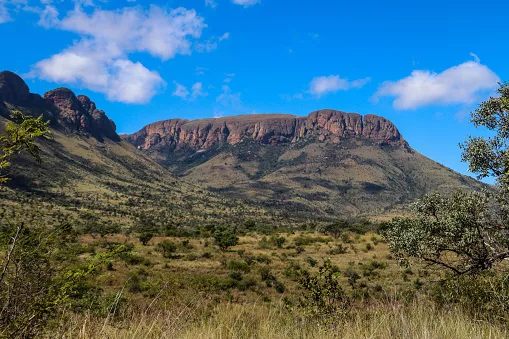
Landscape in Marakele National Park in the Waterberg/By: Boris Edelmann/iStock
Where mountains meet safari country
The Waterberg is perhaps the best example of how South Africa’s mountain landscapes don’t always fit neatly into the idea of a hiking destination.
In Limpopo’s Bushveld, the Waterberg is a landscape of low mountains, escarpments, valleys and savanna. It also functions as a major water catchment, with rivers including the Lephalala, Mokolo, Matlabas and Mogalakwena draining the region.
The wider Waterberg Biosphere Reserve contains more than 5,500 plant species and several different vegetation types, while its mountains and valleys support a variety of threatened and scarce species.
And then there is the wildlife.
Trade hiking boots for binoculars
The Waterberg offers something the other mountains on this list don’t necessarily foreground: mountain safari.
Game reserves and protected areas allow visitors to experience wildlife among sandstone formations, wooded valleys and elevated landscapes rather than the flatter savanna that many visitors associate with safari.
The region’s archaeological and cultural history is also significant. UNESCO notes that the Waterberg has been inhabited for hundreds of thousands of years and contains some of South Africa’s important San rock-art sites.
For travellers who want a few days combining wildlife, scenery, hiking and a comfortable bush stay, the Waterberg is an easy mountain alternative to the country’s more famous ranges.
Why these mountains deserve more attention
South Africa’s mountains are not one landscape.
The Soutpansberg is a meeting point of different habitats in the far north. The Amatholes combine forests, grasslands and waterfalls. The Witteberg rises unexpectedly from the Karoo. The Langeberg marks the meeting point between fynbos and the Little Karoo. The Kamiesberg contains a remarkable concentration of endemic plants, while the Waterberg combines mountains with some of Limpopo’s finest wildlife experiences.
Together, they tell a bigger story about the country’s geography.
Mountain ranges are also far more than scenic backdrops. They provide water catchments, support specialised ecosystems and create refuges for plants and animals that cannot survive elsewhere. SANBI has highlighted the importance of South Africa’s mountain systems for water supply and biodiversity, with many mountain areas protected partly because of their role as catchments.
So the next time you find yourself planning a mountain escape, look beyond the obvious names.
Follow us on social media for more travel news, inspiration, and guides. You can also tag us to be featured.
Instagram | Facebook | Twitter | Spotify
ALSO READ:
5 South African places that are best explored early in the morning