

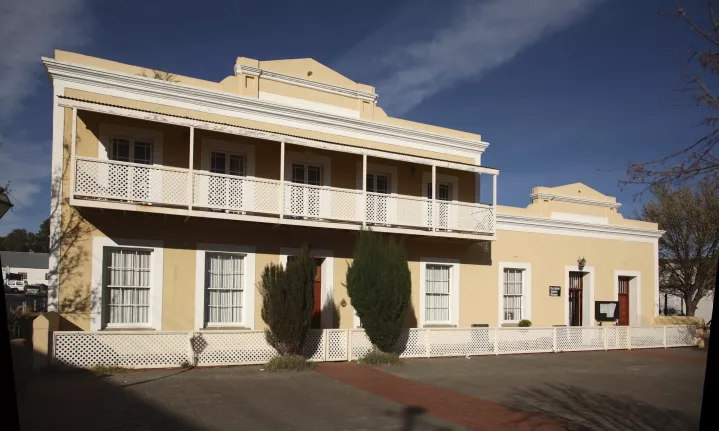
Before highways connected South Africa’s towns and cities, railways were among the country’s most important lifelines. They carried people, livestock, goods and mail across vast distances, while stations helped turn remote settlements into thriving communities.
Some towns grew directly around railway junctions, while others were transformed when the tracks arrived. Today, their railway histories remain visible in old stations, museums, architecture and the landscapes beyond the tracks.
From a major Karoo junction to a tiny Victorian village, these four towns offer a different way to explore South Africa’s railway heritage.
De Aar
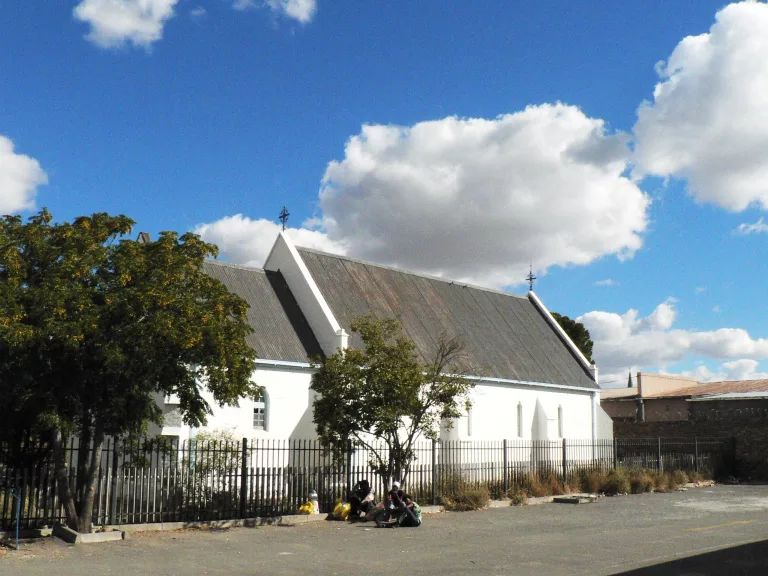
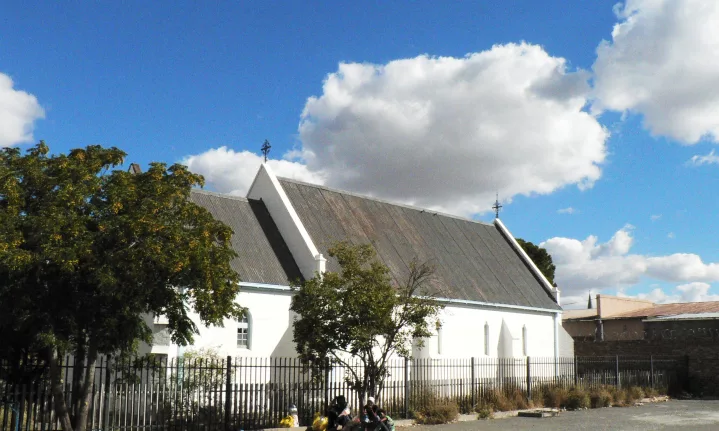
St. Pauls Church, De Aar/Andrew Hall/Wikimedia Commons
Where railway lines meet in the Karoo
Few towns demonstrate the influence of the railway quite as clearly as De Aar.
The town became one of South Africa’s most important railway junctions, with lines connecting the Cape, northern provinces and neighbouring countries. Its development was closely linked to the expansion of the railway network towards Kimberley and the diamond fields.
Today, the railway remains central to De Aar’s identity, even as the town’s surrounding Karoo landscape offers a very different experience from the busy junction it once was.
What to do
Start by exploring the railway precinct and the town’s older buildings, then delve into local history before heading into the surrounding Karoo.
The landscape around De Aar is classic Great Karoo: wide-open plains, dry hills and an enormous sense of space. The wider area also contains examples of Khoisan rock engravings.
Use your second day for a slower exploration of the surrounding landscape and local heritage before continuing your journey.
Laingsburg
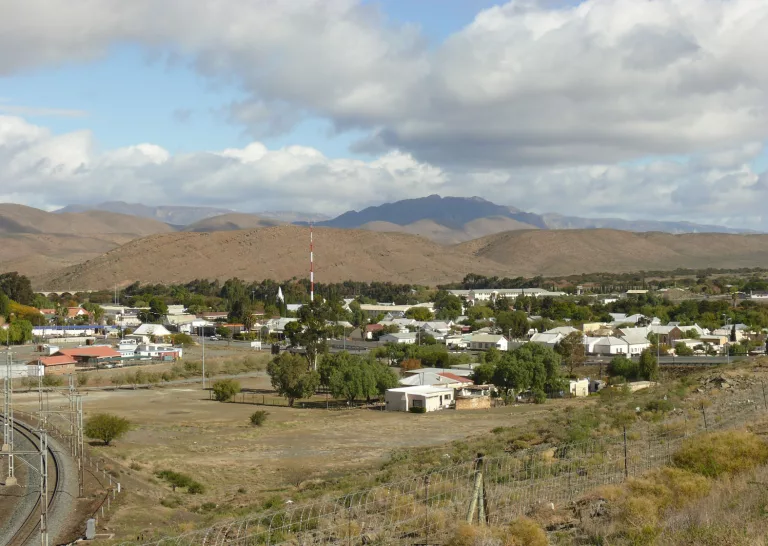
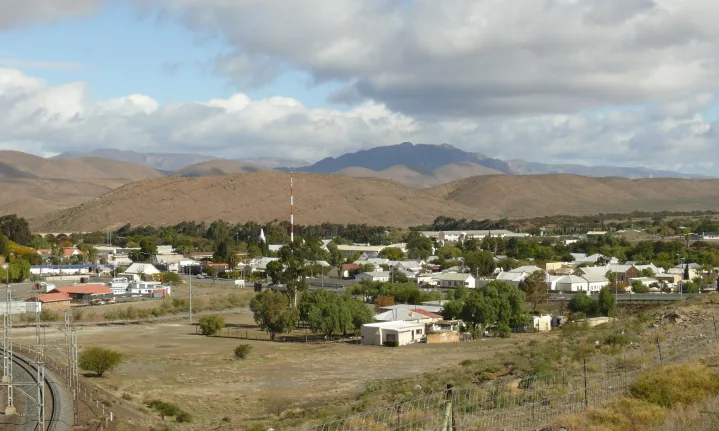
A view of Laingsburg/Morné van Rooyen, Attribution, via Wikimedia Commons
A railway town shaped by disaster
The railway reached the Laingsburg area in 1878, helping transform a small settlement into a town.
But Laingsburg is remembered for another event that dramatically changed its history. In January 1981, catastrophic flooding swept through the town, killing 104 people and destroying much of the settlement.
The railway is therefore only one part of Laingsburg’s story. A visit here reveals how transport, settlement, disaster and rebuilding became intertwined.
What to do
Begin at the Laingsburg Flood Museum, where photographs, objects and personal accounts document the devastating 1981 flood.
Afterwards, walk through the town and look for reminders of the disaster, including flood marks on some historic buildings.
Spend your second day exploring the surrounding Karoo landscape. The area is known for its dry terrain, unusual geology and fossil-rich formations, making it a worthwhile stop even beyond its railway history.
ALSO READ:
72 hours in Namibia’s Erongo region: rock art, wildlife and granite mountains
Matjiesfontein
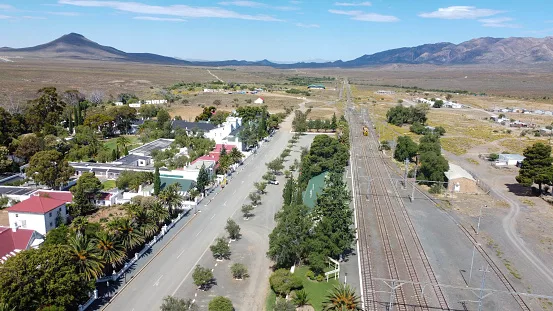
Aerial view of the historical buildings in main street in Matjiesfontein small Victorian village next to railway track in the Karoo/By: Fearless on Four Wheels/iStock
A Victorian railway village in the Karoo
Matjiesfontein is perhaps the most atmospheric railway stop on this list.
The railway station opened in 1878, while the present Victorian station building dates from 1890. Railwayman James Douglas Logan later developed the settlement into a village and health resort.
Today, its carefully preserved buildings give visitors a glimpse of the railway era.
What to do
Start at the station and railway museum, which includes a historic station master’s office and original signal room.
Then explore the village on foot. The old bank, court house, chapel and other Victorian buildings are all within easy reach.
The Transport Museum adds vintage cars, bicycles, a former London bus, a steam train and railway carriages to the experience.
Stay for lunch or dinner at the Lord Milner Hotel, then spend the evening wandering through the village as the Karoo light changes.
On your second morning, take another walk around Matjiesfontein before heading out into the surrounding landscape.
Colesberg
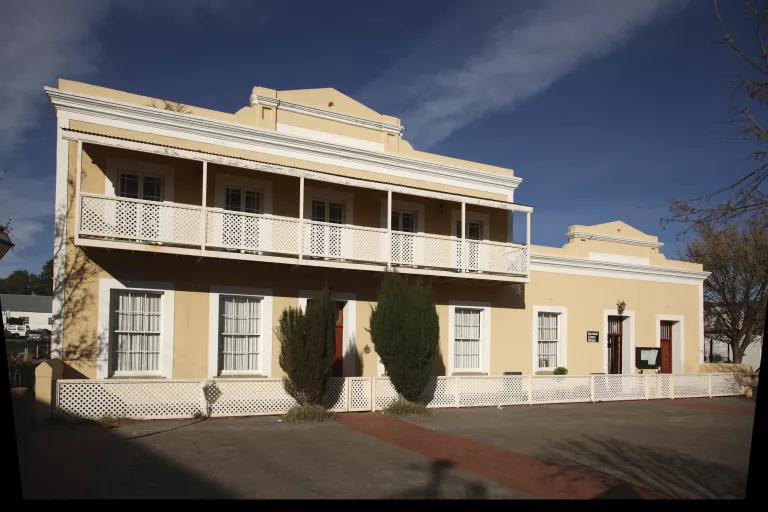
Kemper Museum/Leo za1/Wikimedia Commons
Where an older Karoo town met the railway
Unlike De Aar and Matjiesfontein, Colesberg existed long before the railway arrived.
Founded in 1830, the town was already an important stopping point for people travelling into the interior. The railway later added another layer to its history, with the station dating from the late 19th century.
This makes Colesberg particularly interesting for understanding how railways connected existing communities to a much larger network.
What to do
Start at the Kemper Museum, housed in the historic Colesberg Bank building, before exploring the town’s heritage-rich streets.
Look for Cape Dutch and Victorian architecture, old churches, and historic commercial buildings that reveal the town’s 19th-century character.
Colesberg also has strong connections to the South African War, so that military history enthusiasts can explore the town’s memorials and surrounding sites.
Spend your second day outside town, taking in the koppies, wide Karoo plains and distinctive Coleskop before continuing your road trip.
A different way to experience the Karoo
South Africa’s railway history is often associated with famous trains, grand stations and luxury journeys.
But some of the most interesting stories are found in smaller towns.
De Aar shows how a railway junction could shape an entire community. Laingsburg reveals the relationship between transport, settlement and disaster. Matjiesfontein preserves the atmosphere of a Victorian railway village, while Colesberg shows how the railway became part of an older Karoo landscape.
Together, they offer a different way to travel through the interior.
Instead of simply passing through on the way to somewhere else, slow down at the station, visit the museum, explore the old buildings and look beyond the tracks.
The railway may no longer define these towns as it once did, but its legacy is still woven into their streets, stories and landscapes.
Follow us on social media for more travel news, inspiration, and guides. You can also tag us to be featured.
Instagram | Facebook | Twitter | Spotify
ALSO READ:
5 South African places that are best explored early in the morning