





While Africa’s globally renowned heritage sites—like the Serengeti, Kilimanjaro, and Robben Island—are deserving of their fame, they represent only a sliver of the continent’s rich tapestry.
For curious travellers seeking deeper connection, fewer crowds, and stories untold, these seven underrated gems are worth the spotlight.
1. Twyfelfontein Rock Engravings, Namibia

Rock art, Twyfelfontein, Namibia/Thomas Schoch/Wikimedia Commons
Namibia’s first UNESCO site (2007), Twyfelfontein hosts one of Africa’s largest concentrations of rock petroglyphs: over 2,000 engravings that depict wildlife such as giraffes, zebras, and the iconic “dancing kudu.” These figures span millennia, crafted by San hunter-gatherers whose rituals and storytelling are etched into the sandstone. The site is now carefully protected under Namibia’s National Heritage Act and boasts managed access and local guides to preserve its integrity.
2. Tsodilo Hills, Botswana

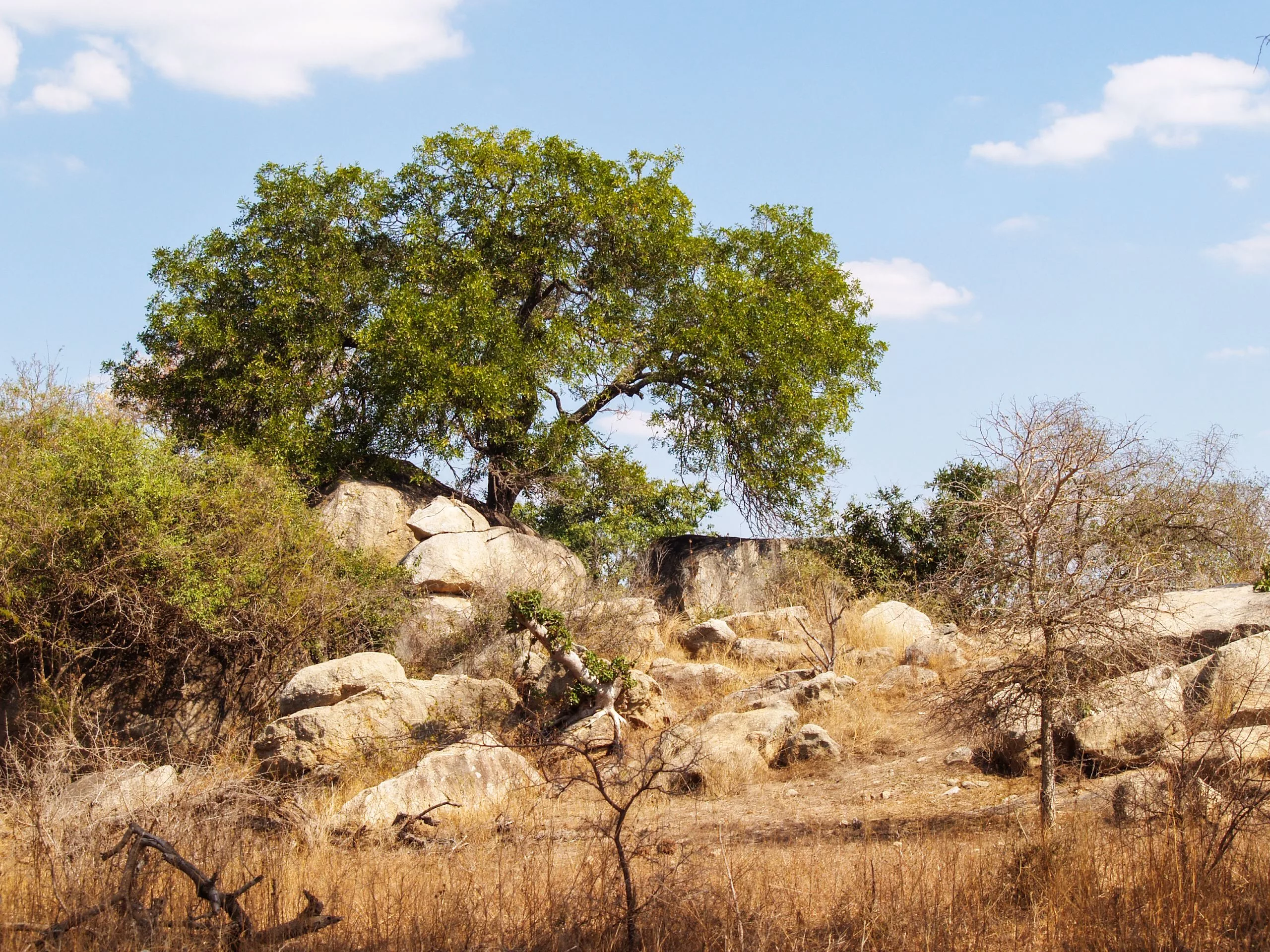
Tsodilo Hills/Joachim Huber from Switzerland/Wikimedia Commons
Dubbed the “Louvre of the Desert,” this remote site in northwestern Botswana contains over 4,500 rock paintings, some possibly dating back 24,000 years. For the San and Hambukushu people, Tsodilo holds deep spiritual significance, believed to be a resting place for ancestral spirits. Visitors can stay at a managed campsite near the famed Laurens van der Post panel, visit the on-site museum, and walk sacred trails through the hills.
3. Kondoa Rock-Art Sites, Tanzania

In the rift-side slopes of the Maasai escarpment lie up to 450 decorated rock shelters, dating back thousands of years. Among these, the Kisese II Rockshelter stands out: it contains stone tools, ostrich eggshell beads, and human burials, marking the critical transitional phase between the Middle and Later Stone Age—offering invaluable insight into prehistoric human evolution.
4. Sukur Cultural Landscape, Nigeria

Sukur Cultural Landscape/SULE/Wikimedia Commons
Perched atop the Mandara Mountains in Adamawa State, Sukur is a striking blend of terraced fields, ritual structures, and a hilltop palace—a heritage site where traditions have remained virtually unaltered for centuries. This was Africa’s first cultural landscape inscribed by UNESCO, and its remote, evocative beauty rewards those willing to venture off the beaten path.
5. Kasubi Tombs, Uganda

Kasubi Tombs/not not phil from SF, CA, US/Wikimedia Commons
Located in Kampala, the Kasubi Tombs are sacred burial grounds of four Buganda kings and an architectural marvel built entirely from vegetal materials. Inscribed in 2001, the site was severely damaged by fire between 2010 and 2023. Reconstruction, supported by the Ugandan government and Japanese funding, is now ongoing—making it not only a place of cultural reverence but also of resilience and heritage revival.
6. Ancient Ksour of Mauritania (Chinguetti & Ouadane)

Chinguetti library, Mauritania/www.Bildtankstelle.de/Wikimedia Commons
The desert-linked cities of Chinguetti and Ouadane were trading, religious, and scholarly hubs from the 11th to 12th centuries. Their distinctive mud-brick architecture, courtyard homes, and—most notably—ancient desert libraries, which preserve manuscripts on astronomy, mathematics, and Islamic law, remain testaments to the intellectual legacy of the Sahara. They continue to endure through careful restoration and desert expeditions.
7. Amphitheatre of El Jem, Tunisia

Amphitheatre at El Djem/Agnieszka Wolska/Wikimedia Commons
Often overshadowed by Rome’s Colosseum, the El Jem Amphitheatre is remarkably well preserved and could once seat up to 35,000 spectators. Dating back to the 3rd century AD, it remains a powerful symbol of Roman architectural grandeur in Africa. Accessible and evocative, it’s both a historical gem and a dramatic visual experience.
Why these sites are special
- Stories Untold: Each site reveals profound narratives of human creativity, spirituality, and social structure that mainstream tourism often overlooks.
- Living Heritage & Resilience: From ongoing reconstruction efforts to millennia-old traditions, these destinations embody dynamic cultural survival.
- Diverse Landscapes: Desert plateaus, mountain escarpments, sacred forests, royal tombs, ancient cities, and Roman ruins—these sites span the full breadth of Africa’s geography and heritage.
- Discover with Respect: Most of these places are remote and benefit from responsible tourism—traveller engagement promotes preservation and supports local communities.
Follow us on social media for more travel news, inspiration, and guides. You can also tag us to be featured.
TikTok | Instagram | Facebook | Twitter
ALSO READ: Heritage through music & dance: Exploring South Africa’s cultural footprints




.jpg)
.jpg)


