







Journey into the continent’s ancient soul — through sandstone, caves, and centuries-old stories etched in stone, where early artists painted visions of spirit, survival, and ceremony that still whisper across Africa’s landscapes today.
1. Twyfelfontein, Namibia
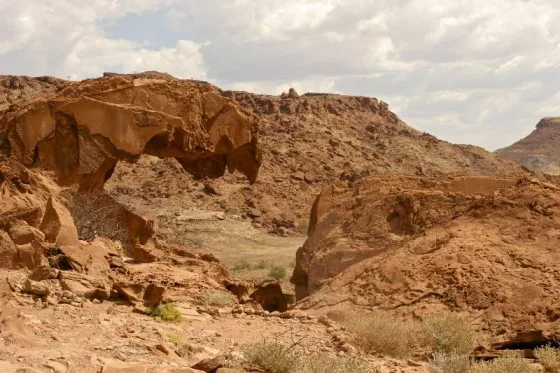
Twyfelfontein/National Heritage Council of Namibia/Wikimedia Commons
Nestled in the arid heart of Damaraland, Twyfelfontein (Afrikaans: “doubtful fountain,” Damara/Nama: /Ui-//aes, meaning “place among rocks”) offers one of the densest collections of rock engravings in southern Africa — over 2,000 individual carvings across 235 panels, set along a west-facing escarpment near a vital spring.
These captivating petroglyphs—depicting giraffes (about 40%), rhinos, oryx, zebras, and the striking “Dancing Kudu” believed to reference fertility rituals were crafted using pecking and polishing techniques by San hunter-gatherers some 6,000 years ago. Some experts estimate more than 2,500 carvings in the broader valley.
Rather than random graffiti, these engravings were placed with purpose in caves, near fissures, or atop rocks, likely as part of shamanistic rituals intended to commune with the spirit world. The “Lion Man” engraving, with its unnatural five-toed paws, is a prime example of spiritual transformation represented in stone.
Recognised for its cultural and spiritual heritage, Twyfelfontein became Namibia’s first UNESCO World Heritage Site in 2007 and is protected under the National Heritage Act (2004). Conservation efforts now include guided routes (self-guided and guided), a visitor centre, and regulated access.
Visitor tip: Combine guided routes with drives through Damaraland’s otherworldly landscapes and stay in locally owned lodges to ensure tourism benefits the community.
2. Matobo Hills, Zimbabwe
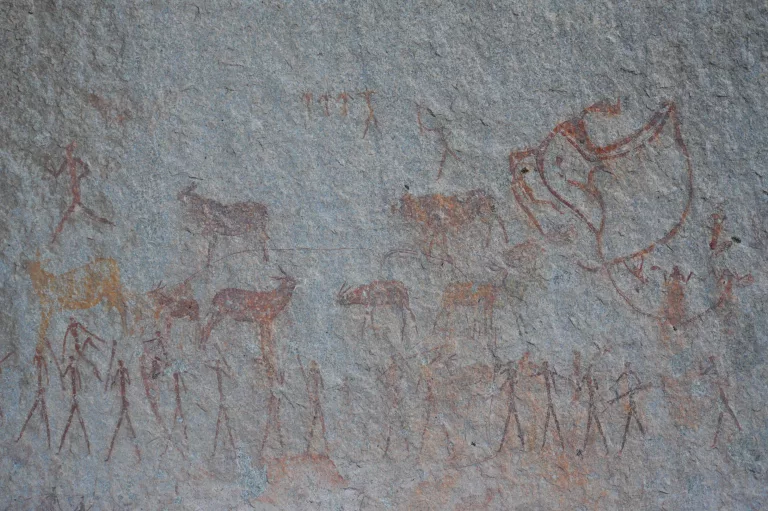
Bambata cave paintings/Sugaarwritter/Wikimedia Commons
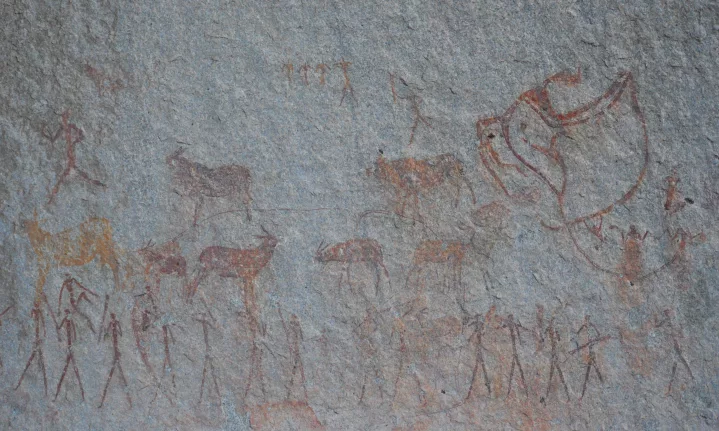
Set within the undulating granite kopjes of Matobo National Park, the Matobo Hills bear witness to over 3,000 documented rock art sites, painted between approximately 320 to 500 CE.
The best-known paintings, located in places like Bambata, Inanke, and Nswatugi caves — depict elephants, giraffes, kudu, warthogs, and tsessebe in deeply symbolic friezes. Some are accessible only via rewarding hikes, like the three-hour trail to Inanke Cave, where Iron Age forges and clay ovens suggest a layered cultural landscape.
Matobo’s significance extends beyond art. The hills retain sacred meaning; the nearby Njelele Shrine remains a rainmaking site where pilgrims gather before the wet season. Visiting Matobo isn’t just a scenic and artistic journey; it’s a chance to touch rock-solid spirituality.
Visitor tip: If you’re up for a challenge, hike to Inanke or other remote shelters. While the routes are rugged, the reward is a deep, immersive experience far from the ordinary.
3. The Drakensberg Caves, South Africa
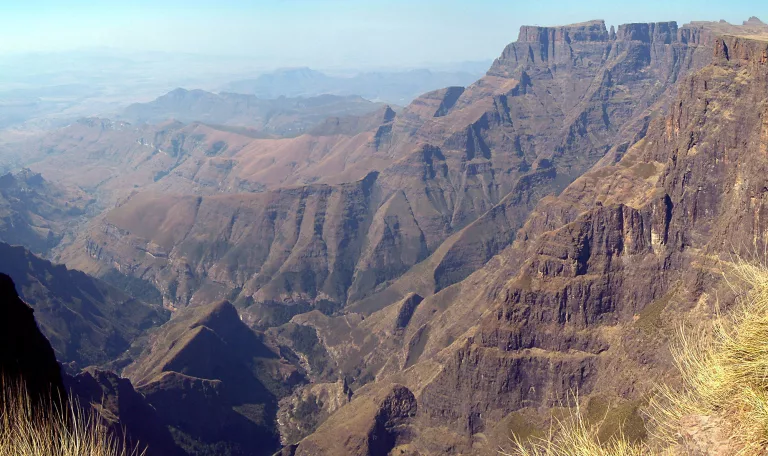
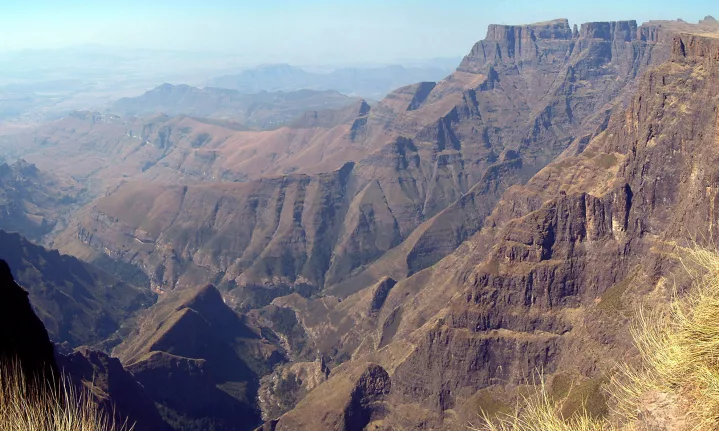
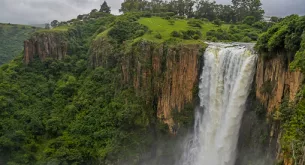
Amphitheatre Drakensberg View/I, PhilippN/Wikimedia Commons
In the soaring sandstone of the uKhahlamba-Drakensberg Park, a UNESCO World Heritage site, lies the globe’s largest concentrated collection of San rock art. Between Royal Natal Park and Bushman’s Nek, explorers have recorded about 20,000 paintings across 500 caves and overhangs.
Particularly prolific areas include:
- Ndedeama Gorge (3,900 paintings at 17 sites, including Sebaayeni Cave)
- Cathedral Peak–Mdelelelo (over 8,800 paintings across 130 sites).
The subjects range deeply — from eland, humans, therianthropes, and ox-wagons to men on horseback, rifles, and other rare depictions. The variety reflects both shamanic trance beliefs and evolving cultural narratives spanning millennia.
Accessible caves such as Game Pass Shelter, Main Caves at Giant’s Castle, and Battle Cave offer guided tours and are magnificent hiking destinations.
Visitor tip: Lace up your hiking boots—Drakensberg trails are as breathtaking as the art. Be sure to book guided tours early, especially through Giant’s Castle or Kamberg.
4. Las Geel (Somaliland)
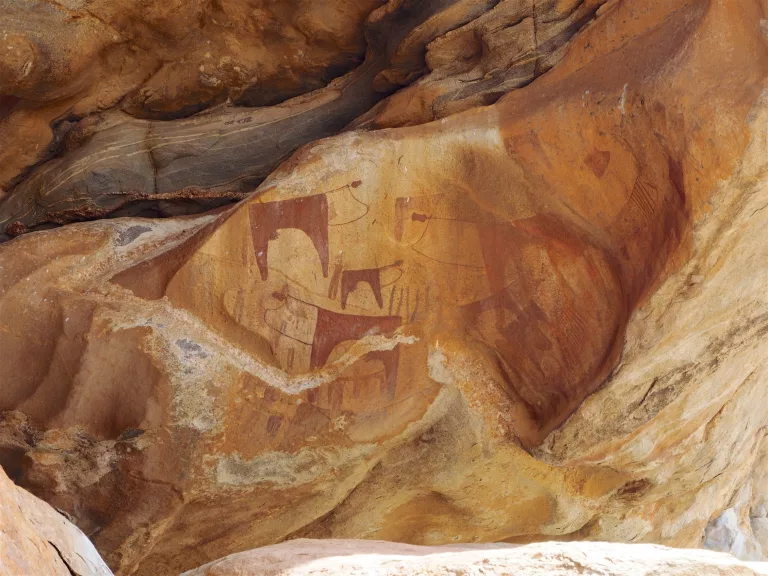
Las Geel Caves/Clay Gilliland from Chandler, U.S.A/Wikimedia Commons
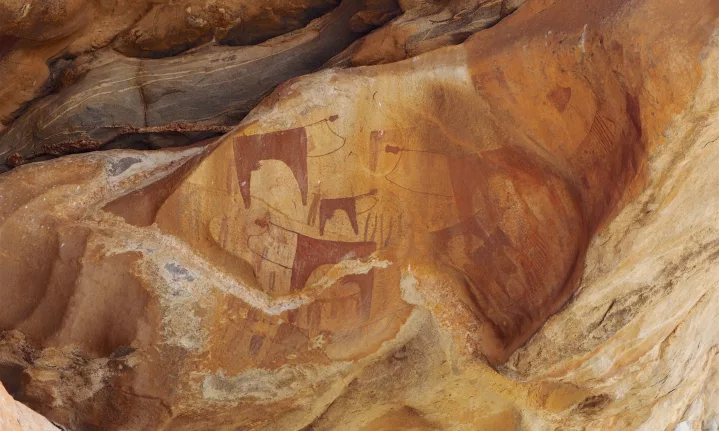
Tucked away in the semi-arid terrain near Hargeisa, Las Geel is one of Africa’s most visually stunning and oldest painted sites. Estimated to be around 5,000 years old, this open-air gallery showcases vibrant depictions of ceremonial cattle, domesticated animals adorned with robes, and human figures—painted with breathtaking clarity and nuance, preserved by dry climate and sheltered niches.
Why it matters:
- The intricate cattle imagery offers rare insight into early pastoralist societies and their rituals.
- With minimal tourist infrastructure and relative obscurity, it remains a tranquil, immersive experience off the beaten path.
Visitor tip: Best accessed via Hargeisa with a guide—ideal for travellers keen on adventure and archaeological exclusivity.
5. Chongoni Rock-Art Area (Malawi)
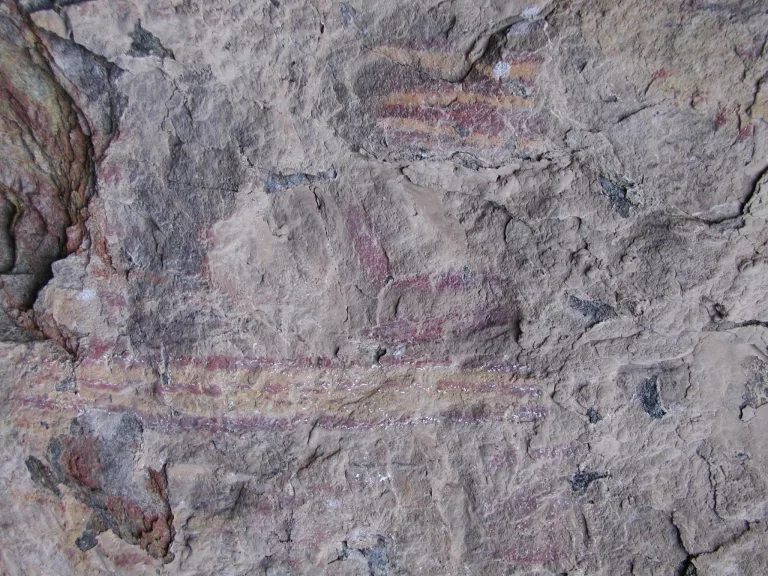
Chongoni Rock-Art Area (Malawi)/Lazare Eloundou Assomo/Wikimedia Commons
High on Malawi’s central plateau, the Chongoni Rock-Art Area encompasses 127 sites and reflects a rare fusion of farmer and hunter-gatherer rock art traditions. Created by BaTwa (hunter-gatherers) and later Iron Age Chewa agriculturalists, many of the symbols—especially those associated with women—remain culturally relevant and are still part of rituals today.
Why it matters:
- It’s a living heritage: art remains intertwined with community rituals, bridging past and present.
- The cross-cultural layers—Stone Age symbols next to Iron Age motifs—tell a larger story of Africa’s evolving cultures.
Visitor tip: Approach with respect. Engage local experts or guides for context-rich visits. And you might witness ceremonies still connected to the paintings.
6. Karinhegane (Somalia) & Gelweita
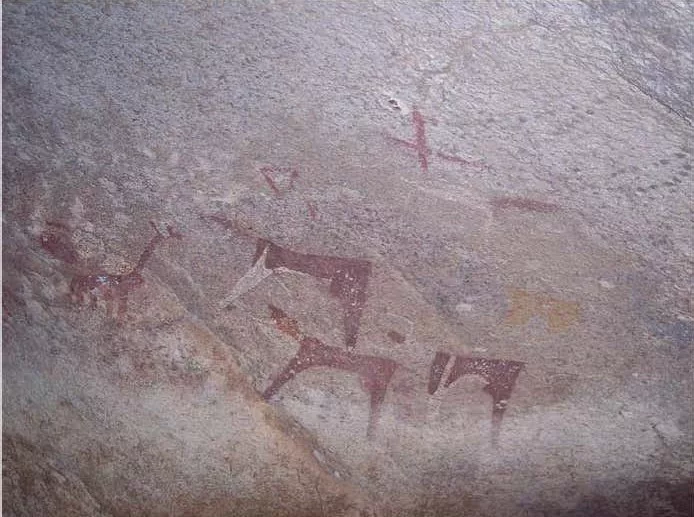
Rock art site of Haadh in Sanaag/Sada Mire, Public domain, via Wikimedia Commons
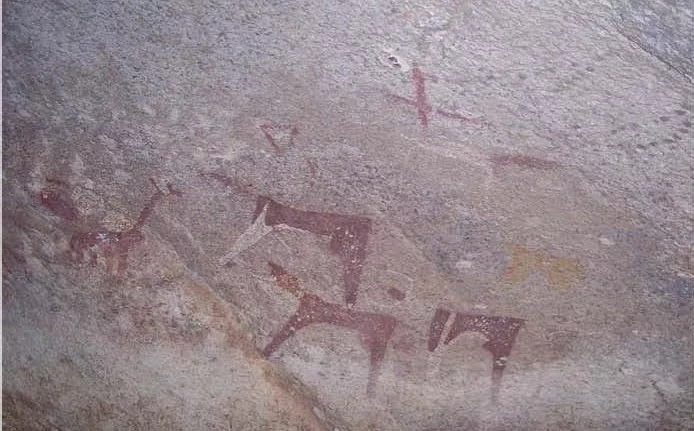
In the Sanaag region of Puntland, northeastern Somalia, lies Karinhegane, an archaeological site featuring polychrome cave paintings of real and mythical animals. These paintings are adorned with inscriptions and are believed to date back around 2,500 years. Nearby, Gelweita also offers fascinating connections in the same Somali rock-art tradition.
Why it matters:
- Unique combination of richly painted figures and accompanying inscriptions—rare in African rock art.
- The style aligns with nearby Laas Geel and Dhambalin, situating it within a significant regional painting tradition.
Visitor tip: Given Somaliland’s evolving political landscape, travel requires careful planning. Still, for adventurous historians and art lovers, it presents a curatorial treasure trove.
Why include these routes?
- Geographic diversity across Africa — from East to Southern Africa to the Horn.
- Cultural layers — pastoralists, farming communities, and hunter-gatherers.
- Artistic variety — Engravings, polychrome paintings, geometric and narrative art.
- Living heritage & ritual significance — not static relics but part of cultural memory.
Follow us on social media for more travel news, inspiration, and guides. You can also tag us to be featured.
TikTok | Instagram | Facebook | Twitter
ALSO READ: Lost Stone Age settlement unearthed beneath Danish waters




.jpg)

