Asia skies in turmoil as 445 flights cancelled and thousands delayed across major hubs

Posted on 14 April 2026 By Zaghrah Anthony

A normal travel day turned into a regional travel meltdown

What should have been an ordinary weekend of movement across Asia quickly spiralled into one of the region’s most disruptive air travel days of 2026. On April 12, passengers across multiple countries woke up to a wave of cancellations and delays that rippled far beyond local airports.

Sourced: X{@inadotholiday}

According to The Traveler, by the end of the day, 445 flights had been cancelled and 3,839 delayed, stretching from East Asia through Southeast Asia and into the Gulf. For many travellers, it meant missed holidays, disrupted business trips, and long, uncertain hours stuck in terminals.

From Tokyo to Dubai, the message was the same: the system was under strain.

Major hubs buckle under pressure

The disruption hit some of Asia’s busiest aviation gateways hardest, exposing just how tightly balanced regional schedules have become.

Key airports affected included:

  • Jakarta Soekarno-Hatta International Airport
  • Beijing Capital International Airport
  • Tokyo Haneda Airport
  • Narita International Airport
  • Singapore Changi Airport
  • Dubai International Airport
  • King Abdulaziz International Airport

At these hubs, tightly packed departure schedules meant even small disruptions quickly snowballed into widespread delays. Once morning and evening peak waves were thrown off balance, recovery became increasingly difficult.

For passengers, that translated into long queues, missed connections, and rebookings stretching into the following days.

Airlines caught in the cascade

Several major carriers found themselves at the centre of the disruption, with operational strain spreading quickly across their networks.

Among the most affected were:

  • China Eastern Airlines
  • Batik Air
  • SpiceJet
  • ANA Wings

These airlines experienced knock-on effects across both domestic and international routes. A single delayed aircraft often meant multiple disrupted legs, especially on tightly scheduled regional networks.

For passengers, the frustration wasn’t just delays—it was the domino effect of missed onward flights and rebooked itineraries that sometimes stretched across continents.

Why the system cracked on April 12

Aviation analysts say there was no single cause behind the disruption. Instead, several pressures collided at once.

Weather played a major role, with thunderstorms and low visibility forcing temporary ground stops in parts of East and Southeast Asia. Once flights began diverting or holding, aircraft rotations fell out of sync, creating ripple effects across entire fleets.

But weather wasn’t the only factor.

Air traffic congestion, longer routing adjustments in parts of the Middle East, and rising operational costs—including fuel pressures—have all pushed airlines to run tighter schedules with less flexibility. That leaves little room for error when something goes wrong.

In short: the system didn’t fail from one shock. It buckled under several at once.

Passengers caught in the middle of a fragile network

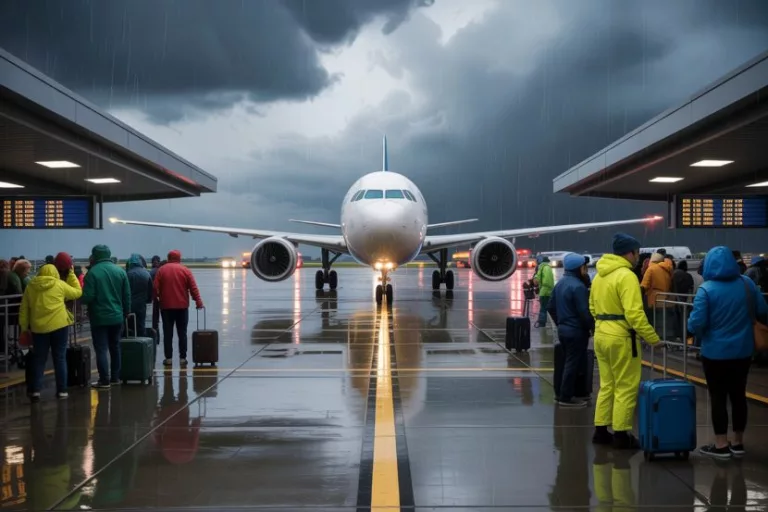
For travellers, the disruption felt immediate and personal. Social media posts from stranded passengers showed crowded terminals, limited communication, and long waits for updates.

Transit hubs that normally depend on precision timing became bottlenecks. A delay in Tokyo or Beijing quickly cascaded into missed connections in Dubai or Singapore, turning short delays into overnight disruptions.

Travel experts note that this kind of network-wide congestion is becoming more visible as passenger demand returns to—and in some cases exceeds—pre-pandemic levels, while airport capacity and staffing remain stretched.

A warning sign before peak travel season

The April 12 disruption is not being viewed as an isolated incident. Similar delays continued into the following days, suggesting ongoing pressure across Asia’s aviation network.

With summer travel demand approaching, airlines now face a difficult balancing act: maintain efficiency while building enough buffer into schedules to absorb inevitable shocks.

For passengers, the lesson is equally clear—flexibility is no longer optional when flying through some of the world’s busiest aviation corridors.

What happened across Asia and the Gulf is more than a single bad travel day. It highlights how tightly interconnected modern aviation has become—and how quickly that system can unravel when multiple stress points collide.

As airlines work to restore punctuality and rebuild trust, April 12 may be remembered not just for its numbers, but for what it revealed: a network operating on very little margin for error.

Source: The Traveler

Follow us on social media for more travel news, inspiration, and guides. You can also tag us to be featured.

TikTok | Instagram Facebook Twitter

ALSO READ:


yoast-primary - 1004431
tcat - Travel news
tcat_slug - travel-news
tcat2 - Travel news
tcat2_slug - travel-news
tcat_final -