
The more life experience you have, the better the storyteller you are. One such example is Mabula Game Reserve Safari Guide Tshepo Loni, whom the Limpopo Economic Development, Environment & Tourism (LEDET) selected to represent the guiding industry at the National Tourism Careers Expo (NTCE) 2024.
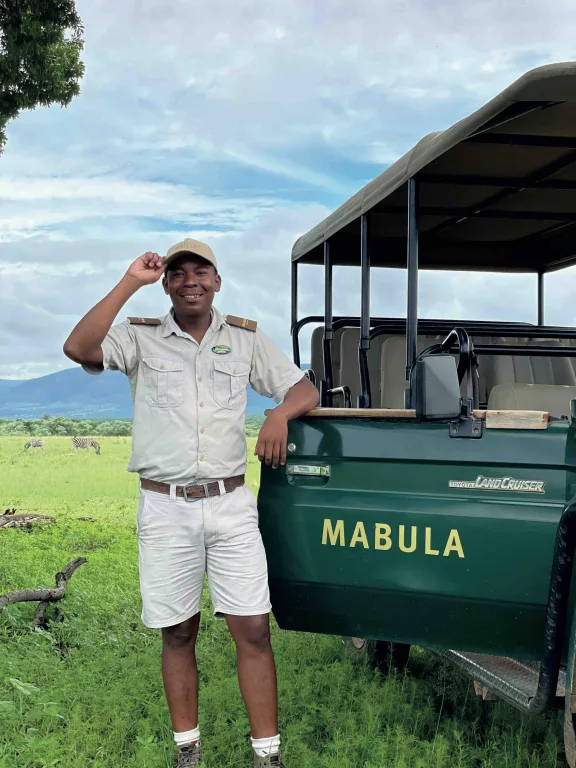
Photography: TSHEPO LONI, Courtesy images
There are reasons I can spin a good yarn. One is deep-rooted insecurity: I’ve always been the most talkative in a group because I feel people can see right through me. Two is authenticity: I want everyone in my game vehicle to see how nature saved and changed me. It’s the best hospital because you realise our universal connection and respect even the little things, the grass, the dung beetle.
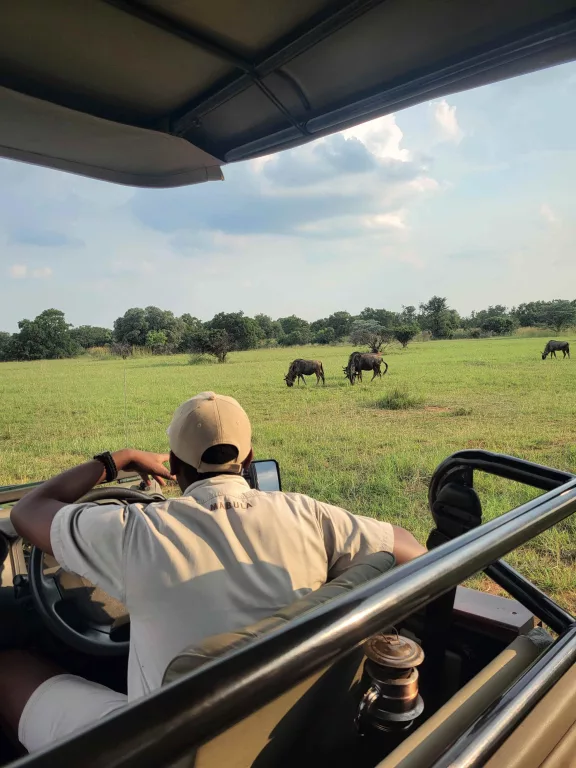
I encourage my passengers to ask questions. Why is the blue wildebeest there? What does it want? My curiosity extends to myself. Why did Dad leave? Why did I have to endure suffering before this job opportunity arose? Realising, as with nature, that everything happens for a reason. If I hadn’t experienced growing up without a father, I wouldn’t see life as I do now. And if I hadn’t been able to follow this career? I’d either be in jail or dead.
I grew up in a small village called Olverton between Bela-Bela and Hammanskraal, with my mom, two older half-brothers, and my uncle, mom’s brother, whom she also looked after, so I considered him a brother, too. I never knew my father. Mom loves us, and she’d take a bullet for us, but if she’d chosen to be with us and give us motherly love and warmth, we wouldn’t have survived. She worked as a domestic worker in Pretoria, often managing to return home only at the end of each month. My role models were my brothers.
Photography: TSHEPO LONI, Courtesy images
As teens and young adults, my brothers got into fights, most of which they won. People were afraid of them and, by association, me, and they protected me. It wasn’t a question of differentiating between good and bad – it was all I knew, and because I looked up to my brothers, I wanted to emulate their behaviour. I encourage young people to leave where they grew up and travel to see how others live.
I was carrying a lot of anger in my father’s absence. Once triggered, my temper blinded me; it didn’t matter who was there. I got into fights, was stabbed and hit with bottles. It was the only way I knew how to deal with my emotions. When I wanted sneakers, I’d find a way to get them, even if it meant hurting others.
I frequently moved around, staying with other families when my brothers couldn’t care for me. To this day, I crave a sense of belonging. On the streets, I felt I was part of something, alive, human. We had to look over our shoulders but became so good at hiding our activities that not even Mom suspected a thing – when she returned home from Pretoria, the house would be clean, and we’d be on our best behaviour.
I passed matric with a bachelor’s and got into Tshwane University of Technology, but I dropped out during my second year when seeing the pain Mom was enduring to afford to keep me there became too much. Then came a pivotal moment when a policeman, Emmanuel Nkoana, caught me red-handed. He came from a similar background and understood Olverton lacked decent role models. He encouraged me to apply for Mabula’s Field Guides Association of Southern Africa (FGASA) training programme, which annually empowers local youth with comprehensive training and career opportunities.
So, I put on a blazer and jeans and attended an interview. I was one of eight applicants; Mabula wanted four. After two weeks, the reserve called to congratulate me. I wondered, why me? I didn’t even know what an impala was. But the timing was perfect. I’d fathered a son by then and hadn’t been able to provide for him.
Our training began in September 2019, and Mabula invested in our accommodation and food. Some of our group were men who hadn’t studied in a long time, and we all had to adjust to discipline after the freedom we’d experienced on the streets.
Photography: TSHEPO LONI, Courtesy images
Shadowing a guide on safari, I realised I could make money while bringing people joy, not sadness, by showing my passengers elephants or giraffes they’d never seen before. I can’t go back and fix the things I’ve done. I still struggle to sleep almost nightly. But I can treat everyone kindly and show young boys from disadvantaged backgrounds that change is possible. I live in the same area, play in the same playground and eat what Tshepo ate. If he can buy a car and upgrade his mother’s house, so can I.
Words by Lisa Abdellah for Getaway May 2025
Follow us on social media for more travel news, inspiration, and guides. You can also tag us to be featured.
Instagram | Facebook | Twitter | Spotify
ALSO READ:
The story behind The Oom: How Miles Masterson brought a surfing legend to life