Wine tours in South Africa are easy to find, but it is surprisingly easy to experience the Winelands badly. You can spend a day rushing from tasting room to tasting room, ticking off estates and trying to remember which Sauvignon Blanc you liked best. Or you can slow down and let someone who knows the landscape show you what lies beyond the wine list.
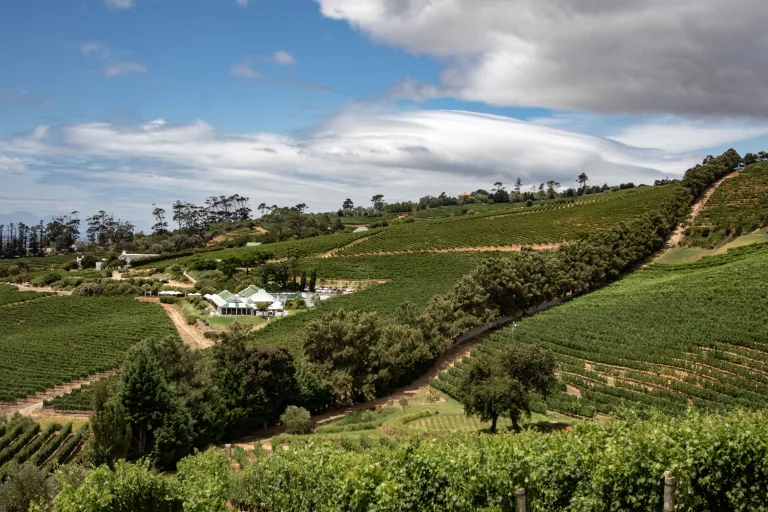
Photo by Magda Ehlers / Pexels
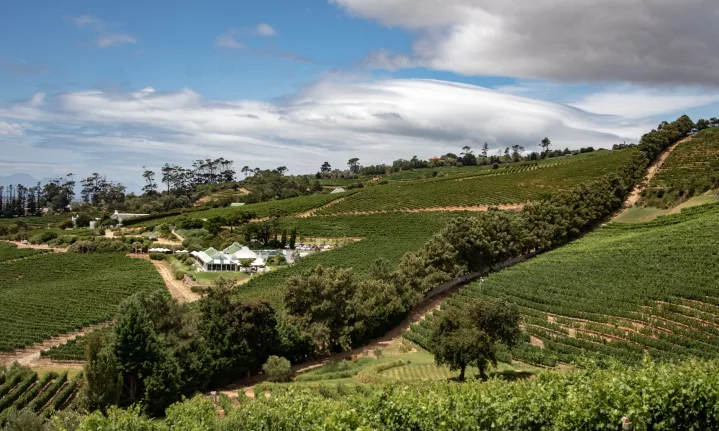
That is where local-led wine tours come in. The Cape Winelands are not simply a backdrop for a glass of wine. They are a living landscape shaped by centuries of farming, winemaking, migration, food, architecture and changing ideas about what South African wine can be. Having a local guide means the journey between estates can become part of the experience, whether that means hearing the history of Stellenbosch, meeting a winemaker, travelling through vineyard back roads or pairing wine with local food.
South Africa’s wine industry can trace its recorded beginnings to 2 February 1659, when Jan van Riebeeck recorded the first wine made from Cape grapes. Stellenbosch later became one of the country’s great wine-producing centres, while Constantia, Paarl, Franschhoek, the Swartland and the Overberg helped build the reputation of the Cape’s wine country.
Stellenbosch was also responsible for another important milestone in wine tourism. In 1971, three local winemakers, Frans Malan of Simonsig, Niel Joubert of Spier and Spatz Sperling of Delheim, established the Stellenbosch Wine Routes after being inspired by wine routes in France. It became South Africa’s first organised wine route and helped turn visiting wine farms into an experience in its own right.
More than 50 years later, there are still plenty of ways to experience the Winelands through the people who know them best.
Meet the winemaker on a private Stellenbosch tour
If your idea of a good wine tour involves asking questions rather than simply being handed a tasting sheet, Wine Flies’ private Meet the Winemaker tour is worth considering.
The experience is built around access. Guests visit wine estates and meet the people behind the bottles. They taste the wines and hear first-hand how they are made. The company says its relationships with winemakers allow guests to experience the estates from behind the scenes rather than simply passing through the tasting room.
A local guide also takes guests through Stellenbosch, giving context to the town and its role in South African wine before heading into the surrounding Winelands. Depending on availability, the itinerary can include historic buildings, modern estates and more personal interaction with the people behind the wines.
It is this personal element that makes the experience stand out. Wine can become intimidating when the language gets too technical, but sitting down with the person who actually makes it tends to make the whole process feel much more human.
Wine Flies also offers more traditional Stellenbosch and Franschhoek tours, as well as food-focused and family-friendly options, making it possible to choose an experience around your interests rather than simply following the same route as everyone else.
Why go: For a deeper understanding of how wine is made and the people behind the bottle.
Make a day of it: Allow time to explore Stellenbosch itself. The town is South Africa’s second oldest and its oak-lined historic centre is filled with galleries, cafés, museums and restaurants. The surrounding area also offers hiking and mountain-biking opportunities in places such as Jonkershoek.
View this post on Instagram
Take the Vine Hopper and choose your own route
There is something wonderfully uncomplicated about the Vine Hopper. Rather than being locked into a single plan, you hop on, hop off and decide which estates deserve more of your time.
The service has been operating in Stellenbosch since 2003 and is run by the local Adventureshop Stellenbosch team. Its three routes visit different groups of wine estates, with five to six stops on each route. Guests can choose where they want to get off, how long they want to stay and which tastings or activities they want to pay for.
The Northern Route includes estates such as Beyerskloof, Simonsig, Delheim, Lievland, Warwick and Remhoogte. The Southern Route heads towards the Helderberg and includes Kleine Zalze, Blaauwklippen, Annandale, Alto, Peter Falke and Cavalli. The Eastern Route travels towards the Helshoogte Pass, with stops including Lanzerac, Neil Ellis, Le Pommier, Boschendal and Zorgvliet.
The beauty of this approach is that you do not have to know exactly what kind of wine tourist you are before you arrive. One farm might be about the wine, another about lunch, another about the view.
And, importantly, someone else is driving.
Why go: It is one of the easiest ways to explore several very different parts of the Stellenbosch Wine Route without worrying about drinking and driving.
Make a day of it: Pick one route rather than trying to conquer the entire Winelands. Stellenbosch’s official wine route is divided into five sub-routes, including Greater Simonsberg, Stellenbosch Berg, Stellenbosch Valley, Helderberg and Bottelary Hills, so there is more than enough ground to cover.
View this post on Instagram
Explore the Winelands with a local guide
For travellers who want a more classic guided tour but still want the freedom of a private experience, Vine Hopper’s private wine tour pairs a local specialist guide with a flexible route through Stellenbosch and Franschhoek.
The tour includes transport, an accredited guide and four wine tastings at premier estates. Because it is private, your guide can adapt the itinerary to your group, and the operator says the day can even be used as part of a transfer between Cape Town and accommodation in Stellenbosch or Franschhoek.
This is the kind of tour that makes sense if you are travelling with a small group, celebrating something or simply want somebody else to handle the logistics. The guide can also help translate the Winelands for you, explaining the landscape and the differences between estates instead of leaving you to work it all out from a tasting menu.
Why go: For a more personal, flexible introduction to Stellenbosch and Franschhoek.
Make a day of it: Franschhoek is compact enough to explore on foot after your tour. Wander through the village, browse its galleries and shops, then settle in for a meal before returning to Stellenbosch or Cape Town.
View this post on Instagram
Go beyond Stellenbosch with African Story Wine Tours
The Cape Winelands do not begin and end in Stellenbosch. African Story Wine Tours builds its full-day experience around three of the Cape’s best-known wine regions: Stellenbosch, Franschhoek and Paarl.
The scheduled tour includes four wine estates, a cellar tour, wine tastings, a cheese and wine pairing, a chocolate and wine pairing and lunch. The company describes its approach as informal and educational, with guides focused on helping visitors understand wine without turning the day into a lecture.
That broader itinerary is useful because the three regions have their own personalities. Stellenbosch is deeply associated with South Africa’s wine heritage and Cabernet Sauvignon, Chenin Blanc and Pinotage. Franschhoek combines its wine culture with a strong French-influenced food culture, while Paarl offers another side of the Winelands and is often overlooked in favour of its better-known neighbours.
The result is less about finding one “best” estate and more about understanding how varied the Cape’s wine country actually is.
Why go: If you want to cover more ground and experience several Winelands regions in a single day.
Make a day of it: If you have the time, do not rush home afterwards. Stay overnight in one of the Winelands towns and explore at a slower pace. Paarl, Stellenbosch and Franschhoek each have enough restaurants, heritage sites, galleries and outdoor activities to justify extending the trip.
Swap the car for a horse
For something that feels very different from the standard wine-tour itinerary, Wine Valley Adventures combines the Winelands with horseback riding, quad biking and horse-drawn carriage experiences.
Owner Michelle draws on more than 30 years of operating in the area and shares local knowledge of the Paarl, Franschhoek and Stellenbosch wine regions. The experiences can be customised to include food and wine tastings, allowing visitors to experience the landscape before settling down with a glass of wine.
This is particularly appealing if not everyone in your group is interested in spending the entire day inside tasting rooms. The operator caters for riders and non-riders, and activities can be combined with wine, meals, hikes and visits to nearby attractions.
The point here is not to replace wine tasting with an adventure. It is to make the journey through the Winelands part of the experience.
Why go: For a slower, more outdoorsy way of experiencing wine country.
Make a day of it: Build in time for the Boland landscape. The region is particularly good for combining wine with hiking, mountain scenery, gardens and long lunches.
View this post on Instagram
Take a wine safari through Stellenbosch
For something with a little more dust under its tyres, Stellenbosch Wine Safaris offers guided half-day experiences through different parts of the wine region.
The current itineraries include northern and eastern routes, with tastings at two wine farms. The northern option includes estates such as Stark-Condé, Rustenberg and Lanzerac, while the eastern route includes Tokara, Zorgvliet and Rainbows End. Tours run in the morning and afternoon, and collection can be arranged from Stellenbosch or Cape Town, with transfers available as an extra option.
The safari format works particularly well for visitors who want the scenery to be part of the day. Rather than treating the vineyards as something viewed through a car window between stops, the open-air format puts the landscape front and centre.
Why go: For a shorter wine experience that still gives you a sense of the terrain and character of Stellenbosch.
Make a day of it: Pair the safari with a walk through Stellenbosch afterwards. The town’s historic core is compact and easy to explore, with Cape Dutch, Georgian and Victorian architecture, museums, galleries and restaurants close to the centre.
View this post on Instagram
Why local-led wine tours are worth doing
There is a temptation, especially in a destination as famous as the Cape Winelands, to treat wine tasting as a checklist. Four estates. Six tastings. One lunch. Done.
But the best wine experiences tend to resist that formula. A local guide can tell you why a particular valley produces a certain style of wine, point out a historic farmstead you might otherwise drive past or introduce you to the person pouring the wine. They can also help you understand that the Winelands is not one destination.
Stellenbosch alone is divided into distinct sub-routes shaped by geography, climate and landscape. The region is also about considerably more than wine. Stellenbosch combines vineyards with hiking, mountain biking, art, heritage and food, while the wider Cape Winelands include towns such as Franschhoek, Paarl, Worcester and Robertson.
That is the real appeal of going with someone who knows the area. You are not simply being taken to a tasting. You are being given a way into the place.
The bottom line
South Africa has no shortage of beautiful wine farms. What makes a wine tour memorable, however, is rarely the size of the estate or how impressive the tasting room looks.
It is the story. It is the guide who knows which road to take. The winemaker who stays for another question. The farm worker who has watched the seasons change. The local who knows that the best part of the afternoon might be the view between two estates, rather than the tasting itself.
So, the next time you head into the Winelands, resist the urge to cram as many stops as possible into one day. Choose a route, find someone who knows the region and leave room for the unexpected. After all, the best way to drink in South Africa’s wine country is to actually take the time to see it.
Follow us on social media for more travel news, inspiration, and guides. You can also tag us to be featured.
Instagram | Facebook | Twitter | Spotify
ALSO READ:
48 hours in Stellenbosch: A weekend of wine, heritage and mountain views