


There is something slightly unnerving about Namibia’s Skeleton Coast.
Sam Power/Unsplash
Stretching for roughly 500km from the Ugab River towards the Kunene River on the Angolan border, the Skeleton Coast National Park protects one of the country’s most unusual landscapes. It is a place shaped by the meeting of the Namib Desert and the Atlantic Ocean, where extreme conditions have created an ecosystem that is surprisingly rich in life. But what makes the Skeleton Coast so extraordinary is precisely what makes it look so inhospitable.
Why is it called the Skeleton Coast?
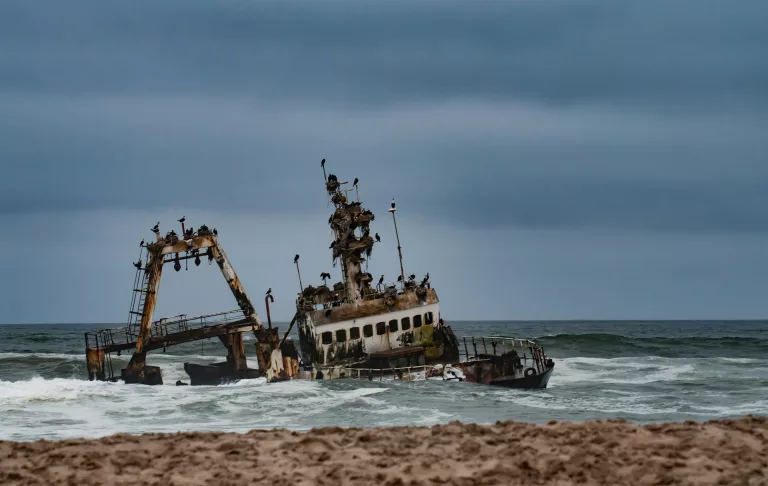
The Skeleton Coast gets its ominous name from the many ships that came to grief along this remote stretch of coastline. Strong currents, dense fog, rough seas and shifting sand made navigation difficult, leaving shipwrecks scattered along the coast. Some have disappeared beneath the sand or been claimed by the ocean, while others remain as haunting reminders of the coastline’s history.
The fog is still one of the defining features of the Skeleton Coast. Created when moist air from the Atlantic meets the cold Benguela Current, it can roll inland over the dunes and dramatically change the appearance of the landscape.
Where the Namib Desert meets the Atlantic
Joshua Kettle/Unsplash
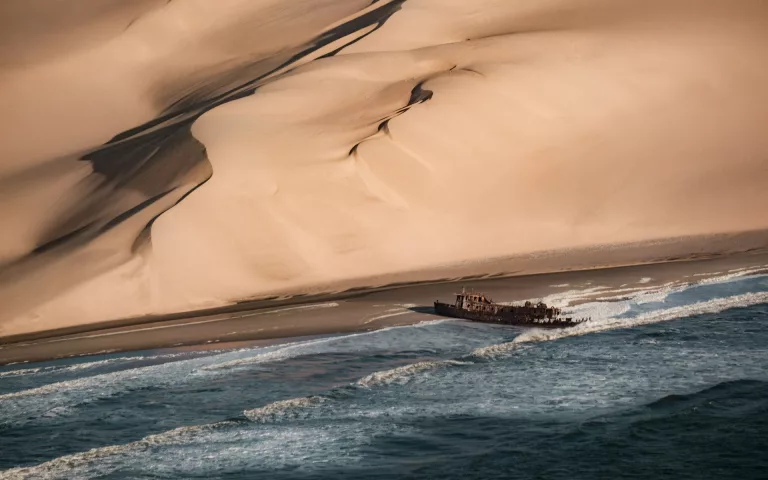
The Skeleton Coast is shaped by one of nature’s great geographical combinations: the Namib Desert and the Atlantic Ocean.
The cold Benguela Current flows northwards along Namibia’s coast, bringing nutrient-rich water that supports an incredibly productive marine ecosystem. It also helps create the coastal fog that provides an important source of moisture in one of the world’s driest environments. Rainfall is scarce, so this fog matters.
Plants and animals have evolved to make use of tiny amounts of moisture, while the wider ecosystem depends on a combination of fog, underground water and occasional rainfall. This is what makes the Skeleton Coast so fascinating. It may look empty, but it is anything but lifeless.
Skeleton Coast wildlife: elephants, lions and rhinos
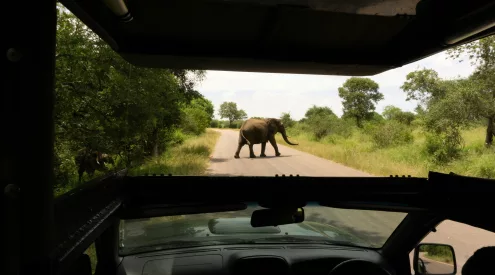
Wildlife is one of the biggest surprises of visiting the Skeleton Coast. The region is home to animals that have adapted to life in the harsh desert environment, including springbok, gemsbok, brown hyena and jackal. Desert-adapted elephants are among its most remarkable residents, travelling vast distances through the dry river valleys in search of food and water.
Lions and black rhino also occur in the wider Skeleton Coast and Kunene region. Rather than gathering around permanent rivers and lush grasslands, many of these animals have learned to follow the landscape itself. The dry river systems provide routes through the desert where vegetation and underground water can sustain wildlife.
The rivers that disappear into the desert
The Hoanib and Hoarusib rivers are among the most important features of the Skeleton Coast landscape. Calling them rivers can be slightly misleading. These are ephemeral river systems, meaning they flow only periodically, often after rainfall far inland. For much of the year, their broad channels can appear completely dry. Yet they remain vital ecological corridors.
Trees and other vegetation grow along parts of the riverbeds, creating pockets of food and shelter. Wildlife follows these corridors across the desert, making the river valleys some of the best places to experience the Skeleton Coast’s wildlife. Exploring them by 4×4 adds another layer to the experience. You can drive for kilometres through seemingly empty terrain before suddenly finding elephant tracks, wildlife or a patch of green vegetation that seems almost impossible in such an arid landscape.
The seals of the Skeleton Coast
katsuma tanaka/Unsplash
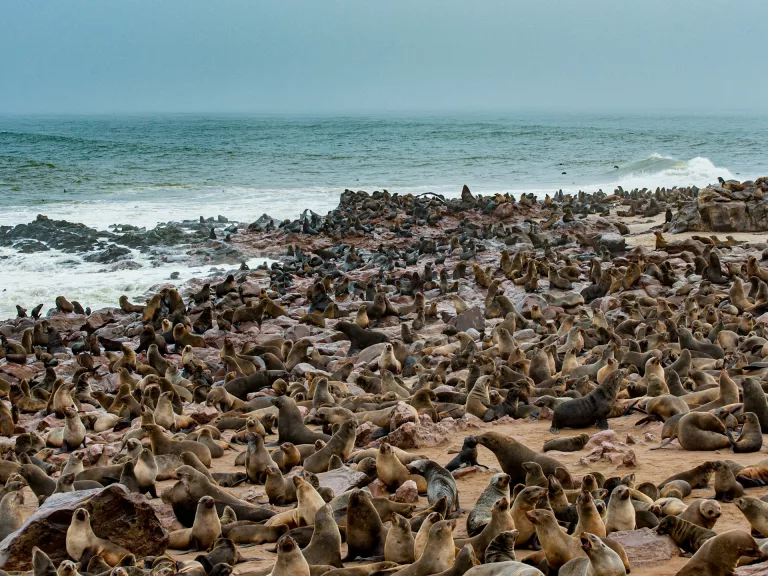
Then there is the ocean. The Cape fur seal colonies along Namibia’s coast are among the most spectacular wildlife experiences in the region. At Cape Cross, south of the Skeleton Coast National Park, thousands of seals gather along the shoreline. The scene is wonderfully chaotic, with seals covering the beach while waves crash against the coast. It is also a useful reminder that the Skeleton Coast is not simply a desert destination. Its story is equally connected to the Atlantic and the marine ecosystem created by the Benguela Current.
How to explore the Skeleton Coast
Getting to the Skeleton Coast is part of what makes the journey memorable. Distances are enormous, facilities are limited and access to certain areas is restricted. Travellers should check current park regulations and access requirements before setting out.
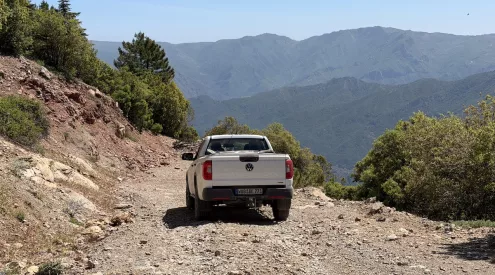
For adventurers, 4×4 journeys offer an immersive way to explore the desert and river valleys. Guided excursions are particularly useful in remote areas, while fly-in safaris provide access to camps and lodges without requiring long drives across difficult terrain. Möwe Bay, Terrace Bay and Torra Bay are among the key points within the Skeleton Coast National Park.
For a truly memorable stay, Shipwreck Lodge embraces the coastline’s maritime history. Its unusual cabins are designed to resemble stranded ships, placing guests in a suitably dramatic setting among the dunes. Further north, the Kunene River marks the northern end of the Skeleton Coast and forms the border between Namibia and Angola.
Follow us on social media for more travel news, inspiration, and guides. You can also tag us to be featured.
Instagram | Facebook | Twitter
ALSO READ:
Valley of Desolation: A hike through millions of years of Karoo history