

In the dry landscape of the Northern Cape, Kuruman is an unexpected splash of green.
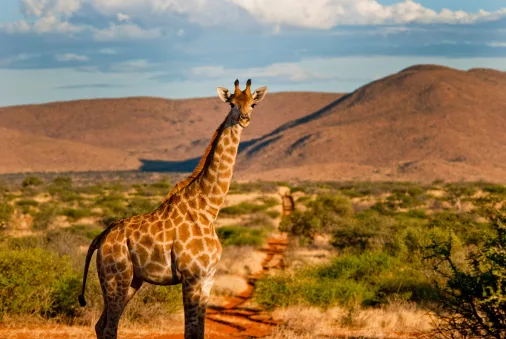
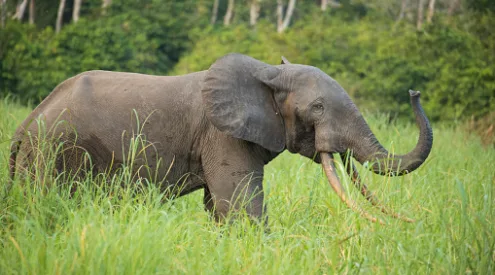
A juvenile Giraffe in the South African Kalahari desert/By: Dominic Cram/Getty Images
Known as the Oasis of the Kalahari, the town grew around the Eye of Kuruman, a natural spring that produces about 20 million litres of water a day. The spring, known as Gasegonyane in Setswana, has sustained people, agriculture and wildlife in this otherwise arid region for generations.
But there is more to Kuruman than its famous spring. Its history stretches from Indigenous communities and missionary settlement to archaeology dating back more than a million years. Beyond town, the landscape shifts into thornveld, rocky hills and Kalahari country.
A weekend here is enough to see how water has shaped the place, from its earliest inhabitants to the town that stands today.
Day 1: Start where the water begins
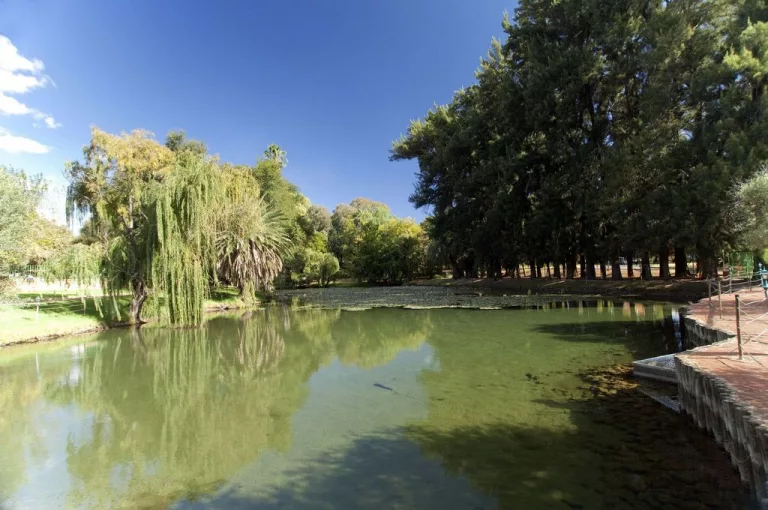
The Eye of Kuruman/South African Tourism from South Africa/Wikimedia Commons
Visit the Eye of Kuruman
Begin your weekend at the attraction that gives Kuruman its distinctive character.
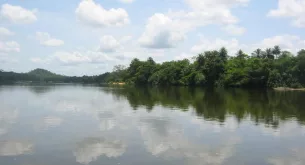
Eye of Kuruman sits in the centre of town, where clear spring water rises from the ground and gathers into a pool surrounded by gardens, palms and other vegetation.
The spring produces around 20 million litres of water every day, including during dry periods. Its Setswana name, Gasegonyane, refers to a small water calabash with bubbling water.
Spend some time walking around the grounds rather than treating the Eye as a quick roadside stop. Look into the clear water for fish and other aquatic life, watch the birdlife around the vegetation and notice how dramatically the greenery contrasts with the dry country beyond town.
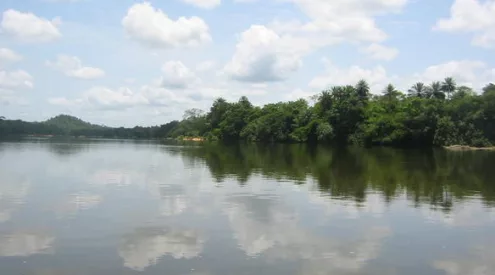
The spring also feeds the Kuruman River and has historically supported irrigation and agriculture in the area.
Follow the water into Kuruman’s history
The story of the Eye is inseparable from the history of Kuruman.
The spring helped make permanent settlement possible and later became central to the establishment of the Moffat Mission. Robert and Mary Moffat established their mission here in the 1820s, working among local Setswana-speaking communities.
The mission became an important centre for language, education and printing. Robert Moffat translated the Bible into Tswana and used a printing press to produce copies locally.
The history is still visible at the mission today.
Explore the Moffat Mission
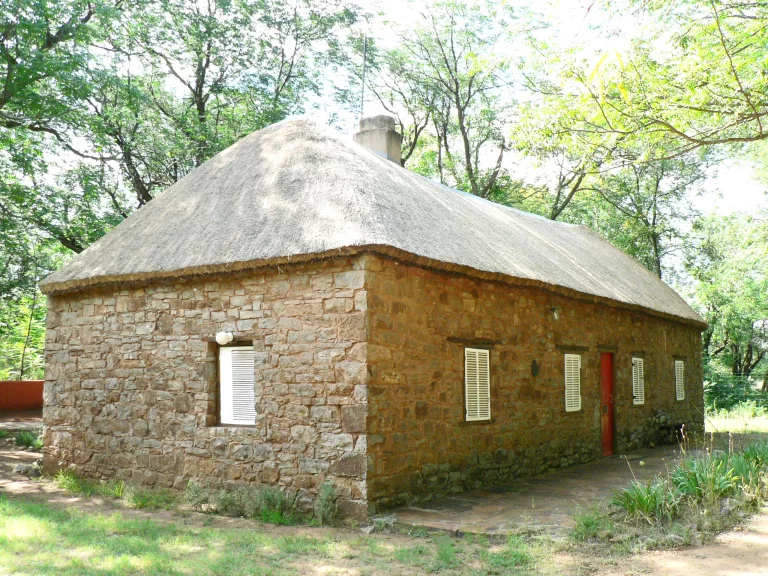
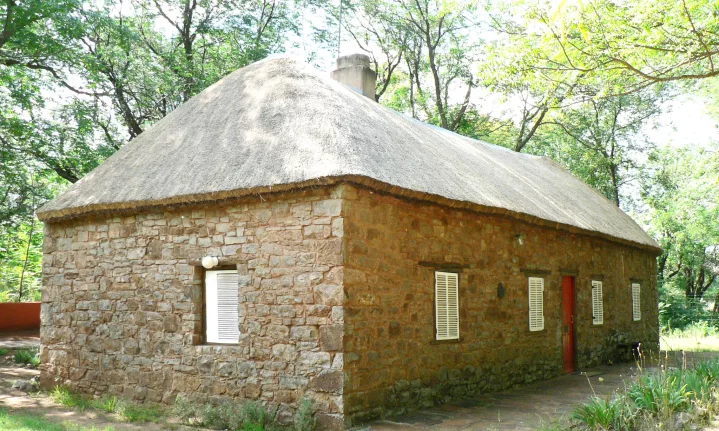
Hamilton House, Moffat Mission/Andrew Hall/Wikimedia Commons
See the historic church
Moffat Mission is one of Kuruman’s most important heritage sites.
The property includes the former Moffat homestead, the foundations of an early schoolroom, the Moffat Church and other historic buildings. The church was completed in 1838 and was designed to accommodate about 800 people.
The grounds offer a striking contrast to the surrounding Northern Cape landscape. Mature trees and gardens grow alongside the historic buildings, with the area’s reliable water source helping create a surprisingly green setting.
Inside the mission, look out for the historic cast-iron printing press used by Moffat, as well as other objects connected to the mission’s history.
Take a slower afternoon
After visiting the Eye and Moffat Mission, leave time to explore the town and its surroundings. The contrast between shaded streets, gardens and the dry landscape outside the oasis is part of what makes the destination interesting.
Kuruman also has local craft outlets where visitors can browse regional artwork and handmade pieces.
If you’re travelling through the Northern Cape rather than making Kuruman your sole destination, the town also makes a useful base for exploring attractions in the surrounding region.
ALSO READ:
Beyond the Magaliesburg weekend: Exploring the farms, mountains and old roads of the Magaliesberg
Day 2: Go deeper into the landscape

Wonderwerk Cave/Getaway Gallery
Step back into deep time at Wonderwerk Cave
The following morning, head south from Kuruman towards Wonderwerk Cave.
The archaeological site lies roughly 43 to 45km from Kuruman and is one of the region’s most remarkable connections to the distant human past. Excavations have uncovered evidence spanning more than a million years, including Stone Age tools, animal remains, engraved stones and evidence of controlled fire.
The cave is around 140m long, and its archaeological record extends through several periods of human occupation. Later rock art includes paintings made using red and yellow ochre.
It is an especially useful stop because it changes the way you look at the landscape outside. Kuruman’s dry hills and thornveld are not simply scenery. They form part of an environment in which people have lived, travelled and adapted for hundreds of thousands of years.
Check access arrangements before setting out, as visits and tours can be subject to arrangements with the site.
Look beyond the cave
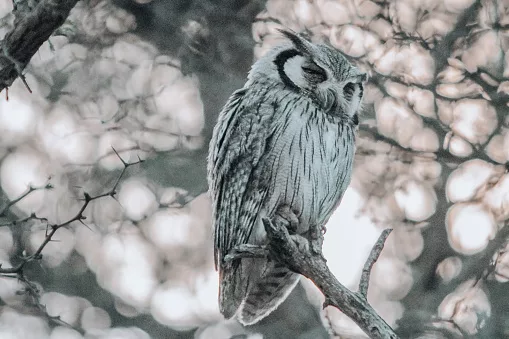
Owl spotted in Hotazel/Mark Smorenburg / 500px/Getty Images
Return towards Kuruman with time to appreciate the landscape itself.
The region around the town is characterised by dry thornveld, rocky terrain and the broader Kalahari environment. Yet pockets of water create habitats that are unexpectedly rich in plants and animals.
Birdwatchers can explore areas such as the Hotazel Road Bird Sanctuary and Nature Reserve north of town, while wildlife-focused travellers have larger conservation destinations within reach, including Tswalu Kalahari Reserve further west.
The important thing is to notice the difference between the green spaces sustained by water and the much drier country around them.
See how water changes the Kalahari
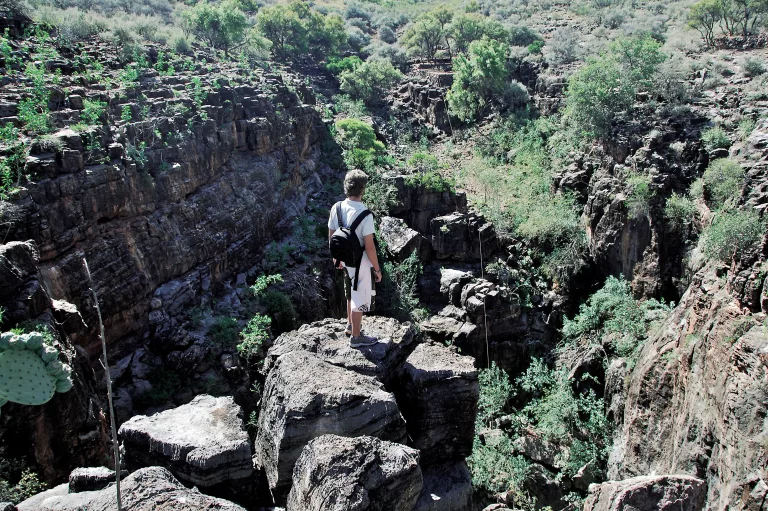
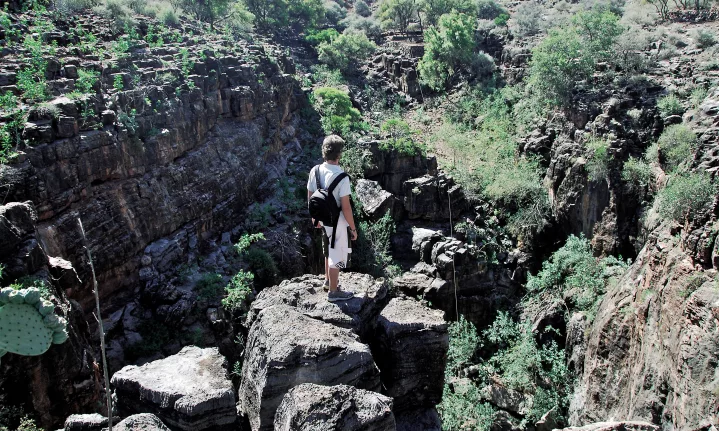
A man overlooking the Boesmansgat Sinkhole/Media24/Gallo Images
From spring to river
Kuruman’s most fascinating story is not really about one spring.
It is about what happens when reliable water appears in an arid environment.
The Eye’s water has supported the town, fed the Kuruman River and enabled irrigation in the surrounding area. A groundwater resource beneath the Ghaap Plateau effectively creates a green thread through an otherwise dry landscape.
That makes Kuruman different from many Northern Cape destinations. The attraction is not simply the desert, but the dramatic relationship between water and dryness.
Make time for the surrounding countryside
If you have an extra few hours, explore some of the smaller attractions around Kuruman rather than immediately leaving town.
The Ga-Segonyana region includes the Boesmansgat Sinkhole, the Koranna-Langberg area, local nature reserves and other heritage sites.
You could also use Kuruman as a jumping-off point for a longer Northern Cape road trip, with destinations such as Kathu, Hotazel and the wider Kalahari region within reach.
When to visit Kuruman
Kuruman can be very hot, particularly during summer. Tourism authorities recommend avoiding the hottest part of the year if possible, while winter brings warm days but potentially very cold nights.
Pack sun protection and comfortable walking shoes, but also bring warm layers if you are travelling during the colder months.
The dry season can contrast the surrounding landscape, and the greenery around the Eye is particularly striking.
Plan your 48 hours
Kuruman works particularly well as a two-night Northern Cape stop rather than a destination where you need to pack your itinerary with activities.
Spend the first day understanding the town through its water and history. Start at the Eye, visit the Moffat Mission and explore the town at an unhurried pace.
Use the second day to look much further back in time at Wonderwerk Cave before returning to the surrounding Kalahari landscape.
By the time you leave, the Eye of Kuruman will make more sense. It is not simply an attractive spring in the middle of town. It is the reason this patch of green exists at all, and a reminder of how profoundly water can shape life in one of South Africa’s driest regions.
Follow us on social media for more travel news, inspiration, and guides. You can also tag us to be featured.
Instagram | Facebook | Twitter | Spotify
ALSO READ: